My grandmother kept a cast iron skillet on the back burner every Sunday, and the smell of okra slow-cooking with onions and andouille sausage is the reason this smothered okra and shrimp recipe feels like home every single time I make it.
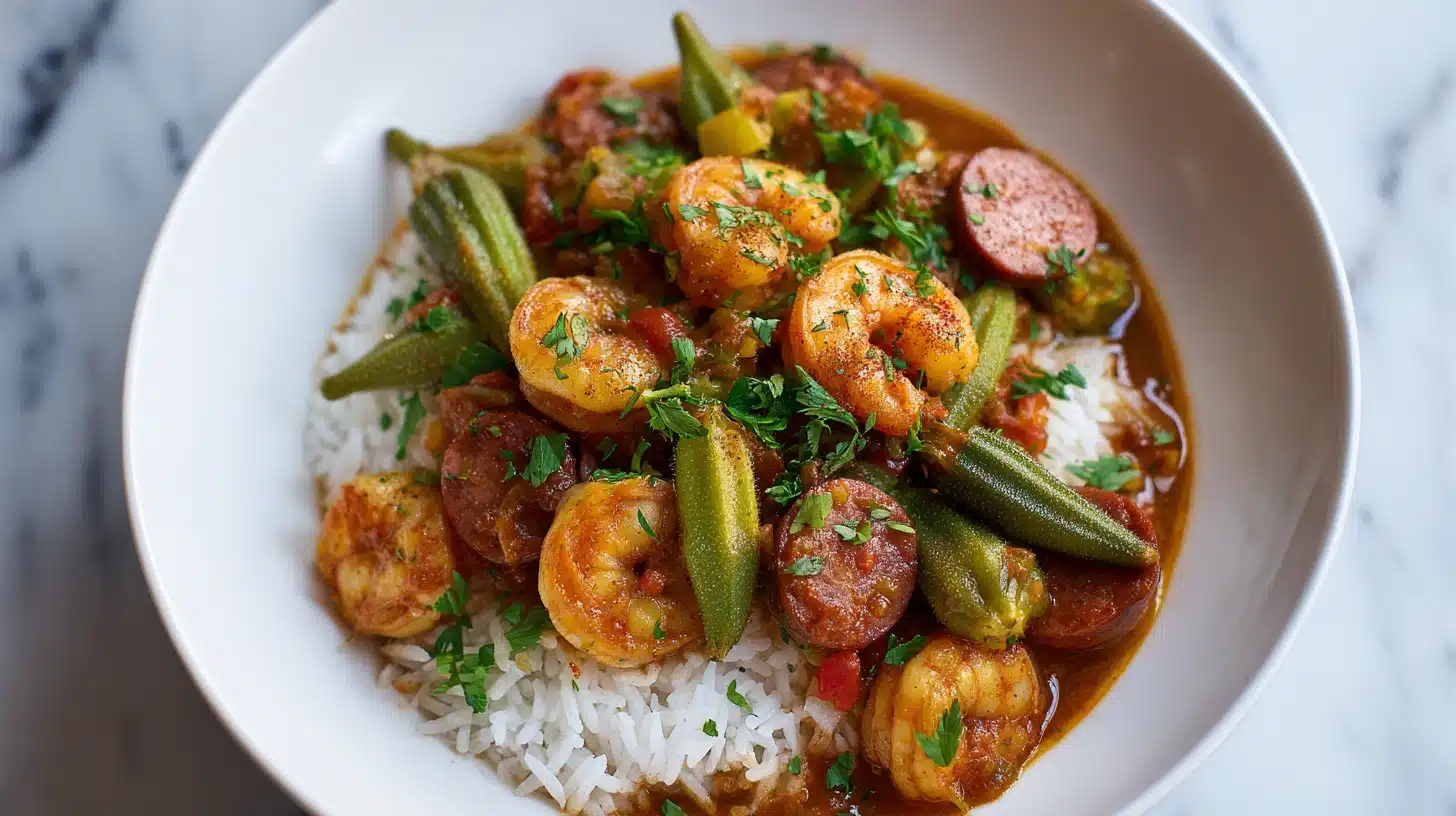
Most people ditch okra the second it turns slimy, and that one bad experience costs them one of the most deeply satisfying dishes in Southern cooking. The fix is a slow, patient smother that transforms the texture completely.
This guide covers how to prep okra so it stays silky instead of gluey, why the holy trinity of Cajun cooking matters here, and exactly how to time your shrimp so they stay plump and tender.
Table of Contents
Why This Smothered Okra and Shrimp Recipe Works
Smothered dishes have anchored Louisiana and Southern cuisine for generations. Smothering is not just a cooking method. It is a philosophy. You build deep flavor by cooking vegetables low and slow in their own moisture, layering in aromatics, and letting everything meld into a thick, glossy sauce that coats every grain of rice underneath it.
The Cajun Holy Trinity Is Non-Negotiable
Creole cooking and Cajun cooking both center on the holy trinity: onion, bell pepper, and celery. For this Cajun smothered okra and shrimp, the trinity forms the flavor base. Each vegetable does a specific job. Onion brings sweetness and body. Green bell pepper adds a bright, grassy bite. Celery contributes an earthy background note that keeps the dish from tasting flat.
You will sauté these three together in butter or oil until they are completely soft, almost jammy, before anything else hits the pan. Do not rush this step. If you push the heat too high, the vegetables steam instead of caramelize, and you lose the rich depth that makes a smothered dish feel different from a simple stir-fry.
Andouille Sausage Builds the Backbone
Andouille sausage is the smoky, garlicky backbone that keeps Southern smothered okra with shrimp from tasting one-dimensional. Slice it into half-moons and brown the pieces in the skillet before you add anything else. Those dark, slightly charred edges render fat into the pan and leave behind caramelized bits that dissolve into the sauce as you cook.
If you cannot find andouille locally, smoked sausage or kielbasa works, but add an extra pinch of Cajun seasoning and a smoked paprika boost to compensate for the flavor gap. The dish still delivers. It just speaks a little softer.
Diced Tomatoes Tie It Together
Canned diced tomatoes, added with their full juices, are the liquid foundation for the smother. They break down over heat, releasing acidity that cuts through the richness of the sausage and butter, while the natural sugars caramelize into the sauce. This gives the finished dish that characteristic dark, almost brick-red color you see in a proper Cajun smothered okra and shrimp recipe.
Pour in enough water or shrimp stock alongside the tomatoes to keep the mixture loose enough to simmer without scorching. About a half cup is usually right, but watch the pan and add a splash more if it tightens up too fast.
Print
Smothered Okra and Shrimp Recipe: The Cajun Comfort Dish You’ve Been Missing
- Total Time: 105 min
- Yield: 8 servings 1x
Description
A deeply savory Southern dish built on slow-cooked okra, smoky andouille sausage, and tender shrimp in a thick Cajun tomato sauce. The okra is pre-seared to keep it silky, and the shrimp go in at the very end so they stay plump. Serve over white rice for a complete, satisfying meal.
Ingredients
For the smother base:
1 lb andouille sausage (sliced into 1/4-inch half-moons)
1 tablespoon vegetable oil or unsalted butter
1 large yellow onion (diced)
1 green bell pepper (diced)
2 celery stalks (diced)
5 garlic cloves (minced)
1 can (14.5 oz) diced tomatoes (with all juices)
1/2 cup water or shrimp stock
2 tablespoons Cajun or Creole seasoning
1 bay leaf
Salt to taste
For the okra:
1 1/2 lbs fresh or frozen okra (thawed and dried, trimmed, cut into 1-inch pieces)
1 teaspoon vegetable oil (for searing)
For the shrimp:
1 1/2 lbs large shrimp (peeled and deveined, tails on or off)
For serving:
4 cups cooked long-grain white rice
Instructions
1. Brown the sausage. Heat 1 tablespoon of vegetable oil in a large cast iron skillet over medium-high heat. Add the andouille sausage slices in a single layer and cook for 2 to 3 minutes per side until golden brown and fragrant. Remove with a slotted spoon and set aside, leaving the rendered fat in the pan.
2. Cook the holy trinity. Reduce the heat to medium. Add the diced onion, green bell pepper, and celery to the skillet. Season with a pinch of salt and cook, stirring occasionally, for 10 to 12 minutes until the vegetables are completely soft and beginning to turn golden at the edges.
3. Add garlic. Stir in the minced garlic and cook for 2 minutes, stirring constantly, until fragrant and just beginning to turn golden.
4. Build the sauce. Pour in the canned diced tomatoes with all their juices and add the water or shrimp stock, Cajun seasoning, and bay leaf. Return the browned sausage to the skillet. Bring to a gentle simmer over medium heat, then reduce to medium-low. Cook uncovered for 20 minutes, stirring every few minutes, until the sauce thickens and deepens in color to a brick-red shade.
5. Sear the okra. While the sauce simmers, heat 1 teaspoon of vegetable oil in a separate skillet over high heat. Add the dried okra pieces in a single layer and cook for 4 to 5 minutes without stirring until the edges blister and turn lightly charred. Remove from heat.
6. Add okra to the smother. Stir the pre-seared okra into the simmering sauce. Taste and adjust seasoning. Cover loosely and cook on medium-low for 25 to 30 minutes, stirring occasionally, until the okra is tender and the sauce coats the back of a spoon thickly.
7. Finish with shrimp. Increase the heat to medium. Remove the bay leaf. Nestle the shrimp into the sauce in an even layer and cook for 3 to 4 minutes, just until the shrimp curl into a loose C shape and turn opaque and pink throughout. Turn off the heat immediately.
8. Serve. Spoon the smothered okra and shrimp over cooked white rice and serve right away while the sauce is hot and glossy.
Notes
Store leftovers in an airtight container in the refrigerator for up to 2 days. Reheat covered over very low heat with a splash of water or stock, about 5 minutes, just until warmed through. The smother base without shrimp freezes well for up to 2 months.
For best texture, dry the okra completely before cutting. Any surface moisture increases sliminess during cooking.
If you cannot find andouille sausage, substitute smoked kielbasa and add an extra 1/2 teaspoon of smoked paprika to the seasoning.
Do not overcook the shrimp. Pull the skillet off the heat as soon as the shrimp are just opaque. Carryover heat will finish them perfectly.
- Prep Time: 30 min
- Cook Time: 75 min
- Category: Main Course
- Method: Stovetop
- Cuisine: American
Nutrition
- Serving Size: 1 cup over rice
- Calories: 320 kcal
- Sugar: 5 g
- Sodium: 890 mg
- Fat: 16 g
- Saturated Fat: 5 g
- Unsaturated Fat: 11 g
- Trans Fat: 0 g
- Carbohydrates: 22 g
- Fiber: 3 g
- Protein: 26 g
- Cholesterol: 175 mg
How to Prep and Cook Okra Without the Slime
This is the section most recipes skip, and it is the reason people swear they hate okra. The sliminess is not an inherent flaw in the vegetable. It is a textural response to moisture and heat that you can absolutely control.
Dry Your Okra Completely Before Cutting
After you wash fresh okra, spread it in a single layer on a clean kitchen towel and let it air dry for at least 15 minutes. Moisture on the cut surface dramatically increases the amount of mucilage the okra releases during cooking. Pat each pod dry if you are in a hurry. Frozen okra needs to be fully thawed and then blotted aggressively with paper towels until no surface moisture remains.
Trim the stem end just above the cap, removing the tough top without cutting into the seed pod itself. You do not need to remove the tip. Cutting into the body of the pod during prep exposes more surface area and releases more of that sticky gel before the pod even hits the pan.
Sear the Okra First in a Hot, Dry Pan
This is the single most effective technique for managing okra texture. Before you add okra to your smother, toss it in a hot, lightly oiled cast iron skillet in a single layer for about 5 minutes over high heat. You want the edges to blister and char very slightly, which helps seal the cut surfaces and reduces the amount of mucilage released during the long simmer.
You will notice the okra smells almost grassy and nutty as it sears. That is exactly what you want. Pull it off the heat before it goes fully soft and set it aside until the tomato mixture is well established and beginning to thicken.
Add Okra Mid-Cook, Not at the Start
One of the biggest mistakes in a smothered okra recipe is adding the okra at the very beginning and letting it cook for the full 75 minutes. By the time the dish is done, the okra has completely dissolved and contributed mostly texture-free slime to the sauce. Instead, add your pre-seared okra about 30 minutes before you plan to finish cooking. It will still have time to absorb the Cajun seasoning and tomato flavors while retaining enough structure to give you distinct, tender pieces in the finished dish.
For a completely different way to enjoy this vegetable, the okra salad recipe with japanese flavors on Forkful Daily is a great contrast to the rich, slow-cooked approach here.
Building the smother: step-by-step
Now that you understand the why behind each component, here is how the full process comes together in order. Read through the whole sequence before you start. A smothered dish rewards the cook who moves with confidence.
Step 1: Render the Sausage
Heat 1 tablespoon of vegetable oil or butter in a large cast iron skillet over medium-high heat. Add sliced andouille sausage in a single layer and cook without moving for 2 to 3 minutes until the undersides are golden and fragrant. Flip and repeat. Remove the sausage with a slotted spoon and set aside, leaving the rendered fat in the pan.
Step 2: Build the Trinity
Reduce the heat to medium. Add diced onion, green bell pepper, and celery to the same skillet. Season immediately with a pinch of salt, which pulls out moisture and speeds softening. Cook, stirring occasionally, for 10 to 12 minutes until the vegetables are completely soft and starting to turn golden at the edges. Add minced garlic in the last 2 minutes and stir constantly so it does not burn.
Step 3: Add Tomatoes and Season
Pour in one can of diced tomatoes with all their juices. Stir in your Cajun or Creole seasoning, a bay leaf, and a half cup of water or shrimp stock. Return the browned sausage to the pan. Bring everything to a gentle simmer, then reduce the heat to medium-low. Cook uncovered for 20 minutes, stirring every few minutes as the sauce begins to reduce and deepen in color.
Step 4: Add the Okra
Stir in your pre-seared okra. Taste the sauce and adjust seasoning. Cover loosely and continue simmering on medium-low for 25 to 30 minutes, stirring occasionally. The sauce should thicken noticeably and coat the back of a spoon. The okra will be completely tender but still holding its shape.
If you enjoy shrimp in a variety of preparations, old bay shrimp boil recipe is another crowd-pleaser worth bookmarking for a weekend cook.
Step 5: Finish with Shrimp
This is the step that requires the most discipline. Shrimp cook in 3 to 4 minutes. They will turn rubbery and tight if you add them too early or leave them in the heat too long. Increase the skillet to medium heat, nestle the peeled and deveined shrimp into the simmering sauce, and cook just until they curl into a loose C shape and turn opaque pink throughout. Turn off the heat immediately. Carryover heat will finish the job. Serve right away over rice.
Serving, storage, and variations
A properly made smothered shrimp and okra dish is already a complete meal when spooned over fluffy long-grain white rice. The sauce soaks into the rice and creates a layered bite that is rich without being heavy. But there are a few ways to adapt and serve this recipe depending on your crowd and pantry.
Rice and Beyond
Long-grain white rice is the classic base. If you want something heartier, try it over a bowl of creamy stone-ground grits. The corn flavor plays beautifully against the Cajun seasoning. You can also serve it with crusty French bread to mop up every last drop of that dark, smoky sauce. Cornbread works equally well and leans the dish even further into Southern comfort territory.
Making It Ahead
The smother base (everything except the shrimp and okra) can be made up to two days ahead and stored in an airtight container in the refrigerator. Reheat gently over medium-low heat with a splash of water or stock to loosen the sauce, then add your pre-seared okra and simmer for 15 minutes before finishing with fresh shrimp to order. This approach actually improves the flavor because the sausage and tomatoes have more time to develop.
Cooked okra and shrimp together are best eaten the day they are made. Reheated shrimp tends to tighten up and the okra can go too soft on a second heat. If you do have leftovers, reheat covered over very low heat with a lid on just until warmed through, about 5 minutes, and pull the shrimp as soon as they are hot.
Spice level adjustments
The beauty of Cajun seasoning is that it is completely scalable. For a family-friendly version with kids at the table, reduce the Cajun seasoning by half and swap in a mild smoked sausage for the andouille. You can always finish adult portions with a few dashes of hot sauce at the table. For a heat-forward bowl, add a pinch of cayenne directly to the trinity during cooking and use a full 2 tablespoons of Cajun seasoning in the sauce.
If you love the idea of a butter-forward shrimp dish with simpler prep, lemon garlic butter shrimp on Forkful Daily is a quick weeknight alternative that comes together in under 20 minutes.
Make it yours
Creole okra and shrimp variations often include a small amount of filé powder stirred in at the very end, which adds an earthy, root-beer-adjacent note and helps thicken the sauce. This is traditional in gumbo preparations and works well here too. Add no more than half a teaspoon, and only off heat, because filé becomes stringy and bitter if it boils. You can also fold in lump crab meat with the shrimp for a more elaborate version when you are cooking for guests.
Frequently asked questions
How do you smother okra down?
Smothering okra means cooking it low and slow in a covered or partially covered pan with liquid, aromatics, and fat until it becomes tender and absorbs all the surrounding flavors. The key is patience. You build a sauce first from the holy trinity, tomatoes, and seasoning, then add the okra and let it simmer gently for 25 to 30 minutes so it becomes completely tender without dissolving.
How do you smother okra on the stove?
Use a heavy-bottomed pan, ideally a cast iron skillet, set over medium-low heat. After building your sauce base, add the okra, stir to coat, and cook partially covered. Stir every 5 minutes or so to prevent sticking and to help the okra release its natural liquid into the sauce. The goal is a gentle, steady simmer rather than a hard boil, which keeps the okra pieces intact.
How do you smother okra without it being slimy?
Three techniques make the biggest difference: dry the okra thoroughly before cutting, sear it in a hot pan before adding it to the sauce, and add it mid-cook rather than at the beginning. The sliminess comes from excess moisture and overexposure to heat, so controlling both of those factors keeps the texture silky and pleasant rather than gluey.
Do you cut the top off okra before cooking?
Yes, you trim the tough stem end, but only just above the cap. You want to remove the fibrous stem without cutting into the seed pod itself. Cutting too deep opens up the interior and releases more of the sticky gel during cooking. A clean, shallow trim is all you need to prep the pod for any smothered okra recipe.
Conclusion
This smothered okra and shrimp recipe is the kind of dish that teaches you something every time you make it. Patience with the smother, confidence with the okra prep, and restraint with the shrimp at the very end are what separate a good pot from a great one. Once you understand those principles, the dish practically builds itself.
Give it a try this weekend. Sunday dinner was made for a pot of something this good simmering on the stove.
For more recipes like this smothered okra and shrimp recipe, follow us on Facebook and Pinterest for Southern comfort dinner ideas.
Love okra? Browse all 25 easy okra recipes in one place, or try okra and shrimp gumbo and chicken okra rice next.