Every great gumbo recipe with okra and shrimp begins not in a pot, but in a memory of standing beside someone who knew exactly how dark to take the roux before pulling it back from the edge.
Most shrimp gumbo attempts end up thin, bland, or rubbery because home cooks rush the roux and add the shrimp too early. This recipe gives you a deep, chocolatey base and perfectly tender shrimp every single time.
You’ll get the exact roux color and timing that builds real depth, the smothered okra technique that kills sliminess for good, and the precise moment to drop your shrimp so they stay plump and sweet.
Table of Contents
Why the Roux Is the Heart of This Shrimp and Okra Gumbo
Ask any Louisiana cook what separates a good gumbo from a forgettable one, and the answer is always the same word: roux. It is not a seasoning or a finishing touch. It is the foundation, the flavor engine, the thing that makes Cajun shrimp gumbo smell like something extraordinary is happening on your stove.
A roux is simply fat and flour cooked together, but the transformation that happens over 30 to 45 minutes of steady stirring is anything but simple. The starches toast, the proteins brown, and something that resembles chocolate in both color and aroma begins to develop in your pot. This is the Maillard reaction doing its finest work.
The three roux stages you need to know
For this gumbo recipe with okra and shrimp, you want a dark roux, sometimes called a “chocolate roux” in Cajun cooking circles. Here’s how to recognize each stage as you go:
- Blonde roux (5 to 10 minutes): Pale yellow, smells like buttered toast. Too light for gumbo.
- Peanut butter roux (15 to 20 minutes): Tan, nutty aroma, starting to deepen. Getting closer.
- Chocolate roux (30 to 45 minutes): Deep reddish-brown, smells almost like coffee or dark chocolate. This is your target.
The ratio is equal parts by weight: half a cup of oil (neutral, like vegetable or canola) to half a cup of all-purpose flour. Use a heavy-bottomed pot, a Dutch oven ideally, and a wooden spoon or flat-edged spatula. Keep the heat at medium to medium-low. Never walk away. Never stop stirring.
If you see black specks floating in your roux, it has burned. Stop. Start over. A burnt roux cannot be saved, and it will make your entire pot of gumbo taste bitter.
Once you hit that deep chocolate color, immediately add your onion, celery, and bell pepper, the “holy trinity” of Cajun and Creole cooking. The vegetables will sizzle loudly, drop the temperature of the roux instantly, and stop the cooking right at the color you worked for. Stir for another three to four minutes until the onion softens and turns translucent. The smell at this point—toasted roux meeting sweet onion and celery—is genuinely one of the best things a kitchen can produce.
If you love bold Cajun flavors and want to explore them beyond gumbo, try this creamy cajun garlic pasta for a quick weeknight option built on the same spice profile.
Print
The Gumbo Recipe with Okra and Shrimp That Tastes Like Louisiana in a Bowl
- Total Time: 108 min
- Yield: 6 servings 1x
Description
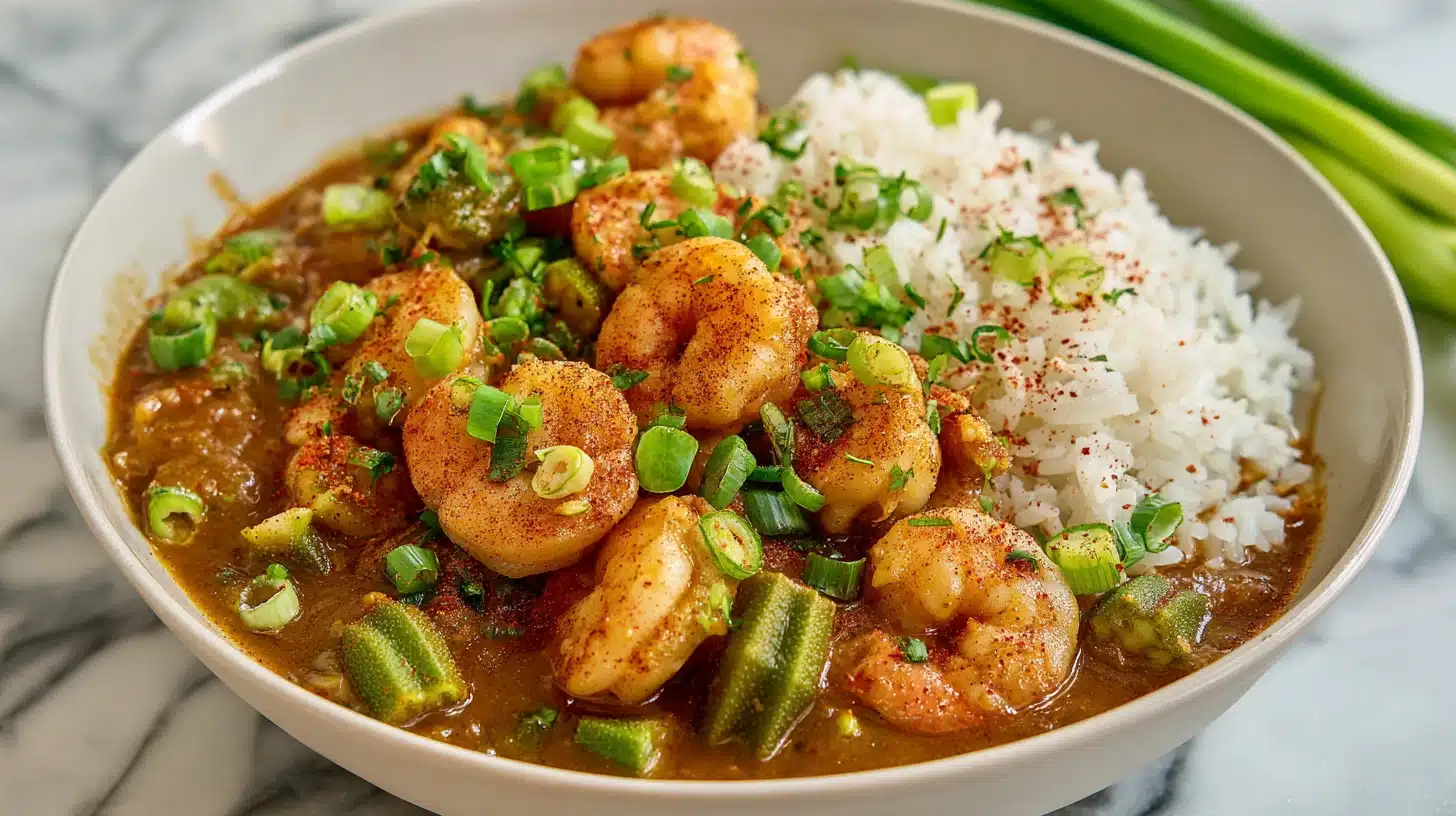
This Cajun shrimp and okra gumbo starts with a deep chocolate roux, builds through the holy trinity of onion, celery, and bell pepper, and finishes with plump shrimp and silky smothered okra. It is rich, bold, and exactly what a proper Louisiana gumbo should taste like. Serve it over white rice with crusty bread for a complete meal.
Ingredients
For the roux:
1/2 cup vegetable oil
1/2 cup all-purpose flour
For the gumbo base:
1 large white onion (finely diced)
3 stalks celery (finely diced)
1 large green bell pepper (finely diced)
1 large red bell pepper (finely diced)
4 cloves garlic (minced)
1/2 cup crushed tomatoes
For the liquid and seasoning:
6 cups shrimp stock or seafood stock
2 bay leaves
1 teaspoon smoked paprika
1 teaspoon dried thyme
1/2 teaspoon cayenne pepper
1 teaspoon salt (plus more to taste)
1/2 teaspoon black pepper
For the okra:
1 lb fresh okra (sliced into 1/2-inch rounds)
1 tablespoon vegetable oil
1 tablespoon apple cider vinegar
For the shrimp and serving:
1 1/2 lbs large raw shrimp (peeled and deveined, tails off)
4 cups cooked white rice
4 scallions (thinly sliced, for garnish)
1/2 teaspoon smoked paprika (for garnish)
Instructions
1. Make the roux: Heat the vegetable oil in a large heavy Dutch oven over medium heat. Add the flour and stir constantly with a wooden spoon or flat spatula. Cook for 30 to 45 minutes, stirring the entire time, until the roux reaches a deep chocolate-brown color and smells nutty. Keep the heat at medium to medium-low and do not stop stirring or the roux will burn.
2. Build the base: Immediately add the diced onion, celery, and green and red bell peppers to the hot roux. The vegetables will sizzle loudly and the roux will darken just slightly. Stir for 3 to 4 minutes until the onion is soft and translucent. Add the minced garlic and stir for 1 more minute until fragrant.
3. Add liquid: Pour the shrimp stock into the pot gradually, whisking or stirring constantly to prevent lumps. Add the crushed tomatoes, bay leaves, smoked paprika, thyme, cayenne, salt, and black pepper. Bring the mixture to a gentle boil, then reduce to a low simmer.
4. Simmer the base: Let the gumbo simmer uncovered on low heat for 45 to 60 minutes, stirring occasionally. Taste and adjust salt and cayenne as needed. The broth should be rich, deeply flavored, and lightly thickened from the roux.
5. Smother the okra: While the gumbo simmers, heat 1 tablespoon of oil in a skillet over medium-high heat. Add the sliced okra and cook, stirring frequently, for 10 to 12 minutes until the okra softens and turns a slightly olive shade of green. Add the apple cider vinegar and stir for 2 more minutes. Remove from heat.
6. Add the okra: Stir the smothered okra into the simmering gumbo during the last 20 minutes of cook time. The okra will release its natural thickener into the broth, giving it a silky body.
7. Cook the shrimp: In the final 4 minutes before serving, add the peeled shrimp to the pot in a single layer. Stir once, cover, and let them cook in the residual heat until they are pink and just curled into a loose C-shape. Do not overcook.
8. Finish and serve: Remove the bay leaves. Taste for seasoning and adjust if needed. Scoop cooked white rice into the center of each bowl and ladle the hot gumbo around and over the rice. Garnish with sliced scallions and a pinch of smoked paprika.
Notes
Store gumbo in an airtight container in the refrigerator for up to 4 days, or freeze without the rice for up to 3 months. Reheat gently on the stovetop over medium-low heat, adding a splash of stock if the gumbo has thickened too much.
For the deepest flavor, make a quick shrimp stock by simmering the shrimp shells in 7 cups of water with half an onion, a bay leaf, and a few peppercorns for 20 minutes. Strain before using.
If your roux develops black specks at any point, it has burned. Discard it and start over, as a burned roux will make the entire gumbo taste bitter.
To add andouille sausage, slice it into rounds and brown in a skillet first, then add to the pot along with the stock. File powder can be stirred in off the heat at serving for extra thickening and a traditional earthy flavor.
- Prep Time: 18 min
- Cook Time: 90 min
- Category: Dinner, Main Course
- Method: Stovetop
- Cuisine: American
Nutrition
- Serving Size: 1 bowl with rice
- Calories: 390 kcal
- Sugar: 5 g
- Sodium: 820 mg
- Fat: 16 g
- Saturated Fat: 2 g
- Unsaturated Fat: 12 g
- Trans Fat: 0 g
- Carbohydrates: 38 g
- Fiber: 4 g
- Protein: 26 g
- Cholesterol: 185 mg
The Okra Question: Smothered vs. Raw, and What It Means for Texture
Okra has a reputation problem. Anyone who has bitten into slimy, undercooked okra in a watery stew understands why some cooks avoid it entirely. But in a proper gumbo recipe with okra and shrimp, okra is not optional and it is not the enemy. Treated correctly, it becomes one of the most important elements in the entire bowl.
Okra serves two purposes in gumbo. First, it adds a subtle earthy flavor that rounds out the richness of the roux. Second, it releases a natural thickener called mucilage as it cooks, which gives Louisiana shrimp gumbo that characteristic body you cannot achieve with stock alone.
The smothered okra technique
The fix for sliminess is heat and acid. Smothering the okra before adding it to the pot breaks down the mucilage compounds that cause the texture problem, so by the time the okra hits your gumbo, it thickens without glooping.
Here is how to do it:
- Slice fresh okra into half-inch rounds. Frozen okra works in a pinch but fresh gives cleaner texture.
- Heat a separate skillet over medium-high heat with a tablespoon of oil or butter.
- Add the okra and cook, stirring frequently, for 10 to 12 minutes. You want it to go from bright green to a slightly olive, softer shade.
- Add a splash of apple cider vinegar or a squeeze of lemon juice in the last two minutes. The acid neutralizes the slime-producing compounds quickly.
- Transfer the smothered okra directly into your simmering gumbo base about 20 minutes before serving.
By the time your okra gumbo with shrimp is ready to bowl up, the pods will be tender and silky rather than stringy or gluey. They will have disappeared into the broth just enough to thicken it without turning it paste-like.
If you are curious about other ways okra shows up in global cooking, this okra salad recipe with japanese flavors is a genuinely surprising and delicious detour.
One more note on okra: size matters. Smaller pods, under three inches, are more tender and less fibrous than large ones. If you can only find large okra, remove the tough tip and give the pieces a slightly shorter cook in the skillet since they will continue to break down in the gumbo pot.
Building the Gumbo: Stock, Seasoning, and the Shrimp Timing Secret
Once your roux is ready and your holy trinity has softened into it, the gumbo starts to come together quickly. This section is about the layers that build flavor from the inside out, and the one timing rule that prevents rubbery shrimp every time.
The stock makes or breaks your gumbo
Water is not stock. This sounds obvious, but it is the single biggest shortcut that flattens a gumbo’s flavor. For this Cajun shrimp gumbo, use seafood stock or shrimp stock. Chicken stock works as a backup, but shrimp stock carries a natural sweetness and depth of the sea that ties directly to the shrimp you are adding later.
You can make a quick shrimp stock in 20 minutes from the shells of your peeled shrimp: simmer the shells in water with half an onion, a bay leaf, and a few peppercorns. Strain and use. It takes almost no effort and makes a noticeable difference.
Add the stock gradually, whisking or stirring constantly as you pour it into the roux-vegetable base. This prevents lumps and ensures the roux dissolves evenly into the liquid. You are building an emulsion, essentially, between fat, flour, and liquid.
Seasoning with depth
Cajun gumbo seasoning is not just cayenne. The spice profile here includes:
- 1 teaspoon smoked paprika
- 1 teaspoon dried thyme
- Half a teaspoon cayenne pepper (more if you want genuine heat)
- 2 bay leaves
- Salt and black pepper to taste
- 4 cloves garlic, minced, added with the holy trinity
- Half a cup of crushed tomatoes (optional, more Creole than Cajun, but adds a beautiful acidity)
Simmer the gumbo base for 45 to 60 minutes on low heat after adding the stock. This is where the flavors marry and the roux fully thickens the liquid. Taste as you go and adjust cayenne and salt gradually.
The shrimp timing rule
Here is the rule that every seafood gumbo with okra recipe lives or dies by: shrimp go in last and they only need 3 to 5 minutes.
Large shrimp, peeled and deveined, turn pink and just curl into a loose C-shape when they are done. If they curl into a tight O, they are overcooked. Add them to the simmering pot in the final five minutes before serving, stir once, put the lid on, and let the residual heat do the work. Remove the bay leaves, taste for seasoning, and serve immediately over white rice.
For another great shrimp preparation that celebrates similar bold flavors, the old bay shrimp boil recipe is a crowd-pleasing companion to keep in your back pocket.
Serving, Storing, and Customizing Your Okra Gumbo with Shrimp
A bowl of gumbo recipe with okra and shrimp deserves to be served properly. Presentation might feel secondary to flavor, but the way gumbo lands in a bowl affects how you experience every bite.
How to serve gumbo the right way
Always cook your white rice separately and scoop it into the center of each bowl. Then ladle the hot gumbo around and over the rice, not the other way around. The rice should stay slightly proud in the middle so each spoonful can carry the right ratio of rich broth, tender shrimp, and silky okra.
Garnish with:
- Thinly sliced scallions
- A pinch of fresh thyme leaves
- A light dusting of smoked paprika
- A few drops of hot sauce on the rim of the bowl for those who want it
Serve with thick slices of crusty French bread or cornbread to mop up every last drop of that dark, aromatic broth. Do not skip the bread.
Storing and reheating
Gumbo stores beautifully, which is one of the many reasons it became a staple of Louisiana home cooking. Store the gumbo and the rice separately in airtight containers.
- Refrigerator: up to 4 days.
- Freezer: up to 3 months. Freeze without the rice.
Reheat gently on the stovetop over medium-low heat, adding a splash of stock or water if the gumbo has thickened too much overnight (the roux continues to absorb liquid as it cools). Do not boil. Add a fresh handful of shrimp if you want to perk up leftovers.
Customization options
This easy shrimp okra gumbo is a generous recipe that accepts substitutions without complaint:
- Add andouille sausage: Slice and brown it separately first, then add to the pot with the stock. It adds smokiness and a savory richness that makes the gumbo even more substantial.
- Add crab: Blue crab clusters or crab claws dropped in during the last 10 minutes of simmering turn this into a full seafood celebration.
- Make it spicier: Double the cayenne or add a whole Scotch bonnet to the simmering pot, then remove it before serving.
- Make it lighter: Swap butter for olive oil in the roux and use a clear seafood stock rather than a richer homemade version.
| Add-In | When to Add | Effect |
|---|---|---|
| Andouille sausage | With the stock | Smoky, savory depth |
| Crab clusters | Last 10 minutes | Seafood richness |
| File powder | Off heat, at serving | Extra thickening, earthy flavor |
| Hot sauce | At the table | Heat without affecting base |
| Corn on the cob | With the stock | Sweetness, visual impact |
File powder, made from ground sassafras leaves, is a traditional Cajun thickener. Add a pinch at the very end, off the heat, and never while the pot is boiling or it turns stringy.
Frequently Asked Questions
Does okra need to be cooked before adding to gumbo?
Yes, and it makes a significant difference. Pre-cooking, or “smothering,” okra in a hot skillet before adding it to the gumbo reduces the slimy texture that puts many people off. Cook sliced okra in a little oil over medium-high heat for 10 to 12 minutes, add a splash of vinegar in the last two minutes, then transfer it to your pot. This step takes the slime out entirely while preserving the thickening properties okra naturally brings to the broth.
What is the secret to good gumbo?
The roux. A dark, properly developed roux cooked to a rich chocolate brown over steady, patient heat is what separates a deeply flavored, complex gumbo from a watery, flat one. Beyond the roux, the secret is time: letting the gumbo simmer low and slow for 45 to 60 minutes after adding the stock allows the flavors to blend and deepen in a way that shorter cooking simply cannot replicate. Quality shrimp stock instead of plain water is another factor that home cooks often overlook.
What’s that one thing Cajuns don’t put in their gumbo?
Tomatoes. Traditional Cajun gumbo relies on a dark roux and the holy trinity of onion, celery, and bell pepper as its flavor foundation, and most Cajun cooks would tell you that tomatoes belong in Creole gumbo, not theirs. Creole gumbo, which developed in New Orleans and reflects more French and Spanish culinary influence, often includes crushed or diced tomatoes. Both versions are delicious, but if you want to cook in the Cajun tradition, leave the tomatoes out and let the roux carry the flavor.
What are some common mistakes to avoid when making shrimp gumbo?
The biggest mistakes are burning the roux, adding shrimp too early, and using water instead of stock. A burned roux cannot be rescued and will make the entire pot taste bitter, so keep the heat medium to medium-low and stir constantly. Shrimp added too early become rubbery and tough, so hold them until the final 3 to 5 minutes of cooking. Using plain water instead of a good seafood or shrimp stock will leave the broth flat no matter how long you simmer it, so take the extra 20 minutes to make a quick shrimp shell stock from the peels.
Conclusion
This gumbo recipe with okra and shrimp is the kind of dish that rewards patience. The dark roux you build by staying at the stove and stirring, the smothered okra that thickens the broth without any sliminess, and the shrimp dropped in at the very last moment all come together into something that tastes far greater than the sum of its parts. You started with a memory of watching someone cook this right, and now you have the tools to make that memory your own.
Give this a try on a Sunday when you have time to enjoy the process. Set a pot of rice and let the gumbo do what Louisiana cooking always does: fill your kitchen with a smell that pulls everyone to the table.
For more recipes like this gumbo recipe with okra and shrimp, follow us on Facebook and Pinterest for soul-warming Southern dinner ideas.
Love okra? Browse all 25 easy okra recipes in one place, or try smothered okra and shrimp and quick okra soup next.