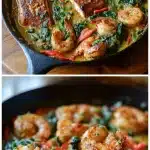
The first time I made Cajun shrimp and salmon with garlic cream, I expected a weeknight compromise. What I got was a dinner that tasted like I’d paid for it, ready in twenty-five minutes.

Seafood at home usually means rubbery shrimp, chalky salmon, or a cream sauce that breaks into oily puddles. This recipe solves all three by searing proteins fast and building the sauce in the same pan.
Inside: how to layer Cajun seasoning without overpowering the seafood, the trick for a smooth garlic cream that never breaks, and why Monterey Jack melts better than cheddar here.
Table of Contents
Why This Skillet Dinner Works
Most home cooks treat salmon and shrimp as two separate projects. You sear the fish, you saute the shrimp, you make a sauce in a third pan, and by the time everything lands on the plate the first component is cold. Cajun shrimp and salmon with garlic cream skips that whole dance by using one large skillet for everything, timing the proteins so they finish within minutes of each other, and building the sauce directly in the fond left behind.
The fond matters more than people think. When you sear salmon skinless-side down in a hot skillet, the Maillard reaction deposits a layer of browned proteins and rendered fat on the pan surface. That layer is pure flavor. If you wash the pan or switch to a clean one, you throw it away. By deglazing with heavy cream right in the same skillet, you dissolve that fond into the sauce, turning what would be scrubbed away into the backbone of your garlic cream.
The Cajun seasoning does double duty here. Applied dry to the salmon and shrimp before searing, it forms a crust that locks in moisture and adds a paprika-rich color to the exterior. When the cream hits the pan, it picks up residual seasoning from the surface, so the sauce carries the same smoky heat without needing a second dose of spice. If you have ever made our garlic brown sugar salmon, you know how well salmon handles bold seasoning. The same principle applies here, just with a Cajun kick instead of sweet.
The garlic cream itself is built on a simple ratio: heavy cream reduced briefly, then enriched with two cheeses. Parmesan adds salt and umami depth. Monterey Jack contributes meltability and mildness, balancing the Cajun heat without competing with it. Cheddar would work, but its sharper flavor fights the spice and its lower moisture content makes the sauce grainy. Monterey Jack melts into smooth, stretchy strands that coat each piece of seafood evenly. I learned this the hard way after one too many gritty cheddar sauces.
Spinach and red bell pepper round out the dish with color and freshness. The bell pepper softens in the butter and garlic base, releasing sweetness that tempers the Cajun seasoning. The spinach goes in at the very end, wilting in the residual heat of the sauce so it keeps its bright green color instead of turning dark and slimy. A squeeze of lemon at the finish cuts through the richness and wakes up every flavor on the plate.
The sear gives you texture. The fond gives you depth. The cream ties it all together.
Print
Cajun Shrimp and Salmon with Garlic Cream (25-Minute Skillet)
- Total Time: 25 min
- Yield: 4 servings 1x
Description
Pan-seared salmon fillets and jumbo shrimp in a spicy Cajun garlic cream sauce with melted Monterey Jack, Parmesan, wilted spinach, and red bell pepper. Ready in twenty-five minutes from one skillet.
Ingredients
For the seafood:
4 salmon fillets (skinless, about 6 ounces each)
1 lb jumbo shrimp (peeled and deveined, raw)
2 tbsp Cajun seasoning
1 tsp kosher salt
1 tbsp avocado oil
For the garlic cream sauce:
2 tbsp butter
6 cloves garlic (minced)
1 red bell pepper (sliced into strips)
1 cup heavy cream
1/2 cup Parmesan cheese (grated fresh)
1/2 cup Monterey Jack cheese (shredded fresh)
2 cups fresh spinach
1 lemon (juiced)
2 tbsp fresh parsley (chopped)
Instructions
1. Pat the salmon fillets and shrimp completely dry with paper towels. Sprinkle Cajun seasoning and kosher salt evenly over both sides of the salmon and over the shrimp. Let sit at room temperature while you prep the remaining ingredients.
2. Heat a large cast iron skillet over medium-high heat with avocado oil until the oil shimmers. Place salmon fillets in the skillet with space between them and sear undisturbed for 4 minutes until a golden crust forms. Flip and cook 3 more minutes for medium doneness. Transfer to a plate and tent loosely with foil.
3. Add the shrimp to the same skillet in a single layer. Sear 2 minutes per side until pink and curled into loose C shapes. Transfer to the plate with the salmon.
4. Reduce heat to medium. Add butter to the skillet and let it melt. Add minced garlic and stir for 30 seconds until fragrant. Add sliced red bell pepper and saute 2 minutes until the edges soften and blister slightly.
5. Pour in heavy cream and use a wooden spoon to scrape up all the browned fond from the bottom of the pan. Simmer 2 minutes until the cream reduces slightly and coats the back of a spoon.
6. Sprinkle in Parmesan and Monterey Jack a handful at a time, stirring constantly until fully melted and the sauce is smooth and glossy, about 1 minute.
7. Add fresh spinach by the handful, stirring until each batch wilts before adding more, about 1 minute total. Squeeze in lemon juice and stir to combine.
8. Nestle the salmon and shrimp back into the skillet. Spoon sauce over the top and cook 1 minute just to warm through. Garnish with chopped parsley and serve directly from the skillet.
Notes
Store in an airtight container in the refrigerator for up to 3 days. Reheat gently over low heat in a skillet with a splash of water or cream. Do not microwave on high because the cream will separate and the salmon will overcook.
This dish does not freeze well because the cream sauce breaks when thawed.
Substitute cod, halibut, or sea scallops for the salmon. All cook in a similar time frame.
Taste your Cajun seasoning before using. If it is very salty, reduce to 1.5 tablespoons. For more heat, add 1/4 tsp cayenne.
- Prep Time: 10 min
- Cook Time: 15 min
- Category: Main Course
- Method: Stovetop
- Cuisine: American
Nutrition
- Serving Size: 1 salmon fillet and 4 oz shrimp with sauce
- Calories: 520 kcal
- Sugar: 3 g
- Sodium: 890 mg
- Fat: 34 g
- Saturated Fat: 16 g
- Unsaturated Fat: 15 g
- Trans Fat: 0 g
- Carbohydrates: 8 g
- Fiber: 2 g
- Protein: 42 g
- Cholesterol: 210 mg
Ingredients for Creamy Cajun Seafood
The ingredient list for Cajun shrimp and salmon with garlic cream is short on purpose. Every item earns its spot. Here is what you need and why each one matters.
Salmon fillets. Use skinless salmon fillets, about six ounces each, cut into four portions. Skinless is important because the skin would stick to the skillet and tear when you flip, leaving chunks behind that burn in the cream sauce. Look for fillets that are even in thickness so they cook at the same rate. Wild-caught sockeye has a firmer texture and deeper flavor, but farmed Atlantic salmon works well too and tends to stay moister.
Raw shrimp. You want large or jumbo shrimp, peeled and deveined, about one pound total. Fresh is ideal, but thawed frozen works fine as long as you pat the shrimp completely dry before seasoning. Wet shrimp will steam instead of sear, and that means no crust. If you have made our lemon garlic butter shrimp before, you already know the difference a good sear makes.
Cajun seasoning. Two tablespoons of a quality Cajun blend coats all the seafood and seasons the sauce. Store-bought blends vary widely in salt and heat, so taste yours first. If it is very salty, cut back to one and a half tablespoons. If you want more control, make your own with paprika, cayenne, garlic powder, onion powder, oregano, and thyme.
Heavy cream. One cup of heavy cream is the base of the garlic cream sauce. Do not substitute half-and-half or milk. Both have lower fat content and will curdle when they hit the hot pan with acidic Cajun seasoning. Heavy cream has enough fat to stay smooth and silky even at a rolling simmer.
Garlic. Six cloves, minced fine. This sounds like a lot, but the garlic mellows as it cooks in butter and infuses the cream. If you use pre-minced jarred garlic, use about three tablespoons. Fresh is better because the volatile oils that give garlic its punch dissipate quickly after mincing, and jarred garlic has already lost most of them.
Parmesan and Monterey Jack. Half a cup of each, grated fresh. Pre-shredded cheeses are coated with anti-caking agents that make sauces gritty. Grating your own takes two minutes and makes a noticeable difference in texture. The Parmesan adds salty umami. The Monterey Jack melts smooth and mild.
Spinach, red bell pepper, lemon, and avocado oil. Two cups of fresh spinach, one sliced red bell pepper, one lemon juiced, and one tablespoon of avocado oil for searing. Avocado oil has a high smoke point, which means it will not burn when you sear the salmon at medium-high heat. Olive oil works but smokes more. Butter comes later, for the aromatics.
Cooking the Cajun Salmon Shrimp Skillet
The cooking process for Cajun shrimp and salmon with garlic cream moves fast, so have everything prepped before you turn on the stove. Mince the garlic, slice the bell pepper, grate the cheeses, and juice the lemon. Once you start cooking, you will not have time to chop.
Start by patting the salmon fillets and shrimp dry with paper towels. Moisture is the enemy of a good sear. Sprinkle the Cajun seasoning and a teaspoon of kosher salt evenly over both sides of the salmon and over the shrimp. Let them sit at room temperature while the skillet heats up. This takes about five minutes and helps the proteins cook more evenly.
Heat a large skillet, cast iron if you have one, over medium-high heat with a tablespoon of avocado oil. When the oil shimmers and just begins to smoke, place the salmon fillets in the pan, leaving space between them. Do not touch them for four minutes. You want a deep golden crust on the bottom. Flip and cook three more minutes for medium doneness. Transfer the salmon to a plate and tent it loosely with foil.
In the same skillet, add the shrimp in a single layer. Sear two minutes per side until they turn pink and curl into loose C shapes. Overcooked shrimp curl tight and feel rubbery, so pull them as soon as the centers lose their translucency. Transfer to the plate with the salmon.
Reduce the heat to medium. Add two tablespoons of butter to the skillet and let it melt. Add the minced garlic and stir for thirty seconds until you can smell it. Add the sliced red bell pepper and cook two minutes, stirring occasionally, until the edges soften and the slices blister slightly.
Pour in the heavy cream and use a wooden spoon to scrape up every bit of browned fond from the bottom of the pan. This is where the flavor lives. Let the cream simmer for two minutes until it reduces slightly and coats the back of the spoon. Sprinkle in the Parmesan and Monterey Jack a handful at a time, stirring constantly. The sauce should be smooth, glossy, and thick enough to cling to the seafood. If it is too thick, add a splash of water. If you love creamy skillet meals, our creamy cajun garlic pasta uses a similar technique you can apply here.
Add the spinach by the handful, stirring until each batch wilts before adding more. This takes about a minute total. Squeeze in the lemon juice and stir. The acid brightens the entire sauce and balances the richness of the cream.
Nestle the salmon and shrimp back into the skillet, spooning sauce over the top. Cook one minute, just long enough to warm the seafood through without overcooking it. Garnish with chopped fresh parsley and serve directly from the skillet.
Serving, Storing, and Customizing
Cajun shrimp and salmon with garlic cream is a complete meal on its own, but a few sides make it better. Crusty bread is the obvious choice because the garlic cream sauce begs to be soaked up. A warm baguette or garlic bread works perfectly. If you want something lighter, serve it over steamed white rice, cauliflower rice, or cooked pasta. Linguine tossed directly in the sauce picks up every bit of flavor.
For a low-carb plate, spoon the seafood and sauce over a bed of zucchini noodles or alongside a simple green salad with vinaigrette. The acidity of the dressing complements the richness of the cream sauce. Roasted asparagus or steamed green beans add color and crunch without competing with the main dish. You can see how we pair salmon with vegetables in our sheet pan salmon and veggies guide, which offers ideas that work alongside this skillet recipe.
Leftovers keep in an airtight container in the refrigerator for up to three days. The cream sauce will thicken as it chills, so reheat gently over low heat on the stove, adding a splash of water or cream to loosen it. Do not microwave on high because the cream will separate and the salmon will overcook. This dish does not freeze well because the cream sauce breaks when thawed.
You can swap the salmon for cod, halibut, or sea scallops if you prefer. All three cook in roughly the same time frame. For a spicier version, add a quarter teaspoon of cayenne to the Cajun seasoning or stir in diced jalapeno with the bell pepper. If you want to stretch the meal, add a cup of cooked andouille sausage slices when you saute the bell pepper. The sausage renders fat that deepens the sauce and makes the whole thing taste like a Cajun stew.
If heavy cream is too rich for your taste, substitute full-fat coconut milk. The texture is slightly thinner, and the coconut adds a subtle sweetness that works well with Cajun spice. Use nutritional yeast instead of Parmesan and skip the Monterey Jack, stirring in a tablespoon of cornstarch slurry to thicken the sauce.
You can season the salmon and shrimp up to eight hours ahead and keep them covered in the refrigerator. Chop the garlic, slice the bell pepper, and grate the cheese in advance. When dinner time arrives, the actual cooking takes only fifteen minutes. That makes this one of the fastest from-scratch seafood dinners you can pull off on a weeknight.
Frequently Asked Questions
Can I use other kinds of seafood instead of salmon and shrimp?
Yes. Cod, halibut, sea scallops, and even lobster tails all work in this recipe. Choose proteins that cook in roughly the same time frame, about four minutes per side for fillets and two minutes per side for scallops or shrimp. Avoid delicate fish like flounder because it falls apart in the cream sauce. Whatever you choose, pat it dry before seasoning for the best sear.
Can I make Cajun salmon and shrimp ahead of time?
You can prep the components ahead but cook the dish fresh. Season the seafood and store it covered in the refrigerator for up to eight hours. Chop the garlic, slice the bell pepper, and grate the cheese in advance. The cream sauce is best made right before serving because it thickens and loses its silky texture when reheated. If you must reheat, do it over low heat with a splash of cream.
How do I prevent the salmon from drying out?
Three things keep salmon moist. First, do not overcook it. Four minutes per side in a hot skillet gives you medium doneness with a slightly translucent center. Second, let the fillets rest on a plate tented with foil while you cook the shrimp and build the sauce. The residual heat finishes cooking the centers gently. Third, return the salmon to the sauce only for one minute at the end, just to warm it through.
What type of shrimp should I use?
Use large or jumbo raw shrimp, size 16 to 20 per pound, peeled and deveined. Fresh shrimp from a fish counter is ideal, but thawed frozen shrimp works well too. Avoid pre-cooked shrimp because they will overcook and turn rubbery when you sear them. If using frozen, thaw overnight in the refrigerator or under cold running water, then pat completely dry before seasoning. The drier the shrimp, the better the crust.
Conclusion
One pan builds the sear, the sauce, and the finish. Every bite carries smoky Cajun heat wrapped in silky garlic cream, and you spent twenty-five minutes on it.
Give it a try this week and serve it straight from the skillet with crusty bread or over steamed rice.
For more recipes like Cajun shrimp and salmon with garlic cream, follow us on Facebook and Pinterest for weeknight dinner ideas.