Peach Caprese Chicken with Balsamic Glaze is the recipe that convinced me summer fruit belongs on savory dinner plates, not just in a fruit bowl on the counter.
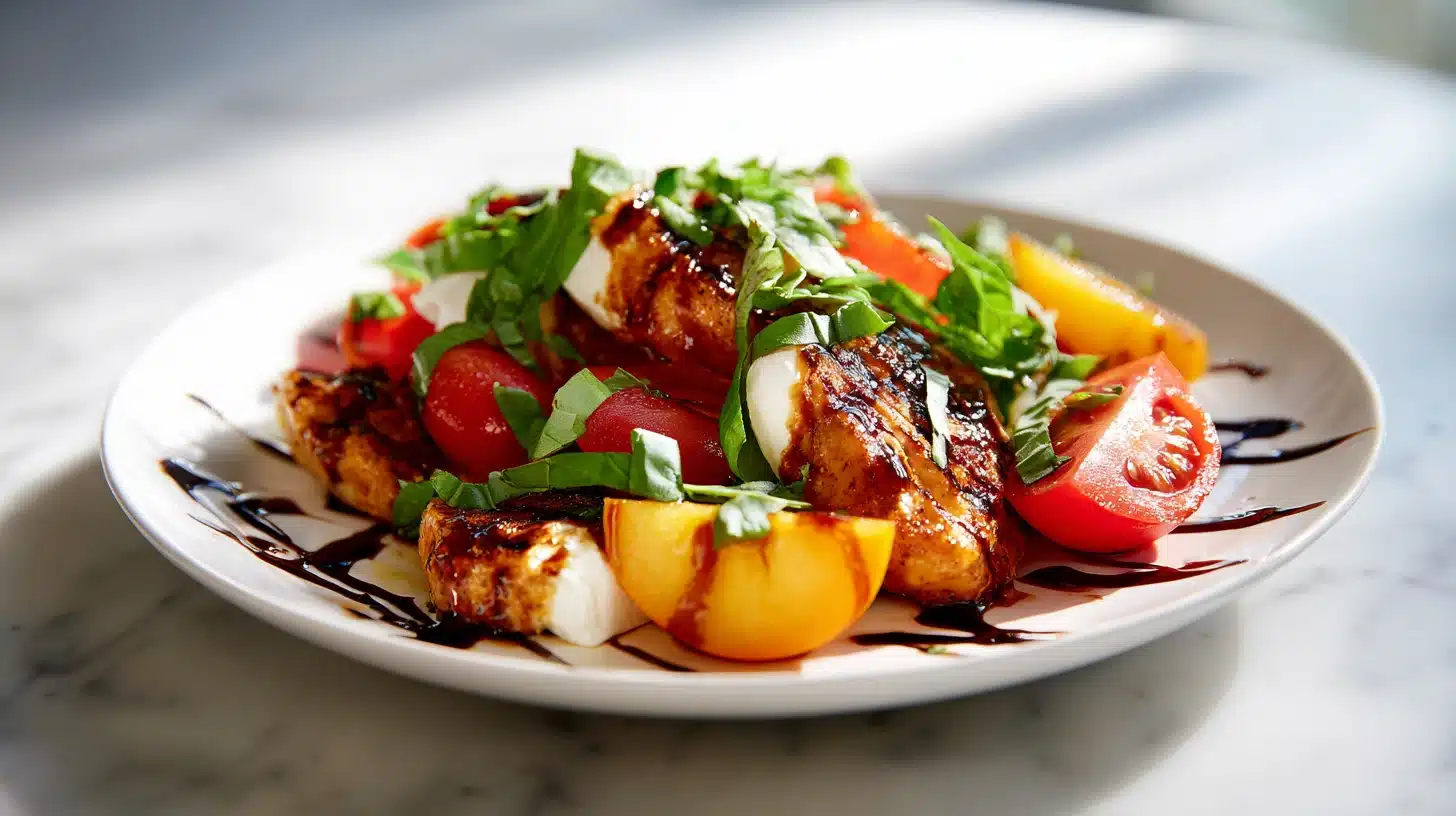
Most weeknight chicken dinners are bone-dry by the time they hit the table, or they look so plain that nobody gets excited to eat them. This recipe keeps the meat juicy by tucking fresh peach slices and mozzarella directly inside slits in the breast, so every bite steams from the inside out.
Inside: the exact hasselback cutting technique that makes this work, tips for choosing the right peaches, and a quick balsamic glaze you can pull together while the chicken rests.
Table of Contents
Why This Recipe Works: The Science Behind Juicy Hasselback Chicken
The hasselback technique is usually associated with potatoes, but it’s one of the smartest moves you can make with a chicken breast. Instead of slicing the breast in half and pounding it flat, you cut a series of deep, evenly spaced slits across the top of the meat, stopping just before you cut all the way through. Those pockets do three important things.
The Pockets Keep the Chicken Moist
First, tucking fresh peach slices into each slit introduces natural juice directly into the interior of the breast as it cooks. Peaches are about 89 percent water. When heat hits those slices, they release that liquid slowly into the surrounding meat rather than letting it evaporate off a flat surface. The result is a chicken breast that still has a slightly firm bite on the outside but stays soft and moist through the center.
Second, the slices of fresh mozzarella placed into those same pockets melt downward through the meat rather than pooling on top. Cheese that melts inward creates pockets of richness throughout the entire bite. Cheese that melts outward just runs off the pan.
Third, the balsamic glaze has more surface area to cling to because of all those ridges. A flat chicken breast gives the glaze maybe one inch of surface contact per bite. A hasselback breast gives it contact on five or six angled cuts per inch of meat.
The Right Peach Makes a Difference
You want peaches that are ripe but still firm, the kind that yield slightly when you press the shoulder near the stem but do not feel mushy. A mushy peach will fall apart when you slice it thin and will turn to jam inside the chicken before it finishes cooking. A completely unripe peach will stay hard and chalky throughout the cook time.
If you cannot find great fresh peaches, canned peaches in juice (not syrup) work reasonably well. Pat them very dry before using them, and reduce the balsamic glaze a little longer since canned peaches release more liquid.
The caprese combination of mozzarella, fresh basil, and tomato is a classic for good reason. If you love playing with that trio in different formats, caprese mozzarella bruschetta is another great summer application worth bookmarking.
Why Balsamic Glaze and Not Raw Balsamic Vinegar
Raw balsamic vinegar is too sharp and acidic to pour straight over chicken. Reducing it over heat concentrates the natural grape sugars and mellows the acidity, turning a thin sour liquid into a syrupy, dark, complex glaze that smells faintly of molasses and berries. You will know your glaze is ready when it coats the back of a spoon and a line you draw through it holds its shape for a few seconds before slowly closing.
Print
Peach Caprese Chicken with Balsamic Glaze (Ready in 35 Minutes)
- Total Time: 35 min
- Yield: 4 servings 1x
Description
Peach Caprese Chicken with Balsamic Glaze is a quick summer dinner made with hasselback chicken breasts stuffed with fresh peach slices, mozzarella, and cherry tomatoes, then roasted until golden and finished with a sweet balsamic reduction. The whole recipe takes 35 minutes from start to table. It works in a skillet or on a baking sheet and is easy enough for a weeknight.
Ingredients
For the chicken:
4 boneless, skinless chicken breasts (6 to 8 ounces each)
2 tablespoons olive oil
3 cloves garlic (minced)
1 teaspoon sea salt
1/2 teaspoon black pepper
1/2 teaspoon dried Italian seasoning
For the filling:
2 medium fresh peaches (ripe but firm, sliced into 1/4-inch rounds)
6 ounces fresh mozzarella (sliced into 1/4-inch rounds)
1/2 cup cherry tomatoes (halved)
1/4 cup fresh basil leaves
For the balsamic glaze:
1/2 cup balsamic vinegar
1 tablespoon honey
Instructions
1. Preheat the oven to 400 degrees F. Line a rimmed baking sheet with parchment paper or lightly oil a large oven-safe skillet. Pat the chicken breasts completely dry with paper towels.
2. Place one chicken breast on a cutting board and cut 5 to 7 deep slits across the top, spacing them about 3/4 inch apart and cutting about two-thirds of the way through the meat. Repeat with all four breasts.
3. Rub each breast all over with olive oil, minced garlic, sea salt, black pepper, and Italian seasoning, pressing the seasoning into the slits.
4. Heat the skillet over medium-high heat with a thin film of olive oil until the oil shimmers. Add the chicken breasts slit-side up and sear for 2 minutes until the bottom is deep golden and releases cleanly from the pan.
5. Tuck alternating slices of fresh peach and mozzarella into each slit in an even, layered pattern. Nestle cherry tomato halves between slits and around the base of each breast.
6. Transfer the skillet to the preheated oven and roast for 18 to 20 minutes, until an instant-read thermometer inserted into the thickest part reads 165 degrees F and the mozzarella is bubbling and turning golden at the edges.
7. While the chicken roasts, combine balsamic vinegar and honey in a small saucepan over medium heat. Simmer without stirring for 8 to 10 minutes until the mixture reduces by half, smells like warm caramel with a fruity edge, and coats the back of a spoon. Remove from heat and let cool slightly.
8. Remove the chicken from the oven and rest for 5 minutes. Drizzle the balsamic glaze generously over each breast, tuck fresh basil leaves into the slits, and serve immediately.
Notes
Store leftovers in an airtight container in the refrigerator for up to 3 days or freeze for up to 2 months. Reheat at 350 degrees F for 10 minutes.
If fresh peaches are not available, use canned peaches in juice, not syrup. Pat them very dry before filling, and reduce the balsamic glaze a little longer since canned peaches release more liquid during cooking.
The hasselback slits can be cut up to 24 hours ahead. Store the prepped chicken covered in the refrigerator and season just before cooking.
The balsamic glaze can be made ahead and stored in a small jar in the refrigerator for up to 1 week. Reheat gently over low heat with a small splash of water if it thickens too much.
- Prep Time: 15 min
- Cook Time: 20 min
- Category: Dinner, Main Course
- Method: Baking, Stovetop
- Cuisine: American
Nutrition
- Serving Size: 1 stuffed chicken breast
- Calories: 410 kcal
- Sugar: 14 g
- Sodium: 620 mg
- Fat: 18 g
- Saturated Fat: 7 g
- Unsaturated Fat: 11 g
- Trans Fat: 0 g
- Carbohydrates: 18 g
- Fiber: 1 g
- Protein: 42 g
- Cholesterol: 115 mg
Ingredients You Need for Peach Caprese Chicken with Balsamic Glaze
Here is the full shopping list, organized so you can grab everything in one pass through the store.
For the chicken:
- 4 boneless, skinless chicken breasts (6 to 8 ounces each)
- 2 tablespoons olive oil
- 3 cloves garlic (minced)
- 1 teaspoon sea salt
- 1/2 teaspoon black pepper
- 1/2 teaspoon dried Italian seasoning
For the filling:
- 2 medium fresh peaches (ripe but firm, sliced into 1/4-inch rounds)
- 6 ounces fresh mozzarella (sliced into 1/4-inch rounds)
- 1/2 cup cherry tomatoes (halved)
- 1/4 cup fresh basil leaves
For the balsamic glaze:
- 1/2 cup balsamic vinegar
- 1 tablespoon honey
A Few Ingredient Notes
Fresh mozzarella is non-negotiable here. The low-moisture block mozzarella you use on pizza does not melt the same way. It gets stretchy rather than creamy, and you lose that milky richness that makes balsamic peach chicken so satisfying. Look for fresh mozzarella packed in water near the deli counter, not the shelf-stable kind.
For the olive oil, use a standard light or pure olive oil for cooking, not an expensive cold-pressed extra virgin bottle. High heat dulls those delicate flavor compounds anyway. Save your fancy bottle for drizzling at the end.
Fresh basil added at the very end, never during cooking. Basil that hits a hot pan for more than thirty seconds turns black and bitter. Add it after the chicken comes out of the oven and the glaze goes on, so it stays bright green and tastes clean and faintly peppery.
If you love the idea of a recipe chicken breast stuffed with different fillings throughout the year, this same hasselback method works beautifully with figs and gorgonzola in fall or roasted red peppers and feta in spring.
How to Make Peach Caprese Chicken with Balsamic Glaze Step by Step
This entire recipe moves from cutting board to table in 35 minutes. Read through the steps once before you start so nothing surprises you at the stove.
Step 1: Preheat and Prep
Preheat your oven to 400°F. Line a rimmed baking sheet with parchment paper or lightly oil a large oven-safe skillet. Both work, but the skillet gives you slightly better caramelization on the bottom of the breast because it retains more heat.
Pat the chicken breasts completely dry with paper towels. This is the single most important step for getting a good sear. Wet chicken steams instead of browning, and you want that golden, slightly crispy exterior before the hasselback filling goes in.
Step 2: Cut the Hasselback Slits
Place one chicken breast flat on a cutting board. Starting at one end, use a sharp knife to cut slits about 3/4 inch apart across the top of the breast, cutting down about two-thirds of the way through the meat. You should end up with five to seven slits depending on the size of the breast. Repeat with all four breasts.
The trick to cutting evenly is to work slowly and use the full length of the blade rather than sawing back and forth. One smooth pull creates a cleaner cut.
Step 3: Season and Sear
Rub the outside of each breast with olive oil, minced garlic, salt, pepper, and Italian seasoning, pressing the seasoning into the slits as well. Heat a large oven-safe skillet over medium-high heat with a thin film of olive oil. When the oil shimmers, add the chicken breasts slit-side up and sear for 2 minutes until the bottom is golden and releases cleanly from the pan.
Step 4: Fill and Roast
Working quickly while the chicken is still in the skillet, tuck alternating slices of peach and mozzarella into each slit. You are looking for a tight, layered pattern: peach, mozzarella, peach, mozzarella. Nestle a few cherry tomato halves between slits and around the base of each breast.
Transfer the skillet to the preheated oven and roast for 18 to 20 minutes, until the internal temperature reads 165°F on an instant-read thermometer and the mozzarella is bubbling and starting to turn golden at the edges.
Step 5: Make the Balsamic Glaze
While the chicken roasts, combine balsamic vinegar and honey in a small saucepan over medium heat. Stir to combine, then let it simmer without stirring for 8 to 10 minutes until it reduces by half and coats the back of a spoon. The kitchen will smell like warm caramel with a sharp, fruity edge. Remove from heat and let it cool slightly. It will thicken more as it cools.
Step 6: Rest, Glaze, and Garnish
Pull the skillet from the oven and let the chicken rest for 5 minutes so the juices redistribute through the meat. Drizzle the balsamic glaze generously over each breast, tuck fresh basil leaves into the slits, and serve immediately.
What to Serve with Peach Caprese Chicken with Balsamic Glaze
The sweet, acidic profile of this dish pairs best with sides that are either neutral and starchy or bright and lightly dressed. You want contrast, not competition.
Starchy Sides That Soak Up the Glaze
- Crusty sourdough bread or a simple ciabatta roll to catch the drippings
- Creamy polenta seasoned with just olive oil and a pinch of sea salt
- Orzo cooked until just tender and tossed with a little butter and lemon zest
- Roasted baby potatoes with rosemary and flaky salt
Any starch that has a mild, slightly buttery flavor will let the balsamic peach chicken stay the star of the plate. Avoid anything with heavy cream sauces or big herb mixtures, since those compete with the basil and balsamic notes.
Fresh and Light Sides
A simple arugula salad dressed with lemon juice and olive oil is one of the best pairings here. The peppery bite of arugula cuts right through the sweetness of the peach and the richness of the mozzarella in a way that a regular romaine salad simply does not.
You could also serve this alongside grilled california avocado chicken as part of a summer dinner spread, though honestly the peach caprese chicken is filling enough to carry a meal entirely on its own.
A simple cucumber and tomato salad with red wine vinegar also works beautifully. If you want to add a little zip to the table, quick pickled red onions recipe gives you a bright, tangy garnish that looks gorgeous scattered over the top of the finished chicken.
Wine and Drink Pairings
- A cold glass of Pinot Grigio or dry Rosé matches the fruit-forward notes without overwhelming them.
- Sparkling water with a squeeze of lemon and a few muddled basil leaves is a lovely alcohol-free option that echoes the herbs in the dish.
- Avoid heavy red wines like Cabernet Sauvignon here. The tannins clash with the sweetness of the peach and make the balsamic glaze taste sharper than it actually is.
Meal Prep and Make-Ahead Notes
You can cut the hasselback slits in the chicken breasts up to 24 hours ahead and store them covered in the refrigerator. Season them just before cooking. The balsamic glaze can also be made ahead and stored in a small jar in the fridge for up to a week. Reheat it gently in a small saucepan over low heat before serving, adding a tiny splash of water if it has thickened too much.
Frequently Asked Questions
How do you make hasselback peach caprese chicken?
To make hasselback peach caprese chicken, cut deep, evenly spaced slits across the top of each chicken breast without cutting all the way through. Tuck thin slices of fresh peach and mozzarella into the slits, season the outside, sear briefly, then roast at 400°F for 18 to 20 minutes. Finish with homemade balsamic glaze and fresh basil right before serving.
What should I serve with oven baked stuffed caprese chicken?
The best sides for oven baked stuffed caprese chicken are neutral and starchy options like creamy polenta, simple orzo, or crusty bread that can soak up the balsamic glaze. Light salads made with arugula, cucumber, or tomato also work well because their acidity balances the sweetness of the peach and the richness of the melted mozzarella.
Can I make this on the grill instead of the oven?
Yes. Grilled peach chicken with this same filling is absolutely delicious. Sear the stuffed chicken breasts over direct medium-high heat for 3 to 4 minutes per side, then move to indirect heat, close the lid, and cook for another 10 to 12 minutes until the internal temperature reaches 165°F. The smoke adds another layer of flavor that works very well with the sweet balsamic glaze.
Can I use frozen peaches for this recipe?
You can use frozen peaches in a pinch, but thaw them completely and pat them very dry before using them. Frozen peaches release significantly more liquid than fresh ones as they cook, which can make the slits in the chicken soggy and dilute the balsamic glaze you drizzle on at the end. Fresh, firm peaches will always give you the best result for skillet peach caprese chicken.
Conclusion
There is something quietly satisfying about a dish that looks like it took much longer than it did. Peach Caprese Chicken with Balsamic Glaze sits right at that sweet spot: impressive enough for a dinner party, fast enough for a Tuesday night, and built on simple, honest ingredients that don’t need much help to taste good.
Give this one a try this week while summer peaches are at their peak. The whole thing comes together in 35 minutes, and the leftovers, if you have any, reheat beautifully in a 350°F oven for about 10 minutes.
For more recipes like Peach Caprese Chicken with Balsamic Glaze, follow us on Facebook and Pinterest for fresh summer dinner ideas all season long.