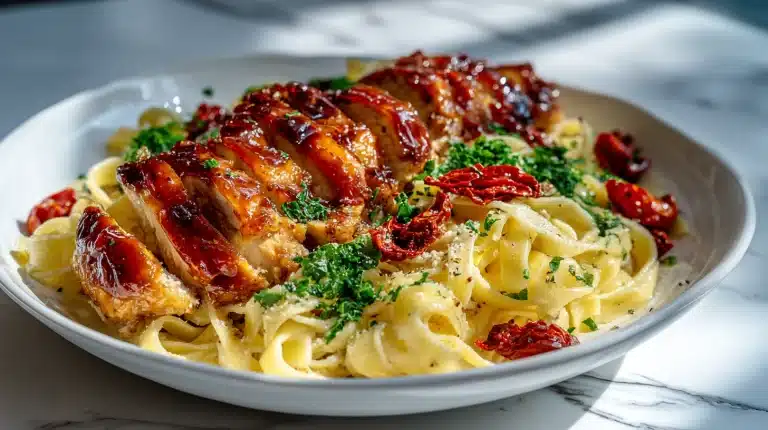
Lemon Chicken Pasta was the first dish I ever made that genuinely tasted like something from a restaurant, right out of my own skillet on a Tuesday night with ingredients I already had.
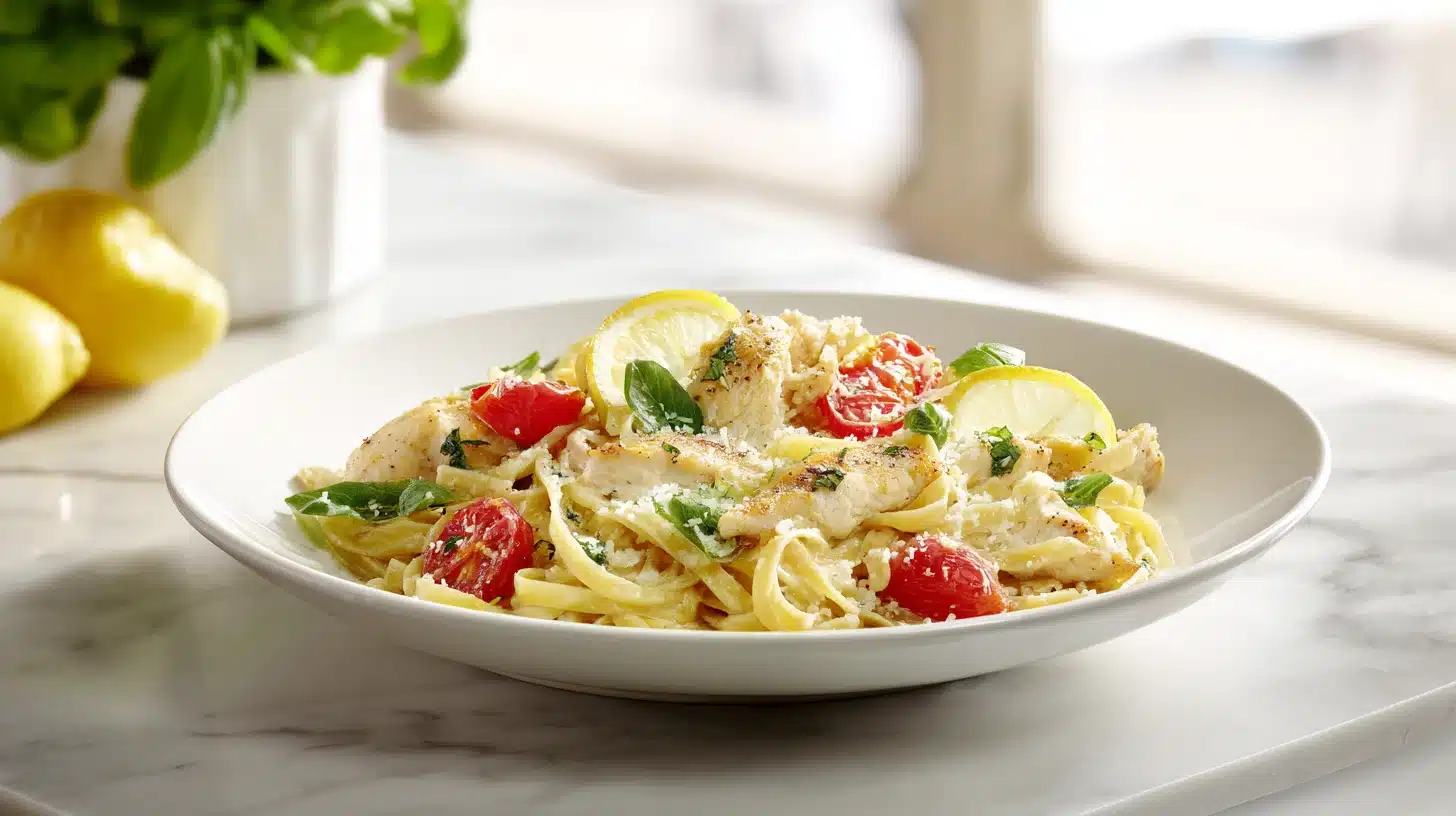
Most creamy pasta recipes leave you with dry, rubbery chicken or a sauce that breaks the second you add anything acidic. This recipe fixes both problems with one simple technique.
Inside: the exact method for keeping your cream sauce smooth when you add lemon, how to get perfectly juicy chicken breast every time, and the optional panko trick that adds a satisfying crunch to every bite.
Table of Contents
Why This Lemon Chicken Pasta Recipe Works So Well
There are dozens of pasta recipes out there promising a creamy, bright, restaurant-quality result. Most of them skip the details that actually make the difference. This one doesn’t.
The sauce science: acid meets cream
The biggest challenge with any creamy lemon chicken pasta is the moment lemon juice hits heavy cream. If your cream is too hot, or if you add the juice too fast, the proteins in the cream seize up and you get a grainy, curdled mess instead of a silky sauce.
The fix is straightforward. You lower the heat to medium-low before adding the cream, let it warm gently rather than boil, and then add the lemon juice in a slow drizzle while stirring constantly. The cream emulsifies instead of curdling. You also add the lemon zest separately at the end, which gives you bright citrus fragrance without adding more acid to an already warm sauce.
Parmesan cheese plays a supporting role here too. Finely grated Parmesan melts smoothly into warm cream because it has a low moisture content. Pre-shredded bags are coated in cellulose, which resists melting and can make your sauce grainy. Buy a wedge and grate it yourself. It takes two extra minutes and the difference is noticeable.
The chicken: juicy every time
Boneless chicken breast is the ingredient most people overcook without realizing it. The window between “just right” and “dry as cardboard” is about two minutes.
Here’s how to stay on the right side of that window. Pound your chicken breasts to an even thickness of about half an inch before cooking. This ensures every part of the breast cooks at the same rate. Season generously with Italian seasoning, garlic powder, salt, and black pepper. Then sear in a combination of butter and olive oil over medium-high heat for about three to four minutes per side. You want a golden crust and an internal temperature of 165°F. Pull them off the heat immediately, let them rest for five minutes on a cutting board, and then slice them against the grain.
That resting step is non-negotiable. Slicing too early sends all the juices running out onto the board instead of staying in the meat.
If you love the idea of even more flavor layered into the chicken before it hits the pasta, check out this one pan garlic butter chicken recipe for technique inspiration.
The pasta: matching shape to sauce
For a creamy lemon garlic chicken pasta, you want a pasta shape with enough surface area to hold onto the sauce. Linguine, fettuccine, and penne all work beautifully. Penne traps sauce inside its tubes. Fettuccine and linguine give you long, ribbon-like bites that feel luxurious. Avoid shapes like farfalle or rotini here because the lighter lemon cream sauce tends to slip right off their ridges.
Cook your pasta in well-salted water (it should taste like mild ocean water) until just al dente. Reserve at least half a cup of pasta water before draining. That starchy water is your safety net for adjusting sauce consistency at the end.
Print
Creamy Lemon Chicken Pasta (Ready in 30 Minutes)
- Total Time: 30 min
- Yield: 4 servings 1x
Description
A creamy, bright pasta dish made with seared chicken breast, fresh lemon juice, lemon zest, garlic, heavy cream, and Parmesan cheese. It comes together in 30 minutes and works well for a weeknight dinner or a casual meal with friends.
Ingredients
For the chicken:
1.5 lbs chicken breast (boneless, skinless, pounded to 1/2 inch thickness)
1 teaspoon Italian seasoning
1/2 teaspoon garlic powder
1/2 teaspoon kosher salt
1/4 teaspoon black pepper
1 tablespoon olive oil
1 tablespoon unsalted butter
For the pasta and sauce:
12 oz linguine or fettuccine
2 tablespoons unsalted butter
5 garlic cloves (minced)
1 cup heavy cream
1/2 cup Parmesan cheese (freshly grated, plus more for serving)
3 tablespoons fresh lemon juice (from about 2 lemons)
1 teaspoon lemon zest
1/4 cup reserved pasta water (plus more as needed)
1/2 teaspoon kosher salt (or to taste)
Optional topping:
1/4 cup panko breadcrumbs (toasted in 1 teaspoon butter until golden)
2 tablespoons fresh flat-leaf parsley (chopped)
Instructions
1. Bring a large pot of heavily salted water to a boil. Cook linguine or fettuccine according to package directions until al dente, about 1 minute less than the package suggests. Before draining, scoop out 1/2 cup of starchy pasta water and set aside. Drain the pasta and toss with a tiny drizzle of olive oil to prevent sticking.
2. Pat chicken breasts dry with paper towels. Season both sides evenly with Italian seasoning, garlic powder, salt, and pepper. Heat 1 tablespoon butter and the olive oil in a large skillet over medium-high heat until the butter foams. The pan should be hot enough that the chicken sizzles loudly when it touches the surface.
3. Add the seasoned chicken and cook undisturbed for 3 to 4 minutes per side until deeply golden and cooked through to an internal temperature of 165 degrees F. Transfer to a cutting board and rest for 5 minutes, then slice against the grain into strips.
4. Without wiping the skillet, reduce heat to medium and add the remaining 2 tablespoons of butter. Once melted, add the minced garlic and stir for about 60 seconds until fragrant and pale gold. You should smell a nutty, savory aroma rising from the pan.
5. Reduce heat to medium-low. Pour in the heavy cream and stir gently to combine. Let it warm for 2 to 3 minutes until small bubbles form at the edges but the cream does not boil. Drizzle in the fresh lemon juice slowly while stirring constantly.
6. Add the grated Parmesan and stir until fully melted and the sauce is smooth and glossy, coating the back of a spoon. Stir in the lemon zest. Taste and adjust salt as needed.
7. Add the drained pasta directly to the skillet and toss to coat, adding reserved pasta water one tablespoon at a time if the sauce is too thick. Arrange the sliced chicken on top.
8. Serve immediately topped with fresh parsley and toasted panko breadcrumbs if using. The sauce thickens as it sits, so eat while hot.
Notes
Store leftovers in an airtight container in the refrigerator for up to 3 days. This recipe is not recommended for freezing as the cream sauce breaks when thawed.
To reheat, warm in a skillet over medium-low heat with 2 tablespoons of chicken broth or water per serving, stirring gently until the sauce loosens and everything is heated through.
For the smoothest sauce, use freshly grated Parmesan from a wedge rather than pre-shredded cheese in a bag. Pre-shredded varieties are coated with cellulose and resist melting cleanly into cream.
If using half-and-half instead of heavy cream, the sauce will be thinner. Add an extra 2 to 3 tablespoons of Parmesan and a little extra lemon zest to compensate for the lighter body.
Bottled lemon juice can be used in place of fresh, but the flavor is noticeably flatter. Start with 2 tablespoons and taste before adding more, as bottled juice tends to be sharper.
- Prep Time: 10 min
- Cook Time: 20 min
- Category: Dinner, Main Course
- Method: Stovetop
- Cuisine: Italian
Nutrition
- Serving Size: 1.5 cups
- Calories: 620 kcal
- Sugar: 3 g
- Sodium: 540 mg
- Fat: 32 g
- Saturated Fat: 17 g
- Unsaturated Fat: 13 g
- Trans Fat: 0 g
- Carbohydrates: 48 g
- Fiber: 2 g
- Protein: 42 g
- Cholesterol: 155 mg
Ingredients You’ll Need
Getting the best lemon chicken pasta recipe starts with quality ingredients. Here is everything you need for four servings, plus a few optional additions that can take the dish in a slightly different direction.
Core ingredients
- 1.5 lbs chicken breast (boneless, skinless, pounded to 1/2 inch thickness)
- 12 oz linguine or fettuccine
- 3 tablespoons unsalted butter (divided)
- 1 tablespoon olive oil
- 5 garlic cloves (minced)
- 1 cup heavy cream
- 1/2 cup Parmesan cheese (freshly grated, plus more for serving)
- 3 tablespoons fresh lemon juice (from about 2 lemons)
- 1 teaspoon lemon zest
- 1 teaspoon Italian seasoning
- 1/2 teaspoon garlic powder
- 1/2 teaspoon kosher salt (plus more to taste)
- 1/4 teaspoon black pepper
- 1/4 cup reserved pasta water
- Fresh flat-leaf parsley (chopped, for garnish)
Optional add-ins
- 1 cup zucchini (sliced into half-moons, sauteed with the garlic)
- 1 cup shiitake or crimini mushrooms (sliced, cooked before the sauce)
- 1/4 cup panko breadcrumbs (toasted in 1 teaspoon butter until golden, sprinkled over the top)
The panko addition deserves a special mention. Toasted panko scattered over the finished plate adds a gentle crunch that plays beautifully against the silky cream sauce. It’s the detail that makes guests ask what the “secret ingredient” is. It takes about ninety seconds in a dry pan over medium heat. Watch it closely because it goes from golden to burnt very quickly.
For a heartier pasta night, the chicken garlic mushroom pasta uses a similar flavor base with even more earthy depth from the mushrooms.
Ingredient swaps to know
| Original Ingredient | Swap | Notes |
|---|---|---|
| Heavy cream | Half-and-half | Sauce will be thinner; add extra Parmesan to compensate |
| Chicken breast | Chicken thighs | Richer flavor, slightly longer cook time |
| Linguine | Penne or rigatoni | Great for a chunkier, scoopable version |
| Fresh lemon juice | Bottled lemon juice | Acceptable, but flavor is noticeably flatter |
| Parmesan | Pecorino Romano | Saltier, sharper, works well in smaller amounts |
Step-by-step instructions
This easy lemon chicken pasta comes together in about thirty minutes when you set up your cooking station before you start. Mise en place (everything prepped and ready before the heat goes on) is what makes this feel effortless rather than frantic.
Step 1: Cook the pasta. Bring a large pot of heavily salted water to a boil. Add your linguine or fettuccine and cook according to package directions until just al dente (one minute less than the package suggests is a good rule). Before draining, scoop out half a cup of the starchy pasta water and set it aside. Drain the pasta and toss it with a tiny drizzle of olive oil so it doesn’t stick.
Step 2: Season and sear the chicken. Pat the chicken breasts dry with paper towels. This is important because moisture on the surface creates steam instead of a sear, and you want that golden crust. Season both sides with Italian seasoning, garlic powder, salt, and pepper. Heat 1 tablespoon of butter and the olive oil in a large skillet over medium-high heat until the butter foams and the foam starts to subside. Add the chicken and cook without moving it for 3 to 4 minutes per side until deeply golden and cooked through to 165°F. The sizzle should be loud and confident when the chicken hits the pan. Transfer to a cutting board and rest for 5 minutes before slicing.
Step 3: Build the garlic base. In the same skillet (don’t wipe it out, those browned bits are flavor), reduce heat to medium and add the remaining 2 tablespoons of butter. Once melted, add the minced garlic and cook, stirring often, for about 60 seconds until fragrant and pale gold. If you’re adding mushrooms or zucchini, add them here and cook for 3 to 4 minutes until softened.
Step 4: Make the lemon cream sauce. Reduce the heat to medium-low. Pour in the heavy cream and stir gently to combine with the garlic butter. Let it warm for 2 to 3 minutes until you see gentle bubbles at the edges but no full boil. Now drizzle in the fresh lemon juice slowly while stirring. Add the Parmesan and stir until fully melted and the sauce coats a spoon with a thin, glossy layer. Stir in the lemon zest. Taste and adjust salt.
Step 5: Combine and finish. Add the drained pasta directly to the skillet and toss to coat. Splash in a little reserved pasta water, a tablespoon at a time, if the sauce feels too thick. Add the sliced chicken on top. Finish with fresh parsley and toasted panko if using. Serve immediately because the sauce continues to thicken as it cools.
The flavors here share DNA with the lemon butter garlic pasta, which is a great reference if you want a chicken-free version of this sauce on busy nights.
Serving, storing, and variations
Serving suggestions
Quick lemon chicken pasta is a complete meal on its own, but a few simple accompaniments make it feel like a full dinner spread.
- A crisp green salad with a light vinaigrette balances the richness of the cream sauce.
- Warm, crusty bread for sauce-mopping is essentially required.
- A glass of cold, dry white wine such as Pinot Grigio or Sauvignon Blanc echoes the lemon notes in the dish and makes the whole thing feel elevated without any extra effort.
- For a vegetable side, roasted asparagus or blistered cherry tomatoes work well. The acidity of the tomatoes is a natural counterpoint to the cream.
Storing leftovers
Creamy lemon chicken pasta stores well in an airtight container in the refrigerator for up to three days. The sauce will thicken considerably as it sits because the pasta absorbs it. That is normal and easy to fix.
To reheat, add the pasta to a skillet over medium-low heat with a splash of chicken broth or water (about two tablespoons per serving). Stir gently until the sauce loosens and the pasta is warmed through. Avoid the microwave if you can because it tends to make the chicken rubbery and can cause the cream sauce to separate. If you must use a microwave, cover the bowl loosely with a damp paper towel and heat in thirty-second intervals, stirring in between.
Freezing is not recommended for this recipe. The cream sauce breaks when frozen and thawed, and the pasta texture suffers.
Easy variations worth trying
Lemon Chicken Alfredo: Add an extra half cup of Parmesan and reduce the lemon juice to two tablespoons for a richer, more classic alfredo-style sauce.
Spicy Lemon Chicken Pasta: Add half a teaspoon of crushed red pepper flakes to the garlic butter step. The heat plays beautifully against the bright lemon.
Light Version: Swap the heavy cream for half-and-half and skip the panko. The sauce will be thinner but still bright and satisfying. Finish with extra lemon zest to keep the flavor punchy.
Meal Prep Version: Cook the chicken and the sauce separately and store them apart from the pasta. Combine when reheating to keep the pasta from absorbing all the sauce before you’re ready to eat.
If you enjoy pasta recipes that layer bold flavors into a creamy base, the creamy garlic parmesan pasta is another weeknight staple worth bookmarking.
Frequently asked questions
Can I make lemon chicken pasta ahead of time?
You can, with a small adjustment. Cook the chicken and sauce up to a day ahead and store them separately from the cooked pasta in the refrigerator. When ready to serve, reheat the sauce in a skillet over medium-low heat, toss in the pasta with a splash of pasta water or chicken broth, and top with the sliced chicken. This keeps the texture much better than storing everything combined.
How do I prevent the alfredo sauce from curdling when adding lemon?
Temperature is the key. Lower your heat to medium-low before adding the heavy cream, let it warm gently without boiling, and then add the lemon juice in a slow, thin drizzle while stirring continuously. Adding acid to cream that is too hot or doing it all at once gives the proteins no time to adjust, which causes curdling. Patience in this one step makes all the difference.
What is the best way to reheat creamy lemon chicken pasta?
A skillet on the stovetop over medium-low heat with a splash of chicken broth or water is your best option. Stir gently as it warms so the sauce re-emulsifies. If you use a microwave, heat in short thirty-second bursts with a damp paper towel over the top and stir between each interval. Avoid high microwave heat because it turns chicken rubbery and can break the sauce.
Can I use bottled lemon juice instead of fresh?
You can use bottled lemon juice in a pinch, but the flavor is noticeably flatter and slightly more acidic in an off way compared to fresh. Bottled juice lacks the volatile compounds that give fresh lemon its bright, floral quality. If you go that route, start with less than the recipe calls for (about two tablespoons instead of three) and taste as you go. The lemon zest, which must come from a fresh lemon regardless, will help compensate for some of the flavor difference.
Conclusion
There is a reason this Lemon Chicken Pasta has become a standing weeknight fixture in my kitchen. It is the kind of recipe that feels special enough for company but is simple enough to pull off on a Thursday when you’re tired and hungry.
Give it a try this week using whatever pasta shape you have on hand. Once you nail the cream sauce technique, you’ll find yourself coming back to it again and again.
For more recipes like this Lemon Chicken Pasta, follow us on Facebook and Pinterest for easy weeknight dinner ideas.