The first time a kimchi pancake landed on my table at a tiny Seoul-style spot in Chicago, I assumed it would taste like a spicy crepe. It tasted like nothing I had ever had before, a crackling, tangy, umami-loaded disc that made me question every boring weeknight dinner I had ever cooked.
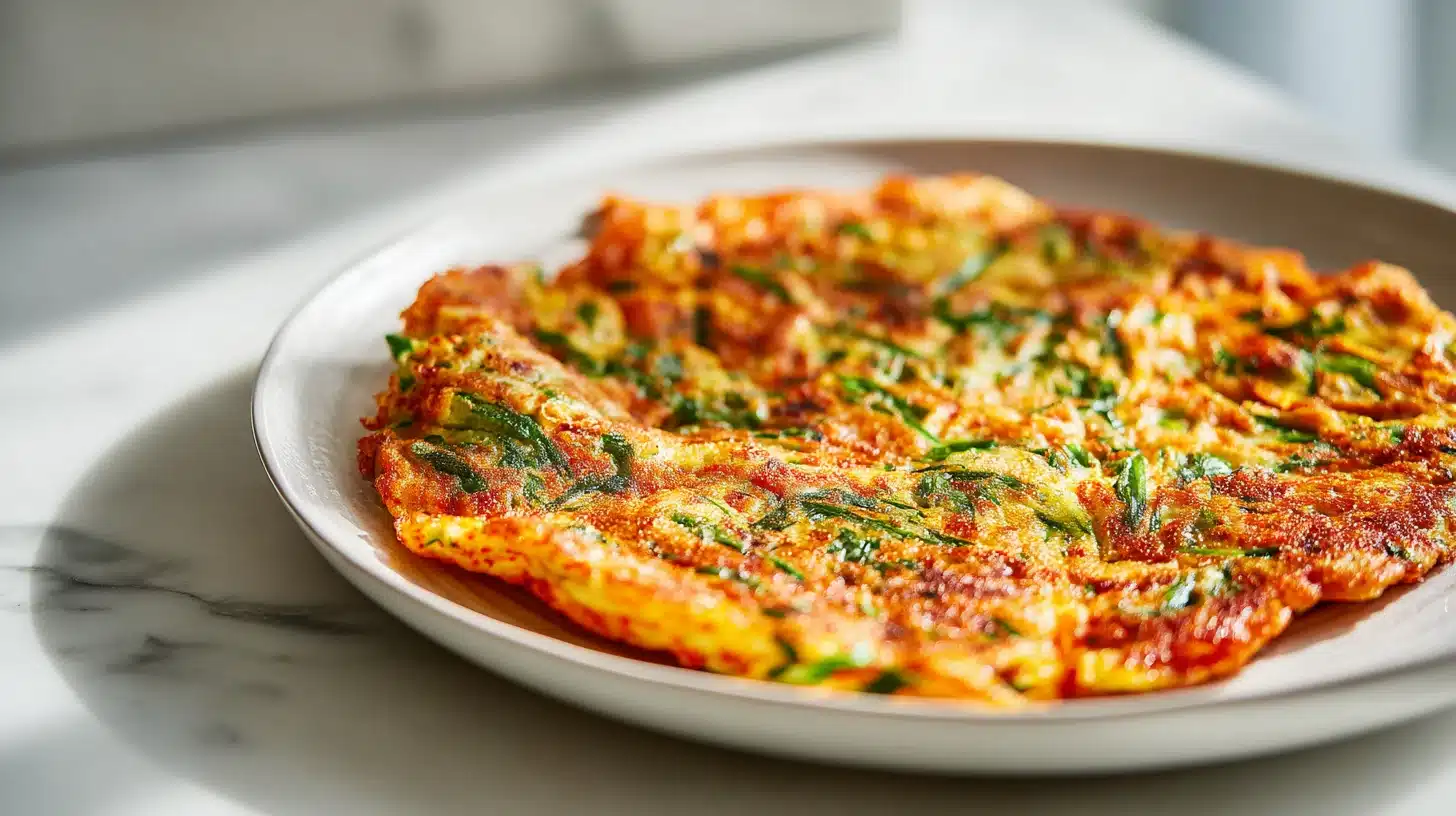
Most homemade versions end up soft and doughy instead of shatteringly crisp, because the batter is too thick and the pan is not hot enough. This recipe fixes both problems with one simple batter ratio and a short rest before the flip.
Inside: the exact flour-to-kimchi ratio that guarantees crunch, a dipping sauce that comes together in two minutes, and the single pan-temperature trick that separates great kimchijeon from a soggy disappointment.
Table of Contents
What Is a Kimchi Pancake and Why Is It Worth Making Tonight?
If you have a jar of kimchi sitting in your fridge right now, you are already most of the way to dinner. The kimchi pancake, known in Korean as kimchijeon or kimchi buchimgae, is one of the most satisfying quick-cook dishes in Korean home cooking. It sits somewhere between a fritter and a flatbread, savory and tangy from fermented cabbage, with crisp lacy edges and a tender, chewy center.
The history behind kimchijeon
Jeon is a broad category of Korean savory pancakes that includes everything from seafood-studded haemul pajeon to the simple green onion version called pajeon. Kimchi jeon, or kimchi buchimgae as it is called in some regions, likely developed as a practical way to use older, more pungent kimchi that had been fermenting for weeks. The sourer the kimchi, the better the flavor. Over-fermented kimchi that you might hesitate to eat on its own becomes the star ingredient once it hits a hot pan.
Why older kimchi makes a better pancake
Fresh kimchi is bright, crunchy, and mildly spicy. Well-fermented kimchi, the stuff that has been sitting in your fridge for three weeks or more, is deeply sour, funky in the best possible way, and packed with complex lactic acid flavors. When it cooks in the pan, that sourness mellows and caramelizes slightly, giving the Korean savory pancake its signature deep, slightly smoky tang. The texture softens as it cooks, so you get tender bites of kimchi distributed throughout the crisp batter.
If your kimchi is on the fresh side, do not worry. Squeeze it well, let the batter rest for five minutes, and you will still get excellent results. But if you have a container of pungent, months-old kimchi, now is its moment.
What you will need (overview)
The ingredient list for a crispy kimchi pancake is short:
- Fermented napa cabbage kimchi (well-drained and roughly chopped)
- All-purpose flour
- Cornstarch (the secret to the crisp crust)
- Cold water
- Egg
- Salt and sugar
- Neutral oil with a high smoke point
No specialty equipment, no hard-to-find pantry items. If you love Korean flavors and want to explore more, check out this kimchi fried rice recipe that uses the same fermented kimchi in a completely different direction.
Print
Kimchi Pancake (Kimchijeon): The Crispiest Korean Savory Pancake You’ll Ever Make
- Total Time: 24 min
- Yield: 4 servings 1x
- Diet: Vegetarian
Description
A crispy Korean savory pancake made with well-fermented kimchi, a light cornstarch batter, and plenty of hot oil. Ready in 24 minutes, it has lacy golden edges, a tender interior, and a tangy soy-sesame dipping sauce on the side.
Ingredients
For the kimchi pancakes:
1 cup (150g) well-fermented napa cabbage kimchi (drained and roughly chopped)
3 tablespoons kimchi brine (reserved from the jar)
3/4 cup (95g) all-purpose flour
2 tablespoons cornstarch
1/2 cup cold water
1 large egg
1 teaspoon sugar
1/4 teaspoon fine salt
3 green onions (thinly sliced)
6 tablespoons neutral oil (vegetable, canola, or avocado), divided
For the dipping sauce:
2 tablespoons soy sauce
1 tablespoon rice vinegar
1 teaspoon toasted sesame oil
1 teaspoon gochugaru (or a pinch of red chili flakes)
1/2 teaspoon sugar
1 teaspoon toasted sesame seeds
Instructions
1. Make the dipping sauce: Combine soy sauce, rice vinegar, sesame oil, gochugaru, sugar, and sesame seeds in a small bowl. Stir well and set aside so the flavors can meld while you cook.
2. Drain the kimchi: Squeeze the chopped kimchi firmly over the sink or in a clean kitchen towel to remove as much liquid as possible. Reserve 3 tablespoons of the brine and set the drained kimchi aside.
3. Mix the batter: In a medium bowl, whisk together the flour, cornstarch, salt, and sugar. Add the cold water, reserved kimchi brine, and egg. Whisk until just combined with a few small lumps remaining. Do not overmix.
4. Add kimchi and green onions: Fold the drained kimchi and sliced green onions into the batter with a spatula until evenly distributed. Rest the batter for 5 minutes.
5. Heat the pan: Heat a 10-inch nonstick or cast iron skillet over medium-high heat. Add 3 tablespoons of neutral oil and let it heat until it shimmers and smells faintly nutty, about 90 seconds.
6. Cook the first pancake: Pour half the batter into the pan and use the back of a spatula to spread it into an even 8-inch round about 1/4 inch thick. Cook undisturbed for 3 to 4 minutes until the edges are opaque and deep golden, and the surface is mostly set.
7. Flip and finish: Slide a wide spatula under the pancake and flip in one confident motion. Cook the second side for 2 to 3 minutes, pressing gently with the spatula, until deep golden brown and the pancake smells of toasted chili and caramelized kimchi.
8. Cook the second pancake: Transfer the first pancake to a cutting board. Add the remaining 3 tablespoons of oil to the pan, let it heat, and repeat with the remaining batter.
9. Slice and serve: Cut each kimchi pancake into wedges or rectangles and serve immediately with the dipping sauce.
Notes
Store leftover pancakes in an airtight container in the refrigerator for up to 3 days or freeze for up to 2 months. Reheat in a dry nonstick pan over medium heat for 2 to 3 minutes per side to restore crispness.
For the crispiest result, use kimchi that has been fermenting for at least 3 weeks. Fresh kimchi will produce a milder, less tangy pancake.
To make this vegan, replace the egg with 1 tablespoon ground flaxseed mixed with 3 tablespoons cold water, rested for 5 minutes before adding to the batter.
The batter can be made up to 24 hours ahead and refrigerated. Stir gently before cooking. Do not skip draining the kimchi or the pancake will be soft rather than crispy.
- Prep Time: 10 min
- Cook Time: 14 min
- Category: Appetizer
- Method: Stovetop
- Cuisine: Korean
Nutrition
- Serving Size: 1 pancake
- Calories: 210 kcal
- Sugar: 3 g
- Sodium: 480 mg
- Fat: 11 g
- Saturated Fat: 1 g
- Unsaturated Fat: 9 g
- Trans Fat: 0 g
- Carbohydrates: 24 g
- Fiber: 2 g
- Protein: 5 g
- Cholesterol: 47 mg
Ingredients and batter ratio: the science of getting it crispy
The single biggest mistake home cooks make with a kimchi pancake is getting the batter wrong. Too much flour creates a gummy, bread-like texture. Too little and the pancake falls apart before you can flip it. The ratio below has been tested repeatedly to produce that ideal combination: crisp on the outside, just cohesive enough on the inside to hold together in a clean slice.
The full ingredient list
For the kimchi pancakes (makes 4 servings):
- 1 cup (about 150g) well-fermented napa cabbage kimchi, drained and roughly chopped
- 3 tablespoons kimchi brine (reserved from the jar)
- 3/4 cup (95g) all-purpose flour
- 2 tablespoons cornstarch
- 1/2 cup cold water
- 1 large egg
- 1 teaspoon sugar
- 1/4 teaspoon fine salt
- 3 green onions, thinly sliced
- 3 tablespoons neutral oil per pancake (vegetable, canola, or avocado oil)
For the dipping sauce:
- 2 tablespoons soy sauce
- 1 tablespoon rice vinegar
- 1 teaspoon toasted sesame oil
- 1 teaspoon gochugaru (Korean red pepper flakes) or a pinch of regular chili flakes
- 1/2 teaspoon sugar
- 1 teaspoon toasted sesame seeds
Why these ingredients work
The cornstarch is the single most important detail here. It coats the surface of the pancake as it fries, creating a shell that stays crisp even after the pancake cools slightly. Think of it the way a light dusting of cornstarch keeps the exterior of a fried chicken wing glass-like instead of soft.
Cold water matters too. Warm water activates gluten development in the flour, which produces a chewier, denser batter. Cold water keeps gluten development minimal, so the batter stays thin and lacy rather than bready.
The kimchi brine does double duty: it adds extra tang and salt so you do not need much additional seasoning, and the liquid from the brine thins the batter to the right consistency without diluting the flavor.
For those who want to experiment with textures, if you enjoy sourdough discard scallion pancakes, you can substitute two tablespoons of sourdough discard for part of the flour here. It adds a subtle depth that pairs beautifully with the fermented kimchi.
Draining your kimchi properly
Squeeze the chopped kimchi firmly in your hands or press it in a clean kitchen towel before adding it to the batter. Excess moisture is the enemy of crispness. You want the kimchi pieces to be as dry as possible before they go into the mix. Reserve that squeezed-out brine and add the measured three tablespoons back in. This way you control exactly how much liquid enters the batter.
Step-by-step instructions: how to make the perfect kimchi pancake
Now we get to the part where technique matters most. Read through all the steps once before you start so nothing surprises you mid-cook.
Step 1: Make the dipping sauce first
Combine soy sauce, rice vinegar, sesame oil, gochugaru, sugar, and sesame seeds in a small bowl. Stir and set aside. This takes two minutes and gets better as it sits, so starting here means the flavors will meld by the time the pancakes are done.
Step 2: Build the batter
In a medium bowl, whisk together the flour, cornstarch, salt, and sugar. Add the cold water, kimchi brine, and egg. Whisk until just combined. Do not overmix. A few small lumps are completely fine and actually help create an uneven, lacy surface when the pancake hits the hot pan.
Fold in the chopped kimchi and green onions with a spatula. The batter will look thick and chunky, which is exactly right. Let it rest for 5 minutes while the pan heats up.
Step 3: Get the pan screaming hot
This step is non-negotiable. Use a 10-inch nonstick or well-seasoned cast iron pan over medium-high heat. Add 3 tablespoons of neutral oil and let it heat until it shimmers and a small drop of batter sizzles immediately on contact. The oil temperature is what creates the crisp crust. If the pan is too cool, the batter absorbs the oil and turns greasy and soft.
The sound you want to hear when the batter hits the pan is a loud, aggressive sizzle. If it makes a gentle hiss, the pan is not ready.
Step 4: Cook the first side
Pour approximately half the batter into the pan and use the back of a spatula to press it into an even round, about 8 inches across and roughly 1/4 inch thick. Cook undisturbed for 3 to 4 minutes. You will see the edges turn opaque and golden, and the surface will bubble and set. Resist the urge to move or check it. Trust the heat.
Step 5: The flip
Slide a wide spatula under the pancake, press down lightly to ensure it has fully released, then flip it in one confident motion. Cook the second side for 2 to 3 minutes until deep golden brown and fragrant, like toasted sesame and charred chili. Press gently on the top with the spatula during these final minutes to maximize crust contact with the pan.
Step 6: Slice and repeat
Transfer the finished crispy kimchi pancake to a cutting board. Slice it into wedges, like a pizza, or into rectangles for easier dipping. Add one more tablespoon of oil to the pan, let it heat back up, and cook the second pancake with the remaining batter. Serve immediately with the dipping sauce on the side.
Serving ideas, variations, and storage tips
A kimchi pancake is one of the most flexible things you can serve. It works as a starter, a snack, a side dish alongside soup, or the main event at a casual weeknight dinner. Here is how to get the most out of this recipe.
What to serve alongside
The most natural pairing is a bowl of hot soup. A kimchi jjigae recipe alongside a stack of kimchi pancakes is a full Korean comfort meal that comes together in under an hour. You can also serve the pancakes next to a simple cucumber salad dressed with sesame oil and rice vinegar, or alongside steamed rice with a fried egg on top.
For a Korean-inspired spread, consider cutting the pancakes into smaller pieces and serving them as part of a banchan-style table with pickled vegetables, seasoned spinach, and sliced tofu.
Variations worth trying
Add pork belly or bacon: Finely diced pork belly or cooked, crumbled bacon stirred into the batter adds a smoky richness that makes the pancake more substantial. Use about 2 ounces per batch.
Make it seafood style: Adding a handful of small shrimp or baby squid transforms the kimchi buchimgae into a version closer to haemul kimchijeon. Pat the seafood dry before adding it to avoid extra moisture.
Vegan version: The egg in this recipe acts primarily as a binder, and you can replace it with 1 tablespoon of ground flaxseed mixed with 3 tablespoons of cold water. The texture is slightly less cohesive but still delicious. Pair with tofu kimchi for a completely plant-based Korean spread.
Gluten-free option: Substitute the all-purpose flour with a 1:1 gluten-free flour blend. Keep the cornstarch as is. The result is slightly more delicate, so handle the pancake gently when flipping.
Storage and reheating
Leftover kimchi pancakes store in an airtight container in the refrigerator for up to three days. The crispness will fade overnight, but you can bring it back. Reheat in a dry nonstick pan over medium heat for 2 to 3 minutes per side, pressing lightly. The pan will re-crisp the exterior far better than a microwave, which will only make it soggy.
For longer storage, freeze cooked pancakes in a single layer on a baking sheet, then transfer to a zip bag for up to two months. Reheat directly from frozen in a pan with a small amount of oil, covered for the first 2 minutes then uncovered to crisp up.
Make it a meal prep staple
The batter itself can be made up to 24 hours ahead and stored covered in the fridge. Give it a gentle stir before cooking. This makes it a genuinely practical option for a quick weeknight dinner when you get home at 6pm and need something on the table by 6:25.
Frequently asked questions
Can I use freshly made kimchi instead of fermented kimchi?
You can, but the flavor will be milder and less complex. Fresh kimchi lacks the deep sourness that gives a kimchi pancake its signature tang. If fresh is all you have, add an extra teaspoon of rice vinegar to the batter to compensate, and increase the gochugaru in the dipping sauce slightly.
Why is my kimchi pancake soggy instead of crispy?
The two most common reasons are a pan that is not hot enough and kimchi that has not been drained well. Make sure the oil shimmers and the batter sizzles loudly on contact, and always squeeze excess moisture from the kimchi before mixing it into the batter. Using cold water and the cornstarch in the recipe also makes a significant difference.
Can I make smaller pancakes instead of one large one?
Absolutely. Drop the batter by quarter-cup portions into the hot pan to make silver-dollar-sized kimchi pancakes. They cook faster, about 2 minutes per side, and are perfect for serving as appetizers or snacks. The smaller size also makes flipping easier if you are new to savory pancakes.
What is the difference between kimchijeon and kimchi buchimgae?
Both names refer to the same dish. “Jeon” is the broader Korean term for pan-fried battered foods, while “buchimgae” specifically refers to pan-fried savory pancakes. Kimchijeon tends to be the more standard term in Seoul and central Korea, while kimchi buchimgae is more common in southern regions. Either way, they describe a crispy, kimchi-filled savory pancake cooked in a well-oiled pan.
Conclusion
There is something deeply satisfying about a dish this simple producing results this good. A well-made kimchi pancake, golden and crackling at the edges with that funky, spicy, sour kimchi flavor running through every bite, is proof that fermented ingredients and high heat are one of the best combinations in cooking.
Give this a try on a weeknight when you need dinner in under 30 minutes and want something genuinely interesting on the table.
For more recipes like kimchi pancake, follow us on Facebook and Pinterest for easy Korean-inspired weeknight dinner ideas.
Craving more ways to use that jar? Browse all my recipes with kimchi in one place — and if you want to ferment your own, the easy homemade kimchi recipe is where to start.