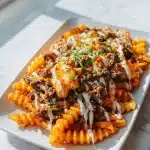
Kimchi fries were the first thing I ordered at a tiny Korean-American food truck, and I stood there eating them off a paper tray in the rain without a single regret.
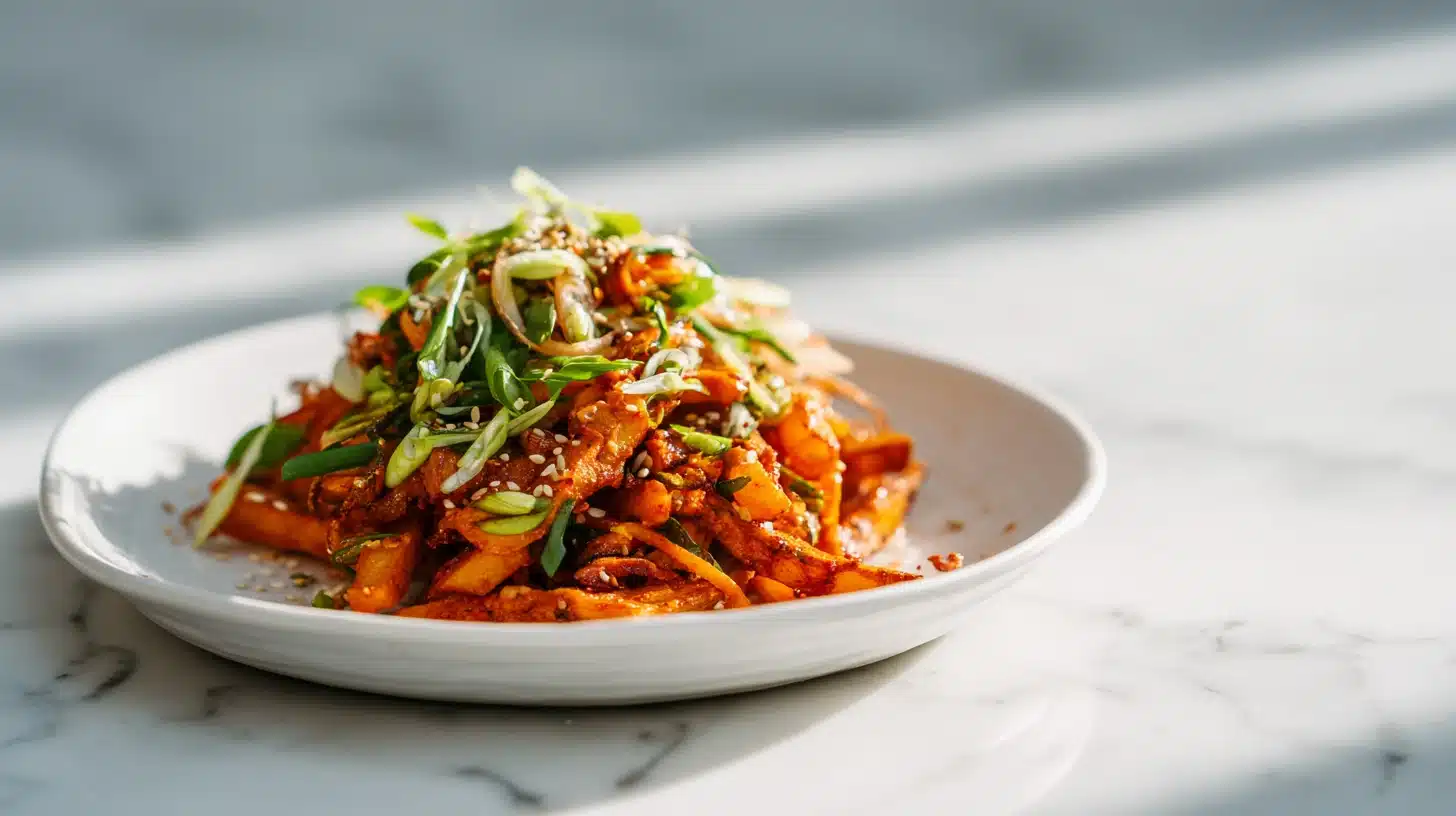
The biggest problem with loaded fries at home is a soggy, steamed-from-the-bottom mess that collapses before you get to the good part. This recipe fixes that with a specific layering method that keeps every fry crisp from the first bite to the last.
Inside: the exact cheese blend that melts without going rubbery, the gochujang mayo that ties everything together, and the one step most recipes skip that guarantees crunch underneath all those toppings.
Table of Contents
What Makes These Kimchi Fries So Good
Korean kimchi fries have taken over food truck menus and late-night diners across the country for a reason. The combination of fermented, tangy kimchi against hot, salty fries creates a contrast so satisfying it borders on addictive. Add melted cheese, savory bulgogi beef, and a drizzle of gochujang mayo, and you have something that feels genuinely special without requiring a culinary degree.
The Korean Fusion Logic Behind the Dish
Korean street food has always understood that fat, acid, heat, and crunch belong together on the same plate. Kimchi brings the acid and funk. The cheese blend of shredded mozzarella and cheddar brings the fat and pull. Gochujang paste brings a slow, brick-red heat that’s much more complex than plain sriracha. Sesame oil ties everything together with a nutty, aromatic finish that you’ll smell the moment the bottle opens.
This dish sits squarely in Korean fusion territory. It borrows the fermented depth of aged napa cabbage kimchi and the savory sweetness of bulgogi-marinated beef, then drops them onto a base that is undeniably American: crispy, golden french fries.
Why the Kimchi You Choose Matters
Not all kimchi behaves the same way on hot fries. Fresh, barely-fermented kimchi is mild and crunchy, which is pleasant but lacks the sharp tang that makes loaded Korean fries pop. For this recipe, you want kimchi that has been fermenting for at least two to three weeks. That aged napa cabbage kimchi has a sour, deeply savory quality that cuts right through the richness of the cheese and beef.
You also want to squeeze the kimchi gently before you use it. Too much brine on your fries is the express lane to sogginess. Give the kimchi a light press in a paper towel, roughly chop it into bite-sized pieces, and you’re ready to go. If you want to try making your own fermented base, this easy homemade kimchi recipe walks you through the whole process with clear, accessible steps.
The Fry Situation
Crinkle-cut frozen french fries are my strong recommendation here. The ridges create extra surface area, which means more crust, and the grooves actually hold onto the toppings instead of letting them slide off. Bake them at 425°F on a wire rack set over a sheet pan so hot air circulates underneath. This single step is what separates genuinely crispy homemade kimchi fries from the limp, sad version.
Cook the fries until they are deeply golden and slightly firm at the edges, roughly 25 to 28 minutes. They will hold up under all the toppings much better than pale, soft fries would.
Print
Kimchi Fries: The Crispy, Cheesy Korean Loaded Fries You Need Right Now
- Total Time: 45 min
- Yield: 4 servings 1x
Description
Crispy crinkle-cut fries loaded with bulgogi beef, aged kimchi, a melted mozzarella and cheddar blend, and a gochujang mayo drizzle finished with green onions and toasted sesame seeds. Big flavor, easy method, ready in 45 minutes.
Ingredients
For the fries:
1 lb frozen crinkle-cut french fries
1/2 tsp garlic powder
1/4 tsp kosher salt
For the bulgogi beef:
3/4 lb thinly sliced beef (ribeye or sirloin, pre-marinated bulgogi style)
1 tbsp sesame oil
1 tbsp soy sauce
1 tsp brown sugar
For the cheese and toppings:
1 cup shredded mozzarella cheese
1/2 cup shredded sharp cheddar cheese
3/4 cup aged napa cabbage kimchi (gently pressed and roughly chopped)
2 green onions (thinly sliced)
1 tbsp toasted sesame seeds
For the gochujang mayo:
3 tbsp mayonnaise
1 tbsp gochujang paste
1 tsp sesame oil
1 tsp rice vinegar
Instructions
1. Preheat your oven to 425 degrees F. Set a wire rack over a rimmed baking sheet. Spread the crinkle-cut fries in a single layer on the rack, season with garlic powder and salt, and bake for 25 to 28 minutes, flipping once at the halfway point, until deeply golden and crisp at the edges.
2. While the fries bake, heat a skillet over medium-high heat until very hot. Add the bulgogi beef in a single layer and cook for 2 to 3 minutes per side without moving it, until the edges caramelize and smell deeply sweet and savory. Remove from heat and rest for 2 minutes, then slice into bite-sized pieces.
3. Whisk together the mayonnaise, gochujang paste, sesame oil, and rice vinegar in a small bowl until smooth and creamy. Taste and adjust heat level with more gochujang if desired. Set aside.
4. Press the chopped kimchi gently in a paper towel to remove excess brine. This step keeps the fries from going soggy once assembled.
5. Remove the baked fries from the oven and transfer them immediately to an oven-safe cast iron skillet or baking dish. Scatter half the mozzarella and cheddar blend over the fries, then layer on the bulgogi beef pieces and the kimchi. Top with the remaining cheese.
6. Return the skillet to the oven at 425 degrees F and bake for 4 to 5 minutes until the cheese is fully melted and beginning to bubble and brown in spots.
7. Pull the skillet from the oven and immediately drizzle the gochujang mayo generously over the top. Scatter sliced green onions and toasted sesame seeds over everything and serve straight from the skillet while the cheese is still stretchy.
Notes
Store components separately in airtight containers in the refrigerator for up to 2 days. Reheat fries on a sheet pan at 400 degrees F for 8 to 10 minutes, then add toppings and broil for 2 to 3 minutes to melt the cheese.
For vegan kimchi fries: replace bulgogi beef with pressed, marinated, pan-fried firm tofu. Use vegan shredded cheese and vegan mayonnaise. Confirm your kimchi contains no fish sauce.
Use kimchi that has fermented for at least 2 to 3 weeks for the best tangy, savory flavor. Fresh kimchi lacks the sharp depth this dish needs.
The gochujang mayo can be made up to 5 days ahead and stored covered in the refrigerator. It gets better as it sits.
- Prep Time: 15 min
- Cook Time: 30 min
- Category: Appetizer
- Method: Baking, Stovetop
- Cuisine: Korean
Nutrition
- Serving Size: 1 generous portion
- Calories: 638 kcal
- Sugar: 5 g
- Sodium: 920 mg
- Fat: 34 g
- Saturated Fat: 12 g
- Unsaturated Fat: 18 g
- Trans Fat: 0 g
- Carbohydrates: 52 g
- Fiber: 4 g
- Protein: 32 g
- Cholesterol: 82 mg
How to Make Kimchi Fries Step by Step
This recipe moves in three overlapping stages: cook the fries, build the bulgogi beef and sauce, then assemble and finish. Once you’ve done it once, the whole thing takes about 45 minutes start to finish.
Stage One: The Fries
Spread one pound of crinkle-cut frozen french fries in a single layer on a wire rack over a rimmed baking sheet. Season lightly with salt and a tiny pinch of garlic powder. Bake at 425°F for 25 to 28 minutes, flipping once halfway through. You’re looking for a deep golden color and edges that look almost too crispy. That is exactly where you want them, because they will soften slightly once the toppings go on.
Stage Two: The Bulgogi Beef
While the fries bake, cook the bulgogi-marinated beef. If you’re buying pre-marinated bulgogi from a Korean grocery, you’re already ahead. If you’re marinating your own, a quick mix of soy sauce, brown sugar, sesame oil, garlic, and a touch of grated Asian pear tenderizes thin-sliced beef in as little as 20 minutes.
Cook the beef in a hot skillet over medium-high heat for 2 to 3 minutes per side until it caramelizes at the edges and smells deeply sweet and savory. That caramelized edge is critical. It adds a slight chew and a roasted depth that plain cooked beef cannot match.
Stage Three: The Gochujang Mayo
Whisk together 3 tablespoons of mayonnaise, 1 tablespoon of gochujang paste, 1 teaspoon of sesame oil, and 1 teaspoon of rice vinegar. Taste it. It should be creamy, spicy, slightly tangy, and have that distinctive fermented-pepper warmth that gochujang delivers. If you want more heat, add another half-tablespoon of gochujang. If you want it richer, add a spoonful of sour cream and whisk again.
Stage Four: The Assembly
Pull the fries from the oven and immediately transfer them to an oven-safe serving tray or cast iron skillet. Work quickly here. Scatter half the shredded mozzarella and cheddar blend over the fries, then layer on the bulgogi beef and the squeezed, chopped kimchi. Add the remaining cheese on top. Return the whole tray to the oven at 425°F for 4 to 5 minutes until the cheese is bubbling and starting to brown in spots.
Pull it out, drizzle generously with the gochujang mayo, and finish with sliced green onions and toasted sesame seeds. Eat immediately. These spicy kimchi fries are not a dish that waits.
Ingredient Swaps and Variations
One of the best things about homemade kimchi fries is how adaptable they are. The base concept stays the same, but you can shift the proteins, the sauce ratios, and even the fry format depending on what you have and who you’re feeding.
Vegan Kimchi Fries
Making vegan kimchi fries requires two swaps. First, replace the bulgogi beef with firm tofu that has been pressed, cubed, and marinated in the same bulgogi-style sauce, then pan-fried until the edges are golden and a little chewy. This tofu kimchi approach works beautifully here because the marinade does all the heavy flavor lifting.
Second, swap the cheese blend for your preferred vegan shredded cheese. Brands based on cashew or coconut oil tend to melt the most smoothly. Replace the mayo with vegan mayo (same quantity), and use a dairy-free sour cream in the gochujang drizzle. The result is still deeply satisfying, tangy, and spicy.
Air Fryer Kimchi Fries
An air fryer is a completely legitimate path to great loaded Korean fries, especially if you’re cooking for one or two people. Cook the fries in the air fryer basket at 400°F for 15 to 18 minutes, shaking halfway through. For technique ideas on getting fries perfectly crispy in a basket, check out these air fryer voodoo fries for a useful frame of reference.
Once the fries are done, transfer them to an oven-safe dish, add your toppings, and broil for 2 to 3 minutes to melt the cheese. The air fryer produces fries with an excellent dry, crackly crust that holds up well under toppings.
Sauce Variations
- Swap gochujang mayo for a straight sriracha and sesame oil drizzle for a thinner, sharper heat.
- Add a spoonful of doenjang (Korean fermented soybean paste) to the mayo for deeper, more savory funk.
- Use sour cream as a cooling counterpoint drizzled alongside the spicy mayo, not mixed in, for contrast.
- A few drops of toasted sesame oil over the finished dish just before serving add aroma that’s worth the extra five seconds.
Cheese Notes
The mozzarella and cheddar blend is non-negotiable for texture. Mozzarella melts stretchy and smooth. Cheddar adds sharpness and a slightly firmer set. Using only one or the other gives you either too gluey or too grainy. If you want to push the flavor, add a small handful of pepper jack to the mix for an extra layer of heat beneath the gochujang.
Serving, Storing, and Pairing Ideas
Kimchi cheese fries are built to be eaten communally, straight from the pan they were assembled in. There’s something about the cast iron skillet presentation specifically that keeps the fries warm longer and looks genuinely impressive on a table.
What to Serve Alongside
These loaded Korean fries are rich and bold enough to work as a main dish for two people. If you’re serving four, pairing them with something lighter makes sense. A simple green salad with a rice vinegar dressing cuts the richness cleanly. Pickled cucumber or daikon on the side adds cooling crunch and mirrors the fermented notes in the kimchi.
If you want to build a full Korean-American spread, pair these fries with a bowl of kimchi fried rice for a meal that genuinely satisfies a crowd.
How to Store Leftovers
Honestly, kimchi fries don’t store particularly well once assembled, and that’s worth being upfront about. The fries will soften overnight no matter how you store them. If you know you’ll have leftovers, store the fries, beef, and kimchi separately in airtight containers in the refrigerator for up to two days.
To reheat: spread the fries on a sheet pan and bake at 400°F for 8 to 10 minutes until they crisp up again. Then add the toppings and broil for 2 to 3 minutes. They won’t be quite as good as fresh, but they’ll be much better than microwaved.
Make-Ahead Tips
- Marinate and cook the bulgogi beef up to three days ahead. Store it in the fridge and reheat in a hot skillet for one minute before assembling.
- Mix the gochujang mayo up to five days ahead. It actually improves as the flavors meld.
- Squeeze and chop the kimchi a few hours ahead and refrigerate until needed.
- Don’t bake the fries in advance. Cook them fresh every time.
Portion Guidance
This recipe makes four generous servings as a side dish or two very satisfying servings as a main. The calorie count per serving lands around 620 to 650 calories, primarily from the fries, cheese, and beef. If you want a lighter version, reduce the cheese by half and use half the amount of gochujang mayo.
Frequently Asked Questions
What is the best type of fry for kimchi fries?
Crinkle-cut fries are the top choice because the ridges create more surface area for crisping and the grooves catch and hold toppings like cheese and kimchi. Waffle fries are a close second for the same reason. Thin shoestring fries tend to go limp too quickly under the weight of toppings, so avoid them if crunch is your priority.
Can I make kimchi fries in an air fryer?
Yes, and the results are excellent. Cook your frozen fries in the air fryer at 400°F for 15 to 18 minutes, shaking the basket halfway through. Transfer the finished fries to an oven-safe dish, add toppings, and broil for 2 to 3 minutes to melt the cheese. The air fryer produces a drier, crispier fry than a conventional oven, which holds up especially well under wet toppings like kimchi.
How do I make vegan kimchi fries?
Replace the bulgogi beef with pressed, marinated, pan-fried firm tofu for the same savory-sweet depth without any meat. Use your favorite vegan shredded cheese blend and vegan mayonnaise for the gochujang sauce. Always check that your kimchi is vegan, since some traditional recipes include fish sauce or fermented shrimp. Many store-bought and homemade versions are made without either.
What protein goes well with kimchi fries?
Bulgogi beef is the classic pairing because the sweet-savory marinade mirrors the fermented tang of the kimchi. Pulled chicken thighs, spicy pork, or even crispy fried tofu all work well too. If you want something simpler, a fried egg placed on top right before serving adds richness and protein with almost no extra effort, and the runny yolk acts as an additional sauce.
Conclusion
Once you understand the layering method and the importance of a genuinely crispy fry underneath, kimchi fries become one of those recipes you find yourself making on repeat. The combination of tangy fermented kimchi, melted cheese, savory bulgogi beef, and that gochujang mayo drizzle is hard to beat on any night of the week.
Give this recipe a try the next time you need something that feels a little indulgent but comes together in under an hour. It’s the kind of dish people ask about before they even sit down.
For more recipes like kimchi fries, follow us on Facebook and Pinterest for bold and easy weeknight dinner ideas.
Craving more ways to use that jar? Browse all my recipes with kimchi in one place — there is a kimchi dish for every craving.