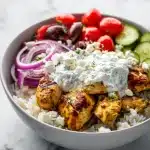
Greek Chicken Bowls have a way of pulling you back to a specific memory, the kind where you’re sitting at a white-washed table somewhere sunny, tearing into something charred and lemony and impossibly good.
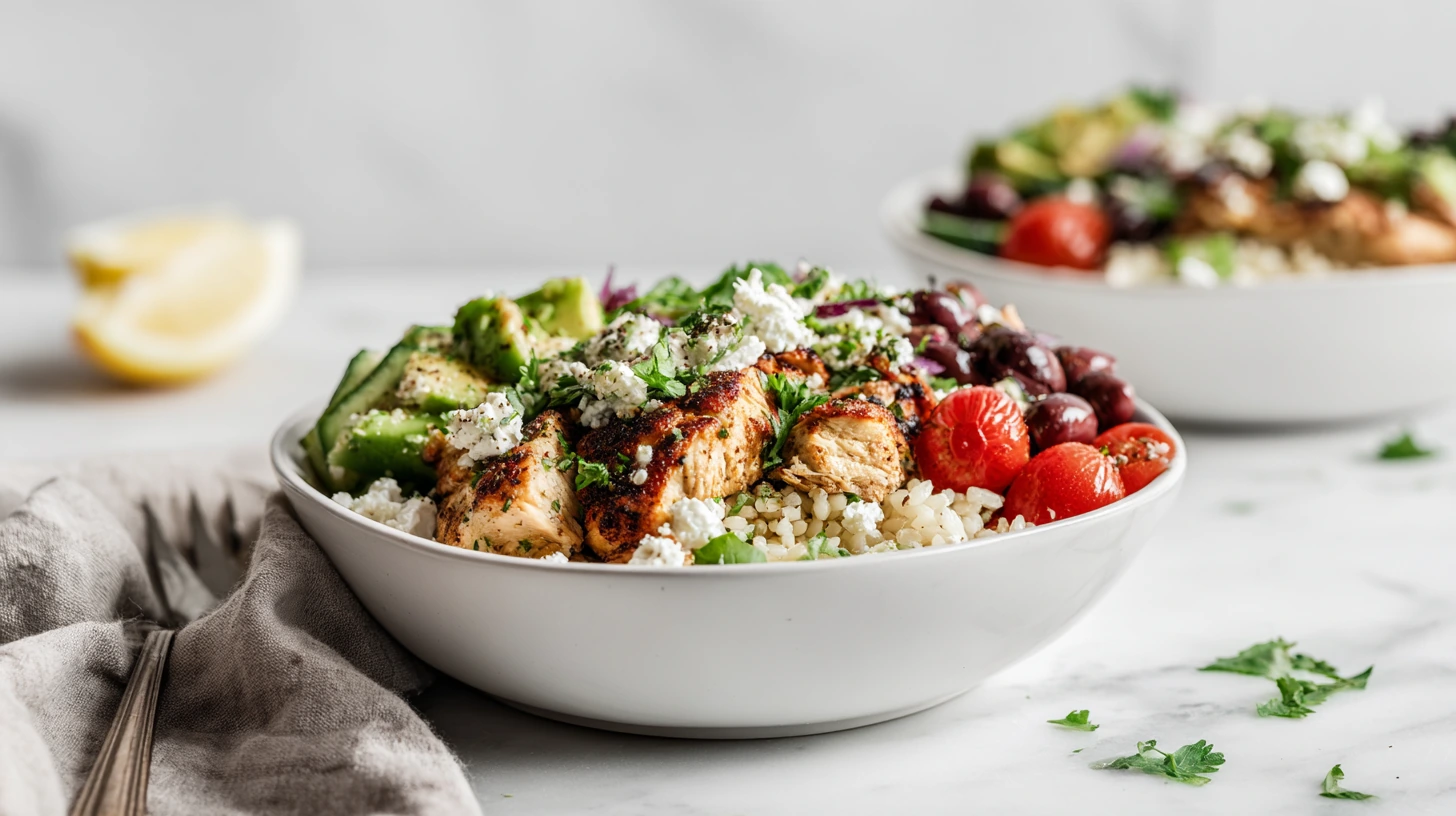
The real frustration with most recipes is dry, flavorless chicken that turns the whole bowl into a chore. The fix is a Greek yogurt marinade that tenderizes the meat from the inside out, so every bite stays juicy even after high-heat cooking.
Inside: the exact marinade ratio that makes the difference, a breakdown of every base and topping option, and a full meal-prep guide so your fridge is stocked for the week.
Table of Contents
The Greek Yogurt Marinade That Changes Everything
If you have ever bitten into chicken that looks beautiful but tastes like cardboard, you already know the problem. Most marinades sit on the surface. Greek yogurt is different. The lactic acid in full-fat Greek yogurt works its way into the muscle fibers of chicken breast, softening the protein structure before heat ever touches it. The result is chicken that stays tender even if it spends an extra minute or two on the grill.
What Goes Into the Marinade
You need five core ingredients, and none of them are exotic:
- 1/2 cup full-fat Greek yogurt
- 3 tablespoons fresh lemon juice (about 1 large lemon)
- 3 cloves garlic, finely grated
- 1 tablespoon dried oregano
- 2 tablespoons olive oil
- 1 teaspoon kosher salt
- 1/2 teaspoon black pepper
Whisk everything together until smooth. The mixture should smell sharp and herby, almost like it belongs in a bowl already. Add your chicken breasts or thighs, press them down so the marinade coats every surface, and cover tightly.
How Long Is Long Enough?
This is where most home cooks shortchange themselves. Thirty minutes gives you surface flavor. Two hours gets you into the meat. Four hours is the sweet spot for chicken breasts, where the lemon and yogurt have done their full job without starting to break down the texture into something mushy.
If you are marinating chicken thighs, you have a little more flexibility because the higher fat content protects the texture. Anywhere from two to eight hours works well for thighs.
One practical note: never marinate in an aluminum bowl. The acid in the lemon juice reacts with the metal and gives the chicken a faintly metallic taste. Glass, ceramic, or a zip-lock bag are all good choices.
Why Yogurt Beats Buttermilk Here
Buttermilk is the classic tenderizing marinade in Southern cooking, and it works. But for a Mediterranean chicken bowl, yogurt does two things buttermilk cannot. First, it clings. The thick consistency of yogurt stays on the surface of the chicken as it cooks, forming a thin crust that picks up char marks beautifully on a grill pan or cast iron skillet. Second, it carries spices. The oregano, garlic, and lemon distribute evenly through yogurt in a way they simply do not in a thin liquid marinade.
For a different take on protein-forward Mediterranean cooking, this high protein lemon chicken orzo uses a similar lemon-garlic flavor profile in a completely different format.
Print
Greek Chicken Bowls That Actually Taste Like a Taverna
- Total Time: 152 min
- Yield: 4 servings 1x
- Diet: Gluten Free
Description
Greek Chicken Bowls are a complete meal built around juicy marinated chicken, creamy tzatziki, and fresh Mediterranean toppings over a grain base. The Greek yogurt marinade keeps the chicken tender and adds a subtle tang that ties the whole bowl together. Great for weeknight dinners and easy to prep ahead for the week.
Ingredients
For the Greek yogurt marinade:
1/2 cup full-fat Greek yogurt (plain, unsweetened)
3 tablespoons fresh lemon juice (about 1 large lemon)
3 cloves garlic (finely grated)
1 tablespoon dried oregano
2 tablespoons olive oil
1 teaspoon kosher salt
1/2 teaspoon black pepper
For the chicken:
4 boneless skinless chicken breasts (6 oz each, pounded to even thickness)
For the tzatziki:
1 cup full-fat Greek yogurt (plain, unsweetened)
1/2 English cucumber (grated and squeezed dry)
1 clove garlic (finely grated)
1 tablespoon fresh lemon juice
1 tablespoon fresh dill (chopped) or 1 teaspoon dried dill
1/4 teaspoon kosher salt
For the bowl base:
2 cups dry basmati rice (cooked according to package directions in chicken broth)
For the toppings:
1 cup cherry tomatoes (halved)
1 English cucumber (diced)
1/2 small red onion (thinly sliced)
1/2 cup kalamata olives (pitted)
3/4 cup feta cheese (crumbled from a block)
2 tablespoons fresh parsley (chopped)
1 lemon (cut into wedges for serving)
Instructions
1. Whisk together the Greek yogurt, lemon juice, grated garlic, dried oregano, olive oil, salt, and pepper in a glass bowl until smooth. Add the chicken breasts, turn them to coat on all sides, cover tightly, and refrigerate for at least 2 hours or up to 4 hours.
2. While the chicken marinates, make the tzatziki. Grate the cucumber on the large holes of a box grater, then wrap it tightly in a clean kitchen towel and squeeze firmly until no more liquid comes out. Combine the squeezed cucumber with Greek yogurt, grated garlic, lemon juice, dill, and salt. Stir well, taste for seasoning, and refrigerate until ready to serve.
3. Cook the basmati rice according to package directions, substituting low-sodium chicken broth for water. When the rice is done, fluff it with a fork and stir in a pinch of dried oregano and a small drizzle of olive oil.
4. Heat a large cast iron skillet over medium-high heat for 2 to 3 minutes until very hot. Add 1 tablespoon of olive oil and let it shimmer for 10 seconds. Remove the chicken from the marinade and let any excess drip off.
5. Lay the chicken breasts in the skillet without crowding and cook without moving for 5 to 6 minutes. You should hear a steady, assertive sizzle and see the edges turning opaque. Flip once and reduce heat to medium. Cook for another 4 to 5 minutes until the internal temperature reads 165 degrees F on an instant-read thermometer.
6. Transfer the cooked chicken to a cutting board and let it rest for 5 minutes. Slice against the grain on a slight diagonal into 1/2-inch strips.
7. Prepare the bowl toppings. Halve the cherry tomatoes, dice the cucumber, and slice the red onion thinly. Crumble the feta from the block.
8. Assemble each bowl by spooning a generous portion of basmati rice into the base. Arrange the sliced chicken over the rice. Add a scoop of tzatziki, then divide the cherry tomatoes, cucumber, red onion, kalamata olives, and crumbled feta evenly between the bowls.
9. Scatter fresh parsley over the top and tuck a lemon wedge on the side. Serve immediately while the chicken is warm and the vegetables are still crisp.
Notes
Store components separately in airtight containers in the refrigerator for up to 4 days. Reheat chicken and rice in the microwave for 90 seconds, then add cold toppings and tzatziki fresh.
Chicken thighs work very well in place of chicken breasts. Use boneless skinless thighs and cook to an internal temperature of 175 degrees F for best texture.
Do not marinate chicken in an aluminum bowl. The acid in the lemon juice reacts with the metal and can affect flavor. Use glass, ceramic, or a zip-lock bag.
Tzatziki does not freeze well. Make it fresh each time or store in the refrigerator for up to 4 days. Stir before using as it may separate slightly.
- Prep Time: 20 min
- Rest Time: 120 min
- Cook Time: 12 min
- Category: Dinner, Main Course
- Method: Stovetop
- Cuisine: Mediterranean
Nutrition
- Serving Size: 1 bowl
- Calories: 520 kcal
- Sugar: 6 g
- Sodium: 890 mg
- Fat: 22 g
- Saturated Fat: 7 g
- Unsaturated Fat: 13 g
- Trans Fat: 0 g
- Carbohydrates: 42 g
- Fiber: 3 g
- Protein: 41 g
- Cholesterol: 115 mg
Building Your Bowl: Base, Toppings, and Sauce
The base of your Greek Chicken Bowls is where you get to make a real decision. Each option changes the texture and calorie profile of the final dish, and all three are legitimate.
Choosing Your Base
Basmati rice is the most common choice. It is light, slightly floral, and absorbs the juices from the chicken and tzatziki without turning gluey. Cook it in low-sodium chicken broth instead of water and add a pinch of dried oregano to the pot. The difference in flavor is noticeable.
Orzo pasta gives you a bowl that feels more like a warm salad. Because orzo is small and pasta-shaped, it tucks around the toppings rather than sitting under them, which means you get a little of everything in each bite. Toss cooked orzo in olive oil and lemon juice while still warm so it does not clump.
Couscous is the fastest option. It only needs about five minutes of soaking in boiling water. The texture is softer than rice and more neutral than orzo, which lets the toppings carry the flavor.
For meal prep specifically, basmati rice holds up the best over four or five days in the refrigerator. Orzo and couscous tend to absorb moisture and go soft by day three.
The Topping Formula
A great Mediterranean chicken bowl follows a simple pattern: something crisp, something creamy, something briny, and something fresh. Here is how that breaks down:
- Crisp: diced cucumber, sliced red onion, shredded romaine
- Creamy: tzatziki sauce, hummus, or a drizzle of full-fat Greek yogurt
- Briny: kalamata olives, capers, or pickled red onions
- Fresh: halved cherry tomatoes, chopped parsley, or fresh dill
Feta cheese deserves its own mention because it does work that falls into multiple categories at once. It is salty and creamy and crumbly, and it binds all the other toppings into something coherent. Use block feta that you crumble yourself rather than pre-crumbled. Pre-crumbled feta is drier and less flavorful because the protective brine has been removed.
Making Tzatziki From Scratch
Store-bought tzatziki is convenient but almost always too thin and too sour. Homemade takes about ten minutes and tastes noticeably better. You need:
- 1 cup full-fat Greek yogurt
- 1/2 cucumber, grated and squeezed dry in a clean kitchen towel
- 1 clove garlic, grated
- 1 tablespoon fresh dill or 1 teaspoon dried
- 1 tablespoon lemon juice
- Salt to taste
The critical step is squeezing the cucumber. Cucumber holds a surprising amount of water, and if you skip this step your tzatziki will be watery within an hour. Wring it firmly in the towel until no more liquid comes out, then fold it into the yogurt. The finished sauce should be thick enough to hold a spoon mark.
Cooking the Chicken: Three Methods That Work
The marinade is done. Now you need heat, and the method you choose affects the final flavor more than most people expect.
Cast Iron Skillet on the Stovetop
This is the method I reach for on weeknights. Heat a cast iron skillet over medium-high heat until it is genuinely hot, about two to three minutes. You should see a faint wisp of smoke rising from the surface. Add one tablespoon of olive oil, let it shimmer for ten seconds, then lay the marinated chicken breasts in the pan without moving them.
Cook for five to six minutes on the first side without touching. Resist the urge to check or press. You will hear a steady, assertive sizzle, and the edges of the chicken will turn opaque as the heat climbs. Flip once, reduce heat to medium, and cook for another four to five minutes until the internal temperature reads 165°F on an instant-read thermometer. Let the chicken rest on a cutting board for five minutes before slicing.
Resting is not optional. Cutting too early pushes all the juices out onto the board instead of back into the meat.
Grill or Grill Pan
A grill or ridged grill pan gives you the char marks that make a chicken gyro bowl look like it came from a restaurant. Preheat to medium-high. Cook the chicken for five to six minutes per side, rotating 45 degrees halfway through each side to get a crosshatch pattern. The yogurt marinade will darken quickly, which is exactly what you want. That slight char is where a lot of the flavor lives.
Sheet Pan in the Oven
If you are cooking for four or more people, the oven is the most efficient method. Arrange marinated chicken on a rimmed baking sheet lined with a wire rack. The rack keeps the chicken elevated so air circulates underneath, preventing the bottom from steaming. Roast at 425°F for 20 to 22 minutes, then switch to broil for the final 2 to 3 minutes to get some color on top. The edges should be golden and slightly crisped.
For another weeknight chicken dinner that uses a similar high-heat oven method, the creamy garlic parmesan chicken breast is worth bookmarking.
Slicing and Serving
Once the chicken has rested, slice it against the grain on a slight diagonal. This is not just about aesthetics. Cutting against the grain shortens the muscle fibers, which means less resistance when you bite through the meat. Aim for slices about a half-inch thick. They will fan nicely over the bowl and pick up the tzatziki from below.
Meal Prep and Storage for Greek Chicken Bowls
One of the best things about Greek chicken meal prep bowls is that almost every component stores well separately and comes together in under three minutes at lunch.
The Component System
Instead of assembling complete bowls and refrigerating them, store each component in its own container:
- Cooked, sliced chicken in one container
- Cooked grain base in another
- Chopped vegetables (cucumber, tomato, red onion) combined in a third
- Tzatziki in a small jar with a tight lid
- Feta and kalamata olives in a small container
When you are ready to eat, microwave the chicken and grain base for about 90 seconds, then add the cold toppings and tzatziki. The contrast between the warm base and cold, crisp vegetables is actually one of the best things about eating this meal at home.
How Long Each Component Lasts
| Component | Refrigerator | Freezer |
|---|---|---|
| Cooked chicken | 4 days | 3 months |
| Cooked rice or orzo | 5 days | 2 months |
| Tzatziki | 4 days | Not recommended |
| Chopped vegetables | 3 days | Not recommended |
| Feta and olives | 5 days | Not recommended |
Tzatziki does not freeze well because the yogurt separates when thawed and turns grainy. Make a fresh batch when your meal-prepped supply runs out.
Batch Cooking Tips
Double the marinade recipe and use half for the chicken you cook now. Pour the other half into a zip-lock bag with raw chicken and freeze it flat. When you thaw the bag in the refrigerator overnight, the chicken marinates as it defrosts. You get perfectly flavored chicken with almost no extra effort.
The grain base benefits from a light re-seasoning when you reheat it. A small squeeze of lemon juice and a drizzle of olive oil wakes up the flavors that dulled in the refrigerator.
If you enjoy high-protein, bowl-style meals for the week, the high protein chicken burrito bowl follows a very similar meal-prep logic with a different flavor profile.
Frequently Asked Questions
Can I make Greek Chicken Bowls ahead of time?
Yes, and they are genuinely better for it when components are stored separately. Cook the chicken and grain base up to four days ahead and keep them refrigerated. Prep the vegetables two to three days ahead, but hold off on assembling the bowl until you are ready to eat so the cucumber and tomato stay crisp.
What is the best yogurt for marinating chicken?
Full-fat Greek yogurt is the best choice by a clear margin. The higher fat content protects the chicken from drying out, and the thick consistency keeps the marinade clinging to the surface. Low-fat or non-fat yogurt has more water and less protein structure, so it tends to slide off the chicken rather than coat it. Plain, unsweetened yogurt is essential because any added sugars will burn at high heat.
How long should I marinate the chicken?
The minimum is 30 minutes if you are short on time, but the flavor and texture payoff increases significantly at the two-hour and four-hour marks. Four hours in the refrigerator is the practical sweet spot for chicken breasts. For chicken thighs, you can push it to eight hours comfortably without the texture becoming mushy. Do not go beyond 12 hours for breasts, because the acid in the lemon juice will begin to break down the surface texture in a way that is hard to fix with heat.
Can I use chicken thighs instead of breasts?
Absolutely, and many cooks prefer thighs in Greek marinated chicken bowls because the higher fat content makes them almost impossible to overcook. Boneless, skinless thighs are the most convenient format. They cook in about the same time as breasts on the stovetop, though they can tolerate a slightly higher internal temperature, up to 175°F, without drying out. The flavor is richer and slightly more savory than breast meat, which pairs well with the bright acidity of the lemon tzatziki.
Conclusion
Greek Chicken Bowls earn their place in regular rotation because they are genuinely balanced, genuinely quick on a weeknight, and genuinely satisfying in a way that a lot of “healthy” dinners are not. The yogurt marinade you learned here is the thing that closes the gap between a mediocre bowl and one that tastes like it took real effort.
Give these a try this week, starting with just the stovetop method and your grain of choice. Once you have the base routine down, you can branch out into different toppings and sauces.
For more recipes like Greek Chicken Bowls, follow us on Facebook and Pinterest for fresh Mediterranean dinner ideas every week.