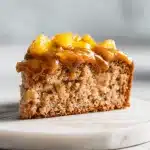
My grandmother never measured the brown sugar she pressed into her peach cake, and that reckless generosity is exactly what this brown sugar peach cake recipe is built on.

Most peach cakes turn out either watery at the base or dry as a cracker because nobody accounts for the peaches releasing juice mid-bake. This recipe tucks that moisture into the batter so every slice stays tender, not soggy.
This guide covers how to prep your peaches for maximum flavor, why dark brown sugar outperforms granulated sugar here, and the quick caramel-style frosting that makes this cake taste like a peach cobbler and a birthday cake collided.
Table of Contents
Why Brown Sugar Is the Secret to the Best Peach Cake
Walk past any display of granulated sugar at the grocery store and you will see it marketed as the all-purpose baking ingredient. It works fine. But fine is not what we are after with a brown sugar peach dessert.
The Science Behind Brown Sugar’s Magic
Brown sugar is granulated sugar that still contains molasses, and molasses brings three things to a cake batter: moisture retention, a subtle caramel depth, and a slightly acidic quality that reacts with baking soda to produce a better, more even rise. When you are baking with fruit that releases its own liquid, that moisture retention becomes critical. The molasses acts as a buffer, keeping the crumb soft rather than letting the fruit juice pool at the bottom and create a gummy layer.
Dark brown sugar has roughly twice the molasses content of light brown sugar. For this cake, I call for dark brown sugar because the peach flavor is bold enough to handle that intensity, and the resulting color gives slices a gorgeous amber interior that you simply do not get with white sugar.
How Brown Sugar Affects Texture
Here is something that surprises most home bakers: swapping brown sugar for white does not just change flavor. It changes the structure of the crumb. Brown sugar is hygroscopic, meaning it actively draws and holds water molecules. In practice, that means your brown sugar peach cake will still feel moist on day two and day three, long after a white-sugar version would start to dry out.
The trade-off is a slightly denser crumb, which in this case is exactly right. A dense, tight crumb holds the peach pieces in suspension instead of letting them sink, so every forkful has fruit in it.
Pairing Brown Sugar with Fresh Peaches
Fresh peaches that have just a little give when you press the skin are ideal. Rock-hard peaches have not developed their full sugar content yet, and overly soft peaches will turn to mush during baking. Peel them, cut them into half-inch cubes, and toss them with a tablespoon of the brown sugar from the recipe before folding them in. That brief maceration starts pulling out surface moisture so the peach liquid releases gradually in the oven rather than all at once.
If you love peach-forward baking, you will also enjoy this peach cobbler cheesecake bars recipe, which uses a similar maceration approach for the peach layer. The difference is that here the fruit gets baked directly into the cake batter rather than layered on top, which creates a more even peach flavor throughout every single slice.
Print
Brown Sugar Peach Cake Recipe: Caramel-Kissed, Perfectly Moist Every Time
- Total Time: 51 min
- Yield: 15 servings 1x
- Diet: Vegetarian
Description
A moist, tender sheet cake made with dark brown sugar and fresh peach chunks, baked until golden and finished with a pourable brown sugar caramel frosting. The molasses in the brown sugar keeps the crumb soft for days, and the peaches are macerating first so the cake never turns soggy at the base.
Ingredients
For the Cake:
2 and 1/4 cups (280 g) all-purpose flour
1 and 1/2 teaspoons baking powder
1/2 teaspoon baking soda
1/2 teaspoon fine sea salt
1 teaspoon ground cinnamon
1/4 teaspoon ground nutmeg
1 cup (200 g) packed dark brown sugar
1/2 cup (100 g) granulated sugar
3/4 cup (170 g) unsalted butter (softened to room temperature)
3 large eggs (at room temperature)
1 cup (240 g) full-fat sour cream
2 teaspoons pure vanilla extract
2 and 1/2 cups (400 g) fresh peaches (peeled and cut into 1/2-inch cubes, about 4 medium peaches)
1 tablespoon dark brown sugar (for macerating the peaches)
For the Brown Sugar Caramel Frosting:
1/2 cup (113 g) unsalted butter
1 cup (200 g) packed dark brown sugar
1/3 cup (80 ml) heavy cream
2 cups (240 g) powdered sugar (sifted)
1 teaspoon pure vanilla extract
1 pinch fine sea salt
Instructions
1. Macerate the peaches: Peel and cube the peaches into 1/2-inch pieces, toss them with 1 tablespoon of dark brown sugar in a bowl, and set aside for 10 minutes until a small pool of syrup forms at the bottom.
2. Prepare the pan and preheat: Heat your oven to 350 degrees F. Grease a 9-by-13-inch baking pan and line the bottom with parchment paper.
3. Mix the dry ingredients: In a medium bowl, whisk together the flour, baking powder, baking soda, salt, cinnamon, and nutmeg until evenly combined. Set aside.
4. Cream butter and sugars: In a large bowl, beat the softened butter with the dark brown sugar and granulated sugar on medium-high speed for 4 minutes until the mixture turns lighter in color and fluffy in texture.
5. Add eggs, sour cream, and vanilla: Add the eggs one at a time, beating for 30 seconds after each. Scrape down the bowl, then add the vanilla and sour cream. Mix on low just until combined. The batter may look slightly curdled at this stage, which is normal.
6. Fold in flour and peaches: Add the flour mixture in three additions, folding gently with a rubber spatula after each. When just a few flour streaks remain, add the macerating peaches and all their syrup. Fold until no dry flour pockets remain and the peaches are evenly distributed.
7. Bake the cake: Spread the batter evenly into the prepared pan. Bake for 26 to 28 minutes until the top is deep golden brown, the edges have pulled from the sides, and a toothpick inserted into the center comes out with just a few moist crumbs. Let the cake cool completely in the pan on a wire rack, at least 1 hour.
8. Make the frosting: Melt the butter in a medium saucepan over medium heat. Add the dark brown sugar and heavy cream, stir constantly, and bring to a low boil. Let it bubble for exactly 2 minutes, still stirring. Remove from heat, cool for 10 minutes, then whisk in the powdered sugar, vanilla, and a pinch of salt until smooth and glossy.
9. Frost and serve: Pour the warm frosting over the completely cooled cake and spread it quickly before it sets. Let the frosting firm up for 15 minutes, then cut into 15 squares and serve.
Notes
Store covered at room temperature for up to 2 days, or in the refrigerator for up to 5 days. The unfrosted cake freezes well for up to 2 months wrapped tightly in plastic and foil. Reheat individual slices at 325 degrees F for 8 minutes.
For the best flavor, use peaches that give slightly when pressed. Rock-hard peaches have not developed their full sugar content, and very soft peaches will turn mushy during baking.
Frozen peaches work as a substitute. Thaw completely, drain well, and pat dry before macerating. Canned peaches in juice also work. Drain thoroughly and reduce the granulated sugar in the batter by 2 tablespoons.
The caramel frosting sets quickly once it starts to cool. Have your cake completely cooled and ready to frost before you start making the frosting, and pour it on as soon as it is smooth.
- Prep Time: 23 min
- Cook Time: 28 min
- Category: Dessert
- Method: Baking
- Cuisine: American
Nutrition
- Serving Size: 1 square slice
- Calories: 387 kcal
- Sugar: 45 g
- Sodium: 178 mg
- Fat: 18 g
- Saturated Fat: 11 g
- Unsaturated Fat: 7 g
- Trans Fat: 0 g
- Carbohydrates: 54 g
- Fiber: 1 g
- Protein: 4 g
- Cholesterol: 82 mg
Ingredients You Need for This Brown Sugar Peach Sheet Cake
A brown sugar peach sheet cake keeps things wonderfully unfussy. You probably have most of these pantry staples on hand right now, and the peaches are the only ingredient that genuinely requires you to pay attention to quality.
For the Cake
- 2 and 1/4 cups (280 g) all-purpose flour
- 1 and 1/2 teaspoons baking powder
- 1/2 teaspoon baking soda
- 1/2 teaspoon fine sea salt
- 1 teaspoon ground cinnamon
- 1/4 teaspoon ground nutmeg
- 1 cup (200 g) packed dark brown sugar
- 1/2 cup (100 g) granulated sugar
- 3/4 cup (170 g) unsalted butter, softened to room temperature
- 3 large eggs, at room temperature
- 1 cup (240 g) full-fat sour cream
- 2 teaspoons pure vanilla extract
- 2 and 1/2 cups (about 400 g) fresh peaches, peeled and cut into 1/2-inch cubes (approximately 4 medium peaches)
- 1 tablespoon dark brown sugar (for macerating the peaches)
For the Brown Sugar Caramel Frosting
- 1/2 cup (113 g) unsalted butter
- 1 cup (200 g) packed dark brown sugar
- 1/3 cup (80 ml) heavy cream
- 2 cups (240 g) powdered sugar, sifted
- 1 teaspoon pure vanilla extract
- Pinch of fine sea salt
A Note on Sour Cream
Do not substitute low-fat sour cream or plain yogurt if you can avoid it. Full-fat sour cream is thick enough to coat the flour proteins and inhibit gluten development, which is why this cake bakes up tender rather than chewy. The acidity also works with the leavening to give you a gentle, even lift across the entire pan.
If you enjoy easy peach cake recipes that lean on pantry swaps and no-fuss techniques, check out this peach bread for another approach to baking with peak-season peaches.
Step-by-Step Instructions for the Perfect Brown Sugar Peach Cake Recipe
Step 1: Prep the Peaches
Peel and cube your peaches, then toss them in a bowl with one tablespoon of dark brown sugar. Let them sit for about ten minutes while you assemble the rest of the batter. You will notice a small pool of peachy syrup forming at the bottom of the bowl. That is exactly what you want.
Step 2: Mix Your Dry Ingredients
In a medium bowl, whisk together the flour, baking powder, baking soda, salt, cinnamon, and nutmeg. Whisking instead of sifting is fine here as long as you are thorough. Set it aside.
Step 3: Cream Butter and Sugar
In a large bowl using a hand mixer or stand mixer fitted with the paddle attachment, beat the softened butter with both sugars on medium-high speed for four full minutes. You are looking for the mixture to turn noticeably lighter in color and fluffy in texture. This step is not one to rush. Proper creaming traps air bubbles that help the cake rise, and the color shift from dark amber to a lighter caramel tan tells you the air is going in.
Step 4: Add Eggs, Sour Cream, and Vanilla
Add the eggs one at a time, beating for thirty seconds after each addition. Scrape down the sides of the bowl. Add the vanilla and the sour cream, then mix on low just until combined. The batter may look slightly curdled at this stage. That is normal and will smooth out once the flour goes in.
Step 5: Fold in the Flour and Peaches
Add the flour mixture in three additions, folding gently with a rubber spatula after each. Switch to folding by hand rather than using the mixer once the flour is partially incorporated. This keeps the gluten relaxed. When just a few streaks of flour remain, add the macerating peaches along with any accumulated syrup in the bowl. Fold until the peaches are evenly distributed and no dry flour pockets remain.
Step 6: Bake the Cake
Preheat your oven to 350°F. Grease a 9-by-13-inch baking pan and line the bottom with parchment paper. Spread the batter evenly into the pan. It will be thick. Bake for 26 to 28 minutes, until the top is a deep golden brown, the edges have pulled slightly from the sides of the pan, and a toothpick inserted into the center comes out with just a few moist crumbs attached. The kitchen will smell like caramelized fruit and warm spice, which is your best sensory signal that things are going well.
Let the cake cool completely in the pan on a wire rack before frosting, at least one hour.
Step 7: Make the Brown Sugar Caramel Frosting
Melt the butter in a medium saucepan over medium heat. Add the dark brown sugar and heavy cream, stirring constantly. Bring the mixture to a low boil and let it bubble for exactly two minutes, still stirring. Remove from heat and let it cool for ten minutes. Whisk in the sifted powdered sugar, vanilla, and salt until smooth and glossy. Pour and spread over the cooled cake immediately, because this frosting sets quickly and becomes difficult to spread once it starts to firm up.
Tips, Variations, and Storage for This Brown Sugar Peach Dessert
Getting the Most Peach Flavor
The single biggest upgrade you can make to this brown sugar peach cake recipe is using peaches at their peak ripeness. When you bite into a raw peach and the juice runs down your wrist, those are the peaches you want. Out of season, frozen peaches work reasonably well. Thaw them completely, drain off excess liquid, and pat them dry before tossing in the brown sugar. Canned peaches in juice (not syrup) are a third option. Drain them thoroughly and reduce the granulated sugar in the batter by two tablespoons since canned peaches bring their own sweetness.
Variations Worth Trying
Spiced Brown Sugar Peach Sheet Cake: Add 1/4 teaspoon of ground cardamom to the dry ingredients. Cardamom and peach are a pairing more common in European baking, and it adds a floral, slightly citrusy note that plays beautifully against the molasses in the frosting.
Peach Cake with Caramel Frosting and Toasted Pecans: Press a generous handful of roughly chopped toasted pecans into the frosting while it is still soft. The contrast of crunchy nuts against the smooth, sticky frosting and tender cake is excellent.
Skip the Frosting: This cake is genuinely good with just a dusting of powdered sugar and a scoop of vanilla ice cream alongside it. For a summer gathering where you want something lighter, that is the move.
Storing Your Cake
Cover the pan tightly with plastic wrap or transfer slices to an airtight container. At room temperature, the cake stays moist for two days. In the refrigerator, it keeps for up to five days, though the frosting will firm up considerably. Pull refrigerated slices out about twenty minutes before serving to let them come to room temperature, which restores the soft, yielding texture. This cake also freezes well before frosting. Wrap individual slices in plastic, then foil, and freeze for up to two months. Thaw overnight in the refrigerator and frost fresh before serving.
Scaling the Recipe
This recipe makes 15 generous servings from a 9-by-13 pan. For a smaller crowd, halve the recipe and bake it in an 8-by-8-inch pan, reducing the bake time to 22 to 24 minutes. Keep an eye on it and use the toothpick test rather than the timer as your final check.
For a completely different kind of peach dessert that uses a similarly simple approach, the classic peach cobbler is a great companion piece to have in your rotation alongside this cake.
Frequently Asked Questions
Can I use canned peaches instead of fresh in this brown sugar peach cake recipe?
Yes, canned peaches in juice work as a substitute. Drain them thoroughly and pat them dry before adding them to the batter, and reduce the granulated sugar in the recipe by two tablespoons to account for the sweetness they bring. Avoid peaches packed in heavy syrup, which will make the cake cloyingly sweet.
Why did my peach cake turn out dense and gummy in the middle?
The most common cause is underbaking combined with too much moisture from the fruit. Make sure your peaches are fully macerating in the brown sugar step so they release excess liquid before going into the batter. Also check that your oven temperature is accurate with an oven thermometer, as ovens can run 25 degrees cooler than their display suggests.
Can I make this cake ahead of time?
Absolutely. The unfrosted cake actually improves overnight as the brown sugar and peach flavors continue to meld. Bake the cake, let it cool completely, cover the pan tightly, and store it at room temperature for up to one day before adding the frosting. Make the frosting fresh the day you plan to serve it, since it sets firm in the refrigerator.
Can I use light brown sugar instead of dark brown sugar?
You can, and the cake will still taste good. Dark brown sugar gives a more pronounced caramel flavor and a slightly deeper color because of its higher molasses content. Light brown sugar will produce a milder result that is a little closer in flavor to a standard vanilla cake with peaches. If deep caramel notes are what you are after, stick with dark.
Conclusion
There is something genuinely satisfying about a cake that tastes more complex than the ingredient list suggests, and this brown sugar peach cake recipe delivers exactly that. The molasses in the brown sugar does the heavy lifting, turning simple pantry staples and ripe summer fruit into something that tastes caramel-deep and warmly spiced with very little effort. That is the spirit my grandmother baked with, and it is the spirit this recipe is designed to carry forward.
Give it a try this weekend while peaches are still at their best. It comes together in under an hour and feeds a crowd easily straight from the pan.
For more recipes like this brown sugar peach cake recipe, follow us on Facebook and Pinterest for seasonal fruit dessert inspiration.