The best peach clafoutis recipe I ever tasted came from a tiny French kitchen where the batter was so simple it barely looked like dessert before it hit the oven.
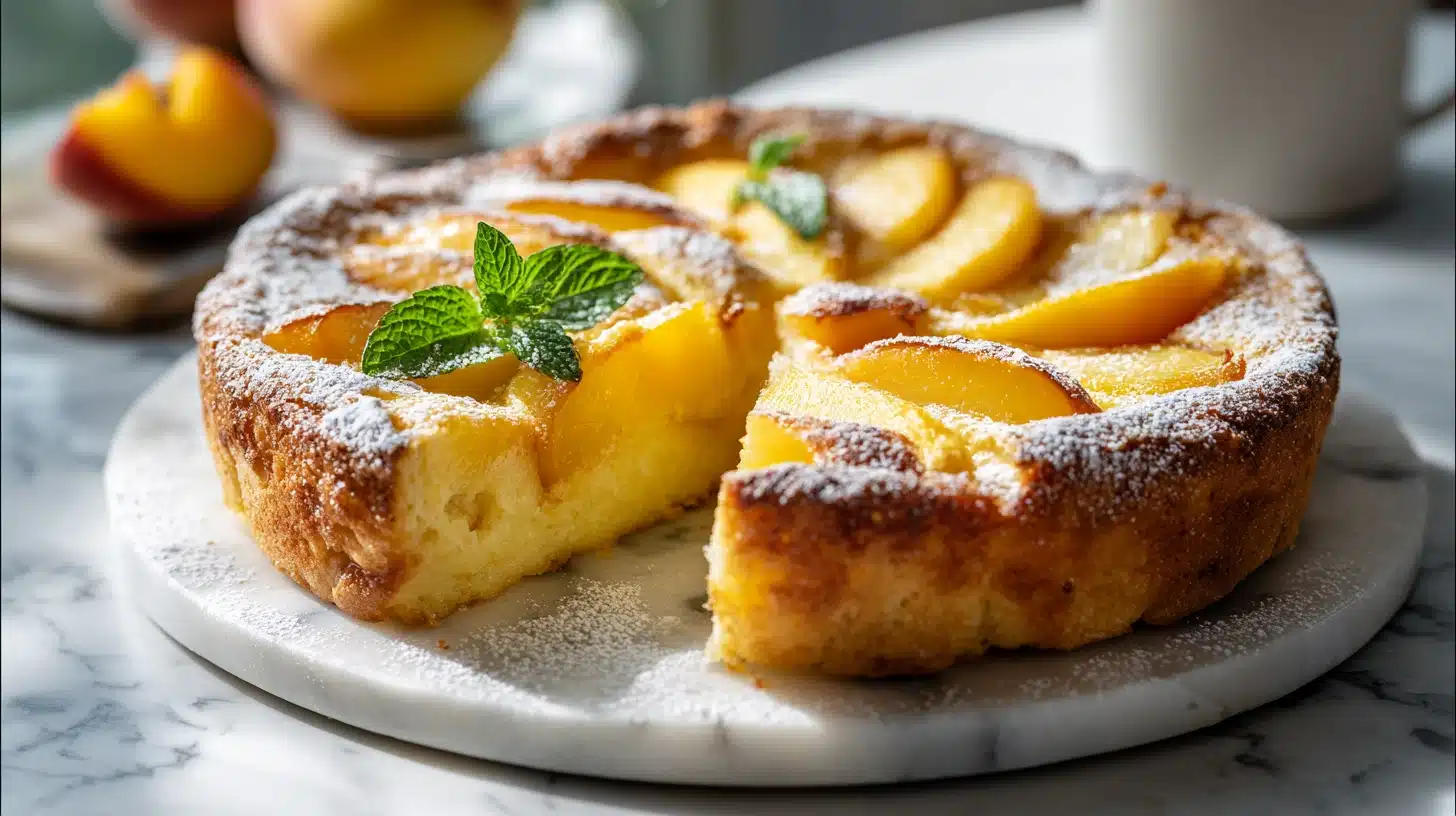
Most baked custard desserts either set up rubbery or stay too loose in the center, and the fruit sinks into a soggy layer at the bottom. This recipe uses a rested batter and a properly preheated dish so the custard sets from the outside in, giving you a clean, silky slice every time.
You’ll get the exact flour-to-egg ratio that keeps the texture soft without being gummy, the right way to prep fresh peaches so they stay suspended in the custard, and the one oven trick that guarantees a properly golden top.
Table of Contents
What is clafoutis (and why peaches are perfect for it)
Clafoutis (pronounced klah-foo-TEE) is a classic French baked dessert that sits somewhere between a flan, a pancake, and a Dutch baby. The name comes from the Occitan word “clafir,” meaning to fill, and the traditional version from the Limousin region is made with whole cherries. When you swap in other fruit, purists technically call it a “flaugnarde,” though most home cooks and food writers use clafoutis as a catch-all. For this summer peach version, you can call it whatever you like as long as you call it delicious.
Why peaches work so well
Stone fruit is the natural partner for this style of custard cake. Peaches bring a high-water content that steams gently as the batter sets, creating pockets of jammy, intensely flavored fruit throughout each slice. Their natural acidity cuts through the richness of the egg-and-cream base in a way that milder fruits simply cannot. When peaches are at their summer peak, the flavor inside a clafoutis concentrates into something almost like eating peach jam baked right into a cloud of custard.
The structure of a clafoutis is also forgiving. The batter is essentially a crepe batter with slightly more flour, which means it barely functions as a vehicle, letting the fruit carry most of the flavor. There’s no pastry crust to burn, no layering to get wrong, and no candy thermometer to worry about.
How clafoutis differs from cobbler
If you’ve made a peach cobbler before, you already understand the impulse behind this dessert: ripe peaches, a hot oven, and a batter that does most of the work for you. The key difference is texture. A cobbler gives you biscuit or cake on top with a saucy, juicy bottom. A clafoutis is a single unified layer where the fruit and custard bake together as one. The result is a dessert closer to a tart than a cake but requires none of the chilling, blind-baking, or precision that tart-making demands.
That makes the peach clafoutis one of the most efficient summer desserts in the French baking repertoire. You need one bowl, a whisk, and about fifteen minutes of active work. The oven does the rest.
Print
The Best Peach Clafoutis Recipe You’ll Make All Summer
- Total Time: 95 min
- Yield: 8 servings 1x
- Diet: Vegetarian
Description
A classic French baked custard cake filled with ripe summer peaches. The batter is thin and egg-based, setting into a silky, tender interior with a lightly caramelized golden top. It sits somewhere between a flan and a pancake, and it comes together with one bowl and about 15 minutes of active prep.
Ingredients
For the custard batter:
3 large eggs (room temperature)
1 cup whole milk
1/3 cup heavy cream
1/2 cup granulated sugar
1/2 cup all-purpose flour (spooned and leveled)
1 teaspoon pure vanilla extract
1/2 teaspoon almond extract
1 tablespoon unsalted butter (for the dish)
1 pinch fine sea salt
For the peaches:
4 medium ripe peaches (about 1.5 lbs total, pitted and sliced 1/2 inch thick)
1 tablespoon granulated sugar
1 teaspoon fresh lemon juice
For finishing:
2 tablespoons powdered sugar (for dusting)
Fresh thyme leaves or mint (optional, for garnish)
Instructions
1. Preheat your oven to 375 degrees F. Brush a 10-inch round ceramic or cast-iron baking dish generously with butter, then dust the inside lightly with granulated sugar.
2. Toss the peach slices with 1 tablespoon of granulated sugar and 1 teaspoon of fresh lemon juice in a bowl. Let them sit and macerate while you make the batter.
3. In a large bowl, whisk the eggs, 1/2 cup sugar, and salt together for about 90 seconds until the mixture is pale and slightly thickened.
4. Whisk in the vanilla extract and almond extract, then add the flour and mix until no dry streaks remain. The batter will smell faintly of vanilla and warm cream.
5. Pour in the whole milk and heavy cream in a slow, steady stream while whisking constantly. The finished batter should be smooth, thin, and slightly foamy.
6. Cover the batter with plastic wrap and let it rest at room temperature for 30 minutes. This allows the flour to fully hydrate and produces a silkier custard texture.
7. Arrange the macerated peach slices in an even, slightly overlapping layer in the prepared dish. Pour the rested batter slowly and evenly over the peaches.
8. Bake on the center rack for 45 to 50 minutes, until the edges are puffed and golden bronze and the center has just a slight wobble when you gently shake the dish. If the top browns too fast, tent loosely with foil for the last 10 minutes.
9. Remove from the oven and let the clafoutis rest for at least 20 minutes. It will puff in the oven and settle as it cools, which is normal.
10. Dust generously with powdered sugar just before slicing and serving. Serve warm, at room temperature, or cold from the refrigerator.
Notes
Store covered in the refrigerator for up to 3 days. Reheat individual slices in a 300 degree F oven for 10 minutes. This recipe does not freeze well as the custard becomes grainy when thawed.
For a bourbon variation, swap the almond extract for 2 tablespoons of good bourbon. For a floral note, steep 1 teaspoon of dried culinary lavender in the warm milk for 10 minutes, then strain before using.
Canned or frozen peaches can be used year-round. Drain and pat them very dry before using to prevent excess liquid from thinning the batter.
The batter can be made up to 24 hours ahead and stored covered in the refrigerator. Whisk it well before using as the flour will settle. The fully baked clafoutis can also be made a day ahead and served at room temperature.
- Prep Time: 15 min
- Rest Time: 30 min
- Cook Time: 50 min
- Category: Dessert
- Method: Baking
- Cuisine: French
Nutrition
- Serving Size: 1 slice
- Calories: 198 kcal
- Sugar: 22 g
- Sodium: 65 mg
- Fat: 8 g
- Saturated Fat: 4 g
- Unsaturated Fat: 4 g
- Trans Fat: 0 g
- Carbohydrates: 28 g
- Fiber: 1 g
- Protein: 5 g
- Cholesterol: 88 mg
Ingredients for the best peach clafoutis recipe
Getting the ingredient proportions right is the difference between a clafoutis that slices cleanly and one that deflates into a puddle the moment it cools. Every measurement below has been tested across multiple batches to nail that sweet spot.
The ingredient list
For the custard batter:
- 3 large eggs (room temperature)
- 1 cup whole milk
- 1/3 cup heavy cream
- 1/2 cup granulated sugar
- 1/2 cup all-purpose flour (spooned and leveled)
- 1 teaspoon pure vanilla extract
- 1/2 teaspoon almond extract
- 1 tablespoon unsalted butter (for the dish)
- Pinch of fine sea salt
For the peaches:
- 4 medium ripe peaches (about 1.5 pounds total)
- 1 tablespoon granulated sugar
- 1 teaspoon fresh lemon juice
For finishing:
- 2 tablespoons powdered sugar (for dusting)
- Fresh thyme leaves or mint (optional)
Ingredient notes
Eggs: Room temperature eggs blend into the batter more smoothly, which means fewer lumps and a more even custard. Pull them from the refrigerator 30 minutes before you start.
Milk and cream: The combination of whole milk and heavy cream gives the batter enough fat to set up silky without being so rich that it tastes heavy. Using all milk produces a slightly looser custard. Using all cream tips it toward something closer to a quiche filling.
Flour: Half a cup is the sweet spot for this size recipe. Less flour and the clafoutis will barely set. More and you lose that custardy interior and end up with something closer to a dense cake.
Peaches: You want peaches that are fragrant and just barely yielding when pressed. If your peaches are very firm and not yet ripe, set them on the counter for a day or two. Overly soft peaches release too much liquid and can waterlog the batter. Whether you peel them is entirely up to you. The skin softens during baking and adds a gentle color, but if you prefer a cleaner presentation, blanch and peel them first.
Almond extract: This is a small amount, but it’s doing significant work. Almonds and stone fruit are close botanical relatives, and that faint almond note in the batter will make your clafoutis taste like it came from a proper French patisserie.
How to make this easy peach clafoutis step by step
The process has four stages: prep the peaches, make the batter, rest it, and bake. Each stage is straightforward, but following the order matters for getting the best result.
Step 1: Prep the peaches
Halve and pit your peaches, then cut each half into 4 to 5 slices (you want pieces thick enough to hold their shape but not so thick that the center of each slice stays raw). Toss the slices with 1 tablespoon of sugar and 1 teaspoon of lemon juice. Let them sit while you make the batter. This short maceration draws out a little juice, seasons the fruit, and concentrates the peach flavor so every bite has that bright, honeyed sweetness.
Step 2: Make the batter
In a large bowl, whisk the eggs, sugar, and salt together for about 90 seconds until the mixture is pale and slightly thickened. Whisk in the vanilla and almond extract, then the flour, mixing until no dry streaks remain. Finally, pour in the milk and cream in a slow, steady stream while whisking constantly. The batter should be smooth, thin, and just a little foamy on top. It will smell faintly of vanilla and cream, like a crepe batter with a richer note underneath.
Step 3: Rest the batter
Pour the batter into a pitcher or large measuring cup, cover it with plastic wrap, and let it rest at room temperature for 30 minutes. This step allows the flour to fully hydrate and the gluten to relax, which produces a more tender, evenly-textured custard. Don’t skip this. Batter poured straight into the dish without resting tends to produce an uneven crumb and a slightly gummy bite.
Step 4: Bake the clafoutis
Preheat your oven to 375°F. Brush a 10-inch round ceramic or cast-iron baking dish generously with butter, then dust the inside lightly with granulated sugar. This creates a thin caramelized crust on the bottom and sides that makes unmolding or slicing much cleaner.
Arrange your macerated peach slices in an even, overlapping layer in the prepared dish. Pour the rested batter slowly over the fruit. The peach slices will rise slightly as the batter settles around them, and some will peek through the surface during baking.
Slide the dish into the center rack of the preheated oven and bake for 45 to 50 minutes. At the 45-minute mark, the edges should be set and puffed, and the top should be deep golden bronze. Give the dish a gentle shake. The center should have just a slight wobble, not a liquid slosh. If the top is coloring too fast before the center sets, tent it loosely with foil for the last 10 minutes.
Remove from the oven and let the clafoutis rest for at least 20 minutes before slicing. It will puff dramatically when it comes out and then settle as it cools, which is completely normal. Dust with powdered sugar just before serving.
Serving, storing, and variations for your summer peach dessert
How to serve it
This fresh peach clafoutis is genuinely good at every temperature. Warm from the oven it’s pillowy and fragrant, with the peaches still releasing little wisps of steam as you cut into each slice. At room temperature it firms up to a silkier, more custard-like texture that slices even more cleanly. Cold from the refrigerator the next morning it tastes almost like a chilled tart filling, particularly good with a strong cup of coffee.
For a simple dessert, a dusting of powdered sugar is all you need. If you want to dress it up a little, serve each slice with a small scoop of peach ice cream alongside, which mirrors the fruit flavor in the custard beautifully.
Storage
Cover the cooled clafoutis tightly with plastic wrap or transfer slices to an airtight container. It keeps well in the refrigerator for up to 3 days. The texture changes slightly as it chills, becoming more compact and firm, but the flavor stays bright. Reheat individual slices in a 300°F oven for about 10 minutes if you want to bring back some of the original warmth and puff.
Clafoutis doesn’t freeze well. The custard becomes grainy and weeps moisture when thawed, so it’s best eaten fresh within the window above.
Variations worth trying
Bourbon peach clafoutis: Swap the almond extract for 2 tablespoons of good bourbon. The caramel notes in the spirit play beautifully with peak-season peaches.
Lavender peach clafoutis: Steep 1 teaspoon of dried culinary lavender in the warm milk for 10 minutes before adding it to the batter. Strain it out before mixing. The floral note is subtle but distinctive.
Peach and raspberry clafoutis: Scatter a small handful of fresh raspberries among the peach slices before pouring in the batter. The tartness of the berries cuts through the custard’s richness in a lovely way.
Peach and brown butter clafoutis: Instead of plain melted butter for the dish, use browned butter. Swirl 2 tablespoons in a small pan until it smells nutty and turns amber, then use it to grease the dish and add 1 extra tablespoon to the batter itself. The nuttiness layers with the almond extract for a richer, more complex result.
If you love working with fresh peaches all season long, the peach crisp on Forkful Daily is another minimal-effort recipe that lets great fruit shine.
Frequently asked questions
Can I use canned or frozen peaches instead of fresh?
Yes, with some adjustments. Drain canned peaches very well and pat them dry before using, since extra liquid will thin the batter and prevent the custard from setting properly. Frozen peaches should be thawed completely, then drained and dried the same way. Fresh peaches at their summer peak will always give you the most flavor, but well-drained canned or thawed frozen peaches produce a perfectly enjoyable clafoutis year-round.
Why did my clafoutis sink in the middle after baking?
A slight dip in the center after cooling is completely normal and not a flaw. Clafoutis puffs dramatically in the oven from steam and egg proteins, then settles as the steam escapes during cooling. If the sinking is extreme and the center looks wet or undercooked, your oven may run cool or the dish was removed too early. Use an oven thermometer to confirm your oven temperature and bake until the center has just a very gentle wobble when you shake the dish.
Do I have to peel the peaches?
No, you don’t have to peel them, and most of the time I don’t bother. The skin softens during the 50-minute bake and becomes nearly imperceptible in the finished custard. If you have very thick-skinned freestone peaches or simply prefer a cleaner, more uniform texture, blanch them in boiling water for 30 seconds, transfer to ice water, and the skins will slip off easily.
Can I make this clafoutis ahead of time?
You can make the batter up to 24 hours in advance and keep it covered in the refrigerator. Give it a good whisk before pouring it over the fruit, since the flour will have settled. The fully baked clafoutis can also be made a day ahead and refrigerated, then brought to room temperature or briefly warmed in the oven before serving. Making it the morning of a dinner party and serving it at room temperature that evening works particularly well.
Conclusion
This best peach clafoutis recipe started as a simple French farmhouse dessert and it remains exactly that: honest, unfussy, and built entirely around great summer fruit. A batter so simple it barely looks like dessert before the oven transforms it, and that’s still the most accurate description I can give.
Give it a try this weekend while peaches are at their peak. Bring it to a dinner table warm, dust it with powdered sugar at the last moment, and watch it disappear before anyone asks what it is.
For more recipes like this best peach clafoutis recipe, follow us on Facebook and Pinterest for fresh summer dessert inspiration.