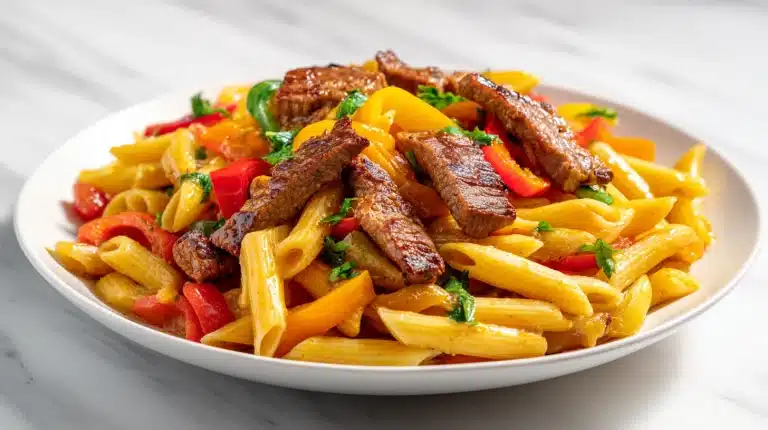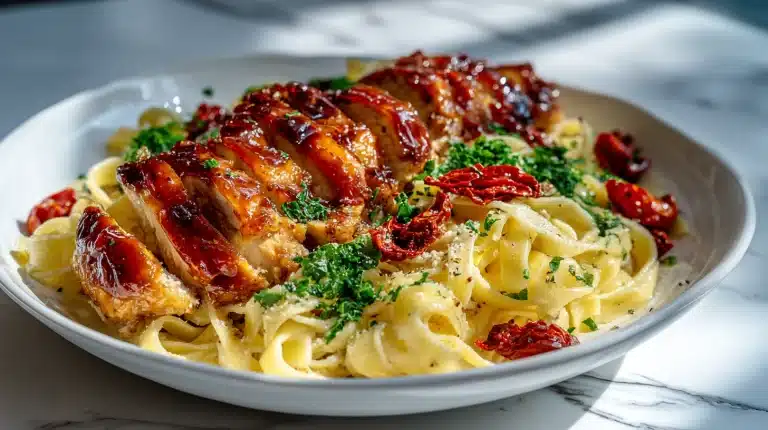
The first time I plated Cajun surf and turf pasta for friends, the silence at the table said everything. Forks hovered, eyes widened, and someone whispered “this beats any restaurant version.”
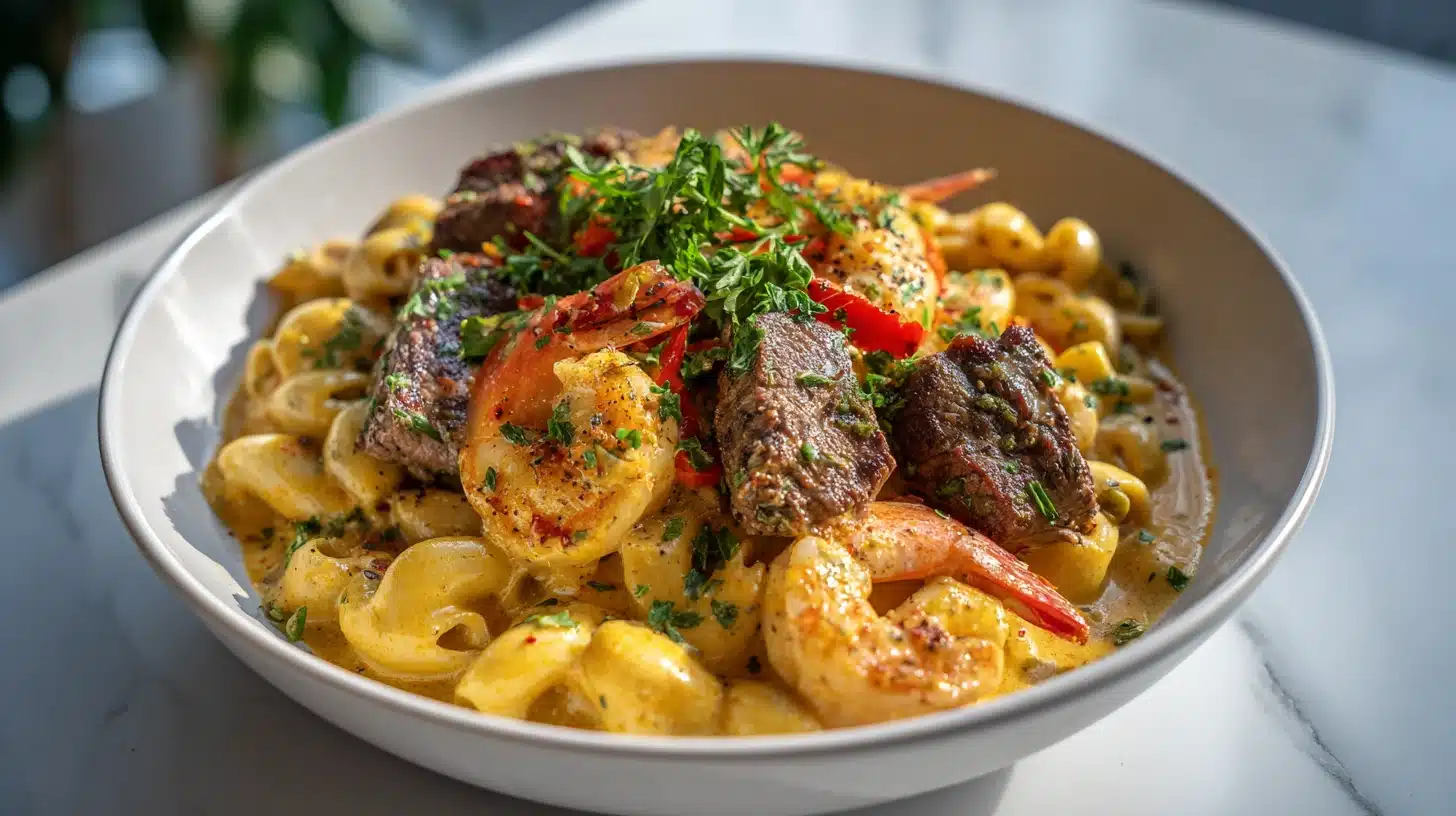
Most surf and turf pasta recipes drown in heavy sauce, leaving the steak overcooked and the shrimp rubbery. This version solves both problems by searing each protein separately and building the sauce in the same skillet.
Inside: the exact Cajun seasoning ratio that balances heat and savor, a two-stage searing method for tender steak and plump shrimp, and how to build a cream sauce that clings to every strand of pasta without breaking.
Table of Contents
Why This Cajun Surf and Turf Pasta Is Different
The magic of Cajun surf and turf pasta comes down to layering. Instead of dumping everything into one pot and hoping for the best, you build flavor in stages, with each step adding depth to the final dish.
Think about what happens when you sear steak in a hot skillet. The meat develops a caramelized crust while the pan collects browned bits, called the fond, packed with concentrated beef flavor. When you then cook shrimp in that same skillet, those juices mingle with the natural sweetness of the seafood. By the time you add cream and cheese, the sauce has absorbed every layer of flavor from the proteins that came before it.
This is the fundamental difference between a restaurant-quality Cajun surf and turf pasta and a bland home version. Most home cooks skip the fond. They wipe the pan clean between steps or use a separate saucepan, throwing away the best part. Do not do that. Every browned bit stuck to the bottom of your skillet is pure flavor gold, and it dissolves right into your cream sauce when you deglaze.
The Cajun seasoning matters a lot here. A good blend combines smoky paprika, earthy garlic powder, onion powder, dried oregano and thyme, a pinch of cayenne for warmth, salt, and black pepper. You can buy pre-mixed Cajun seasoning, and I sometimes do for convenience, but mixing your own lets you control the heat level precisely. If you love spicy surf and turf pasta, double the cayenne. If you prefer a mellow warmth, halve it. The paprika gives you that signature rust color and smoky backbone regardless.
The sauce base is what makes this a Cajun surf and turf Alfredo rather than a dry stir-fry. Heavy cream, butter, freshly grated Parmesan, and Romano cheese come together into a silky sauce that coats the pasta like a warm blanket. The trick is to grate your own cheese from a solid block. Pre-shredded cheese is coated with anti-caking agents that make the sauce grainy instead of smooth, and that texture problem is impossible to fix once it happens.
If you enjoy this flavor profile, you might also like our creamy cajun garlic pasta, which uses a similar seasoning approach with a simpler protein lineup.
The final element is the pasta itself. Linguine, fettuccine, or tagliatelle all work well because their flat surfaces grab onto the cream sauce and hold it tight. Round shapes like penne can work in a pinch, but flat noodles give you that restaurant-style twirl on the fork that makes every bite feel special. The pasta also finishes cooking in the sauce, which means it absorbs seasoning and cream directly into its surface rather than just sitting underneath it.
Print
Bold, Creamy Cajun Surf and Turf Pasta for Weeknight Dinners
- Total Time: 48 min
- Yield: 4 servings 1x
Description
A creamy Cajun Alfredo pasta loaded with seared steak strips, plump shrimp, and bell peppers. Ready in under an hour for four servings.
Ingredients
For the Cajun seasoning:
2 tsp smoked paprika
1 tsp garlic powder
1 tsp onion powder
1/2 tsp dried oregano
1/2 tsp dried thyme
1/4 tsp cayenne pepper
1 tsp kosher salt
1 tsp black pepper
For the pasta and proteins:
12 oz linguine pasta
1 lb sirloin steak (cut into 1-inch strips against the grain)
1 lb large shrimp (peeled and deveined, patted dry)
2 tbsp olive oil
1 tbsp butter
1 large bell pepper (sliced)
4 cloves garlic (minced)
For the Cajun Alfredo sauce:
2 tbsp butter
1 cup heavy cream
1/2 cup Parmesan cheese (freshly grated)
1/4 cup Romano cheese (freshly grated)
1 tsp Cajun seasoning (from the blend above)
2 tbsp fresh parsley (chopped, for garnish)
Instructions
1. Cook the linguine in a large pot of well-salted boiling water for 1 minute less than package directions, about 8 minutes. Drain and reserve 1/2 cup of pasta water.
2. Mix all Cajun seasoning ingredients in a small bowl. Season the steak strips and shrimp with 2 tablespoons of the blend, tossing to coat evenly.
3. Heat 1 tablespoon olive oil in a large skillet over high heat until it shimmers. Sear the steak strips for 2 minutes per side until a deep brown crust forms. Transfer to a plate.
4. Add 1 tablespoon butter to the same skillet. When it foams, cook the shrimp for 1 minute per side just until they turn pink and curl. Transfer to the plate with the steak.
5. Lower the heat to medium. Add 2 tablespoons butter and the sliced bell peppers. Cook for 3 minutes until the peppers soften and smell sweet. Add the minced garlic and stir for 30 seconds until fragrant.
6. Pour in the heavy cream and bring to a gentle simmer. Whisk in the Parmesan and Romano cheeses until the sauce turns smooth and silky, about 2 minutes. Add 1 teaspoon of Cajun seasoning.
7. Add the cooked pasta, steak, and shrimp to the skillet. Toss gently for 1 minute until the sauce coats every strand and the proteins are warmed through. Add splashes of reserved pasta water if the sauce needs thinning.
8. Taste and adjust salt and pepper. Serve immediately in shallow bowls, garnished with fresh parsley and an extra pinch of Cajun seasoning.
Notes
Store leftovers in an airtight container in the refrigerator for up to 3 days. Reheat gently in a skillet over medium-low heat with a splash of milk or cream.
Grate your own Parmesan and Romano from blocks rather than using pre-shredded cheese, which contains anti-caking agents that make the sauce grainy.
Pat the shrimp completely dry before seasoning to ensure a good sear. Wet shrimp will steam instead of browning.
Adjust the cayenne pepper in the Cajun seasoning to control the spice level. Use 1/8 teaspoon for mild heat or 1/2 teaspoon for a spicy kick.
- Prep Time: 18 min
- Cook Time: 30 min
- Category: Dinner, Main Course
- Method: Stovetop
- Cuisine: American
Nutrition
- Serving Size: 1.5 cups
- Calories: 685 kcal
- Sugar: 4 g
- Sodium: 1280 mg
- Fat: 38 g
- Saturated Fat: 22 g
- Unsaturated Fat: 14 g
- Trans Fat: 0 g
- Carbohydrates: 42 g
- Fiber: 3 g
- Protein: 42 g
- Cholesterol: 245 mg
Ingredients for the Best Cajun Surf and Turf Pasta
Great Cajun shrimp and steak pasta starts with smart ingredient choices. Let me walk through each component and why it matters, because the quality of what goes into the skillet determines what comes out.
The steak. You want a cut that sears quickly and stays tender. Ribeye is the richest option, with marbling that melts as it cooks and bastes the meat from within. Sirloin is leaner and more affordable, and it still develops a beautiful crust. New York strip sits in the middle, offering both marbling and structure. Any of these three will work well. What matters most is cutting the steak into strips against the grain before cooking so each bite is easy to chew. Aim for strips about 1 inch wide and 3 inches long, uniform in size so they cook evenly.
The shrimp. Large or extra-large shrimp, around 16 to 25 per pound, are ideal here. They cook in under 2 minutes per side and stay plump and juicy. Fresh shrimp are wonderful, but frozen shrimp work just as well if you thaw them properly. Pat them completely dry before seasoning. Wet shrimp will steam instead of sear, and you lose that golden caramelization that adds so much flavor to the pan.
The pasta. Linguine is my go-to for this Cajun surf and turf pasta. Its flat shape and slightly chewy texture hold the creamy sauce well, and each strand picks up flecks of seasoning as you toss. Fettuccine is a close second. Tagliatelle works if you want something a touch more delicate. Whatever you choose, cook it 1 minute less than the package suggests so it finishes cooking in the sauce, absorbing flavor as it softens.
The Cajun seasoning. Here is the blend I use and recommend:
- 2 teaspoons smoked paprika
- 1 teaspoon garlic powder
- 1 teaspoon onion powder
- 1/2 teaspoon dried oregano
- 1/2 teaspoon dried thyme
- 1/4 teaspoon cayenne pepper
- 1 teaspoon kosher salt
- 1 teaspoon freshly ground black pepper
This makes about 3 tablespoons total, and you will use roughly 2 tablespoons for seasoning the proteins. The remaining tablespoon goes into the sauce for a second hit of flavor that permeates every bite.
The sauce. Heavy cream, butter, Parmesan, and Romano. The Romano adds a sharper, saltier edge that balances the richness of the cream and keeps the dish from feeling one-note. Bell peppers bring color and a slight sweetness that cuts through the spice. If you want to explore another approach to Cajun seasoning on proteins, our cajun parmesan sheet pan chicken uses a similar blend on chicken instead.
How to Make Cajun Surf and Turf Pasta Step by Step
This is where everything comes together. The process takes about 30 minutes of active cooking, and the sequence matters more than you might expect. Read through all the steps before you start so you can move efficiently from one to the next without pausing.
Step 1: Cook the pasta. Bring a large pot of well-salted water to a rolling boil. The water should taste like the sea, because that is the only chance the pasta has to get seasoned from the inside. Add 12 ounces of linguine and cook it 1 minute less than the package instructions. You want it slightly underdone because it will finish cooking in the sauce. Before draining, scoop out half a cup of the starchy pasta water and set it aside. This liquid is your secret weapon for adjusting sauce consistency later, and it costs you nothing to save.
Step 2: Season the proteins. Pat the steak strips and shrimp dry with paper towels. Sprinkle 2 tablespoons of the Cajun seasoning over both, tossing to coat evenly. Let them sit at room temperature for 5 minutes while the skillet heats up. This brief rest helps the seasoning adhere to the surface and takes the chill off the meat so it sears more evenly.
Step 3: Sear the steak. Heat 1 tablespoon of olive oil in a large skillet over high heat until it shimmers and just begins to smoke. Add the steak strips in a single layer, working in batches if needed to avoid crowding the pan. Sear for 2 minutes per side until a deep brown crust forms. You want to hear that aggressive sizzle the moment the meat hits the pan. Transfer the steak to a plate and resist the urge to cover it, because covering traps steam and softens the crust you just worked to build.
Step 4: Cook the shrimp. In the same skillet, add 1 tablespoon of butter. When it foams and begins to brown slightly, add the shrimp in a single layer. Cook for 1 minute per side just until they turn pink and curl into loose C shapes. Overcooking is the enemy here, and the line between perfect and rubbery is about 30 seconds. Transfer the shrimp to the plate with the steak. The pan should now have a layer of fond, those gorgeous browned bits, coating the bottom.
Step 5: Build the sauce. Lower the heat to medium. Add 2 tablespoons of butter and the sliced bell peppers. Cook for 3 minutes until the peppers soften and release a sweet aroma. Add 4 cloves of minced garlic and stir for 30 seconds until you can smell it toasting. Pour in 1 cup of heavy cream and bring it to a gentle simmer. Whisk in half a cup of grated Parmesan and a quarter cup of grated Romano. The sauce will thicken and turn silky in about 2 minutes. For a deeper look at cream sauce technique, check out our creamy garlic parmesan pasta.
Step 6: Combine everything. Add the cooked pasta, steak, and shrimp back to the skillet. Toss gently for 1 minute until the sauce coats every strand and the proteins are warmed through. If the sauce feels too thick, add splashes of the reserved pasta water until it reaches the consistency you want. Serve immediately in shallow bowls with fresh parsley and an extra pinch of Cajun seasoning on top.
Tips, Variations, and Storage
Even a straightforward recipe like Cajun surf and turf pasta benefits from a few pro tips. Here are the ones that make the biggest difference between a good dinner and one you will want to make again next week.
Do not overcook the shrimp. This is the number one mistake people make with any shrimp pasta. Shrimp go from perfect to rubbery in a matter of seconds. When you see them turn pink and form a loose C shape, they are done. If they curl into a tight O, they are overcooked and the texture turns grainy. Pull them from the heat the moment they look pink on both sides, even if you think they need another few seconds. Carryover heat from the pan and the sauce will finish the job.
Let the steak rest before slicing. If you are cooking a whole steak instead of pre-cut strips, let it rest for 5 minutes after searing before you cut it. This allows the juices to redistribute throughout the meat. Cutting into a hot steak sends all the juice onto the cutting board, leaving the meat dry and the flavor on your countertop.
Control your heat level. The cayenne in the Cajun seasoning is where the spice lives. If you are serving kids or spice-sensitive guests, reduce the cayenne to an eighth of a teaspoon. You can always serve hot sauce on the side for those who want more kick. The paprika gives you that signature rust color and smoky flavor without the burn, so the dish will still look and taste authentic even with minimal cayenne.
Make it ahead. You can prep every component in advance and store them separately. Cook the pasta and toss it with a little olive oil to prevent sticking. Season the proteins and keep them covered in the fridge. Mix the Cajun seasoning blend up to a month ahead and store it in a sealed jar. When dinnertime rolls around, the actual cooking takes less than 15 minutes. This approach also works well if you are adapting the concept for another dish like our cajun chicken mac and cheese.
Storage and reheating. Store leftovers in an airtight container in the refrigerator for up to 3 days. The sauce will thicken as it sits, so add a splash of milk or cream when reheating. Warm it gently in a skillet over medium-low heat, stirring occasionally. Avoid the microwave if possible, because it makes the shrimp tough and the sauce greasy. The texture is always better with gentle stovetop reheating.
Variations to try. Swap the linguine for fettuccine or tagliatelle. Add sliced andouille sausage for a triple-protein feast. Toss in a handful of baby spinach at the end for color and nutrients. Use half-and-half instead of heavy cream for a lighter sauce, though it will be less rich. You can also add halved cherry tomatoes for bursts of acidity that cut through the cream and balance the dish.
Frequently Asked Questions
Is this Cajun Steak and Shrimp Alfredo Pasta spicy?
The spice level is moderate and fully adjustable. The cayenne pepper in the Cajun seasoning provides a gentle warmth that most people find pleasant and approachable. If you are sensitive to heat, reduce the cayenne to an eighth of a teaspoon. If you love spice, double it. The paprika adds smoky flavor and color without heat, so the dish still looks and tastes authentic even with minimal cayenne.
Can I use frozen shrimp for this Cajun surf and turf pasta?
Yes, frozen shrimp work perfectly well. Thaw them overnight in the refrigerator or place them in a colander under cold running water for about 15 minutes. The most important step is patting them completely dry with paper towels before seasoning. Wet shrimp will steam instead of sear, which means no golden crust and less flavor in the pan for your sauce to absorb.
What type of steak can I use?
Ribeye, sirloin, and New York strip all work well. Ribeye is the most flavorful and tender thanks to its marbling, but it is also the most expensive. Sirloin is leaner and more budget-friendly while still delivering great beef flavor. New York strip offers a balance of both. Whichever you choose, cut it against the grain into strips before cooking so each bite is tender and easy to chew.
What type of pasta should I use for surf and turf Alfredo?
Linguine, fettuccine, and tagliatelle are the best choices because their flat surfaces grab and hold the creamy sauce. Linguine is slightly narrower and cooks a touch faster. Fettuccine is wider and heartier. Avoid very thin pastas like angel hair, because they get lost under the heavy sauce and proteins. Penne can work in a pinch, but you lose that satisfying fork-twirl experience that makes this dish feel special.
Conclusion
You can get restaurant-quality flavor on a weeknight timeline with this dish. Searing each protein separately, building sauce in the same skillet, and using a homemade Cajun seasoning blend creates layers of flavor that no single-pot shortcut can match. The creamy Alfredo sauce ties it all together, and every strand of pasta picks up warmth and spice.
Give it a try this week. It comes together in under an hour and feeds four hungry people comfortably. I keep coming back to this one on nights when I want something that feels indulgent without spending two hours in the kitchen.
For more recipes like Cajun surf and turf pasta, follow us on Facebook and Pinterest for weeknight dinner ideas.