Surf and turf ramen is what happens when you refuse to choose between a steakhouse dinner and a cozy noodle bowl, so you pull both into the same pot and let them mingle. I first threw this together on a rainy Tuesday when I had a leftover ribeye, half a bag of shrimp, and a serious craving for something brothy and warm.
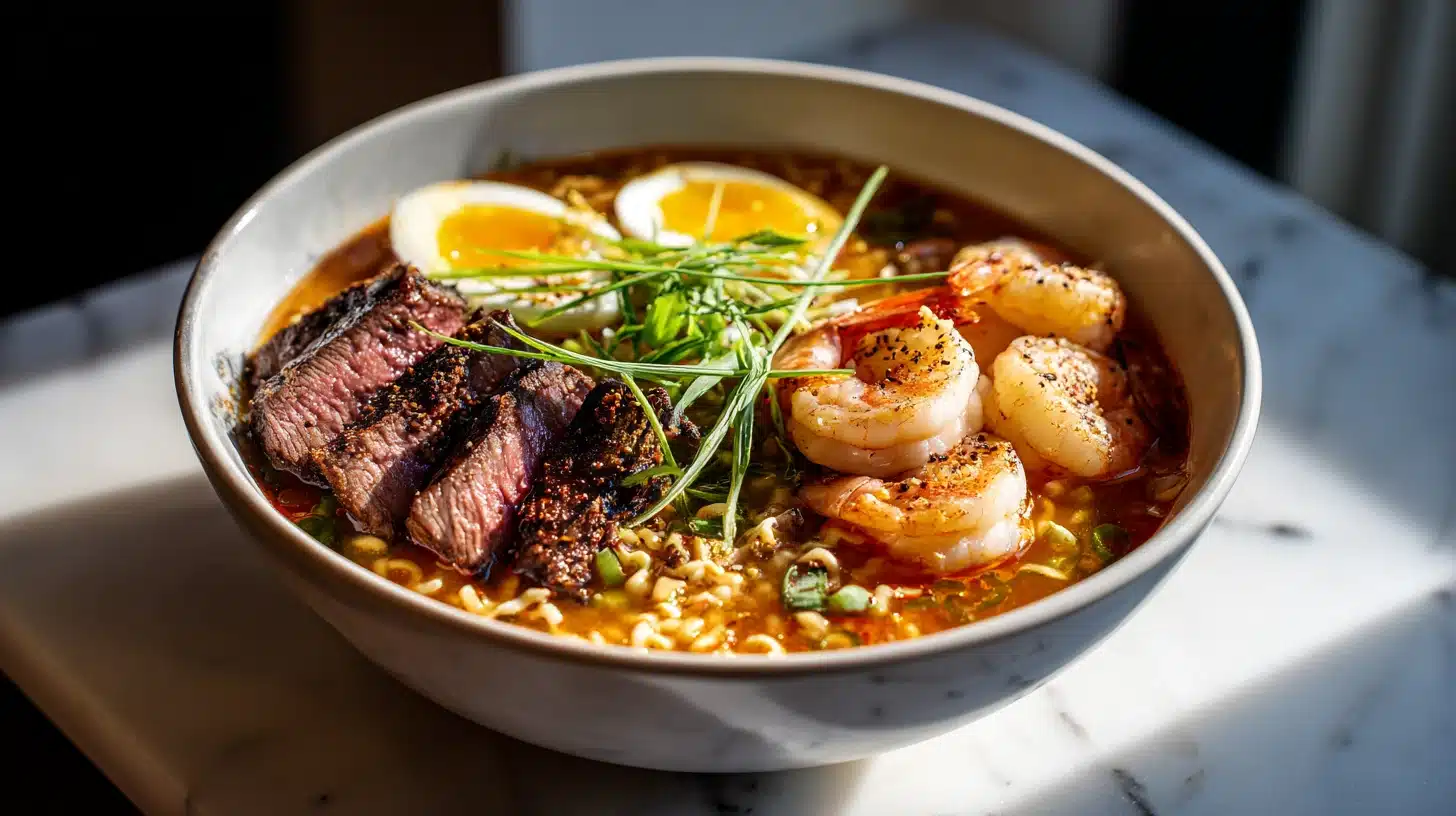
Most surf and turf noodle recipes fall apart because the steak overcooks in the broth and turns gray, or the shrimp turns rubbery and tasteless while the noodles go limp and gummy. This recipe fixes both problems by searing the proteins separately and adding them at the very end so every element stays at peak texture.
You’ll walk away with a method for building a umami-packed broth in 20 minutes, a technique for medium-rare steak that stays tender in a hot bowl, and a simple timing system so your shrimp, steak, and noodles all finish at the same moment.
Table of Contents
Why This Combination Actually Works
The idea of putting steak and shrimp in ramen might sound like a restaurant-only indulgence, but the logic behind it is surprisingly practical. Steak brings deep, browned, meaty richness from the Maillard reaction on its crust. Shrimp contributes sweetness and a briny edge that brightens the whole bowl. When you pair them with a broth that has enough backbone to support both, you get something that tastes far more complex than the sum of its parts.
The trick is treating each protein with respect. Steak belongs in a hot, dry pan for a hard sear, never boiled. Shrimp needs just 90 seconds per side in a butter-garlic bath, never a second more. If you kimchi ramen fans think you know umami, wait until you taste a broth that has absorbed the juices of both a seared ribeye and caramelized shrimp shells.
The broth itself is a shortcut hybrid. You start with store-bought chicken or dashi broth and build it up with aromatics, a splash of soy sauce, a spoon of miso, and the reserved shrimp shells for depth. Twenty minutes of simmering is all you need. The shells melt their ocean flavor into the liquid while ginger and garlic round out the profile. You then strain the broth so it stays clean and silky, not gritty.
What makes this a true surf and turf ramen recipe rather than just noodles with toppings is the layering. You build the bowl so the broth hits the noodles first, then the steak and shrimp sit on top where they stay warm without continuing to cook. A soft-boiled egg adds richness. Scallions and sesame oil add freshness and aroma. Every bite gives you a different ratio of meat, seafood, broth, and noodle, which is what makes ramen so satisfying in the first place.
This is a big, confident, fork-and-chopstick kind of dinner that fills the kitchen with the smell of seared beef and toasted sesame. If you have ever wanted a gourmet ramen with steak and seafood that you can actually make on a weeknight, this is your blueprint.
Print
Surf and Turf Ramen: The Bowl That Has Everything
- Total Time: 60 min
- Yield: 2 servings 1x
Description
A ramen bowl that combines seared medium-rare steak slices with butter-garlic shrimp in a quick miso and shrimp-shell broth over fresh noodles. Topped with a jammy soft-boiled egg and scallions, it makes two generous servings in about an hour.
Ingredients
For the broth:
4 cups low-sodium chicken broth
1 tbsp soy sauce
1 tbsp white miso paste
1 tsp neutral oil
Shells from 1 lb large shrimp (reserved from peeling)
1 clove garlic (smashed)
1 slice fresh ginger (1/4 inch thick, smashed)
For the steak and shrimp:
8 oz ribeye or sirloin steak
1 lb large shrimp (21 to 25 per pound, peeled and deveined, shells reserved)
1 tbsp unsalted butter
1 clove garlic (minced)
1/2 tsp salt
1/2 tsp freshly ground black pepper
1 tsp neutral oil (for searing steak)
Additional salt and pepper to taste
For the bowls:
2 portions fresh ramen noodles (about 6 oz total)
2 large eggs (cold from refrigerator)
2 scallions (thinly sliced)
1 tsp toasted sesame oil
1 tsp sesame seeds
Additional freshly ground black pepper to garnish
Instructions
1. Peel the shrimp and reserve all shells. Pat the shrimp dry with paper towels and set aside. Pat the steak dry and season both sides generously with salt and pepper.
2. Heat 1 tsp oil in a medium pot over medium-high heat. Add the shrimp shells, smashed garlic, and ginger slice. Cook for 3 minutes, stirring, until the shells turn bright pink and release a toasted oceanic aroma.
3. Pour in the chicken broth and soy sauce. Bring to a gentle simmer and cook for 15 minutes. Strain through a fine mesh sieve into a clean pot. Off the heat, whisk in the miso paste until smooth. Keep warm over low heat.
4. Heat a cast-iron skillet over high heat until lightly smoking. Add 1 tsp oil, then lay the steak in the pan. Sear 3 minutes without moving, flip, and cook 2 to 3 more minutes for medium-rare. Transfer to a cutting board and rest for 5 minutes.
5. In the same skillet over medium heat, add the butter and minced garlic. Add the shrimp with a pinch of salt and cook 90 seconds per side, just until they curl and turn opaque with light pink edges. Remove immediately.
6. Bring a pot of water to a boil. Lower the cold eggs in and boil for 6 minutes and 30 seconds. Transfer to an ice bath for 2 minutes, then peel carefully.
7. Cook the fresh ramen noodles in boiling water for 90 seconds (or dried noodles 1 minute less than package directions). Drain and rinse briefly under warm water to remove excess starch.
8. Warm two serving bowls. Divide the noodles and twirl into loose nests. Pour about 1.5 cups of hot broth gently down the side of each bowl.
9. Slice the rested steak against the grain into 1/4 inch strips. Fan 4 to 5 slices across one side of each bowl. Arrange 3 shrimp on the opposite side.
10. Halve the eggs and place one half in each bowl, cut side up. Top with scallions, sesame seeds, a drizzle of toasted sesame oil, and a twist of black pepper. Serve immediately.
Notes
Store the broth separately from the proteins in the refrigerator for up to 3 days. Reheat the broth to a simmer and assemble with freshly seared steak and shrimp for best texture.
If you cannot find fresh ramen noodles, dried noodles work if undercooked by 1 minute. Rinse them to remove starch that would cloud the broth.
For a spicier version, add 1 tsp of chili crisp or a spoonful of gochujang to the broth before serving.
Substitute sirloin for ribeye if you prefer a leaner cut. Slice against the grain to keep it tender.
- Prep Time: 25 min
- Cook Time: 35 min
- Category: Dinner, Main Course
- Method: Stovetop
- Cuisine: Asian
Nutrition
- Serving Size: 1 bowl
- Calories: 620 kcal
- Sugar: 4 g
- Sodium: 1480 mg
- Fat: 32 g
- Saturated Fat: 12 g
- Unsaturated Fat: 18 g
- Trans Fat: 0 g
- Carbohydrates: 38 g
- Fiber: 3 g
- Protein: 42 g
- Cholesterol: 285 mg
Choosing the Right Ingredients
The quality of your surf and turf ramen depends almost entirely on the raw materials, so let us talk about what to buy and what to swap if you need to.
For the steak, pick a cut that stays tender with a quick sear. Ribeye is ideal because its fat keeps it juicy even when sliced thin and floated in hot broth. Sirloin works well too and costs a bit less. Flank steak is a leaner option that shines if you slice it against the grain into quarter-inch strips. Avoid anything that needs long, slow cooking like chuck or brisket, because those cuts will turn chewy and tough in this context. You want about 8 ounces of steak for two bowls, which gives you four generous slices per person.
For the shrimp, go with medium or large, around 21 to 25 per pound. Leave the shells on when you buy them, because those shells are going straight into the broth pot. If you can only find pre-peeled shrimp, that works, but you will lose some of the ocean depth in the broth. Frozen shrimp are perfectly fine and often fresher than what sits at the seafood counter. Thaw them under cold running water for ten minutes and pat them dry before cooking.
For the noodles, fresh ramen noodles are the gold standard. You can find them in the refrigerated section of most Asian grocery stores and some well-stocked supermarkets. They cook in about 90 seconds and have a springy, chewy texture that dried noodles cannot match. If dried is all you have, cook them one minute less than the package suggests so they stay firm in the hot broth. If you are making a katsu chicken ramen noodle soup style bowl, the same noodle logic applies: slightly undercook, finish in broth.
For the broth base, look for a low-sodium chicken broth or a kombu dashi powder. You want something neutral that you can season yourself, because the shrimp shells and miso will do heavy lifting. Avoid beef broth here because it overpowers the shrimp and clashes with the lighter aromatics.
Here is a quick breakdown of what each ingredient contributes:
| Ingredient | Role in the Bowl |
|---|---|
| Ribeye or sirloin steak | Meaty richness, seared crust, tender bite |
| Large shrimp | Sweetness, brine, textural contrast |
| Fresh ramen noodles | Chewy, springy base that absorbs broth |
| Miso paste | Umami depth and body for the broth |
| Ginger and garlic | Aromatic backbone, cuts richness |
| Soy sauce | Salt and fermented savoriness |
| Scallions | Fresh bite and color |
| Soft-boiled egg | Creamy richness, classic ramen topping |
The aromatics are non-negotiable. Fresh ginger, garlic, and scallions are what separate a homemade bowl from a sad packet of instant seasoning. Spend the extra two minutes mincing them fresh. Your kitchen will smell incredible, and the difference in the final bowl is enormous.
Building the Broth and Cooking the Proteins
Now we get to the hands-on part. This is where surf and turf ramen either comes together beautifully or falls apart, so follow the sequence carefully and everything will land at the right moment.
Start with the broth. Peel your shrimp and reserve every shell. Heat a tablespoon of oil in a medium pot over medium-high heat and toss in the shells with a smashed garlic clove and a slice of fresh ginger. Cook the shells for about three minutes until they turn pink and release a toasted, oceanic smell. Pour in four cups of chicken broth, add a tablespoon of soy sauce, and bring it to a gentle simmer. Let it go for 15 minutes, then strain through a fine mesh sieve into a clean pot. Whisk in a tablespoon of white miso paste at the end, off the heat, so it dissolves without getting grainy. The broth should taste salty, savory, and faintly sweet from the shrimp.
While the broth simmers, season your steak generously with salt and pepper on both sides. Heat a cast-iron skillet over high heat until it is smoking lightly. Add a teaspoon of oil, then lay the steak down and do not touch it for three minutes. Flip and cook another two to three minutes for medium-rare, depending on thickness. Transfer the steak to a cutting board and let it rest. Do not skip this. If you slice it immediately, all the juices run into the board instead of staying in the meat where they belong.
In the same skillet, turn the heat to medium and add a tablespoon of butter. Toss in the peeled shrimp with a pinch of salt and a minced garlic clove. Cook for 90 seconds per side, just until the shrimp curl and turn opaque with light pink edges. Pull them out immediately. Overcooked shrimp taste like rubber bands and have no place in a great bowl of surf n turf noodles.
If you have ever made a gumbo recipe with okra and shrimp, you already know how much flavor shrimp shells pack. The same principle applies here. Those shells carry the broth.
Now bring a pot of water to a boil for the noodles. If you are using fresh noodles, they need just 90 seconds. Dried noodles need about three minutes, but check one minute early. You want them al dente because they will continue softening in the hot broth. Drain and rinse briefly under warm water to stop the cooking and remove excess starch, which would cloud your broth.
The final prep step is your soft-boiled eggs. Lower two cold eggs into gently boiling water and set a timer for six minutes and thirty seconds. Transfer immediately to an ice bath for two minutes, then peel carefully. The whites should be set but tender, and the yolks should be thick, jammy, and golden. Slice each one in half just before serving.
At this point, everything is ready to assemble. Your broth is strained and seasoned. Your steak is resting. Your shrimp is cooked and waiting. Your noodles are drained. Your eggs are peeled. The next section is where it all comes together in the bowl.
Assembling the Perfect Bowl
Assembly is the moment of truth for any surf and turf ramen bowl. The order in which you layer the ingredients matters more than you might think, because it affects both how the bowl looks and how each bite tastes.
Start with warm bowls. Run them under hot water for ten seconds or pop them in a 200 degree oven while you prep. A warm bowl keeps the broth hotter for longer, which means your steak slices stay warm and your noodles do not go cold before you finish eating.
Divide the noodles between two bowls. Use tongs to twirl them into a loose nest in the center of each bowl. This creates height and makes the bowl look like something from a ramen shop rather than a soup kitchen. Pour the hot broth gently down the side of the bowl so it pools around the noodles without washing them flat. You want about a cup and a half of broth per bowl.
Now slice the steak. Cut it against the grain into quarter-inch slices. Arrange four to five slices fanned across one side of each bowl. The resting period means the juices have redistributed, so the slices will be pink in the center with a dark, crusty edge. Place three shrimp on the opposite side of the bowl, tail-on for presentation if you like. The visual of steak on one side and shrimp on the other is what makes this a true surf and turf presentation.
Add the halved soft-boiled egg, cut side up, leaning against the noodles. Tuck a small handful of thinly sliced scallions on top. Drizzle a few drops of toasted sesame oil over the broth, just enough to create a fragrant, glossy film on the surface. Add a pinch of sesame seeds and a twist of freshly ground black pepper over the steak.
The first slurp should hit you with the salty, savory broth, followed by the chew of the noodles. Then you reach for a slice of steak, dip it briefly in the broth to warm it, and bite into that tender, beefy richness. The shrimp comes next, sweet and garlicky, with just enough bite to remind you it spent 90 seconds in butter. The egg is the final luxury, its yolk mixing into the broth and making everything richer.
If you want to push this even further, consider pairing it with something crunchy on the side. A batch of cajun surf and turf stuffed peppers supreme would be an ambitious companion, but even simple pickled vegetables or a small salad would balance the richness.
One more tip about surf and turf instant ramen: if you are short on time, you can use instant noodle packets and discard the seasoning. Cook the noodles, then build the broth from scratch with miso, soy sauce, and shrimp shells. The noodles from the packet are not as good as fresh, but the homemade broth carries the bowl and makes the upgrade worthwhile. You still get seared steak, buttery shrimp, and a jammy egg on top, which is what matters most.
This recipe makes two generous bowls, but it scales easily. Double the broth and proteins for four servings, and keep the assembly line moving. The whole thing takes about an hour start to finish, which is less time than driving to a ramen shop and waiting for a table.
Frequently Asked Questions
Can I make surf and turf ramen ahead of time?
You can prep the broth a day in advance and store it in the refrigerator. Sear the steak and cook the shrimp fresh on the day you serve, because reheating them in hot broth will overcook both proteins and ruin the texture that makes this bowl special.
What cut of steak works best for ramen?
Ribeye is the top choice because its fat content keeps it juicy even when sliced thin and floated in hot broth. Sirloin is a close second if you want something leaner. Avoid tough cuts like chuck or brisket that need long cooking times to become tender.
Can I use dried ramen noodles instead of fresh?
Yes, dried noodles work fine if you undercook them by about one minute. Fresh ramen noodles have a superior chewy texture and cook in 90 seconds, but dried noodles are more widely available and still produce a satisfying bowl.
How do I keep the steak from overcooking in the broth?
Slice the steak after it rests and place it on top of the broth rather than submerging it. The hot broth will warm the slices gently without continuing to cook them. Eat the steak first or dip individual slices briefly right before each bite.
Conclusion
Surf and turf ramen is proof that you do not have to choose between a steakhouse dinner and a noodle bowl when you can have both in one. By searing the steak and shrimp separately, building a quick broth from shrimp shells and miso, and assembling with care, you get a bowl that rivals anything from a ramen shop. The contrast of beefy, crusty steak against sweet, tender shrimp, all swimming in a savory broth over springy noodles, is the kind of dinner I would happily eat every rainy Tuesday for the rest of my life.
Give this recipe a try this week when you want something hearty and impressive without spending your whole evening in the kitchen. It comes together in about an hour and makes two very happy people.
For more recipes like surf and turf ramen, follow us on Facebook and Pinterest for weeknight dinner ideas.