My grandmother stirred apple cinnamon prebiotic oatmeal into existence before the word “prebiotic” existed on any food label, and somehow her gut was in better shape than most of ours are today.
Most oatmeal recipes leave you with a gluey, flavorless bowl that gets cold in three minutes and keeps you hungry by 10 a.m. This recipe fixes both problems by using the right oat-to-liquid ratio and layering in ingredients that actually feed your gut bacteria.
Coming up: why rolled oats are a prebiotic powerhouse, which apple variety gives you the best pectin punch, and exactly how to build a bowl with texture that holds up from the first spoonful to the last.
Table of Contents
Why This Oatmeal Is a True Prebiotic Breakfast
The word “prebiotic” gets thrown around on packaging a lot, but it has a real, specific meaning. Prebiotics are non-digestible fibers that feed the beneficial bacteria living in your large intestine. When those bacteria eat well, they produce short-chain fatty acids, including butyrate, which supports the gut lining, calms inflammation, and even influences mood and energy. Rolled oats are one of the most concentrated sources of a prebiotic fiber called beta-glucan, and a single cup of cooked oats delivers roughly 2 grams of it.
What makes rolled oats the right choice
Not all oats are created equal when it comes to gut health. Steel-cut oats take longer to digest and have a slightly lower glycemic impact, but rolled oats retain more of the intact starch structure that gut bacteria feed on. Quick oats are processed further and break down faster, which means less of that fiber reaches the colon where it can do its best work. For this fiber-rich apple cinnamon oatmeal, old-fashioned rolled oats are the clear winner. If you need a gluten-free version, certified gluten-free rolled oats work identically in this recipe.
The role of apples and pectin
Apples bring their own prebiotic superstar to the bowl: pectin. Pectin is a soluble fiber found primarily in the skin of the apple, and it feeds Lactobacillus and Bifidobacterium strains in the gut. When you cook apple pieces directly into the oatmeal rather than spooning applesauce on top, the pectin softens and integrates into the dish, creating a naturally thick, creamy texture without any added starch or cream.
For the best result, choose an apple with some tartness, such as Granny Smith, Honeycrisp, or Pink Lady. Sweeter varieties like Fuji or Gala still work, but the tart ones hold their shape better during cooking and provide a brighter contrast to the warm cinnamon flavor. Leave the skin on whenever possible. That is where the pectin lives, and it breaks down beautifully into the oatmeal over medium heat without leaving any tough or chewy pieces behind.
The optional add-ins of flaxseed and chia seeds push this recipe further into gut-healthy territory. Ground flaxseed adds lignans and additional soluble fiber, while chia seeds contribute a gel-forming fiber that slows digestion and helps stabilize blood sugar between meals. Neither changes the apple-cinnamon flavor, so they are easy to include without anyone noticing.
If you love grain-based breakfasts that work hard nutritionally, you might also enjoy this cinnamon quinoa breakfast bowl for a slightly different texture with similar warming spice notes.
Print
Apple Cinnamon Prebiotic Oatmeal: The Gut-Healthy Breakfast You’ll Crave Every Morning
- Total Time: 14 min
- Yield: 2 servings 1x
- Diet: Vegan
Description
A warm, creamy bowl of rolled oats cooked with fresh apple and cinnamon that feeds your gut bacteria with prebiotic fiber. The apple softens into the oats as they cook, creating natural sweetness and a thick texture without any added starch. Optional chia seeds and ground flaxseed add extra fiber and a satisfying, pudding-like consistency.
Ingredients
For the oatmeal:
1 cup old-fashioned rolled oats (certified gluten-free if needed)
1 medium apple, skin on, diced into 1/2-inch pieces (Granny Smith or Honeycrisp recommended)
1 teaspoon ground cinnamon
2 cups water or milk of choice (dairy, oat, or almond)
1 pinch of fine sea salt
Optional add-ins:
1 tablespoon ground flaxseed
1 tablespoon chia seeds
1 to 2 teaspoons honey or pure maple syrup (to taste)
Optional toppings:
Extra ground cinnamon for dusting
Fresh apple slices (skin on) for garnish
Instructions
1. Combine liquid and apple. Pour 2 cups of water or milk into a medium saucepan and add the diced apple. Place over medium-high heat and bring to a steady boil. The apple will begin to soften and release its juices, tinting the liquid a faint golden color.
2. Add oats and cinnamon. Once the liquid reaches a rolling boil, add the rolled oats, ground cinnamon, and salt all at once. Stir once to combine, then reduce the heat to medium-low. Do not stir again after this point to avoid a gluey texture.
3. Simmer undisturbed. Cook for 4 to 5 minutes, letting the oats absorb the liquid steadily. The surface will look creamy with small craters forming as steam escapes and the edges pulling away slightly from the sides of the pan.
4. Stir in flaxseed and chia seeds. If using ground flaxseed, stir it in now. Add chia seeds during the last 60 seconds of cooking and stir once. The oatmeal will thicken noticeably as the chia seeds absorb liquid.
5. Rest off the heat. Remove the pan from the heat, cover with a lid, and let it rest for 1 to 2 minutes. This step lets the residual heat finish cooking the oats evenly and allows the texture to settle into a creamy, cohesive consistency.
6. Taste and sweeten. Remove the lid and taste the oatmeal. Add honey or maple syrup if the apple is tart or if you prefer a sweeter bowl. Start with 1 teaspoon and add more as needed.
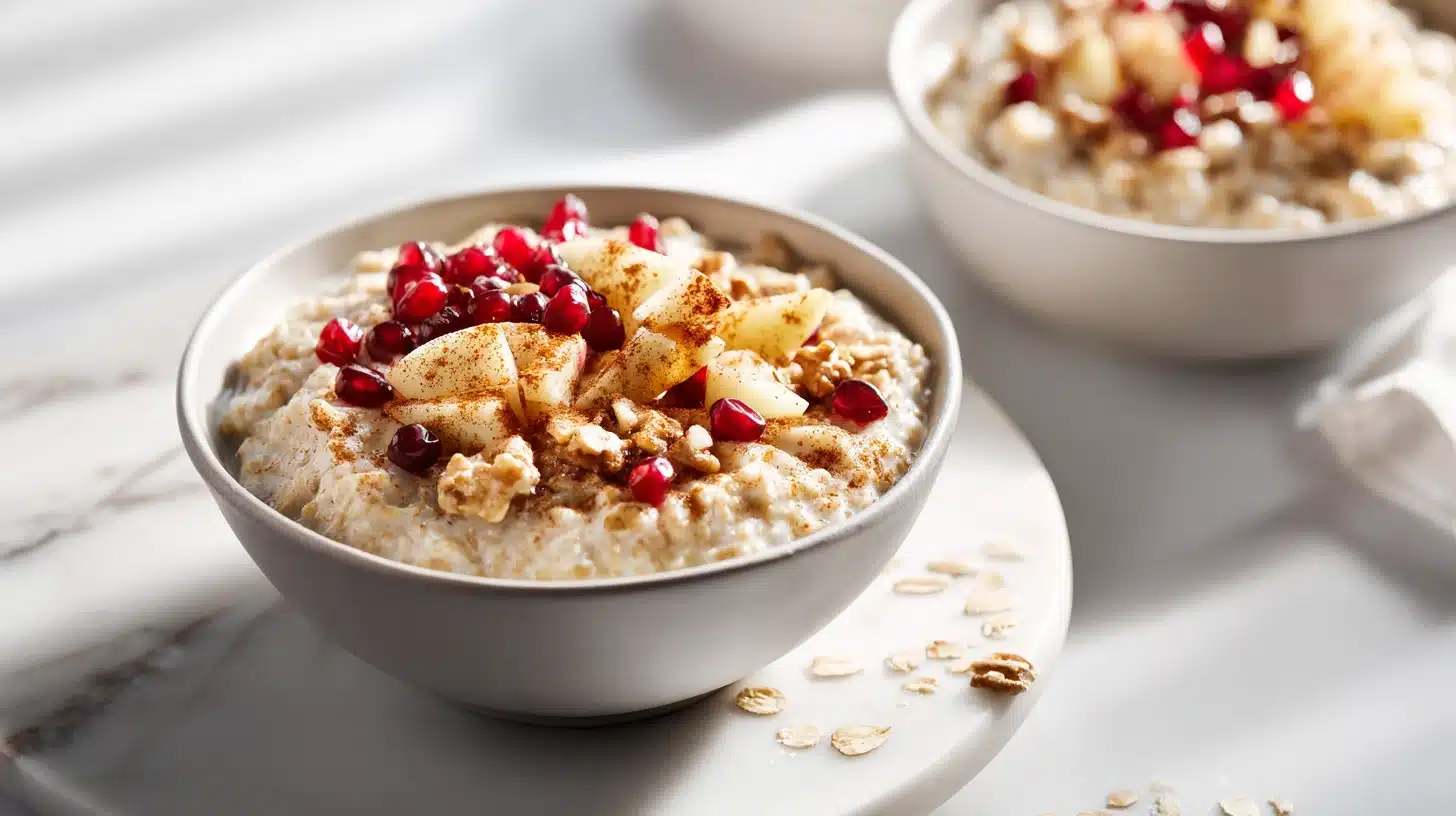
7. Serve immediately. Spoon into a bowl, dust lightly with extra ground cinnamon, and add fresh apple slices on top if desired. Serve while hot for the best texture.
Notes
Store cooled oatmeal in an airtight container in the refrigerator for up to 4 days. To reheat, add 2 to 3 tablespoons of water or milk and warm over medium-low heat, stirring gently, or microwave for 60 to 90 seconds and stir once halfway through.
For a dairy-free version, unsweetened oat milk or almond milk both work well. Oat milk adds a slight natural sweetness that complements the apple and cinnamon.
If you prefer a thicker, creamier texture, reduce the liquid to 1 and 3/4 cups. For a thinner, more pourable consistency, increase to 2 and 1/4 cups.
Tart apples like Granny Smith or Pink Lady hold their shape better during cooking and provide a brighter contrast to the cinnamon. Sweeter apples like Fuji or Gala work but may make the finished bowl taste sweeter, so adjust or omit added sweetener accordingly.
- Prep Time: 5 min
- Rest Time: 2 min
- Cook Time: 7 min
- Category: Breakfast
- Method: Stovetop
- Cuisine: American
Nutrition
- Serving Size: 1 bowl (approximately 1 cup cooked)
- Calories: 295 kcal
- Sugar: 12 g
- Sodium: 85 mg
- Fat: 5 g
- Saturated Fat: 1 g
- Unsaturated Fat: 4 g
- Trans Fat: 0 g
- Carbohydrates: 52 g
- Fiber: 7 g
- Protein: 8 g
- Cholesterol: 0 mg
The ingredients: what you need and why each one earns its place
Every ingredient in this gut-healthy oatmeal has a clear reason for being here. This is not a recipe padded with trendy extras. It is a tight, functional list where each component does real work.
- Rolled oats (1 cup, old-fashioned): The prebiotic base. Look for organic if your budget allows, since oats are one of the crops with higher pesticide residue in conventional farming.
- Apple (1 medium, skin on, diced into 1/2-inch pieces): The pectin source and the natural sweetener. Cooking it directly in the pot with the oats means the apple juices flavor the entire batch.
- Cinnamon (1 teaspoon, ground): More than a flavoring agent. Cinnamon contains compounds, particularly cinnamaldehyde and polyphenols, that have been studied for their effect on blood sugar regulation. One teaspoon per serving is the amount most research points to for a meaningful dose, not just a dusting.
- Water or milk (2 cups): Water keeps the flavor clean and lets the apple and cinnamon shine. Whole milk adds creaminess and fat-soluble vitamins. Unsweetened oat milk adds a slight sweetness that pairs well here. For dairy-free gut support, try unsweetened kefir-style oat milk, which adds live cultures on top of the prebiotic fiber.
- Flaxseed, ground (1 tablespoon, optional): A tablespoon adds about 2 grams of fiber and a mild, nutty background note. Grind it fresh or use pre-ground. Whole flaxseeds pass through largely undigested.
- Chia seeds (1 tablespoon, optional): Stir them in during the last minute of cooking. They swell slightly and give the oatmeal a thicker, pudding-like consistency.
- Honey or maple syrup (1 to 2 teaspoons, to taste): Optional, but a small drizzle at the end rounds out the tartness from the apple. Maple syrup also contains trace minerals including magnesium, which supports hundreds of enzymatic reactions in the body.
- Pinch of salt: Essential. Salt does not make food salty at this quantity. It makes food taste more like itself, and oatmeal without any salt tastes flat and dull.
The simplicity here is intentional. You do not need a dozen adaptogens or a tablespoon of coconut oil. The rolled oats and apple together already deliver a meaningful prebiotic breakfast that your gut bacteria will put to work immediately.
How to cook apple cinnamon prebiotic oatmeal without gluey results
The biggest complaint about homemade oatmeal is texture: either it turns out soupy or it becomes a thick, gummy paste that sticks to the spoon in one clump. Both problems come from the same source, which is incorrect liquid ratio combined with stirring at the wrong moment.
- Start with the liquid and apple together. Pour your 2 cups of water or milk into a medium saucepan and add the diced apple immediately. Bring this to a medium boil over medium-high heat. Starting the apple in cold liquid rather than dropping it into already-boiling water gives it a head start on softening. By the time the oats go in, the apple is already releasing its pectin and its juices are tinting the cooking liquid a faint golden color. The kitchen will smell like a bakery within two minutes.
- Add oats and cinnamon at the boil. Once the liquid reaches a steady, rolling boil, add the rolled oats and cinnamon all at once. Stir once to combine, then reduce heat to medium-low. This single stir is critical. Constant stirring activates the starch in oats and produces that gluey texture everyone hates. After the first stir, put your spoon down.
- Cook undisturbed for 5 minutes. Let the oatmeal simmer gently, uncovered, for 4 to 5 minutes. You will see it thicken steadily. When the oats have absorbed most of the liquid and the surface looks creamy with small craters forming as steam escapes, it is ready. If you are adding flaxseed, stir it in now. If you are adding chia seeds, stir them in during the last 60 seconds and watch the oatmeal thicken slightly further.
- Rest before serving. Pull the pan off the heat and let it sit, covered, for 1 to 2 minutes. This resting period lets the residual heat finish cooking the oats evenly and allows the texture to settle into something creamy rather than watery. It makes a noticeable difference.
- Taste and finish. Taste before adding sweetener. A tart apple like Granny Smith may need a teaspoon of honey. A Honeycrisp may need nothing at all. Add your drizzle if needed, then spoon into a bowl. A light dusting of extra cinnamon on top takes about 2 seconds and makes the whole bowl look intentional rather than thrown together.
For another morning bake that leans into the same apple-cinnamon flavor profile, the baked apple cinnamon cottage cheese is a high-protein companion recipe worth bookmarking.
Nutrition, blood sugar, and the science behind the bowl
This prebiotic oatmeal with apples and cinnamon is one of those recipes where good nutrition and good flavor happen to align perfectly. Understanding why helps you make the most of it and adapt it to your specific health goals.
Blood sugar and the cinnamon connection
Cinnamon is one of the most studied spices in relation to blood sugar regulation. The compound cinnamaldehyde appears to improve insulin sensitivity and slow gastric emptying, meaning food moves more slowly from your stomach to your intestine and glucose enters your bloodstream at a more gradual rate. Combined with the beta-glucan from oats, which also slows glucose absorption, this apple cinnamon oatmeal recipe creates a gentler blood sugar curve than plain oats or toast would. For people managing type 2 diabetes or monitoring blood sugar, this combination is genuinely useful, not just marketing language. That said, always consult your healthcare provider about dietary changes for medical conditions.
Fiber, butyrate, and your gut lining
The beta-glucan in rolled oats feeds bacteria that produce butyrate, a short-chain fatty acid that nourishes the cells lining your colon. A healthy gut lining is less permeable, which means fewer inflammatory compounds leaking from the gut into the bloodstream. The pectin from the apple adds a second layer of prebiotic fuel that feeds slightly different bacterial strains, which is why diverse fiber sources matter more than a large amount of any single one.
Vitamins and minerals worth noting
A bowl of this oatmeal delivers a meaningful amount of magnesium from the oats and flaxseed, B vitamins including B1 (thiamine) from the oats, and vitamin C from the raw apple if you add fresh slices on top at serving. It is not a multivitamin, but it is a genuinely nutrient-dense start to the day. Note that oats do not naturally contain vitamin B12, which is relevant for anyone on a plant-based diet who relies on breakfast for that nutrient. You would need a fortified milk alternative or a separate source for B12.
Caloric density and satiety
One serving of this gut-healthy oatmeal clocks in at roughly 280 to 320 calories depending on the liquid and optional add-ins you use. That calorie count buys you approximately 7 grams of fiber, 8 grams of protein (higher if you use dairy milk), and a genuine 3 to 4 hours of satiety for most people. The beta-glucan specifically has been shown to increase levels of peptide YY, a satiety hormone, which is part of why oatmeal tends to keep you full longer than a comparable calorie-count of something like toast or cereal.
If you are curious about other oatmeal variations that support specific wellness goals, this sleep supporting oatmeal is a great evening counterpart to this morning bowl.
Frequently asked questions
Is apple and cinnamon oatmeal good for you?
Apple and cinnamon oatmeal is genuinely good for you in several concrete ways. The oats supply beta-glucan fiber that feeds gut bacteria and helps moderate blood sugar, the apple adds pectin and natural sweetness, and cinnamon contributes polyphenols that support insulin sensitivity. Together, they form a breakfast with meaningful fiber, plant-based protein, and micronutrients including magnesium and B vitamins.
Is oatmeal a good prebiotic?
Yes, oatmeal is one of the most accessible prebiotic foods available. The beta-glucan fiber in rolled oats resists digestion in the small intestine and reaches the large intestine largely intact, where gut bacteria ferment it and produce beneficial short-chain fatty acids like butyrate and propionate. This fermentation process supports a diverse gut microbiome and contributes to colon health over time.
What do oatmeal and cinnamon do to your body?
Oatmeal and cinnamon work together in a complementary way. Oatmeal provides soluble fiber that slows carbohydrate absorption and feeds beneficial gut bacteria. Cinnamon adds compounds that further improve insulin sensitivity and slow the rate at which your stomach empties after eating. The combined effect is a steadier rise and fall in blood glucose after meals, which helps sustain energy and reduce cravings throughout the morning.
Is cinnamon oatmeal good for diabetics?
Cinnamon oatmeal can be a smart breakfast choice for people with type 2 diabetes, but context matters. The beta-glucan in oats has solid research supporting its ability to reduce the glycemic response to a meal, and cinnamon has been shown in several studies to improve insulin sensitivity. A plain, whole-oat bowl with cinnamon and minimal added sweetener is a lower-glycemic option compared to many processed breakfast foods. Always check with your healthcare provider before making dietary changes to manage blood sugar.
Conclusion
This apple cinnamon prebiotic oatmeal earns its place on the breakfast table because the ingredients do exactly what good food is supposed to do: nourish you and taste worth eating. Just like my grandmother’s bowl on a cold morning, the best version of this recipe is the one you actually make and sit down with, no special equipment required and nothing fancy on the counter.
Give it a try this week, any morning when you have 10 minutes and want a breakfast that holds you steady through the whole morning without a second thought.
For more recipes like this apple cinnamon prebiotic oatmeal, follow us on Facebook and Pinterest for gut-healthy breakfast inspiration.
This recipe is part of my fibermaxxing collection — 21 high-fiber recipes for feeding your gut and staying full longer.