
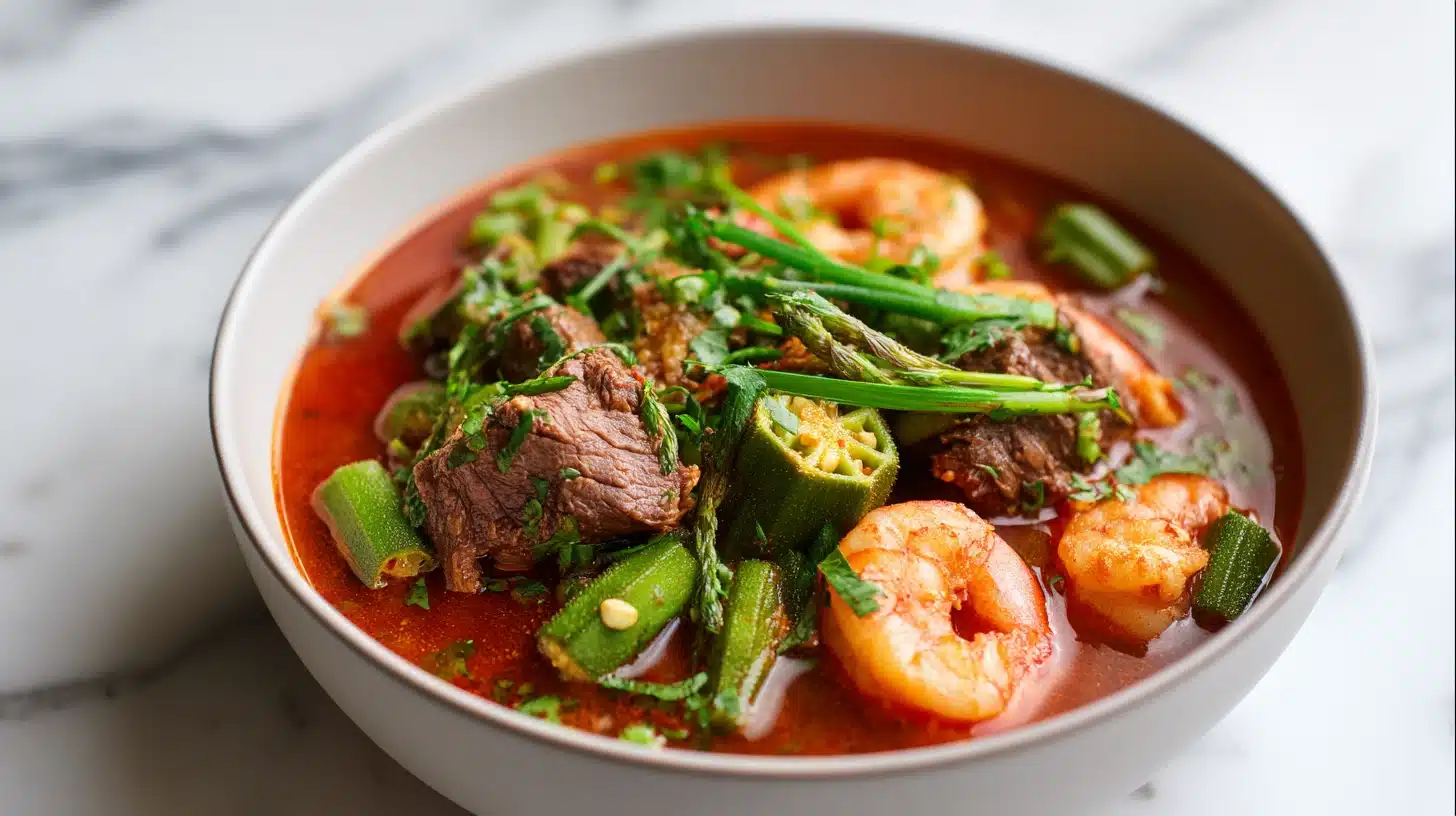
The first time I watched my neighbor Adaeze pull a pot of west african okra stew from her stove, I expected something ordinary. What I got was a deep, glossy, impossibly fragrant bowl that stopped me mid-sentence.
Most home cooks avoid okra because of sliminess gone wrong. Too much heat for too long and you get a gluey, stringy mess instead of the rich, silky body that makes this stew so satisfying. The fix is all in timing and cut size.
Coming up: exactly how to prep okra to control its texture, the spice blend that gives this stew its depth, and the best proteins to use for a complete, crowd-pleasing meal.
Table of Contents
What Makes West African Okra Stew So Unique
The flavor profile behind African okra soup
If you have only ever cooked okra in Southern American styles, the West African approach will surprise you. This is not a mild side dish. It is a bold, layered, full-meal stew built on tomatoes, onion, ground crayfish, and a slow-cooked protein that falls apart at the touch of a spoon.
What makes okra stew distinct from other stews is its textural contrast. The okra is not just a vegetable floating in broth. It thickens the stew naturally, giving it a smooth, slightly viscous body that clings to rice or fufu in the most satisfying way. That texture is intentional, and in West African cooking it is celebrated, not avoided.
Across Nigeria, Ghana, Sierra Leone, and Senegal, versions of this stew appear on family tables every week. Nigerian okra soup tends to rely heavily on palm oil, stockfish, and ground crayfish for its deep umami flavor. Ghanaian okra stew often includes fresh tomatoes and garden eggs for a brighter, slightly sweeter profile. This recipe pulls from both traditions to give you the best of each.
The role of crayfish and palm oil
Two ingredients set this stew apart from anything you might find in a Western kitchen: ground dried crayfish and red palm oil.
Ground crayfish is a fermented, dried seafood powder used widely across West African cooking. It adds a funky, savory depth that sits somewhere between fish sauce and anchovy paste in terms of its background richness. You don’t taste “shrimp” or “fish” when the dish is done. You taste something richer, more complex, and almost meaty in a way that is hard to describe until you try it. You can find it at any African grocery store or order it online.
Red palm oil is the other non-negotiable. Its nutty, earthy flavor and deep orange color are signatures of this dish. Standard vegetable oil simply cannot replicate what palm oil does to the base of this stew. A small amount, roughly three tablespoons, goes a long way.
If you enjoy cooking with bold, nutrient-rich ingredients, you might also want to explore okra water for pregnancy recipe for another angle on this versatile vegetable.
Why this stew is worth adding to your weekly rotation
West African okra and tomato stew is genuinely one of the most nutritious comfort meals you can cook. Okra is high in fiber, folate, and antioxidants. The tomato base brings lycopene. The protein, whether you choose beef, goat, chicken, or shrimp, makes it a complete one-pot dinner. It reheats beautifully, tastes better the next day, and freezes for up to three months.
Once you build your pantry with the core African staples, you can have this on the table in under an hour on any weeknight.
Print
West African Okra Stew Recipe: Bold, Silky, and Ready in 55 Minutes
- Total Time: 55 min
- Yield: 6 servings 1x
Description
A bold, silky West African okra stew made with tender beef, shrimp, fresh okra rounds, and a deeply reduced tomato and palm oil base seasoned with ground crayfish and scotch bonnet pepper. It comes together in about 55 minutes and serves 6. The stew thickens naturally from the okra and tastes even better the next day.
Ingredients
For the meat:
1.5 lbs beef chuck or goat meat (cut into 1.5-inch chunks)
1 teaspoon bouillon powder (for pre-cooking the meat)
2 cloves garlic (minced, for pre-cooking)
1 cup water (for pre-cooking the meat)
Salt to taste
For the stew base:
3 medium Roma tomatoes (roughly chopped)
1 large red onion (half blended, half finely diced)
1 medium red bell pepper (roughly chopped)
1 scotch bonnet pepper (whole or halved, seeds removed for less heat)
4 cloves garlic (minced)
3 tablespoons red palm oil
2 tablespoons ground dried crayfish
1 cup reserved meat cooking stock
1 teaspoon bouillon powder (or 1 crumbled cube)
Salt to taste
For the okra and finish:
1 lb fresh okra (rinsed, dried, trimmed, sliced into 1/2-inch rounds)
0.5 lb large shrimp (peeled and deveined)
1 teaspoon dried uziza leaves or dried thyme (optional)
Instructions
1. Season and pre-cook the meat: Toss the beef or goat chunks with bouillon powder, minced garlic, and a pinch of salt in a medium pot. Add 1 cup of water, bring to a boil over medium-high heat, and cook for 20 to 25 minutes until the meat is tender. The broth will smell rich and savory. Remove the meat and reserve all the cooking stock.
2. Blend the tomato base: Combine the Roma tomatoes, half the red onion, red bell pepper, and scotch bonnet in a blender. Blend until completely smooth with no large chunks remaining.
3. Build the base: Heat the red palm oil in a wide, heavy-bottomed pot over medium heat for about 1 minute until melted and slightly deepened in color. Add the diced onion and cook for 4 minutes, stirring, until soft and golden and fragrant.
4. Cook down the tomato base: Pour the blended tomato mixture into the pot and stir to combine with the onion. Cook uncovered over medium heat for 12 to 15 minutes, stirring occasionally, until the mixture reduces to a thick, dark brick-red paste and pulls away from the sides of the pot.
5. Add crayfish, stock, and meat: Stir in the ground crayfish and remaining minced garlic and cook for 1 minute until fragrant. Add the pre-cooked meat and pour in the reserved cooking stock. Stir well, taste for salt and bouillon, and simmer for 5 minutes so the meat absorbs the base flavors.
6. Add the okra: Add the sliced okra rounds to the pot and stir once to incorporate. Do not cover the pot. Cook over medium heat for 7 to 8 minutes. The stew will thicken noticeably and the okra will turn a deep olive green.
7. Finish with shrimp: Add the shrimp in the last 3 minutes of cooking. Stir gently and cook just until the shrimp turn pink and firm. Stir in dried uziza leaves or thyme if using, taste one final time for seasoning, and serve immediately with fufu, eba, or rice.
Notes
Store leftover stew in an airtight container in the refrigerator for up to 4 days or in the freezer for up to 3 months. Reheat on the stovetop over medium-low heat for 5 to 8 minutes with a small splash of water to loosen.
For best okra texture in leftovers, store the stew without the okra and add freshly sliced okra when reheating.
Ground dried crayfish is available at African grocery stores or online. If you cannot find it, substitute 1 teaspoon fish sauce plus 1 teaspoon dried shrimp powder for a similar umami depth.
Frozen okra can replace fresh. Thaw completely, pat very dry, and reduce the stock by 1/4 cup to account for extra moisture released during cooking.
Scotch bonnet pepper makes this stew genuinely spicy. For a milder result, remove all seeds or replace it with a habanero pepper used in smaller quantity.
- Prep Time: 20 min
- Cook Time: 35 min
- Category: Dinner, Main Course
- Method: Stovetop
- Cuisine: West African
Nutrition
- Serving Size: 1 cup
- Calories: 310 kcal
- Sugar: 5 g
- Sodium: 620 mg
- Fat: 16 g
- Saturated Fat: 6 g
- Unsaturated Fat: 10 g
- Trans Fat: 0 g
- Carbohydrates: 14 g
- Fiber: 4 g
- Protein: 28 g
- Cholesterol: 110 mg
Ingredients You Need for This West African Okra Stew Recipe
For the stew base
Getting the ingredient list right is half the battle. Here is exactly what you need to make six generous servings of this okra and tomato stew.
Produce and aromatics:
- 1 lb fresh okra (trimmed, sliced into 1/2-inch rounds)
- 3 medium Roma tomatoes (roughly chopped)
- 1 large red onion (half blended, half finely diced)
- 4 cloves garlic (minced)
- 1 scotch bonnet pepper (whole or halved, adjust for heat)
- 1 medium red bell pepper (roughly chopped)
Proteins:
- 1.5 lbs beef chuck or goat meat (cut into 1.5-inch chunks)
- 1/2 lb large shrimp (peeled and deveined, optional but recommended)
Pantry staples:
- 3 tablespoons red palm oil
- 2 tablespoons ground dried crayfish
- 1 cup beef or chicken stock (low sodium)
- 2 teaspoons bouillon powder (or one cube, crumbled)
- 1 teaspoon ground uziza leaves or dried thyme (optional but adds authenticity)
- Salt to taste
A note on okra prep
The single most important technique in this entire recipe is how you handle the okra before it hits the pot. Slicing it into rounds rather than long strips gives you more control over the stickiness. Thin slices release more mucilage and create a thicker stew body. Chunkier half-inch cuts give you a slightly firmer bite with just enough thickness.
Don’t rinse the okra after slicing. Washing after cutting pulls out moisture unevenly and can lead to that watery, stringy texture home cooks dread. Rinse, dry, then slice.
If you are curious about other ways okra shows up in world cuisines, the okra salad recipe with japanese flavors is a fascinating contrast to this rich stew.
Ingredient substitutions
| Ingredient | Substitution |
|---|---|
| Red palm oil | Coconut oil (flavor will differ) |
| Ground crayfish | 1 tsp fish sauce + 1 tsp dried shrimp |
| Goat meat | Lamb shoulder or bone-in chicken thighs |
| Scotch bonnet | Habanero pepper at equal quantity |
| Uziza leaves | Dried basil or extra thyme |
How to make West African okra stew step by step
Step 1: Season and pre-cook the meat
This step is what separates a flat, one-dimensional stew from one with real depth. Season your beef or goat chunks generously with bouillon powder, half the minced garlic, and a pinch of salt. Add them to a pot with just enough water to cover (about one cup) and cook over medium-high heat for 20 to 25 minutes until the meat is tender but not yet falling apart. Reserve the cooking stock because it goes straight into the stew.
The meat should be aromatic and lightly browned on the outside when this step is done. If you are using goat, it may need an extra five minutes.
Step 2: Build the tomato and pepper base
In a blender, combine the Roma tomatoes, half the red onion, the red bell pepper, and the scotch bonnet. Blend until smooth. This is your stew base.
Heat the red palm oil in a wide, heavy-bottomed pot over medium heat until it melts and the color deepens slightly, about one minute. Add the finely diced half of the onion and cook until soft and golden, about four minutes. You will smell the onion sweetening as it hits the warm palm oil. Pour in the blended tomato mixture.
Cook the tomato base down for 12 to 15 minutes, stirring occasionally, until most of the liquid has evaporated and the mixture darkens from bright orange-red to a deep, jammy brick color. This step matters. Undercooked tomato base makes the stew taste raw and sharp. You want it sweet, concentrated, and almost sticky at the bottom of the pot.
Step 3: Add crayfish, stock, and meat
Stir in the ground crayfish and remaining minced garlic. Cook for one minute, letting the crayfish bloom in the hot base. Add the pre-cooked meat and pour in the reserved cooking stock plus the additional cup of stock if needed. Stir to combine.
Taste and adjust salt and bouillon at this stage. Let everything simmer together for five minutes so the meat absorbs the tomato base flavors.
Step 4: Add okra and finish
Add the sliced okra directly to the pot and stir gently. Don’t cover the pot. Cooking okra uncovered lets steam escape and prevents excess moisture from making the stew watery. Cook over medium heat for 7 to 8 minutes. The okra will turn bright green, then a deeper olive tone, and the stew will thicken noticeably around the four-minute mark.
If you are adding shrimp, drop them in during the last three minutes of cooking. They need just 2 to 3 minutes to turn pink and firm. Overcooking shrimp makes them rubbery, so watch the clock.
Finish with uziza leaves or thyme if using, taste one final time, and serve immediately.
Serving suggestions, storage, and pro tips
What to serve with West African okra stew
The traditional companions for this okra and tomato stew are fufu (pounded yam, cassava fufu, or semolina), eba (garri), or plain white rice. The silky texture of the stew is specifically designed to pair with a starchy, dipping-style side. You scoop a small piece of fufu, make an indentation with your thumb, and use it to scoop up the stew. It is communal, satisfying, and deeply comforting.
For a lighter pairing, serve the stew over long-grain parboiled rice or with warm flatbread. It also works well alongside fried plantains as a side for textural contrast.
If you enjoy building hearty, protein-rich stews from scratch, the beef stew recipe easy on the stove is another excellent weeknight option in a different flavor direction.
Storage and reheating
This west african okra stew stores exceptionally well. Here is a quick reference:
| Method | Duration |
|---|---|
| Refrigerator | Up to 4 days in an airtight container |
| Freezer | Up to 3 months |
| Reheat on stovetop | 5 to 8 minutes over medium-low with a splash of water |
| Reheat in microwave | 2 minutes, covered, stirring halfway |
One important note: okra texture softens further after a day in the refrigerator. If you prefer a firmer okra texture in leftovers, store the stew without the okra and add fresh okra when reheating.
Pro tips for the best results
- Dry your okra thoroughly before slicing. Moisture on the surface accelerates over-thickening.
- Don’t stir the okra constantly once it hits the pot. Stirring too frequently breaks down the pods and releases extra mucilage.
- Use fresh okra when possible. Frozen okra works in a pinch but releases significantly more liquid, so reduce your stock by a quarter cup to compensate.
- The tomato base cook-down is not optional. If the mixture still looks loose and bright orange after 12 minutes, keep cooking. That jammy, brick-red base is the flavor foundation of the whole stew.
- Ground crayfish is your secret weapon. Even one tablespoon transforms the stew from “good tomato stew” to “authentic Nigerian okra soup” in terms of depth. Don’t skip it.
- Taste at every stage. West African cooking is heavily seasoned, and bouillon levels vary by brand. Add incrementally and trust your palate.
For another warming, filling one-pot meal idea, the lentil stew slow cooker recipe is a great companion to this recipe when you want to batch-cook for the week.
Frequently asked questions
Can I make this west african okra stew recipe without palm oil?
Yes, but the flavor will change noticeably. Red palm oil contributes a nutty, earthy depth and a distinctive orange color that no other oil fully replicates. Coconut oil is the closest substitute in terms of richness. You can also use a neutral oil like sunflower with a small drop of annatto or paprika to approximate the color, though the taste will be milder.
Why does my okra stew turn out slimy and stringy?
Sliminess in African okra soup usually comes from two mistakes: over-stirring and overcooking. Once the okra hits the pot, stir it once to incorporate and then leave it mostly alone. Cook it for 7 to 8 minutes uncovered over medium heat. Cooking it longer, covering the pot, or using very thin slices in too much liquid all amplify the mucilage beyond what you want.
What proteins work best in this stew?
Bone-in goat meat or beef chuck give the deepest flavor because the bones and connective tissue enrich the cooking stock. Bone-in chicken thighs are a faster and more accessible option that still taste excellent. Smoked fish, stockfish, or a combination of shrimp and beef are also popular in Nigerian and Ghanaian households. Plant-based cooks can use tofu or mushrooms and substitute the crayfish with miso paste for umami depth.
Can I use frozen okra instead of fresh?
Frozen okra works, but it needs a couple of adjustments. Thaw it completely and pat it very dry with paper towels before adding it to the pot. Reduce your stock by about a quarter cup since frozen okra releases extra water as it cooks. Expect the stew to have a slightly softer okra texture overall, which some people actually prefer in a slow-simmered stew.
Conclusion
This west african okra stew recipe is proof that bold, deeply nourishing food doesn’t have to be complicated. From the first time I watched it come together in Adaeze’s kitchen, I understood why it earns a place on the weekly table in so many West African homes. The combination of jammy tomato base, ground crayfish, palm oil, and perfectly timed okra creates something entirely its own.
Give this stew a try this Sunday. Serve it with fufu or rice, call it a proper dinner, and let the leftovers carry you through Monday.
For more recipes like this west african okra stew recipe, follow us on Facebook and Pinterest for bold one-pot dinner ideas from around the world.
Love okra? Browse all 25 easy okra recipes in one place, or try quick okra soup and okra and shrimp gumbo next.