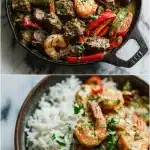
My first bowl of Cajun surf and turf stew came from a tiny roadside kitchen outside Lafayette, where the cook seared ribeye scraps in cast iron and folded in shrimp at the last second. One spoonful and I understood why this combo owns the South.
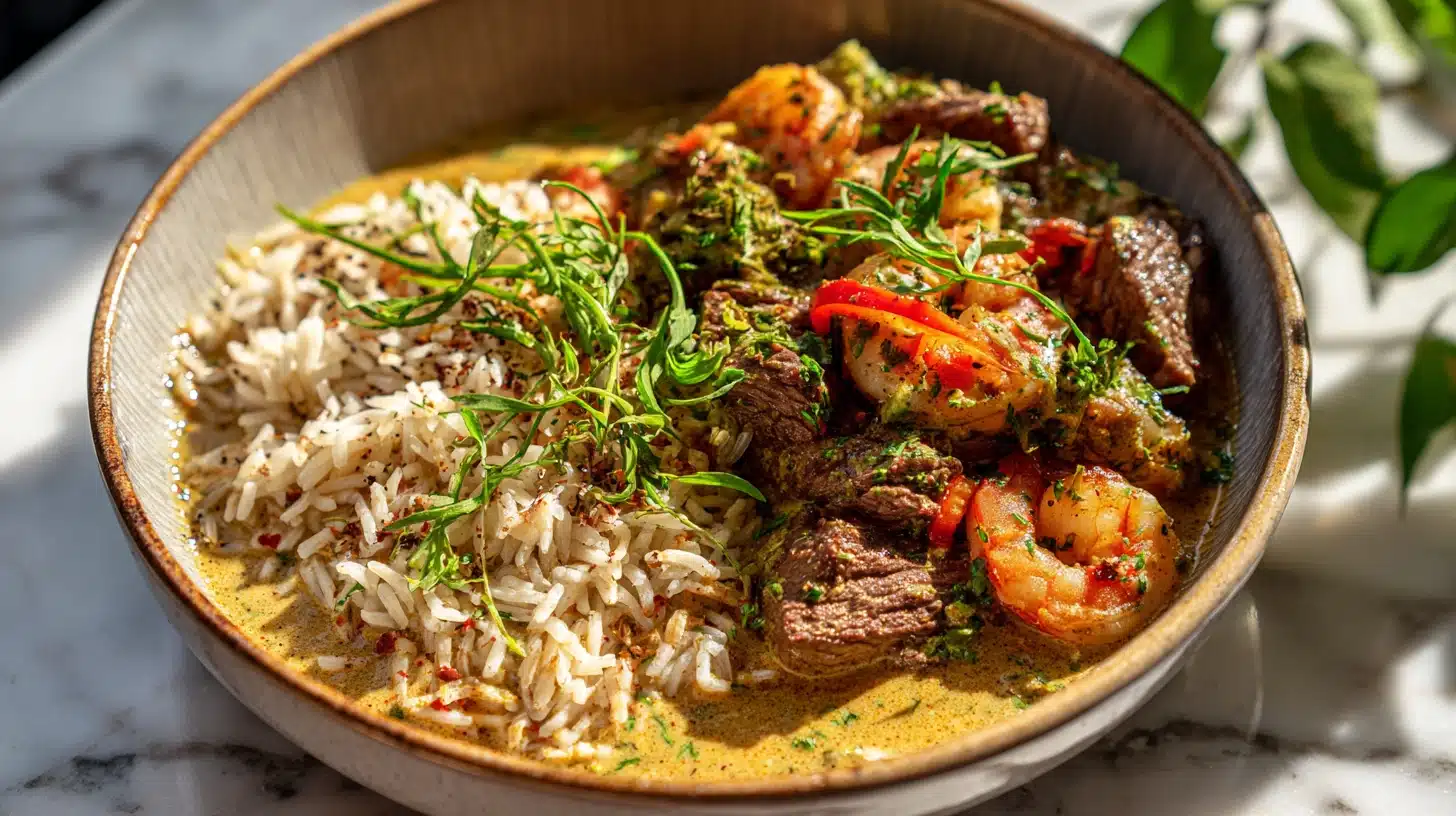
Most surf and turf recipes split the steak and shrimp into separate plates, leaving the sauce thin and the shrimp rubbery. This stew fixes that by building one unified cream sauce in the same skillet, so every bite carries smoky steak fat, sweet shrimp, and backbone Cajun spice.
In this guide I’ll walk you through layering seasoning for depth without heat overload, nailing the timing on tender shrimp and medium-rare steak, and finishing the cream sauce so it clings to every spoonful.
Table of Contents
Why This Cajun Surf and Turf Stew Works
The secret to a great Cajun surf and turf stew is treating the skillet like a flavor bank. Every step deposits something into the pan, and nothing gets wasted. When you sear the steak first, the browned bits stuck to the bottom of the cast iron become the foundation for everything that follows. The onions and bell peppers pick up that residual fat and start building sweetness. The garlic adds a sharp aromatic punch. Then the cream and broth deglaze the whole pan, scraping up every dark crumb of flavor.
This stew has a thick, substantial sauce. It is luxurious without being heavy because the tomato paste and Cajun seasoning give it structure and color. You want a spoon that stands up in the bowl, coating the shrimp and steak in a rust colored gravy that tastes like it simmered for hours.
The other reason this recipe succeeds is portion control on the protein. This is a stew where the steak and shrimp are equal partners with the vegetables and sauce. That means cutting the steak into bite sized pieces before cooking, which sounds obvious but matters enormously. If you have ever tried a cajun surf and turf stuffed peppers supreme you already know how well this flavor pairing translates to one pot cooking.
Choosing the right cut of beef matters too. Ribeye brings fat and flavor, which is ideal for stewing because the marbling melts into the sauce. Tenderloin works if you prefer leaner meat, but you lose some of that beefy richness that makes the dish feel complete. The steak should be cut into half inch cubes so each piece cooks through quickly and stays tender rather than turning chewy.
Cast iron is the best vessel here because it holds heat steadily and develops a better sear on the steak. A heavy bottomed Dutch oven also works. What you want to avoid is a thin pan that temperature spikes when you add the shrimp, because that is how you get uneven cooking and tough, curled shrimp.
Print
How to Make a Rich, Smoky Cajun Surf and Turf Stew
- Total Time: 60 min
- Yield: 6 servings 1x
Description
A creamy skillet stew with seared ribeye steak, tender shrimp, bell peppers, and onions in a Cajun spiced cream sauce finished with butter. Ready in under an hour.
Ingredients
For the steak and shrimp:
1 lb ribeye steak, cut into half inch cubes
1 lb large shrimp, peeled and deveined
2 tbsp olive oil
1 tbsp Cajun seasoning (store bought or homemade)
1 tsp kosher salt, divided
For the holy trinity and aromatics:
1 large yellow onion, diced
1 green bell pepper, diced
1 red bell pepper, diced
2 stalks celery, diced
6 cloves garlic, minced
For the sauce:
2 tbsp tomato paste
1/2 cup dry white wine (or chicken broth with 1 tsp lemon juice)
1 cup chicken broth
1 cup heavy cream
2 tbsp cold unsalted butter, cubed
For serving:
3 cups cooked white rice
2 scallions, sliced
2 tbsp fresh parsley, chopped
Hot sauce, to taste
Instructions
1. Pat the steak cubes dry and toss with the Cajun seasoning and half teaspoon of salt. Heat the olive oil in a large cast iron skillet over high heat until shimmering.
2. Sear the steak cubes in two batches for about 90 seconds per side until dark brown and crusty. Transfer to a plate and let rest.
3. Reduce heat to medium and add the onion, bell peppers, and celery to the same skillet. Cook for 5 to 7 minutes until the onions are translucent and the peppers brighten in color.
4. Add the garlic and stir for 30 seconds until fragrant. Stir in the tomato paste and cook for 1 minute until it darkens slightly.
5. Pour in the white wine to deglaze, scraping the bottom of the pan with a wooden spoon to lift all the browned bits. Let it reduce by half, about 2 minutes.
6. Add the chicken broth and bring to a gentle simmer. Stir in the heavy cream and let the sauce simmer for 3 to 4 minutes until it thickly coats a spoon.
7. Return the steak cubes to the pan along with the raw shrimp. Press the shrimp into the sauce and cover the skillet for 2 minutes until the shrimp turn pink and opaque.
8. Remove from heat and stir in the cold butter cubes one at a time until the sauce turns glossy and silky. Taste and adjust salt as needed.
9. Serve over white rice, garnished with scallions, parsley, and hot sauce.
Notes
Store in the refrigerator for up to 3 days or freezer for up to 2 months. Reheat gently in a skillet over low heat for 5 minutes, stirring occasionally.
Substitute tenderloin for ribeye if you prefer leaner meat. Adjust the cayenne in your Cajun seasoning to control heat level.
Do not boil the sauce after adding cream or it may separate. Keep it at a gentle simmer.
Cook the shrimp for no more than 3 minutes total to avoid a rubbery texture.
- Prep Time: 10 min
- Rest Time: 10 min
- Cook Time: 40 min
- Category: Main Course
- Method: Stovetop
- Cuisine: American
Nutrition
- Serving Size: 1 cup
- Calories: 412 kcal
- Sugar: 4 g
- Sodium: 890 mg
- Fat: 28 g
- Saturated Fat: 12 g
- Unsaturated Fat: 14 g
- Trans Fat: 0 g
- Carbohydrates: 6 g
- Fiber: 1 g
- Protein: 32 g
- Cholesterol: 185 mg
Building the Cajun Flavor Base
Cajun seasoning is the backbone of this stew, but store bought blends vary wildly in salt and heat. The best approach is mixing your own so you control every variable. A simple blend combines two tablespoons of paprika, one tablespoon of garlic powder, one tablespoon of onion powder, one teaspoon of black pepper, one teaspoon of cayenne, and one teaspoon of kosher salt. That gives you a smoky, savory base with a manageable kick.
The trick with Cajun seasoning in a stew is blooming it in fat before adding liquid. When you sprinkle the seasoning over the steak and sear it in hot oil, the spices toast and release their oils. This is the same principle behind a great creamy cajun sausage rigatoni, where the seasoning meets the pan before the cream ever touches it. The result is a deeper, rounder flavor than if you stirred the spices into broth at the end.
The holy trinity of Cajun cooking (onions, celery, and bell peppers) goes into the pan right after the steak comes out. You want the vegetables to soften in the steak fat and pick up the seasoning remnants. Cook them for five to seven minutes until the onions turn translucent and the bell peppers brighten in color. The celery should lose its crunch but hold its shape.
Garlic goes in last because it burns fast. Thirty seconds in the hot pan is enough to release that sharp, pungent aroma that signals something good is happening. If you cook the garlic too long it turns bitter, and that bitterness will haunt the entire pot. As soon as you smell it, it is time to deglaze.
The deglazing liquid is where the sauce starts taking shape. White wine adds acidity and brightness, cutting through the richness of the steak fat and cream. If you prefer not to use wine, substitute an equal amount of chicken broth with a squeeze of lemon juice. Either way, use a wooden spoon to scrape the bottom of the pan vigorously. Those browned bits, called fond by chefs and “the good stuff” by everyone else, are concentrated flavor. They dissolve into the liquid and turn it dark amber.
Cooking the Shrimp and Steak Perfectly
The number one failure point in any Cajun surf and turf stew is overcooked shrimp. Shrimp cook in two to three minutes, full stop. If they spend more time than that in the heat, they curl into tight cylinders and turn rubbery. The solution is adding them at the very end, after the sauce is already built and simmering.
Start by searing the steak cubes in batches. Overcrowding the pan drops the temperature and the meat steams instead of browning. You want a hard sear on at least two sides of each cube, which takes about ninety seconds per side in a smoking hot cast iron skillet with a thin film of oil. The outside should be dark brown and crusty while the inside stays pink. Remove the steak to a plate and let it rest while you build the sauce.
Once the sauce is simmering and has thickened enough to coat a spoon, slide the steak back in along with the raw shrimp. Press the shrimp down into the liquid so they are submerged. Cover the pan for two minutes, then check. The shrimp should be pink on the outside and just opaque in the center. Carryover heat will finish them even after you pull the pan off the burner.
For the steak, carryover cooking is also a factor. The cubes continue to cook in the hot sauce, so if you pull them at medium rare they will reach a perfect medium by the time the stew hits the table. This is why cutting the steak small matters. Large chunks hold more heat and overcook faster in the center.
If you have made a beef stew recipe easy on the stove you know that stew meat needs long braising to get tender. This recipe avoids that problem entirely by using a premium cut like ribeye or tenderloin that is already tender. You are searing for flavor, not breaking down connective tissue. The whole cook time for the protein is under ten minutes.
A useful comparison is the approach in a lemon garlic butter shrimp dish, where the shrimp hit the pan for barely a flash. Here they get slightly more time because the sauce buffers the heat, but the principle is the same. Cook fast, pull early, trust the residual heat.
Finishing and Serving the Stew
The finish is what separates a good Cajun surf and turf stew from a great one. After the shrimp and steak are cooked and the pan is off the heat, stir in two tablespoons of cold butter cut into small cubes. This is called mounting, and it gives the sauce a glossy sheen and a silky texture that cream alone cannot achieve. The butter emulsifies into the liquid as it melts, thickening without flour.
Heavy cream is the other finishing ingredient you need. Add it after the deglazing liquid has reduced by half, then let the whole pot simmer for three to four minutes until it thickens. Do not boil hard once the cream is in. A hard boil can cause the dairy proteins to separate and leave you with a grainy sauce. A gentle simmer keeps everything smooth.
Taste the sauce before serving and adjust. If it needs more salt, add it. If the cayenne heat is too aggressive, a teaspoon of sugar or a splash of cream will calm it down. If the stew tastes flat, a few drops of fresh lemon juice will wake it up. Seasoning at the end is always more effective than trying to fix an over salted pot later.
Serving options are wide open. Over steamed white rice is the classic choice, and the rice absorbs the sauce beautifully. A scoop over cajun loaded potato bowls gives you a heartier base with more texture. Crusty bread for dipping is essential if you want to capture every drop of sauce.
Garnish with sliced scallions and a sprinkle of chopped parsley for freshness and color. The green against the rust colored sauce makes the bowl look as good as it tastes. A few drops of hot sauce on top lets each diner customize the heat level without making the whole pot spicy.
Store leftovers in the refrigerator for up to three days. The flavors actually deepen overnight as the Cajun seasoning permeates the meat and shrimp. Reheat gently in a skillet over low heat, stirring occasionally, until just warmed through. Do not microwave on high because the shrimp will turn rubbery.
Frequently Asked Questions
What is a Cajun stew called?
Cajun stew does not have one single name, but the closest classic is gumbo, which is a thick, roux based stew with meat, seafood, or both. This Cajun surf and turf stew is more of a cream based skillet stew, similar to what some cooks call a Cajun smothered dish or courtbouillon, depending on the region and family.
What sauce is used for surf and turf?
Traditional surf and turf uses butter, garlic, and sometimes a red wine reduction or bearnaise. This Cajun surf and turf stew uses a cream and tomato based sauce built on Cajun seasoning, deglazed with white wine or broth, and finished with cold butter for a silky texture that coats the steak and shrimp.
What is Louisiana’s signature stew?
Gumbo is Louisiana’s most famous stew, built on a dark roux with the holy trinity of onions, celery, and bell peppers. It typically contains seafood, sausage, or chicken. This Cajun surf and turf stew borrows those same flavor building techniques but uses a cream sauce instead of a roux base.
What’s in Louisiana cowboy stew?
Louisiana cowboy stew typically includes ground beef, kidney beans, corn, tomatoes, and Cajun seasoning, cooked in one pot as a hearty camp meal. It is quite different from this Cajun surf and turf stew, which uses premium steak and shrimp in a creamy sauce rather than ground meat and beans.
Conclusion
A great Cajun surf and turf stew brings together everything that makes Louisiana cooking worth learning. The seared steak deposits flavor into the pan, the shrimp cook in seconds at the end, and the cream sauce ties it all together with spice and richness in every spoonful. That first bowl outside Lafayette stuck with me because it proved steak and shrimp do not need separate plates to shine.
Give this recipe a try this week when you want something warming but not fussy. It comes together in under an hour, and the leftovers taste even better the next day.
For more recipes like Cajun surf and turf stew, follow us on Facebook and Pinterest for cozy one pot dinner ideas.