The most common failure with springtime crinkle cookies isn’t overbaking. It’s forgetting that the dough is wetter than you think it should be. This one detail is what creates those perfect, deep cracks after rolling in powdered sugar.
This recipe solves the sticky, spreading mess by leaning into that very wetness. You’ll get soft, lemony cookies with dramatic crinkles every single time.
Here you’ll get the exact chilling time for that wet dough, a foolproof method for mixing vibrant pastel colors with gel food coloring, and clear answers on lemon substitutions. If you love seasonal baking projects, you’ll also enjoy my creme brulee cookie, another showstopper with a caramelized sugar top.
Table of Contents
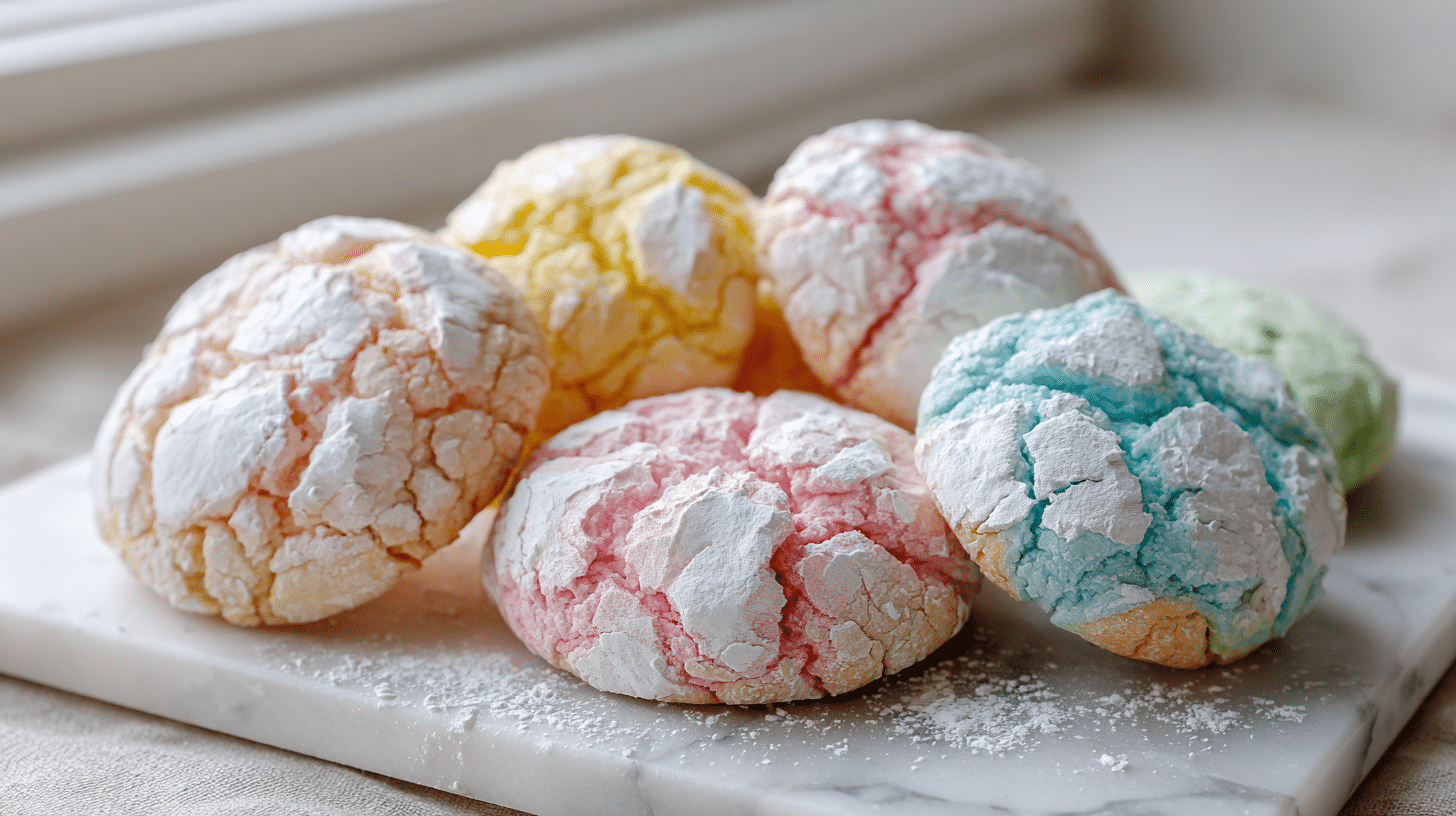
Table of Contents
Welcome Spring with These Vibrant Crinkle Cookies
What Makes These Cookies Special
These springtime crinkle cookies are a celebration on a baking sheet. They deliver a soft, cake-like texture, a bright burst of lemon, and those iconic powdered sugar cracks, all wrapped in cheerful pastel colors. The magic happens in the dough. It’s intentionally wetter than most cookie doughs, which feels wrong when you’re handling it. But that extra moisture is what forces the cookies to expand dramatically in the oven, creating those deep, beautiful crinkles as they bake.
I learned this the hard way after a batch spread into a flat, sad puddle. I’d assumed the dough was too soft and added more flour. Big mistake. The perfect crinkle comes from embracing the stickiness. This recipe locks in that balance. Here’s what you can expect:
- A soft, tender bite from the perfect mix of baking powder and baking soda
- A double hit of fresh lemon flavor from both zest and juice
- Vibrant, bakery-quality pastel colors that won’t bake out, thanks to gel food coloring
- A foolproof method that guarantees dramatic cracks every time
The Joy of Seasonal Baking
There’s something uniquely satisfying about baking with the seasons. For spring, it’s all about lightness, brightness, and a pop of color. These cookies capture that feeling perfectly. The process itself is part of the joy: creaming room-temperature butter with granulated sugar until it’s fluffy, whisking in eggs and vanilla extract, and folding in the dry ingredients. Then, you get to play with color. Dividing the dough and mixing in drops of gel food coloring to create soft blues, pinks, yellows, and greens is my favorite part, it turns the kitchen into a pastel workshop.
This recipe is your blank canvas. Love a stronger almond note? A drop of almond extract complements the lemon beautifully. Would you like to make them for a spring party? They’re a stunning, shareable treat. If you enjoy shaping citrus cookies, you might also like these heart shaped lemon zest cookies. The best part? After the 120-minute chill, simply roll the dough balls, coat them generously in powdered sugar, and bake. In 10 minutes, you have a plateful of spring.
Print
Easy Springtime Crinkle Cookies with Pastel Colors (Step-by-Step)
- Total Time: 2 hours 30 min
- Yield: 24 servings 1x
Description
These springtime crinkle cookies are soft, cake-like cookies with bright lemon flavor and classic powdered sugar cracks. The dough is divided and colored with gel food coloring to create cheerful pastel shades. A 120-minute chill is essential for the perfect texture and dramatic crinkles.
Ingredients
For the dough:
2 ½ cups (300g) all-purpose flour
1 cup (200g) granulated sugar
1 cup (2 sticks / 226g) unsalted butter, softened
2 large eggs, room temperature
1 tablespoon lemon zest
2 tablespoons lemon juice
1 teaspoon baking powder
½ teaspoon baking soda
½ teaspoon salt
1 teaspoon vanilla extract
For coating:
½ cup (60g) powdered sugar
For coloring:
Gel food coloring in pastel colors (pink, blue, yellow, green)
Instructions
1. Whisk the flour, baking powder, baking soda, and salt in a medium bowl.
2. In a large bowl, cream the softened butter and granulated sugar with a hand mixer on medium speed for 2-3 minutes until light and fluffy.
3. Beat in the eggs one at a time, then mix in the vanilla extract, lemon zest, and lemon juice.
4. With the mixer on low, gradually add the dry ingredients until just combined. The dough will be soft and sticky.
5. Divide the dough into four equal portions. Add a small drop of gel food coloring to each portion and knead with clean hands until the color is fully blended and you achieve a soft pastel hue.
6. Wrap each colored dough ball tightly in plastic wrap and refrigerate for 120 minutes.
7. Preheat your oven to 350°F (175°C) and line baking sheets with parchment paper.
8. Place the powdered sugar in a shallow bowl. Scoop about 1.5 tablespoons of chilled dough, roll into a smooth ball, then roll it heavily in the powdered sugar until completely coated.
9. Place dough balls 2 inches apart on the prepared baking sheets.
10. Bake one sheet at a time for 10-12 minutes, until the tops have cracked and the edges are set. The centers will still look soft.
11. Let cookies cool on the baking sheet for 5 minutes before transferring to a wire rack to cool completely.
Notes
Store cooled cookies in an airtight container at room temperature for up to 5 days.
For best results, use gel food coloring. Liquid coloring can thin the dough and fade during baking.
The dough must be chilled for the full 120 minutes to prevent excessive spreading and ensure proper cracking.
Roll the dough balls in a thick, heavy coating of powdered sugar for the best crinkle effect.
The cookies are done when they spring back lightly when touched and have an internal temperature of 190°F.
- Prep Time: 20 min
- Additional Time: 2 hours
- Cook Time: 10 min
- Category: Dessert, Snack
- Method: Baking
- Cuisine: American
Nutrition
- Serving Size: 1 cookie
- Calories: 153 kcal
- Sugar: 13 g
- Sodium: 85 mg
- Fat: 8 g
- Saturated Fat: 5 g
- Unsaturated Fat: 3 g
- Trans Fat: 0 g
- Carbohydrates: 19 g
- Fiber: 0 g
- Protein: 2 g
- Cholesterol: 34 mg
Gathering Your Ingredients and Preparing for Success
Active Time: 20 minutes | Total Time: 2 hours 30 minutes | Yield: 24 cookies
Essential Ingredients for Flavor and Texture
Gathering the right ingredients is your first step to perfect springtime crinkle cookies. Here’s your full list, with notes on why each one matters:
- 2 ½ cups (300g) all-purpose flour: The structure. Weighing it prevents a dry, cakey cookie
- 1 cup (200g) granulated sugar: For sweetness and, when creamed with butter, creating air pockets for a soft texture
- ½ cup (60g) powdered sugar: Used for rolling. It creates the iconic crinkly crust as the cookies expand.
- 1 cup (2 sticks / 226g) unsalted butter, softened: Must be at room temperature to cream properly with the sugar. Cold butter won’t incorporate enough air.
- 2 large eggs, room temperature: Binds the dough and adds moisture. Room temp eggs mix in more evenly
- 1 tablespoon lemon zest: For bright, aromatic lemon flavor
- 2 tablespoons lemon juice: Adds tang and reacts with the baking soda for a better rise
- 1 teaspoon baking powder and ½ teaspoon baking soda: The leavening team for lift and spread
- ½ teaspoon salt and 1 teaspoon vanilla extract: Balances sweetness and enhances all the other flavors
No lemons? Use 1 tablespoon of bottled lemon juice and skip the zest; the flavor will be less bright, but it works. Out of vanilla? A ¼ teaspoon of almond extract is a lovely swap. For another citrus dessert that uses fresh lemon beautifully, try my sugar-free lemon blueberry pudding cake, it’s a no-guilt option with real fruit flavor.
Choosing Your Food Coloring
For those soft pastel colors, gel food coloring is non-negotiable. Liquid food coloring is mostly water, which can thin your dough and will bake into faded, disappointing shades. Gel color is highly concentrated, so you only need a drop or two per dough portion to achieve vibrant pinks, blues, yellows, and greens that stay true after baking.
I use toothpicks to add color. Start with one small drop, knead it in, and add more as needed. You can mix colors to create custom shades. A drop of blue and yellow makes a lovely spring green. The goal is a soft, Easter-egg hue. If you love the lemon flavor here, you might also enjoy these lemon meltaway cookies for another citrus treat.
Helpful Equipment
You don’t need fancy tools, but a few basics make the process smoother. A stand mixer or hand mixer is key for properly creaming the butter and granulated sugar until it’s light and fluffy, about 2–3 minutes. You’ll also need mixing bowls, a zester or fine grater for the lemon zest, a baking sheet, and parchment paper or a silicone mat to prevent sticking.
For portioning, a medium cookie scoop (about 1.5 tablespoons) gives you evenly sized dough balls. Have a small bowl ready for your powdered sugar for rolling.
Step-by-Step Baking Instructions for Perfect Cookies
Step 1: Mixing the Cookie Dough
- In a medium bowl, whisk together the flour, baking powder, baking soda, and salt. This ensures the leaveners are evenly distributed.
- In a large bowl, use a hand mixer to cream the softened butter and granulated sugar on medium speed for 2–3 minutes. It should look light and fluffy.
- Beat in the eggs one at a time, followed by the vanilla extract, lemon zest, and lemon juice. The mixture may look slightly curdled; that’s okay.
- With the mixer on low, gradually add the dry ingredients until just combined. The finished cookie dough will be very soft and sticky.
Chef’s Note: Don’t overmix once you add the flour. Stop as soon as you see no dry streaks. Overworking develops gluten, leading to tough cookies.
Step 2: Dividing and Coloring the Dough
- Divide the soft dough into four equal portions. I weigh it for accuracy.
- Place each portion in a separate small bowl. Using a toothpick, add a tiny drop of gel food coloring to each.
- Use clean hands to gently knead the color into each dough portion until it’s fully blended and you achieve a soft pastel hue. Add more color one drop at a time if needed.
- Wrap each colored dough ball tightly in plastic wrap. This is your chill dough.
Watch Out: Gel color stains skin. Wear disposable gloves if you’re concerned. The color deepens slightly as the dough chills.
Step 3: Chilling and Shaping the Dough Balls
- Refrigerate the wrapped dough for 120 minutes. This firms up the butter, preventing the cookies from spreading too fast and merging on the baking sheet.
- Preheat your oven to 350°F / 175°C and line baking sheets with parchment paper.
- Place powdered sugar in a shallow bowl. Scoop about 1.5 tablespoons of chilled dough and roll it into a smooth ball between your palms.
- Roll each ball heavily in the powdered sugar until it’s completely coated and white. The coating should be thick. Place balls 2 inches apart on the prepared sheet.
Step 4: Baking to Perfection
- Bake one sheet at a time in the center of the oven for 10–12 minutes. The cookies are done when the tops have cracked deeply, and the edges are just set. They should spring back lightly when touched.
- The centers will still look soft; this is correct. They firm up as they cool. For a soft, cake-like center, aim for an internal temperature of 190°F.
- Let the cookies cool on the baking sheet for 5 minutes before transferring them to a wire rack to cool completely.
- Store cooled cookies in an airtight container at room temperature for up to 5 days.
Storage, Troubleshooting, and Creative Serving Ideas
How to Store and Freeze Your Cookies
Keep these cookies in an airtight container at room temperature for up to 5 days. A sheet of parchment between layers prevents sticking. For longer storage, freeze them. Place cooled cookies in a single layer on a tray to freeze solid, then transfer to a freezer bag for up to 3 months. Thaw at room temperature for an hour. You can also freeze the cookie dough balls after rolling them in powdered sugar. Freeze on a tray, then bag them; bake from frozen, adding 1–2 minutes to the bake time.
| Airtight Container | 5 days | Layer with parchment paper |
| Freezer (baked) | 3 months | Freeze flat first to prevent sticking |
| Freezer (dough balls) | 3 months | Bake from frozen, add 1–2 minutes |
Common Problems and How to Fix Them
The most common issues stem from the dough’s texture and temperature. If your dough is too sticky to handle, it likely needs more time in the fridge. Chill it for at least another 30 minutes. If cookies spread too much or the pastel colors fade, your dough wasn’t chilled thoroughly, ensure a full 120 minutes. A thin powdered sugar coating can be fixed by rolling the dough balls twice: once, let them sit for 5 minutes, then roll again right before baking.
| Dough too sticky | Chill for at least 30 more minutes |
| Cookies spread too much | Ensure dough is chilled for the full 120 minutes |
| Powdered sugar coating is thin | Roll dough balls in sugar twice |
| Lemon flavor too weak/strong | Adjust fresh zest and juice to taste next time |
| Cookies browning too much | Watch closely last 2 minutes; oven may run hot |
Fun Variations and Presentation Tips
This recipe is a fantastic base for other flavors. Swap the lemon for orange zest and juice, or add ¼ teaspoon of almond extract along with the vanilla for a nutty flavor enhancement. For different holidays, change the gel food coloring, use red and green for Christmas, or orange and black for Halloween. For a beautiful spring platter, mix all your pastel colors together. These pair wonderfully with a cup of tea or as part of a dessert spread with other seasonal treats like white chocolate cranberry heart cookies.
- Serve on a tiered stand for a party.
- Package in clear cellophane bags tied with ribbon for gifts.
- Crumble over vanilla ice cream or lemon sorbet for a refreshing spring dessert.
For a spicier holiday option, try molasses ginger heart cookies. And if you’re building a full cookie box, my oatmeal raisin heart cookies, strawberry kiss cookies, and chocolate chip heart cookies all make beautiful additions alongside these pastel crinkles.
Frequently Asked Questions
What are springtime crinkle cookies?
Springtime crinkle cookies are soft, cake-like lemon cookies rolled in powdered sugar before baking. As they expand in the oven, the sugar coating cracks to reveal colorful dough underneath, creating the signature “crinkle” pattern. This version uses gel food coloring to tint the dough in cheerful pastel shades (pink, blue, yellow, green), making them perfect for Easter, spring parties, baby showers, or Mother’s Day brunch.
Can you use lemon extract instead of fresh lemon?
Yes, but the flavor profile changes. Use 1 teaspoon of pure lemon extract in place of both the fresh zest and juice. The cookie will still be lemony, but it will lack the bright, floral punch that fresh lemon zest provides. The dough may also be slightly drier without the liquid from the juice.
Can I skip the lemon zest?
You can, but I don’t recommend it for the best flavor. The zest holds the aromatic citrus oils that give these springtime crinkle cookies their signature bright taste. If you must skip it, increase the fresh lemon juice to 3 tablespoons to compensate, knowing the flavor will be more sharp than rounded.
Can I make these cookies gluten-free or dairy-free?
For a gluten-free version, swap the all-purpose flour with a 1:1 gluten-free baking blend. For dairy-free, use a plant-based butter stick. The eggs are trickier to replace; a commercial egg replacer may work, but the texture will be denser. Chill the dough for the full 120 minutes regardless of substitutions.
Why did my cookies spread into flat puddles?
This almost always means your dough wasn’t chilled long enough or your butter was too soft. The butter must re-solidify in the fridge. Ensure you chill the wrapped dough for the full 120 minutes. If your kitchen is very warm, consider chilling the shaped dough balls for 15 minutes before baking.
Can I make springtime crinkle cookies ahead of time?
Yes, these are great make-ahead cookies. You can freeze the shaped dough balls (already coated in powdered sugar) for up to 3 months. Bake from frozen, adding 1–2 minutes to the bake time. Baked cookies stay fresh in an airtight container for 5 days at room temperature or 3 months in the freezer.
What other flavors work with this crinkle cookie recipe?
This is a versatile base recipe. Try swapping lemon for orange zest and juice for an orange crinkle cookie. Add ¼ teaspoon almond extract for a nutty note. For chocolate crinkle cookies, reduce the flour by ¼ cup and add ¼ cup cocoa powder; skip the food coloring since the chocolate provides its own rich color.
Make These Springtime Crinkle Cookies This Weekend
Remember, success lies in embracing the wet, sticky dough during the initial chill. Those 120 minutes in your fridge guarantee the dramatic crinkles we all love. These springtime crinkle cookies bring a bright, naturally colorful twist to your table through simple gel food coloring and fresh lemon.
My favorite moment is kneading those soft pastel hues into separate dough portions; it feels like playing with edible playdough. Give this joyful, tactile recipe a try this weekend.
More seasonal baking recipes you’ll love:
- Heart Shaped Lemon Zest Cookies: another beautiful citrus cookie.
- Lemon Meltaway Cookies: delicate and buttery.
- Oatmeal Raisin Heart Cookies: cozy and classic.
- Creme Brulee Cookie: caramelized sugar top.
- Strawberry Kiss Cookies: pink and pretty.
- Chocolate Chip Heart Cookies: always a crowd favorite.
- Coconut Heart Shaped Macaroons: chewy and tropical.
For more recipes like springtime crinkle cookies, follow us on Facebook and Pinterest for cheerful seasonal bakes and easy cookie recipes.