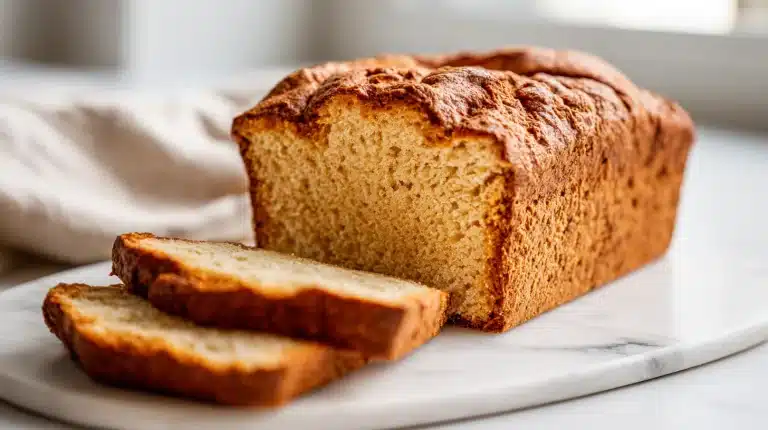
Most sourdough bread recipe guides skip the single step that guarantees oven spring. It’s not about your starter or flour. It’s a timing trick buried in the bulk fermentation.
Your loaves are dense because proofing schedules are vague. This guide fixes that with a sample baking day you can set your watch to.
Here you’ll get exact fold times, a Dutch oven alternative, and how to read your crumb for perfect hydration every time.
Table of Contents
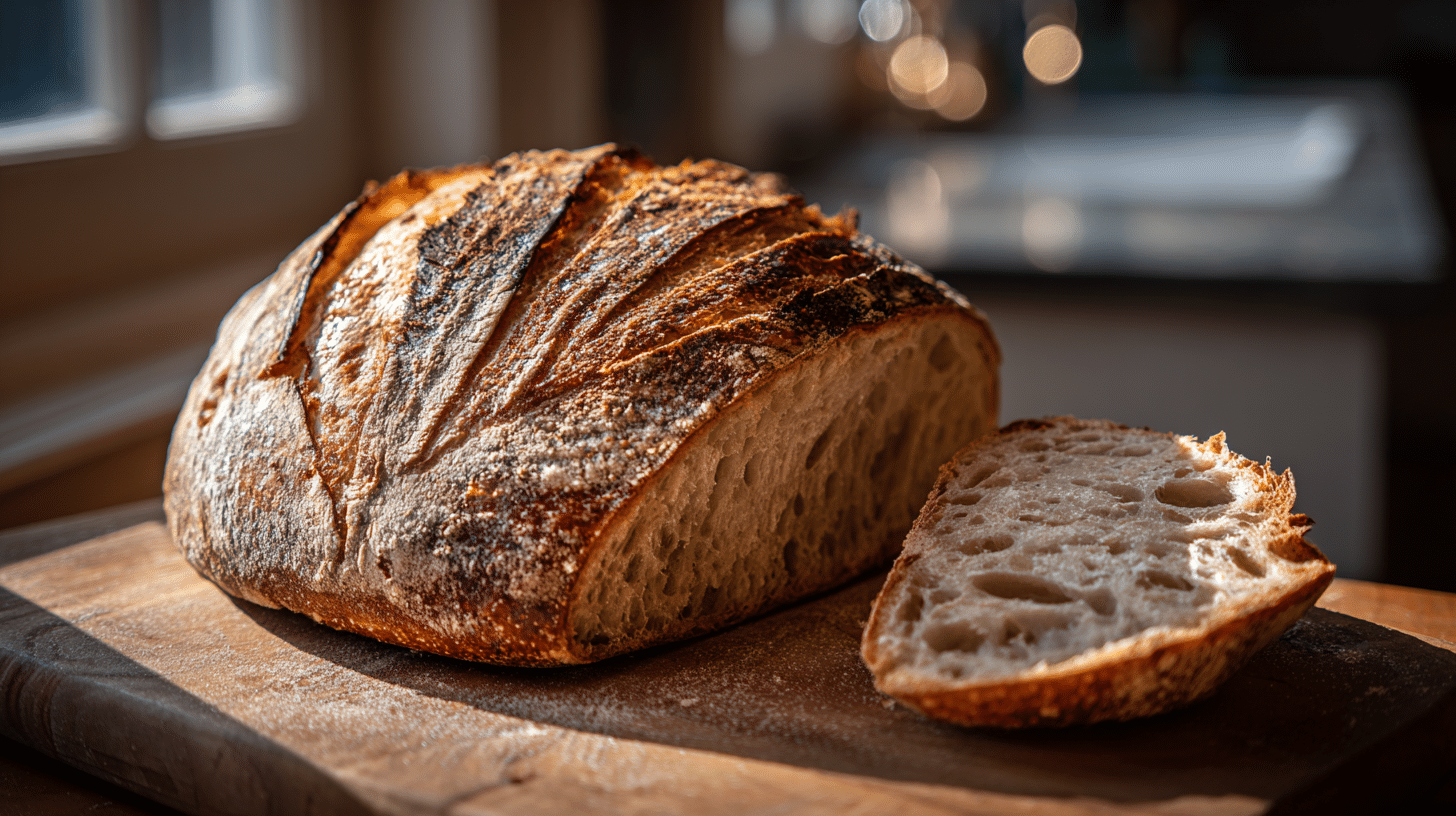
Table of Contents
What is Sourdough Bread? A Guide for Beginners
The Magic of Wild Yeast
Sourdough bread is different from every other loaf in your kitchen. It doesn’t use commercial yeast from a packet. Instead, it relies on a living culture called a sourdough starter. This starter is a simple mix of bread flour and water that has captured wild yeast and friendly bacteria from the air around us. When you bake with it, you’re baking with a unique, local ecosystem.
The process is a slow, natural fermentation. You mix a portion of your active starter (called a levain) with more flour, water, and salt. Over many hours, the wild yeast eats the sugars in the flour. It produces gas, which makes the dough rise, and acids, which create that classic tangy flavor. This long bulk fermentation is the heart of a great sourdough bread recipe. It develops a strong gluten network and complex flavors that fast-rising yeast breads can’t match.
For beginners, this might sound complicated. I promise it’s simpler than it seems. Your main job is to manage time and temperature, not muscle. The dough does most of the work. You’ll learn to judge its readiness not by the clock, but by look and feel, like the windowpane test to check gluten strength. Starting with a reliable recipe gives you a framework to understand the rhythm of stretch and fold sessions and the poke test for proofing.
- It uses just five core ingredients: starter, flour, water, salt, and optional olive oil.
- The long fermentation builds flavor and texture naturally.
- Success depends on observing your dough, not just following minutes.
Think of your starter as a pet that likes to eat flour. Once you get its rhythm, making a homemade sourdough bread becomes a rewarding, almost daily ritual. If you’re starting from zero, you’ll need to create this culture first. We have a guide for a chocolate sourdough starter recipe that follows the same fundamental process.
Print
The Ultimate Beginner’s Sourdough Bread Recipe: Easy & Flavorful
- Total Time: 20 hours 30 min
- Yield: 12 slices 1x
Description
This straightforward sourdough bread recipe uses just five core ingredients (including optional olive oil) and a Dutch oven to achieve a crisp crust and an open, airy crumb. The process is built around a clear schedule, making it perfect for beginners.
Ingredients
For the dough:
500 grams (about 4 cups) bread flour
350 grams (1 ½ cups) lukewarm water (85°F/30°C)
100 grams (½ cup) active sourdough starter
10 grams (2 tsp) fine sea salt
Optional:
1 tablespoon olive oil (for coating bowl)
Instructions
1. Mix the bread flour and water in a large bowl until no dry flour remains. Cover and let rest for 30 minutes (autolyse).
2. Add the active sourdough starter and salt to the dough. Use wet hands to mix until fully combined.
3. Cover the bowl and let the dough rise at room temperature (around 75°F/24°C) for 3-4 hours, or until it has increased in volume by 50-75%. During the first 2 hours, perform 4 sets of stretch and folds, spaced 30 minutes apart.
4. Turn the dough onto a lightly floured surface and shape into a round ball. Let rest for 20 minutes.
5. Shape the dough again, creating surface tension. Place it seam-side up into a floured banneton or towel-lined bowl. Cover and refrigerate for at least 12 hours (up to 48).
6. Place a Dutch oven with its lid into your oven. Preheat to 450°F (230°C) for 45 minutes. Turn the cold dough out onto parchment paper. Score the top with a sharp blade or lame, about ½ inch deep. Carefully transfer the dough (on the parchment) into the hot Dutch oven. Cover with the lid. Bake covered for 25 minutes. Remove the lid and bake uncovered for another 20-25 minutes, until deeply golden brown.
7. Let the loaf cool completely on a wire rack for at least 3-4 hours before slicing.
Notes
Use a digital kitchen scale for the most accurate and consistent results.
Your starter is ready to use when it passes the float test: a small spoonful floats in a glass of water.
The optional olive oil is for coating the bowl during bulk fermentation and is not included in the dough’s nutritional calculation.
Store at room temperature for up to 3 days or freeze for up to 3 months. Reheat at 350°F for 10 minutes.
Don’t skip the cooling step. Cutting into a hot loaf results in a gummy crumb.
- Prep Time: 30 min
- Rest Time: 19 hours
- Cook Time: 45 min
- Category: Breakfast
- Method: Baking
- Cuisine: American
Nutrition
- Serving Size: 1 slice
- Calories: 160 kcal
- Sugar: 0 g
- Sodium: 325 mg
- Fat: 1 g
- Saturated Fat: 0 g
- Unsaturated Fat: 1 g
- Trans Fat: 0 g
- Carbohydrates: 32 g
- Fiber: 1 g
- Protein: 5 g
- Cholesterol: 0 mg
Health Benefits of Sourdough
That long fermentation does more than just make your kitchen smell amazing. It actually changes the nutritional profile of the bread in your favor. The acids produced by your sourdough starter during fermentation begin to pre-digest the flour. This breaks down phytic acid, a compound found in grains that can block your body from absorbing minerals like iron and zinc. So, you get more nutrients from every slice.
The same process also helps break down some of the gluten proteins. Many people with a sensitivity to commercial yeast breads find sourdough bread easier to digest. It’s not gluten-free, but the gluten structure is altered. The bacteria in the starter also produce probiotics during fermentation. While most are baked off, they leave behind beneficial organic acids that support gut health.
Furthermore, sourdough has a lower glycemic index than most store-bought bread. The organic acids and fermented grains slow down the rate at which sugars are released into your bloodstream. This means you get sustained energy without a sharp spike in blood sugar. It’s a satisfying, nutritious choice that comes from a process centuries old. Every time you bake, you’re harnessing this natural, health-promoting fermentation.
Why This Recipe Works
I’ve tested dozens of methods over the years. This easy sourdough bread recipe cuts through the noise with a clear, timed schedule. Most failures happen during bulk fermentation, letting the dough rise for too long or not long enough. This recipe gives you a visual and tactile benchmark, so you know exactly when to move to the next step. It’s designed for a strong oven spring (that fantastic final rise in the heat) and an open, airy crumb.
First, it uses a moderate hydration level. That’s baker talk for the amount of water relative to flour. This dough is hydrating enough to create a beautiful, open interior, but it’s not so wet that it’s impossible for a beginner to handle. You’ll be able to shape it confidently without it sticking everywhere. Second, we use a Dutch oven. This kitchen pot traps steam around the loaf as it bakes. That steam is the secret to a crispy, blistered crust and maximum rise. No fancy equipment needed.
But the real magic is in the timeline. We provide a sample baking schedule you can follow to the hour. It tells you when to start your levain, when to begin bulk fermentation, and the ideal time to bake. This removes the guesswork that causes dense loaves. Once you master this basic loaf, you can explore fun variations, like our blackberry lime sourdough bread. This beginner sourdough bread recipe builds the foundational skills you need for any sourdough adventure.
Ingredients & Equipment for Sourdough Success
Active Time: 30 minutes
Total Time: 20 hours 30 minutes (including rest time)
Yield: 1 loaf (12 slices)
The right ingredients and a few key tools set you up for a perfect loaf. This sourdough bread recipe keeps things simple. You only need five things to start.
Essential Ingredients
Here is everything for one beautiful loaf. Use a digital kitchen scale for the best results. Volume measurements for flour are inconsistent and can throw off your hydration, leading to a dense crumb.
- 500 grams (about 4 cups) bread flour: Bread flour has a higher protein content (12-14%) than all-purpose. This protein is essential for building the strong gluten network that traps gas during fermentation, giving you that fantastic oven spring and open structure. It’s the foundation of a great artisan sourdough bread.
- 350 grams (1 ½ cups) water: Use lukewarm water, around 85°F (30°C). This temperature helps wake up your starter and encourages a steady, predictable bulk fermentation. The exact water-to-flour ratio defines your dough’s hydration. This recipe uses 70% hydration, which is manageable for beginners.
- 100 grams (½ cup) active sourdough starter: This is your leavening agent. “Active” means it has been fed recently and is at its peak, bubbly volume. Using it at the right time is non-negotiable for a successful rise.
- 10 grams (2 tsp) fine sea salt: Salt tightens the gluten structure, controls yeast activity for better flavor development, and, of course, seasons the loaf. Add it after the flour and water have mixed and rested (a step called autolyse) so it doesn’t inhibit initial gluten formation.
- 1 tablespoon olive oil (optional): A light coating of oil in your bowl during bulk fermentation prevents sticking and makes handling easier. It doesn’t go into the dough itself.
Pro Tip: Weigh your ingredients. A cup of flour can vary by 20+ grams depending on how you scoop it. That difference can turn a perfect dough into a sticky mess or a dry brick. A $20 scale is the best investment for consistent homemade sourdough bread.
Sourdough Starter: The Heart of Your Bread
Your sourdough starter is a living culture. For this recipe, you need 100 grams of it to be active and hungry. An active starter should have at least doubled in size 4-8 hours after its last feeding, be domed on top, and be filled with bubbles.
To check if it’s ready, do the float test. Drop a small spoonful of starter into a glass of room-temperature water. If it floats, it’s full of gas and ready to leaven your dough. If it sinks, it needs more time to eat and become active. Don’t rush this. A sluggish starter means a flat loaf.
If you maintain your starter in the fridge, you’ll need to wake it up. Take it out 1-2 days before you plan to bake. Feed it equal parts bread flour and water (e.g., 50g starter, 50g flour, 50g water) until it reliably doubles after each feeding. For this beginner sourdough bread recipe, feed your starter 6-8 hours before you plan to mix your dough. This ensures it’s at peak activity when you use it to build your levain (the mixture of starter, fresh flour, and water you add to the final dough).
Optional Add-Ins and Variations
Once you’re comfortable with the basic no-knead sourdough bread process, you can fold in extra flavor. The best time to add mix-ins is during the stretch and fold phase in the first hour of bulk fermentation. This evenly distributes them without deflating the dough.
For seeds or grains (like sunflower seeds, rolled oats, or everything bagel seasoning), use about ½ cup. Toast nuts first for better flavor. For dried fruit (like cranberries or chopped apricots), use ⅔ cup. Soak them in warm water for 10 minutes, and pat dry to prevent them from sucking moisture from your dough.
Cheese is a fantastic add-in. Try 1 cup of grated sharp cheddar or gruyère folded in during shaping. For a sweeter, fruit-forward loaf, our raspberry lemon sourdough bread is a delicious next step. You could also try blueberry orange sourdough bread. Always adjust add-ins based on your dough’s consistency; if it feels too wet, add a little extra flour during folding.
Must-Have Equipment
You don’t need a bakery’s worth of gear, but these tools make the process smoother and more reliable.
- Digital Kitchen Scale: I’ll say it again. This is the single most important tool for baking consistency. Measuring by weight is accurate and repeatable.
- Dutch Oven: A 5-7 quart enameled cast iron or ceramic pot with a lid is the secret to professional crust and spring. It traps steam from the dough, creating the humid environment needed for the loaf to expand fully before the crust sets. No Dutch oven? Use any heavy, oven-safe pot with a lid, or place a pan of boiling water on the oven rack below your baking sheet.
- Bench Scraper: This stiff plastic or metal rectangle is your dough-handling hero. It helps you divide, scoop, and clean sticky dough off your counter without tearing it.
- Banneton (Proofing Basket): A cane or linen-lined basket holds your shaped dough during its final proofing. It helps the loaf hold its shape and creates those beautiful spiral marks. A medium bowl lined with a floured kitchen towel works in a pinch.
- Razor Blade or Lame: For scoring. A sharp, shallow cut on top of the loaf just before baking controls where the oven spring expands. A serrated knife can drag and deflate the dough.
- Glass or Plastic Bowl: For mixing and bulk fermentation. You need a clear, straight-sided container to see when your dough has risen by 50-75%. Marking the starting height with a rubber band is a helpful visual cue.
Step-by-Step Guide: How to Make Sourdough Bread
This is the hands-on part of your sourdough bread recipe. Follow these six steps in order. Your main tools are your eyes and hands. Watch how the dough changes, and feel its strength develop.
Step 1: Mix the Dough (Autolyse)
First, combine your bread flour and water in a large bowl. Mix with a spatula or your hands until no dry flour remains. It will look shaggy and rough. Cover the bowl and let it rest for 30 minutes. This rest is called the autolyse. It allows the flour to fully hydrate, which kickstarts gluten development naturally and makes the dough smoother and easier to handle later.
After the autolyse, add your 100g of active sourdough starter and the 10g of salt. Use wet hands to pinch and fold the mixture until everything is thoroughly combined. The dough will be sticky and messy; that’s normal. It should start to feel more cohesive after a few minutes of mixing.
Chef’s Note: Don’t skip the autolyse. I’ve tried rushing it, and you end up fighting a much stickier dough during folding. This 30-minute wait makes every step after it easier.
Step 2: Bulk Fermentation (First Rise)
This is where flavor and structure are built. Cover your bowl tightly and let the dough rest at room temperature (ideally around 75°F / 24°C) for 3-4 hours. This period is the bulk fermentation. You’re not just waiting for it to rise; you’re allowing the wild yeast from your starter to ferment the dough.
The timing trick: bulk fermentation is complete when the dough rises 50–75%, not when the clock hits 4 hours. This visual cue, not time, is what guarantees oven spring.
Your target is for the dough to increase in volume by about 50-75%. It should look puffy, have bubbles visible on top and along the sides of the bowl, and have a slightly domed surface. In a cooler kitchen, this can take up to 6 hours. The time is less important than these visual cues.
During the first 2 hours of this rise, you will perform stretch and folds (Step 3).
Step 3: Stretch and Fold the Dough
Instead of kneading, we use stretch and folds to build strength. Over the first 2 hours of bulk fermentation, perform 4 sets of stretches, spaced 30 minutes apart.
For each set:
- Wet your hand slightly.
- Reach under one side of the dough, gently stretch it upward, and fold it over toward the center.
- Rotate the bowl a quarter turn and repeat until you’ve gone all the way around (typically 4-6 folds).
After each set, re-cover the bowl. You’ll feel the dough transform from loose and slack to tight, smooth, and elastic by the final fold.
Watch Out: Don’t tear the dough. If it resists stretching, let it rest another minute. A gentle stretch builds better structure than an aggressive pull.
Step 4: Shape and Second Rise (Proofing)
Once bulk fermentation is complete, turn your dough onto a lightly floured surface. Using a bench scraper, gently shape it into a round ball (a boule) by tucking edges underneath. Let it rest seam-side down for 20 minutes; this relaxes the gluten for final shaping.
For final shaping, create surface tension by pulling edges toward the center again. Flip it seam-side up into a floured banneton or towel-lined bowl. Cover lightly with plastic or a shower cap. Now begins cold proofing: place it in your refrigerator for at least 12 hours, or up to 48. This long, slow rise deepens flavor immensely.
Step 5: Score and Bake
Place your empty Dutch oven with its lid on into your oven. Preheat to 450°F / 230°C for at least 45 minutes. Right before baking, take your dough from the fridge. Turn it out onto parchment paper (the seam side is now down). Using a razor blade or lame, make one confident slash about ½ inch deep across the top; this scoring controls your oven spring.
Carefully transfer the parchment and dough into the scorching hot Dutch oven. Put the lid back on immediately.
- Bake covered for 25 minutes.
- Remove the lid carefully.
- Bake uncovered for another 20-25 minutes, until deeply golden brown all over.
The loaf should sound hollow when tapped on its bottom, or register an internal temperature of at least 200°F / 93°C.
No Dutch Oven? Place a heavy, oven-safe pan on the bottom rack while preheating. When you load your bread, pour a cup of boiling water into the pan to create steam, then bake your loaf on a preheated sheet or stone on the middle rack.
Cook’s Tip: For extra shine on your crust, brush off excess flour from your loaf after scoring with a damp pastry brush before baking.
Step 6: Cool and Slice
This is non-negotiable: let your bread cool completely on a wire rack for at least 3-4 hours. I know it’s hard to wait when it smells so good.
The interior is still cooking from residual heat during this time. Cutting into a hot loaf releases steam that turns what would be a moist crumb into a gummy one. When fully cooled, slice with a serrated knife. You’ll see an open crumb with irregular holes, the sign of successful fermentation.
Once mastered, you can use this same method as a base for flavored loaves like our strawberry lemon sourdough bread by adding fruit during folding. You might also enjoy lemon blueberry sourdough bread.
Storage, Troubleshooting, and Serving Ideas
You did it. You baked a beautiful loaf of homemade sourdough bread. Now let’s make sure you keep it perfect, fix any hiccups next time, and enjoy every last crumb.
How to Store Your Sourdough Bread
Sourdough’s thick, crispy crust is its glory, but it’s also its enemy for storage. That crust wants to pull moisture from the soft interior, leading to a tough exterior and a stale middle. Your goal is to protect that balance.
The best method depends on how fast you’ll eat it. For the first day or two, just leave the cut side down on a cutting board. This lets the crust breathe while protecting the crumb. After that, wrap the whole loaf tightly in beeswax wrap or a reusable bag and store it at room temperature.
| Method | Duration | Best For |
| Counter (wrapped) | Up to 3 days | Eating within the week. |
| Freezer (whole or sliced) | Up to 3 months | Long-term storage; locks in freshness. |
| Fridge | Not recommended | The fridge accelerates staling. Only use if your kitchen is very hot and humid. |
To freeze, let the loaf cool completely. Wrap it tightly in two layers of plastic wrap or aluminum foil, then seal it in a freezer bag. You can freeze it whole or pre-sliced for easy toast. To reheat, don’t thaw it. Place frozen slices directly in a toaster. For a whole loaf, wrap it in foil and warm it at 350°F for 10 minutes to refresh the crust and interior.
Common Problems and Solutions
Even after dozens of loaves, I still have off days. Baking with a living sourdough starter means variables change, such as kitchen temperature, starter vigor, and flour absorption. Don’t get discouraged. Here are the most common issues and how to fix them.
Most problems trace back to fermentation timing or dough handling. Use this table to diagnose your next bake.
| Problem | Solution |
| Dense, gummy crumb | Your dough was under-proofed or under-fermented. Next time, let bulk fermentation go longer until the dough is visibly puffy with bubbles. The cold proof should be at least 12 hours. |
| No oven spring; flat loaf | Often caused by over-proofing. The yeast ran out of food before baking. Shorten your final proof time or use colder water next time to slow fermentation. Ensure your scoring cut is deep enough (½ inch). |
| Dough is too sticky to handle | High hydration can be tricky. During your stretch and fold sets, use wet hands, not floured ones—flour will dry out the dough’s surface. A well-developed gluten network from proper folding will make it less sticky over time. |
| Crust is too pale or too hard | A pale crust needs more time baking uncovered after removing the Dutch oven lid. A rock-hard crust means there was too much steam trapped during cooling—always cool on a wire rack for 3-4 hours before slicing. |
| Starter didn’t pass the float test | It wasn’t active enough. Feed your starter 6-8 hours before you need it and keep it in a warm spot (75-78°F). A sluggish starter makes sluggish bread. |
If your kitchen is cold (below 70°F), your timelines will stretch significantly. Let bulk fermentation go until you see a 50-75% rise, even if it takes 6-8 hours.
Delicious Ways to Serve Sourdough Bread
This isn’t just sandwich bread. Its complex flavor and sturdy structure make it the star of any meal.
- The Ultimate Toast: Thick slices are perfect for avocado toast or slathered with good butter and flaky salt. For something sweet, try it with ricotta and honey.
- Hearty Sandwiches & Paninis: The robust crust holds up to juicy fillings without getting soggy. It makes an exceptional grilled cheese or a turkey club.
- Bread Bowls for Soup: Hollow out a small round loaf to serve chili or creamy potato soup right inside it, a total crowd-pleaser.
- Croutons & Breadcrumbs: Stale bread is a gift! Toss cubed bread with olive oil and herbs, then bake at 375°F until crisp for killer croutons.
- Bread Pudding: Use slightly stale slices for a savory strata with cheese and herbs or a decadent dessert version.
Once you’re hooked on that tangy flavor, our collection of sourdough recipes has endless ideas for your next bake.
For your next loaf adventure, consider folding in zest and seeds for our bright lemon poppy seed sourdough loaf. It uses the same reliable method you just mastered.
Your Sourdough Bread Recipe Questions, Answered
What is sourdough bread?
Sourdough bread is made with a live culture of wild yeast and bacteria, called a starter, instead of commercial yeast. This starter ferments a simple mix of bread flour, water, and salt over many hours. This long bulk fermentation creates the bread’s signature tangy flavor, chewy crust, and open crumb.
How do I know if my starter is ready to use?
Perform the float test. Drop a small spoonful of your active starter into a glass of room-temperature water. If it floats, it’s full of gas and ready for your recipe. It should also look bubbly and have at least doubled in size 4-8 hours after its last feeding.
Can I make sourdough without a Dutch oven?
Yes. The Dutch oven traps steam for oven spring and a crisp crust. Without one, place a heavy, oven-safe pan on the bottom rack while preheating. When you load your bread, pour a cup of boiling water into the pan to create steam, then bake on a preheated sheet or stone.
Why is my dough so sticky?
This is normal, especially early in bulk fermentation. High-hydration doughs are sticky. Use wet hands, not floured ones, during your stretch and fold sessions; adding flour changes the recipe. The dough will become smoother and less tacky as the gluten network develops over the first few hours.
This sourdough bread recipe is worth the time for its incredible flavor and chewy texture. Remember the timing trick: watch your dough rise 50-75% during bulk fermentation, not just the clock. That, plus a hot Dutch oven, guarantees a perfect oven spring and open crumb.
I still feel a little thrill every time I hear that hollow tap on the bottom of a fresh loaf. Give it a try this weekend, your first slice of warm, homemade bread is a genuine reward.
What’s your biggest hurdle when trying to bake sourdough at home?
For more recipes like the sourdough bread recipe, follow us on Facebook and Pinterest for more artisan baking guides and simple bread-making inspiration.