The step everyone skips in macaroni cheese recipe sauce is the one that leaves it tasting flat. I used to do it wrong every time, until I figured out the 45-second move that changes everything.
This sauce never gets grainy because it ditches the roux for a simpler method that takes just 17 minutes, warm spices included. No chalky powders, no broken cheese. You’ll never stand over a whisk for 20 minutes again. The whole thing finishes while your pasta boils.
You’ll walk away with the exact spice ratio, the creamy cheese blend I use weekly, and a timeline that beats any boxed mac and cheese. Plus, the one temperature rule that prevents your sauce from splitting, something most recipes ignore.
Table of Contents
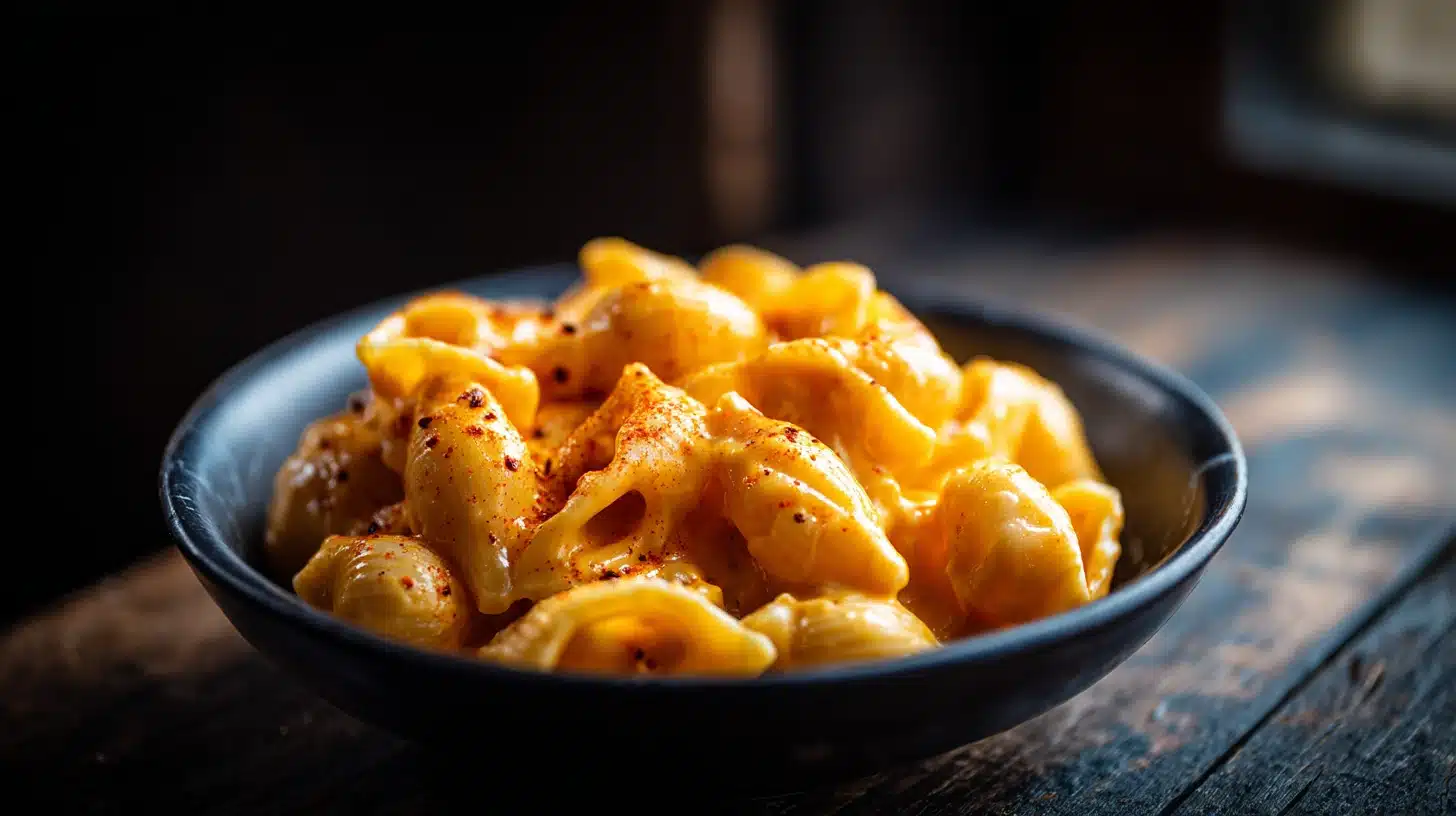
Table of Contents
Why This Macaroni Cheese Sauce Recipe Works
What Makes This Cheese Sauce Special
This macaroni cheese recipe sauce is built on a method most recipes skip: blooming warm spices directly in melted butter before any liquid hits the pan. It takes 45 seconds and makes the whole dish smell like it simmered for an hour.
The real twist is a splash of Buffalo hot sauce stirred in right before serving. Not enough to add heat, just enough to amplify the sharp cheddar’s tang without covering it up. My kids don’t even notice, but they ask why it tastes so much better than the blue box.
No roux means no raw flour taste. You also avoid the sandpaper grit that happens when flour doesn’t cook fully. Instead, heavy cream and whole milk hit hot butter and spices, then cheese melts in off heat. The sauce stays silky every time.
Here’s what makes the texture and flavor work:
- Sharp cheddar for punch, mozzarella for stretch
- Heavy cream and whole milk for richness without separating
- A tiny pinch of nutmeg and a half-teaspoon of mustard powder for depth
- The sauce is ready in 17 minutes, while the pasta boils
- You never whisk over high heat, so it won’t break
Once you get a feel for the cheese blend, leftovers can easily morph into other meals. I’ll often pour extra sauce into a ham and cheese frittata recipe the next morning.
How This Recipe Solves Common Mac and Cheese Problems
I ruined macaroni cheese recipe sauce for years by cranking the heat too high. Grainy, split, weirdly oily, those were my signatures. The fix is simple: add shredded cheese when the pan is off the burner. Residual warmth melts it smoothly without scrambling the proteins.
Bland sauce is another trap. Boxed mixes rely on salt and powdered cheese. This recipe uses a warm spice blend of paprika, mustard, and a tiny hit of cayenne. Buffalo hot sauce does double duty, it wakes up the cheese without tasting spicy. Nobody will name it as an ingredient, but they’ll finish their bowl faster.
Grainy texture also comes from pre-shredded cheese. The powdery anti-caking coating stops it from melting into a smooth sauce. Grate your own block. It adds two minutes and fixes everything.
If you’ve ever ended up with a greasy puddle on top, the temperature was too high. Cheese fat separates above 150°F. I melt the cheese with the burner off, and if I need to reheat leftovers, I do it gently with a splash of milk.
Leftover sauce keeps in the fridge for 3 days, never the freezer, which turns it grainy on thawing. For a completely different use of creamy dairy, I’ll turn extra cream cheese into this cottage cheese peanut butter mousse for an easy dessert.
Print
17-Minute Macaroni Cheese Recipe Sauce: Creamy, Spiced, and So Easy
- Total Time: 18 min
- Yield: 7 servings 1x
- Diet: Gluten-Free, Vegetarian
Description
This macaroni cheese sauce skips the roux and instead blooms warm spices in butter before adding cream and cheese. The result is a velvety, spiced sauce that’s ready in 18 minutes. A splash of Buffalo hot sauce brightens the cheddar without adding heat.
Ingredients
For the spice bloom:
3 tablespoons unsalted butter
½ teaspoon smoked paprika
½ teaspoon mustard powder
Pinch of ground nutmeg
Pinch of cayenne pepper
For the sauce base:
1 cup heavy cream (240ml)
1 cup whole milk (240ml)
For the cheese blend:
2 cups shredded sharp cheddar cheese (8 oz / 225g), from a block
1 cup shredded low-moisture mozzarella cheese (4 oz / 115g), from a block
1–2 teaspoons Buffalo-style hot sauce (like Frank’s)
Fine sea salt, to taste
Instructions
1. Melt the butter in a medium saucepan over medium heat until foaming.
2. Add the smoked paprika, mustard powder, nutmeg, and cayenne; stir constantly for 45 seconds until fragrant.
3. Pour in the heavy cream and whole milk; whisk to combine. Bring to a gentle simmer (small bubbles at edge) and cook for 3–4 minutes, whisking occasionally, until the sauce thickens enough to coat the back of a spoon.
4. Remove the pan from the heat. Add the cheddar and mozzarella a handful at a time, stirring each addition until melted and the sauce is smooth.
5. Stir in the Buffalo hot sauce and a pinch of salt. Taste and add more salt if needed.
6. Toss with cooked pasta, thinning with a splash of reserved pasta water if desired. Serve immediately.
Notes
Use block cheese and grate it yourself, pre-shredded cheese contains anti-caking agents that prevent smooth melting.
Remove the pan from the heat before adding cheese; high heat can cause the sauce to break and turn grainy.
Store leftovers in the refrigerator for up to 3 days. Do not freeze; the texture will change upon thawing.
Reheat gently in a skillet over medium-low heat with a splash of water, or microwave in 30-second intervals, stirring in between.
Blooming the spices in butter is key for depth; don’t skip the 45 seconds, and watch carefully to avoid burning.
- Prep Time: 5 min
- Cook Time: 12 min
- Category: Dinner, Main Course
- Method: Stovetop
- Cuisine: American
Nutrition
- Serving Size: 1 serving (about ½ cup sauce)
- Calories: 353 kcal
- Sugar: 2 g
- Sodium: 350 mg
- Fat: 32 g
- Saturated Fat: 20 g
- Unsaturated Fat: 12 g
- Trans Fat: 0 g
- Carbohydrates: 5 g
- Fiber: 0 g
- Protein: 14 g
- Cholesterol: 104 mg
Macaroni Cheese Sauce Ingredients & Substitutions
Active Time: 12 minutes Total Time: 18 minutes Yield: 7 servings
- 3 tablespoons unsalted butter
- ½ teaspoon smoked paprika
- ½ teaspoon mustard powder
- Pinch of ground nutmeg
- Pinch of cayenne pepper
- 1 cup heavy cream (240ml)
- 1 cup whole milk (240ml)
- 2 cups shredded sharp cheddar cheese (8 oz / 225g), from a block
- 1 cup shredded low-moisture mozzarella cheese (4 oz / 115g), from a block
- 1–2 teaspoons Buffalo-style hot sauce (like Frank’s)
- Fine sea salt, to taste
No flour here, this macaroni cheese recipe sauce is naturally gluten-free. If you’re out of butter, swap in the same amount of olive oil. For a dairy-free version, full-fat coconut milk and vegan shreds work, but the sauce loses some silkiness.
| Original | Substitute | Notes |
|---|---|---|
| Unsalted butter | Coconut oil or olive oil | Same amount; mild flavor |
| Heavy cream | Half-and-half or evaporated milk | Slightly less rich texture |
| Whole milk | 2% milk or unsweetened oat milk | Lighter, but don’t use skim |
| Sharp cheddar | Aged gouda or gruyère | Different flavor, equally melty |
| Mozzarella | Fontina or provolone | Good stretch; mild |
| Buffalo hot sauce | Worcestershire sauce | Similar umami kick, less tang |
Key Ingredients for the Perfect Sauce
Butter does double duty. It melts first to bloom the warm spices, releasing their fat-soluble aromatics. Paprika, mustard powder, nutmeg, and cayenne hit the pan for 45 seconds, and the whole room smells like the sauce has been simmering for an hour. Without this step, you get flat dairy flavor with no backbone.
Heavy cream and whole milk combine into a liquid that’s rich enough to stand in for a roux. The sauce thickens as it simmers gently, no raw flour taste, no sandy texture. Whole milk lightens the cream just enough so the sauce doesn’t coat your mouth like glue. If you swap in all milk, the sauce will be thinner and less glossy.
The Buffalo hot sauce goes in right before serving. It’s not about heat. A tiny dose amplifies the sharpness of the cheddar without anyone being able to name it. The acid in the sauce also balances the dairy fat, keeping the flavor bright. You might never make mac and cheese without it again.
Choosing the Best Cheeses for Melting
Sharp cheddar brings the punch; mozzarella brings the stretch. That’s the winning pair. I buy blocks and grate them by hand. Pre-shredded cheese is coated in starch and cellulose to stop clumping, and that same coating stops it from melting into a smooth sauce. Two minutes of grating saves you from a gritty, separated mess.
Melted cheese turns grainy or oily when it gets too hot, 150°F is the danger zone for cheese proteins. I take the pan off the burner before adding the handfuls of shredded cheese, then stir until it disappears into a velvety sauce. Residual heat does all the work.
Parmesan or aged asiago can be swapped in for a little of the cheddar if you want more umami, but don’t use them alone, they don’t melt as smoothly. For a baked version, pour this sauce over pasta and crackle the top under a broiler with extra cheese. You’ll find a solid pasta and cheese recipe baked technique over on Forkful Daily. Leftover shredded cheese is also perfect for crispy cottage cheese tots the next day.
How to Make Macaroni Cheese Sauce Step-by-Step
Making the Roux
This macaroni cheese recipe sauce skips flour entirely. Instead, you’ll build a rich, spiced butter base in under a minute.
- Place a medium saucepan over medium heat and melt the butter. Watch for it to foam gently, no browning.
- Toss in the smoked paprika, mustard powder, nutmeg, and cayenne. Stir constantly for exactly 45 seconds. You’ll smell the spices bloom and darken slightly. This step unlocks fat-soluble flavor that flat dairy can’t match.
- Keep the mixture moving so nothing scorches. Burnt paprika turns bitter fast.
Cook’s Tip: If you see the butter browning or the spices clumping darkly, pull the pan off the heat immediately and lower the flame. You want fragrant, not toasted.
Adding Milk and Cheese
Now you’ll build the silky body without a single grain in sight.
- Pour in the heavy cream and whole milk. Whisk slowly until the spiced butter swirls in completely.
- Bring the liquid to a gentle simmer, small bubbles around the edge, never a rolling boil. Cook for 3–4 minutes, whisking occasionally, until the sauce coats the back of a spoon.
- Kill the heat. Slide the pan off the burner. Now, add the sharp cheddar and mozzarella a handful at a time. Stir each addition until it disappears. The residual warmth melts everything perfectly; the sauce will thicken as it sits.
- Stir in a pinch of fine sea salt. Taste and adjust, the cheese brings salt, so go easy.
The low-heat melt is the same trick I use for a cottage cheese queso recipe, where even a touch of high heat turns the dip grainy. Same principle here.
Watch Out: Pre-shredded cheese is coated in starch that prevents smooth melting. Grate your own block so the sauce stays glossy.
Combining with Pasta
The final step marries the sauce and noodles without overcooking.
- Cook your pasta in well-salted water until al dente. Before draining, scoop out about ½ cup of pasta water.
- Drain the pasta and return it to the warm pot. Pour the cheese sauce over the top and add the Buffalo-style hot sauce. Toss with a spatula, adding a splash of pasta water if it feels too thick. The starchy water loosens everything and helps the sauce cling.
- Taste once more. Add a little more salt or hot sauce if needed. Serve right away, the sauce is creamiest straight from the pot.
Leftovers reheat beautifully if you add a splash of milk and warm them gently over low heat, lid on. I’ll often spoon leftover sauce into a cottage cheese pizza bowl the next day as a quick lunch.
Storage, Troubleshooting & Serving Ideas
How to Store for Maximum Freshness
This macaroni cheese recipe sauce keeps well for quick meals later, but only in the fridge. Never leave it on the counter, dairy needs cold storage.
| Storage Method | Duration | Notes |
|---|---|---|
| Refrigerator (airtight container) | Up to 3 days | Sauce may thicken; thin with milk when reheating. |
| Freezer | Not recommended | Texture turns grainy and oily upon thawing. |
| Reheating (skillet) | Medium-low heat | Add a splash of water or milk, stir gently. |
| Reheating (microwave) | 30-second intervals | Cover loosely, stir between bursts. |
The pasta absorbs liquid as it sits. When you reheat, stir in a tablespoon of milk per cup of leftovers. Heat it slowly in a covered skillet over medium-low, or zap it in 30-second bursts. A lid traps steam and brings the sauce back to life.
I often spoon leftover sauce onto a cottage cheese egg salad sandwich for a hot lunch. The creamy saltiness works surprisingly well. Just skip any extra mayo.
Common Problems & Quick Fixes
Even a simple sauce can misbehave. Here’s how to rescue it.
| Problem | Solution |
|---|---|
| Grainy or separated cheese | Take the pan off the heat before adding cheese. Grate your own block, pre-shredded has anti-caking starch that ruins texture. |
| Sauce is too thin | Simmer gently for another 2 minutes, or stir in a little pasta water (its starch thickens). |
| Bland flavor | Add a splash more Buffalo hot sauce and a pinch of salt. Acidity wakes up the cheese. |
| Sauce breaks when reheating | Reheat ultra-low, adding a splash of milk. Never boil. |
| Leftovers seem dry | Toss with a spoonful of milk or cream until glossy again. |
Once you’ve nailed the sauce, a few serving touches keep it party-ready. Pile it into warmed bowls right away, the creaminess fades as it cools. For a crowd, keep the finished mac and cheese in a slow cooker on “warm,” stirring every 15 minutes with a splash of milk. You can also pour the sauce into a baking dish, top with more cheddar, and broil for 2 minutes for a crackly crust.
For a completely different crunch, serve alongside these cottage cheese flagels, the crisp edges contrast the silky pasta beautifully.
Macaroni Cheese Recipe Sauce FAQ
Why does this macaroni cheese recipe sauce use Buffalo hot sauce?
It wakes up the sharp cheddar’s tang without adding heat. Just a teaspoon or two stirred in at the end balances the rich dairy with a subtle acidity. Nobody will name it, but they’ll notice the sauce tastes brighter. You can swap Worcestershire for a similar umami boost.
Can I freeze leftover macaroni cheese recipe sauce?
No, the texture turns grainy and oily once thawed. The dairy separates and won’t come back together. For best results, refrigerate it in an airtight container for up to 3 days. Reheat gently with a splash of milk, never over high heat. See the storage table above for details.
Why is my cheese sauce grainy even when I follow the recipe?
Pre-shredded cheese is often the culprit, the anti-caking starch prevents smooth melting. Grate your own block. Overheating also causes graininess; always remove the pan from the burner before stirring in the cheese. The sauce stays silky if you never exceed 150°F. More fixes are in the troubleshooting section.
What’s the best way to reheat this macaroni cheese recipe sauce without it breaking?
Use low, gentle heat, never a boil. Stir in a tablespoon of milk per cup of leftovers, cover with a lid, and warm in a skillet over medium-low, or microwave in 30-second bursts. The added moisture and steam revive the creamy texture.
Can I make this sauce ahead of time and add it to pasta later?
Yes, prepare the sauce up to a day in advance and refrigerate it separately from the pasta. Reheat slowly with a splash of milk, then toss with freshly boiled noodles. This prevents the pasta from soaking up too much liquid and getting mushy.
Try This Creamy Macaroni Cheese Recipe Sauce Tonight
Now you know the 45-second spice bloom, the off-heat cheese melt, and the splash of Buffalo hot sauce that keep this macaroni cheese recipe sauce velvety. A creamy filling with warm spice flavor, no roux, and just 17 minutes.
I always grate my own cheese while the butter melts, a two-minute habit that pays off in pure silkiness. Grab a block of sharp cheddar and make it this weekend.
Do you add a little extra Buffalo sauce or keep it totally kid-friendly?
For more recipes like macaroni cheese recipe sauce, follow us on Facebook and Pinterest for comforting pasta dishes and no-fuss weeknight dinner ideas.