The best frittata with cottage cheese starts with a move most people skip: cooking onions without oil. It sounds wrong, but it’s the trick to a custardy, never-rubbery frittata.
Rubbery, weepy frittatas happen when cottage cheese separates. This recipe uses a water-free onion technique and the right pan temperature to lock in a creamy bite. No curdled mess, just velvety eggs.
You’ll walk away with a spinach-and-potato version you can meal prep for the week, plus how to add ham or sausage without turning it soggy. The exact bake time that sets the center without drying the edges is in here too.
Table of Contents
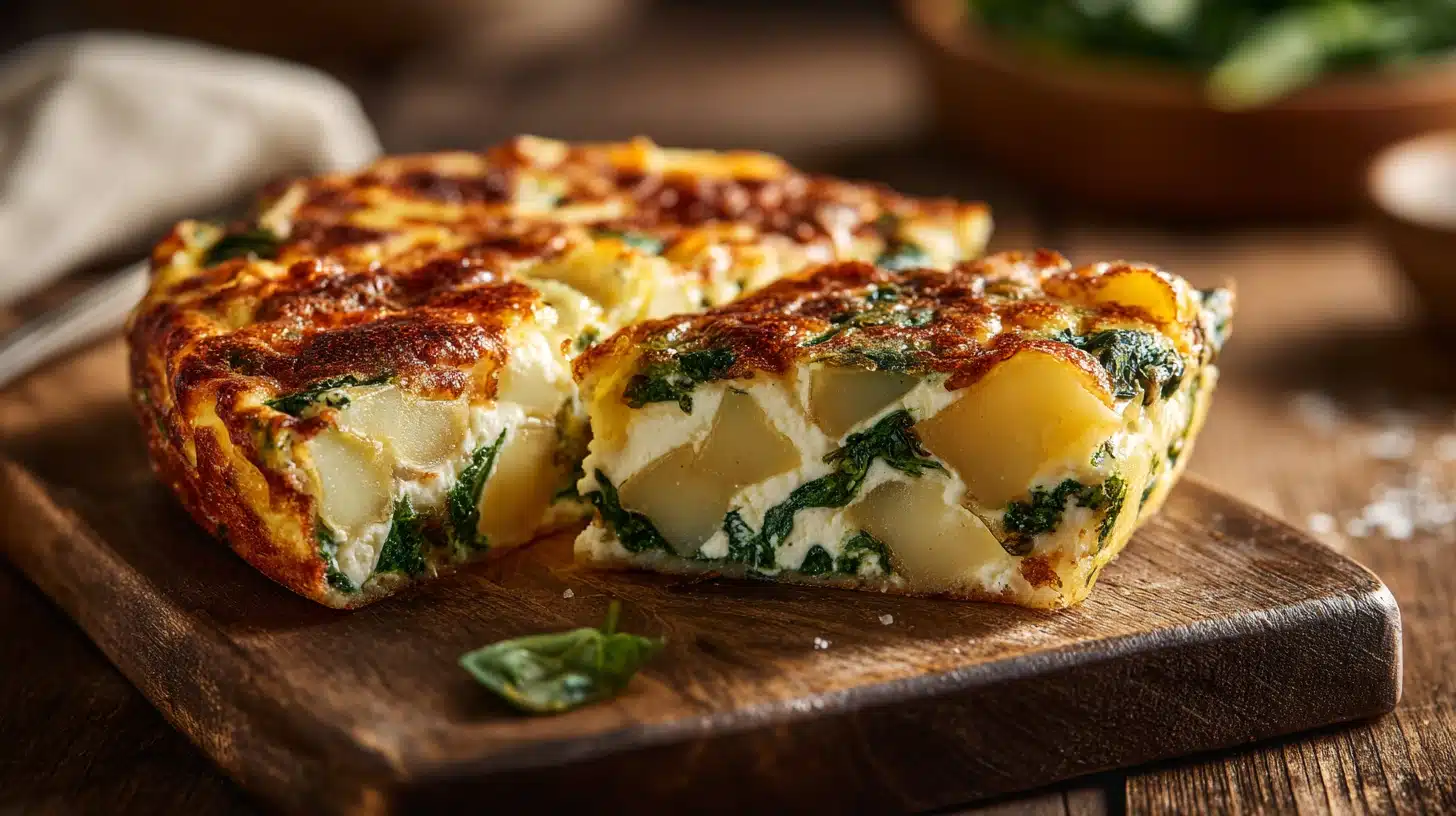
Table of Contents
Why you’ll love this high-protein cottage cheese frittata
The secret to an ultra-creamy texture
I ruined a few frittatas before a chef friend showed me a trick that sounded wrong: cook onions in a dry skillet with just a splash of water. No oil.
The onions soften and release their sweetness without adding liquid that later separates from the eggs. That moisture control is the difference between a creamy slice and a weepy puddle on your plate.
Blending the cottage cheese right into the eggs does the rest. It disappears completely, no curds, no lumps, just a silky custard that holds the spinach and potatoes in every bite. Even my pickiest eaters don’t notice the cottage cheese is there. The final texture is closer to a quiche than a standard frittata, but without the heavy cream or extra work. Parmesan or cheddar melted into the top adds a lightly browned crust that cracks when you cut into it.
This method fixed every rubbery frittata I’d made before. The baked eggs set at 350°F for 22 to 25 minutes, just until the center jiggles like set Jell-O. That timing keeps the edges from drying out. You get a custardy interior that stays that way straight from the fridge.
A protein-packed start to your day
One slice delivers more staying power than a stack of pancakes. Each serving has 15 grams of protein from eggs, cottage cheese, and whatever add-ins you toss in. Ham or cooked sausage bumps the number even higher without turning the frittata soggy, as long as you pat them dry first.
Here’s what makes it a weekday hero:
- 15+ grams of protein per slice keeps hunger quiet until lunch
- Bake once and reheat for four days, no daily cooking
- Toss in leftover potatoes, mushrooms, asparagus, or bell pepper
- Cold slices pack well, so it’s a no-reheat breakfast on busy mornings
I rely on meals that don’t force a kitchen scramble at 7 a.m. This frittata freezes for two months, slices up like a sheet cake, and fits the same meal prep rhythm as my high protein cottage cheese baked ziti – hearty, make-ahead, and nothing artificial.
But when I want a hot, oven-fresh start, this frittata is my answer. Creamy, fast, and built for the week.
Print
Cottage Cheese Frittata: 35-Minute Easy Frattata Recipe with Cottage Cheese
- Total Time: 35 min
- Yield: 6 servings 1x
- Diet: Vegetarian
Description
A creamy, high-protein frittata made by blending cottage cheese into eggs for a silky custard, with spinach, potatoes, and optional ham or sausage. Ready in 35 minutes, it’s a perfect make-ahead breakfast or brunch for six.
Ingredients
For the frittata:
8 large eggs, at room temperature
1 cup full-fat cottage cheese (4% milkfat works best)
2 cups fresh spinach, roughly chopped
1 cup diced potatoes, boiled until fork-tender (about ½-inch cubes)
½ medium onion, finely diced
1 tablespoon olive oil or cooking spray
½ teaspoon kosher salt
¼ teaspoon black pepper
⅓ cup grated parmesan cheese
Optional:
½ cup diced ham or crumbled cooked sausage, patted dry
Instructions
1. Position a rack in the upper third of the oven and heat to 350°F.
2. Heat a 10-inch oven-safe skillet over medium heat. Add the diced onion and a splash of water. Cook, stirring occasionally, until translucent and soft, about 3 minutes. No oil needed here.
3. Toss in the boiled potatoes and chopped spinach. Stir for 60 seconds, just until the spinach barely wilts. Season with salt and pepper. Remove the skillet from heat.
4. In a blender, combine the eggs and cottage cheese. Blend on high for 20 seconds until completely smooth, no visible curds. Pour the custard directly over the vegetables in the warm skillet.
5. Scatter the parmesan across the top. If using, dot in the ham or crumbled sausage.
6. Bake for 22 to 25 minutes, until the edges are puffed and pull away from the sides, and the center jiggles like firm gelatin when nudged.
7. Let the frittata rest for 5 minutes before slicing, the carryover heat finishes the center and makes clean cuts easier.
Notes
Store in an airtight container in the refrigerator for up to 4 days, or freeze for up to 2 months. Reheat gently in a skillet over medium-low heat with a splash of water, or microwave in 30-second intervals.
For the creamiest texture, use the no-oil onion trick: cook onions in a dry skillet with a splash of water to soften without adding water that can separate from the eggs later.
If spinach releases water during cooking, tip the skillet and blot the liquid with a paper towel before adding the egg mixture, extra moisture will make the bottom soggy.
Drape a kitchen towel over the skillet handle immediately after removing from the oven; the handle stays hot and is easy to grab by mistake.
To lower the carbs, skip the potatoes or replace them with roasted bell pepper or steamed broccoli florets.
- Prep Time: 10 min
- Cook Time: 25 min
- Category: Breakfast
- Method: Baking
- Cuisine: American
Nutrition
- Serving Size: 1 slice
- Calories: 205 kcal
- Sugar: 2 g
- Sodium: 451 mg
- Fat: 12 g
- Saturated Fat: 4 g
- Unsaturated Fat: 8 g
- Trans Fat: 0 g
- Carbohydrates: 8 g
- Fiber: 1 g
- Protein: 15 g
- Cholesterol: 248 mg
Cottage cheese frittata ingredients
Active Time: 10 minutes Total Time: 35 minutes Yield: 6 servings
Core ingredients
Every ingredient pulls double duty, flavor and structure. The eggs and cottage cheese form a custard that bakes up silky, while the vegetables add heft without watering things down. Here’s what you need:
- 8 large eggs, at room temperature
- 1 cup full-fat cottage cheese (4% milkfat works best)
- 2 cups fresh spinach, roughly chopped
- 1 cup diced potatoes, boiled until fork-tender (about ½-inch cubes)
- ½ medium onion, finely diced
- 1 tablespoon olive oil or cooking spray (for the skillet)
- ½ teaspoon kosher salt
- ¼ teaspoon black pepper
- ⅓ cup grated parmesan cheese
- Optional: ½ cup diced ham or crumbled cooked sausage, patted dry
Cottage cheese blends straight into the eggs, no chunks, no weird texture. Full-fat keeps the frittata creamy without extra butter. Spinach wilts down during baking, so you don’t need to pre-cook it. The potatoes must be boiled first; raw spuds won’t soften in the short bake time. Parmesan melts into a golden crust, while ham or sausage adds smoky depth.
A quick substitution note: you can swap parmesan for sharp cheddar, or use kale instead of spinach. If potatoes aren’t your thing, roasted bell pepper or steamed broccoli florets work well.
| Original | Substitute | Notes |
|---|---|---|
| Parmesan | Sharp cheddar, pecorino | Same amount; cheddar melts softer |
| Spinach | Kale, Swiss chard | Remove tough stems and chop finely |
| Ham | Cooked bacon, turkey sausage | Pat dry to avoid sogginess |
| Potatoes | Roasted sweet potato, no potato | Skip if you want a lower-carb frittata |
Ingredient swaps & add-ins
This frittata handles swaps like a champ. The base custard of eggs and blended cottage cheese stays constant; everything else is flexible. The no-oil onion trick works even if you skip oil entirely.
For vegetables, mushrooms, asparagus, or diced bell pepper slot in beautifully. Just cook any watery veg (like mushrooms) in a dry pan first to drive off moisture. That keeps the baked frittata from getting weepy. If you want to lean harder into comfort food, stir in leftover roasted potatoes or even tater tots, no pre-boiling needed.
Cheese choice changes the top layer. Parmesan gives a nutty, crisp crust. Cheddar melts into a gooey blanket. A mix of both works too. For a richer flavor, try gruyère or smoked gouda. If you have leftover cottage cheese, it’s great in a cottage cheese egg salad sandwich for next-day lunch.
Add-ins like ham or cooked sausage push the protein past 20 grams per slice. Crumble them in cold, straight from the fridge, they’ll heat through in the oven. Just remember the pat-dry rule: any add-in that carries extra liquid needs a quick blot. This simple step prevents the dreaded soggy-bottom frittata.
How to make cottage cheese frittata
Step-by-step instructions
- Position a rack in the upper third of the oven and heat to 350°F.
- Heat a 10-inch oven-safe skillet over medium heat. Add the diced onion and a splash of water (the no-oil onion trick). Cook, stirring occasionally, until translucent and soft, about 3 minutes. No oil needed here.
- Toss in the boiled potatoes and chopped spinach. Stir for 60 seconds, just until the spinach barely wilts. Season with the salt and pepper. Remove the skillet from heat.
- In a blender, combine the eggs and cottage cheese. Blend on high for 20 seconds until completely smooth, no visible curds. Pour this custard directly over the vegetables in the warm skillet.
- Scatter the parmesan (or cheddar) across the top. If you’re adding ham or crumbled sausage, dot them in now.
- Slide the skillet onto the center rack and bake for 22 to 25 minutes. The edges will puff and pull away from the sides slightly. The center should be set but wobble like firm gelatin when you nudge the pan.
Watch Out: If your spinach releases water in the pan, tip the skillet and blot the liquid with a paper towel before adding the egg mixture. Extra moisture makes the bottom soggy.
The top should be golden brown with darker spots where the cheese caramelized. Let it rest for 5 minutes before slicing. This carryover heat finishes the center and makes clean cuts easier. If you lean toward high-protein breakfasts that don’t feel heavy, this method delivers. For another morning option with a similar payoff, try these cottage cheese protein pancakes – same creamy base, completely different shape.
Oven-safe skillet method
Starting on the stovetop and finishing in the oven prevents the bottom from burning while the top stays undercooked. I learned this the hard way with a scorched edge and raw middle. The transition solves both problems.
Use a well-seasoned cast iron skillet or a nonstick pan with an all-metal handle, no plastic grips that melt at 350°F.
Begin on medium heat just long enough to sauté the aromatics and wilt any vegetables. You want a warm pan when the egg mixture hits it, which jump-starts the bottom layer so it sets at the same rate as the rest.
Pour the blended eggs and cottage cheese into the skillet right after removing it from the burner. The residual heat creates a thin, crisped edge without sticking. Transfer immediately to the hot oven. Bake until the internal temperature reads 160°F at the center, or the frittata springs back when pressed lightly with a fingertip. This takes 22 to 25 minutes in my oven.
The biggest mistake I see: leaving the handle scorching hot and grabbing it bare-handed. Drape a kitchen towel over the handle the second it comes out of the oven. I keep one permanently hanging on the oven door for this exact reason.
This oven-baked frittata works because the eggs cook gently from all sides. No flipping, no broiling, no fuss. The same principle, blend cottage cheese into a warm base for body and protein, ties right into this cottage cheese pasta high protein recipe if dinner hour hits and you still have cottage cheese left.
Storage, troubleshooting & serving ideas
How to store and reheat
Refrigerate leftovers in an airtight container for up to 4 days. For longer storage, wrap individual slices tightly in plastic wrap, then foil, label with the date, and freeze for up to 2 months.
Reheating is simple. Warm a slice in a skillet over medium-low heat with a splash of water, cover, and cook for 3–5 minutes. The steam revives the custardy texture. In a hurry, microwave in 30-second intervals until steaming. This make-ahead nature makes the frittata a weekday hero. For another portable high-protein breakfast, try these high protein cottage cheese wraps – equally meal-prep friendly.
| Method | Duration | Instructions |
|---|---|---|
| Refrigerator | Up to 4 days | Store in an airtight container. |
| Freezer | Up to 2 months | Wrap slices individually in plastic, then foil. Label with date. |
| Skillet Reheat | 3–5 min | Medium-low heat with a splash of water, covered. |
| Microwave Reheat | 30-sec bursts | Heat until steaming, pausing between bursts. |
Common mistakes and how to fix them
| Problem | Solution |
|---|---|
| Frittata is watery | Squeeze spinach vigorously after chopping. Pre-cook mushrooms or other wet veggies in a dry skillet first. |
| Eggs stick to skillet | Grease the skillet generously with oil or butter right before adding the egg mixture. |
| Undercooked center | Bake longer at 350°F. Cover loosely with foil if the top browns before the center sets. |
| Cottage cheese flavor too strong | Blend eggs and cottage cheese until totally smooth, no visible curds. |
| Frittata deflates after baking | Avoid over-whisking the eggs. A slight puff is normal and settles as it cools. |
| Needs a protein boost | Fold in diced ham, crumbled sausage, or an extra handful of shredded cheddar. |
What to serve with cottage cheese frittata
The frittata holds its own, but a few simple sides round out the plate:
- A baby arugula salad with lemon vinaigrette cuts through the richness of the eggs and cheese.
- Toasted sourdough or whole-grain bread for a satisfying crunch.
- Sliced melon, berries, or a citrus salad adds brightness.
Cold slices also travel well for packed lunches. When you need a faster high-protein breakfast, no baking required, scrambled eggs with cottage cheese takes less than 10 minutes and uses the same creamy trick.
Frittata recipe with cottage cheese FAQ
Can frittata be eaten cold?
Yes, cold slices hold their custardy texture straight from the fridge. I often pack them for no-reheat breakfasts. The eggs stay silky, and the spinach and potatoes don’t turn rubbery. Just store them airtight and grab a slice when you need it.
How long to bake a frittata?
Bake this frittata at 350°F for 22 to 25 minutes. The top should be golden, edges puffed, and the center wobbles like firm gelatin when you shake the skillet. An instant-read thermometer should hit 160°F at the middle for a set but creamy interior.
What is a good high-protein breakfast?
This frittata fits the bill perfectly. One slice packs 15+ grams of protein from eggs and cottage cheese, and you can boost that over 20 grams with diced ham or crumbled sausage. It powers me through mornings without a mid-morning crash.
Is cottage cheese healthy?
Absolutely. It brings protein, calcium, and a creamy texture without heavy cream. In this recipe, it blends completely smooth and adds satiety. A single serving has enough staying power to count as a full meal, not just a side.
What do you serve with a frittata?
A handful of peppery arugula tossed in lemon vinaigrette cuts the richness nicely. Toasted sourdough adds crunch. For a brunch spread, pile on sliced melon or berries. The frittata works solo too. It’s a full plate on its own.
Can frittata be made in advance?
Yes, two ways. Prep the veggies and blend the eggs with cottage cheese the night before, then assemble and bake fresh. Or bake the whole thing, cool, and refrigerate. Reheat slices in a covered skillet with a splash of water for 3 to 5 minutes to revive the creamy center.
Can you freeze frittata?
Yes, it freezes well. Wrap individual slices tightly in plastic, then foil, label, and freeze up to 2 months. Reheat from frozen in a 350°F oven for 15 to 20 minutes, or microwave in 30-second bursts until steaming. The texture stays surprisingly tender.
Make this frittata recipe with cottage cheese this weekend
This frittata delivers a creamy, never-rubbery slice thanks to a no-oil onion trick and a quick blend. Bake at 350°F until the center just wobbles, and you’ll have a warm breakfast ready for the week.
I double the batch and freeze half for those mornings when I need protein but not effort. Try it this weekend. It’s easier than pancakes and keeps you full until lunch.
Do you go for ham or sausage in yours, or keep it all veggies?
For more recipes like this, follow us on Facebook and Pinterest for easy high-protein breakfasts and meal prep inspiration.