The moment I stopped feeling guilty about eating dessert was the day I realized a protein dessert could taste exactly like the raw cookie dough I used to sneak from the bowl as a kid.
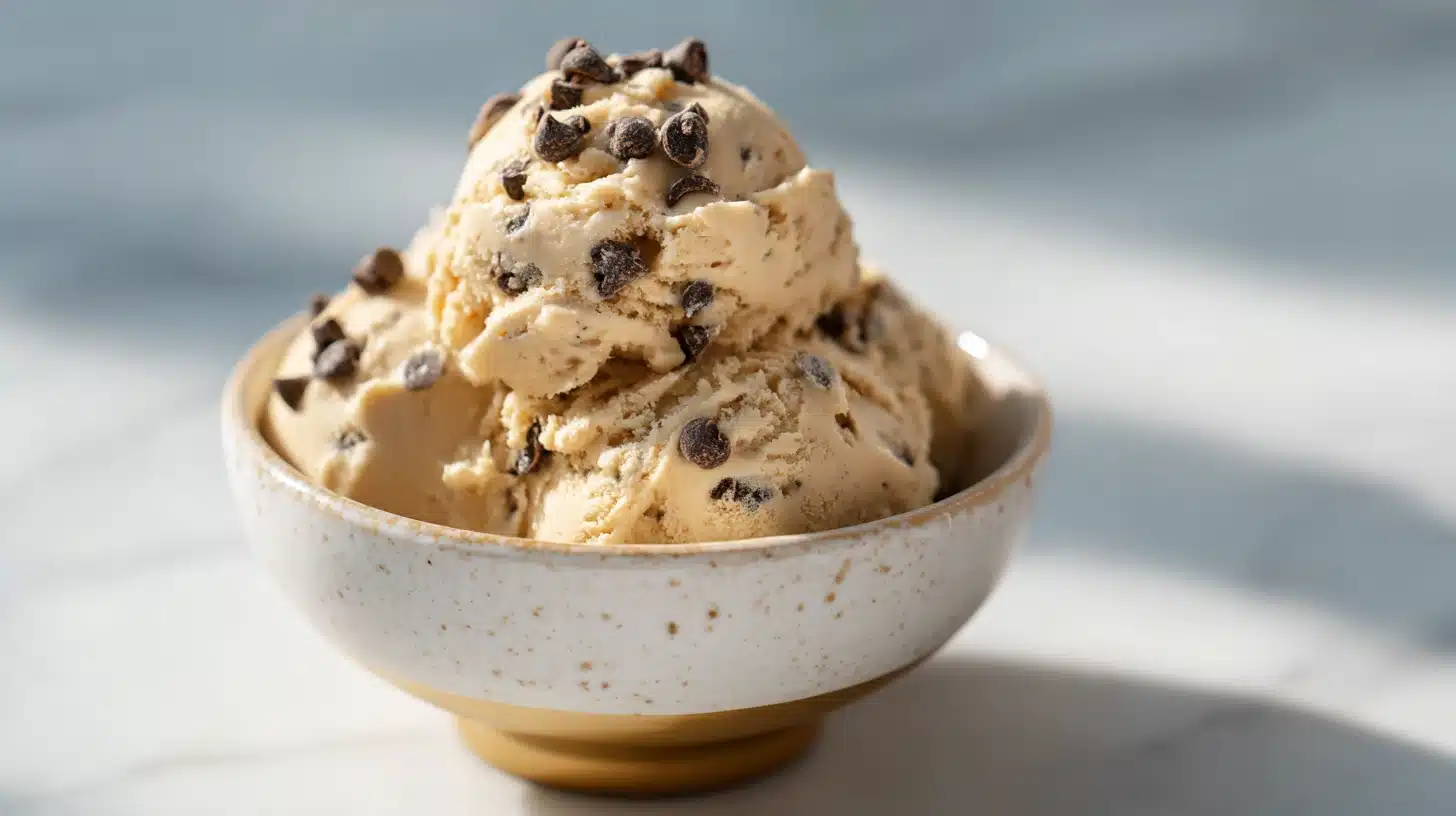
Most high-protein desserts fail you in one of two ways: they taste like chalky powder or they have a gummy, paste-like texture that no amount of chocolate chips can fix. This recipe solves both problems by using cottage cheese as the creamy base and just enough protein powder to boost the macros without overwhelming the flavor.
Here’s what you’ll get: a no-bake method that comes together in 5 minutes flat, a texture tip that keeps things perfectly smooth and scoopable, and the exact ratio of ingredients that makes this taste indulgent rather than “healthy.”
Table of Contents
Why This No-Bake Protein Dessert Actually Works
Most people assume that adding protein powder to a dessert automatically means sacrificing taste and texture. I get it. We have all bitten into a protein bar that tasted like a vitamin chew and sworn off the category entirely. But the reason so many high-protein desserts disappoint comes down to one thing: using protein powder as the foundation instead of as a supporting player.
In this recipe, cottage cheese does the heavy lifting. It provides creaminess, body, and a naturally mild tang that mimics the flavor profile of raw cookie dough better than almost anything else in a refrigerator. The protein powder comes in as a booster, not the star, which means you get the macros you want without the chalky aftertaste that ruins so many healthy protein desserts.
The Cottage Cheese Trick
Blending cottage cheese before using it is the single most important technique in this entire recipe. Unblended cottage cheese has visible curds that create an uneven, lumpy texture. Give it 30 to 45 seconds in a blender or food processor and it transforms into something that looks and feels like thick cream cheese. Smooth, rich, and completely neutral in appearance.
From there, the rest of the ingredients fold in easily: vanilla protein powder (unflavored works too), a spoonful of natural almond butter, a touch of maple syrup, and a pinch of sea salt. The almond butter adds fat and depth that makes your brain read “cookie dough” rather than “protein shake in a bowl.”
Why Texture Matters More Than Flavor Here
You can cover up a lot of flavor problems with mini chocolate chips and a drizzle of honey. Texture is harder to fake. If the base is gritty or pasty, no topping saves it. Blending the cottage cheese eliminates the grit. Using a vanilla or unflavored whey-casein blend instead of a pure whey isolate prevents the mixture from becoming watery after it sits. Casein is thicker by nature, and even a small percentage in a blended powder makes a noticeable difference in the final consistency.
If you’re curious about other ways cottage cheese works as a base for sweet treats, check out this cottage cheese cookie dough recipe, which takes the same concept in a slightly different direction with chickpeas for extra fiber.
Chilling the finished mixture for just 5 minutes in the freezer firms it up to a perfect scoopable consistency, somewhere between soft-serve and thick pudding. That brief rest is what separates “good” from “actually satisfying.”
Print
The No-Bake Protein Dessert That Tastes Like Cookie Dough (Ready in 10 Minutes)
- Total Time: 10 min
- Yield: 2 servings 1x
- Diet: Vegetarian
Description
A no-bake protein dessert made from blended cottage cheese, vanilla protein powder, almond butter, and mini chocolate chips. It comes together in 5 minutes, chills for 5 minutes, and tastes like cookie dough with around 24 grams of protein per serving.
Ingredients
For the cookie dough base:
1 cup full-fat cottage cheese (blended smooth)
2 scoops (60 g) vanilla protein powder (whey-casein blend recommended)
2 tablespoons natural almond butter
1 tablespoon maple syrup
1/2 teaspoon pure vanilla extract
1 pinch sea salt
For the mix-ins and topping:
3 tablespoons mini dark chocolate chips (plus a pinch reserved for topping)
1 tablespoon milk of choice (optional, to thin if needed)
Instructions
1. Add 1 cup of full-fat cottage cheese to a blender or food processor. Blend on high for 30 to 45 seconds, scraping down the sides once, until completely smooth with no visible curds. It should look like thick sour cream.
2. Transfer the blended cottage cheese to a medium mixing bowl. Add the vanilla protein powder, almond butter, maple syrup, vanilla extract, and sea salt.
3. Fold everything together with a rubber spatula for about 60 seconds until fully combined. The mixture will thicken and pull away from the bowl sides. If it seems too thick, add 1 tablespoon of milk and fold again.
4. Add the mini chocolate chips and fold them in gently, reserving a small pinch for topping.
5. Divide the mixture evenly between two bowls. Scatter the reserved chocolate chips on top.
6. Place the bowls in the freezer for exactly 5 minutes, until the surface feels firm and holds a light indent when pressed. Serve immediately or transfer to the refrigerator covered for up to 3 days.
Notes
Store covered in the refrigerator for up to 3 days. Stir before serving as the mixture firms slightly when chilled. Freeze for up to 1 month and thaw for 10 minutes on the counter for a soft-serve texture.
For a keto version, replace maple syrup with liquid allulose or stevia and use sugar-free chocolate chips to bring carbs down to around 6 to 8 grams per serving.
Plant-based protein powder works in place of whey-casein. Add an extra tablespoon of almond butter to compensate for the drier texture it can bring.
Greek yogurt (full-fat, plain) can replace the cottage cheese in equal amounts and skips the blending step, though the flavor will be slightly tangier.
- Prep Time: 5 min
- Rest Time: 5 min
- Cook Time: 0 min
- Category: Dessert
- Method: No-Cook
- Cuisine: American
Nutrition
- Serving Size: 1 bowl
- Calories: 310 kcal
- Sugar: 12 g
- Sodium: 420 mg
- Fat: 13 g
- Saturated Fat: 4 g
- Unsaturated Fat: 9 g
- Trans Fat: 0 g
- Carbohydrates: 18 g
- Fiber: 1 g
- Protein: 24 g
- Cholesterol: 55 mg
Ingredients and what each one does
Understanding why every ingredient is in here helps you make smart substitutions when you need to.
Cottage cheese (full-fat, 2%): This is your protein base and your texture agent. Full-fat gives you the richest result. Low-fat works but produces a slightly thinner mixture. Avoid fat-free if possible. It tends to turn watery after blending.
Vanilla protein powder: Adds 15 to 20 grams of protein per serving depending on your brand. Whey-casein blends work best for texture. Plant-based protein powders (pea or brown rice) work if you avoid dairy, but add an extra tablespoon of almond butter to compensate for the drier consistency.
Natural almond butter: Provides fat, creaminess, and that signature nutty richness you associate with cookie dough. Peanut butter is a direct swap and arguably even more convincing as a dough flavor. Sunflower seed butter works for nut-free needs.
Maple syrup: Just one tablespoon brings enough sweetness to make this feel like a real protein sweet treat rather than a savory dip. Honey works identically. If you’re tracking carbs closely, two drops of liquid stevia or a teaspoon of erythritol are solid alternatives.
Vanilla extract: Half a teaspoon deepens the vanilla flavor and adds warmth. Don’t skip it even if your protein powder is already vanilla flavored. The extract adds a dimension the powder alone cannot replicate.
Mini chocolate chips: Fold these in at the end. The smaller size distributes more evenly and means you get a chip in every bite rather than one large chunk every few spoonfuls.
Pinch of sea salt: This is non-negotiable. Salt doesn’t make things taste salty. It makes everything else taste more like itself. A small pinch amplifies the sweetness and the chocolate without adding any flavor of its own.
For another take on no-bake protein dessert options that use unexpected bases, the boiled egg chocolate pudding high protein recipe on Forkful Daily is worth a look if you want to see how far creative high-protein desserts can go.
Step-by-step instructions
The whole process takes about 5 minutes of active work, plus a short rest in the freezer.
Step 1: Blend the cottage cheese
Add 1 cup of full-fat cottage cheese to a blender or food processor. Blend on high for 30 to 45 seconds, scraping down the sides once halfway through. You’re looking for a completely smooth, creamy texture with no visible curds. It should look like thick sour cream or Greek yogurt. This step is where the magic happens. Don’t rush it and don’t skip it.
Step 2: Mix in the dry and wet ingredients
Transfer the blended cottage cheese to a medium mixing bowl. Add 2 scoops (roughly 60 grams) of vanilla protein powder, 2 tablespoons of natural almond butter, 1 tablespoon of maple syrup, 1/2 teaspoon of vanilla extract, and a pinch of sea salt. Use a rubber spatula to fold everything together until fully combined. The mixture will thicken noticeably as the protein powder hydrates. After about 60 seconds of folding, it should pull away from the sides of the bowl and look like thick, scoopable dough. If it seems too thick, add one tablespoon of milk (any kind) to loosen it slightly.
Step 3: Fold in the chocolate chips
Add 3 tablespoons of mini chocolate chips and fold them in gently. Reserve a small pinch for topping if you want the finished bowls to look polished. The cold chocolate chips hitting the slightly warm mixture from the blending process creates the most satisfying contrast in texture.
Step 4: Chill and serve
Divide the mixture evenly between two bowls. Place them in the freezer for exactly 5 minutes. This short chill firms the texture from “thick batter” to “soft, scoopable dough.” When you pull them out, the surface should hold a light indent when pressed, and the chocolate chips should feel slightly set into the mixture. Top with the reserved chocolate chips and serve immediately, or transfer to the refrigerator (covered) for up to 3 days.
That 5-minute chill is the difference between a protein dessert that impresses and one that just fills a macro gap.
Customizations, variations, and storage tips
One of the best things about this base recipe is how easily it takes on new personalities. The blended cottage cheese foundation is neutral enough to carry almost any flavor direction you choose.
Flavor variations worth trying
Peanut Butter Cup: Swap almond butter for natural peanut butter. Add 1 teaspoon of unsweetened cocoa powder to the mix. Top with a few dark chocolate chips and a light drizzle of melted peanut butter. The result smells exactly like a Reese’s and delivers around 25 grams of protein per serving.
Chocolate Brownie: Use chocolate protein powder instead of vanilla. Add 1 tablespoon of unsweetened cocoa powder and a few drops of espresso extract. The cocoa deepens the chocolate flavor and the espresso makes it taste richer without adding any noticeable coffee flavor. This is one of the most convincing low-calorie protein desserts in the rotation.
Pumpkin Spice: Add 2 tablespoons of canned pumpkin and 1/2 teaspoon of pumpkin pie spice. Use vanilla protein powder and skip the chocolate chips in favor of a sprinkle of cinnamon on top. This version tastes remarkably close to the pumpkin cheesecake protein pudding that our readers make obsessively every fall.
Strawberry Shortcake: Use unflavored or vanilla protein powder, fold in 1/4 cup of diced fresh strawberries, and add 1 teaspoon of strawberry jam. Top with a small spoonful of whipped cream for a no-bake protein dessert that feels genuinely festive.
Storage and meal prep
This recipe stores beautifully. Covered tightly in the refrigerator, it keeps for up to 3 days with minimal texture change. The mixture firms slightly as it sits, which some people actually prefer. Give it a quick stir before serving and it comes right back to the right consistency.
For meal prep, double or triple the batch and portion it into small mason jars or airtight containers. Each portion is pre-measured and ready to pull from the fridge whenever a craving hits, which makes sticking to your nutrition goals significantly easier when 9pm rolls around and the pantry starts calling.
Freezing is possible but changes the texture slightly. The mixture becomes more ice-cream-like when frozen solid, which is genuinely delicious in its own right. Let it thaw on the counter for 10 minutes before eating for a soft-serve consistency.
| Variation | Swap | Extra add-in |
|---|---|---|
| Peanut Butter Cup | Peanut butter for almond butter | 1 tsp cocoa powder |
| Chocolate Brownie | Chocolate protein powder | 1 tbsp cocoa + espresso drops |
| Pumpkin Spice | Keep vanilla powder | 2 tbsp canned pumpkin + spice |
| Strawberry Shortcake | Keep vanilla powder | 1/4 cup diced strawberries |
Frequently asked questions
Can I use Greek yogurt instead of cottage cheese?
Yes, plain full-fat Greek yogurt is a solid substitute and skips the blending step entirely since it’s already smooth. The flavor will be tangier and slightly less rich, but the texture holds up well. Use the same amount (1 cup) and reduce the maple syrup by half a teaspoon since Greek yogurt carries more natural tartness than cottage cheese.
What protein powder works best in this recipe?
A vanilla whey-casein blend gives the best texture because casein thickens as it absorbs liquid. Pure whey isolate works but produces a slightly runnier mixture that needs a longer chill. Plant-based protein powders (pea, brown rice, or a blend) work well if you add an extra tablespoon of nut butter to compensate for the drier, sometimes grainier consistency they can bring.
Is this recipe suitable for a low-carb or keto diet?
With maple syrup, each serving contains roughly 18 grams of carbohydrates. To make it keto-friendly, replace the maple syrup with a liquid sweetener like allulose or stevia, and swap the mini chocolate chips for sugar-free chocolate chips. Those two swaps bring carbohydrates down to around 6 to 8 grams per serving without affecting the creamy texture or the overall satisfaction of this protein dessert.
How many grams of protein does one serving actually contain?
One serving delivers approximately 24 grams of protein, depending on your specific protein powder brand. The cottage cheese contributes about 13 grams and the two scoops of protein powder contribute roughly 30 grams total across two servings. The almond butter adds another 4 grams. This makes it one of the most protein-dense no-bake protein dessert options you can make with common pantry staples.
Conclusion
A great protein dessert doesn’t ask you to choose between hitting your goals and enjoying what you eat. This no-bake cookie dough version proves that point in exactly 10 minutes, using a blended cottage cheese base that produces the creamy, indulgent texture most healthy protein desserts miss entirely.
Give this a try tonight. Keep the ingredients stocked and it becomes the kind of thing you make on autopilot three times a week.
For more recipes like this protein dessert, follow us on Facebook and Pinterest for high-protein sweet treat ideas and no-bake dessert inspiration.