A kiwi sleep bowl sounds almost too simple to be real, and that is exactly what makes it so surprising. Research published in the Asia Pacific Journal of Clinical Nutrition found that eating two kiwi fruits an hour before bed significantly improved sleep onset, duration, and quality.
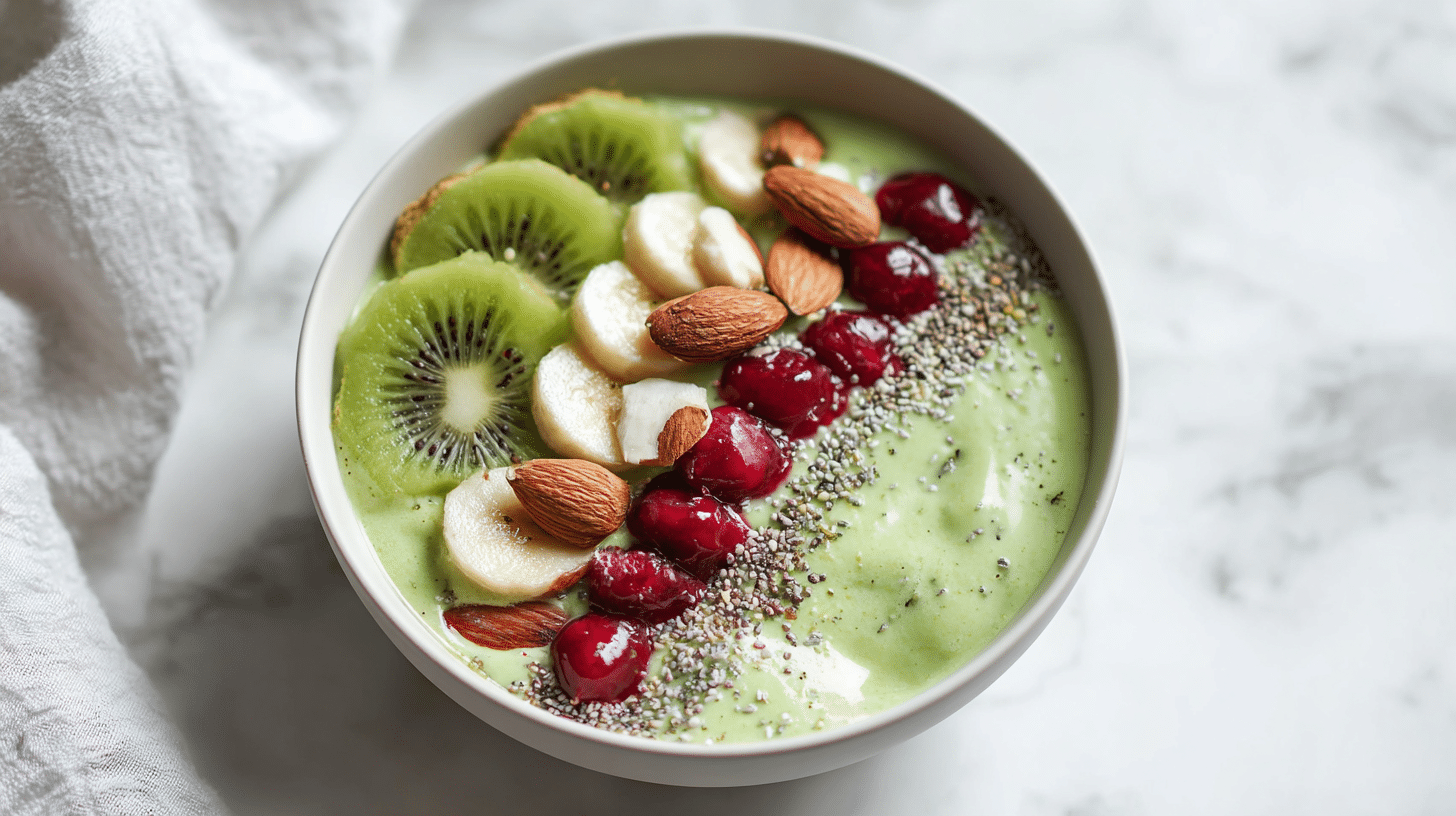
Most bedtime snacks leave you either wired from sugar or frustrated by a growling stomach at 2 a.m. This bowl layers kiwi with Greek yogurt, tart cherry juice, almonds, and chia seeds. Each ingredient works to support natural melatonin and serotonin production.
You’ll learn the science behind each ingredient, how to build the bowl without triggering a sugar spike, and three simple ways to customize it for your own sleep goals.
Table of Contents
Why Kiwi Is a Legitimate Sleep Aid (And What the Science Actually Says)
Before kiwi became a trendy sleep aid on social media, researchers were already paying attention to it. The fruit is genuinely unusual in its nutritional profile. Once you understand why, building an entire bedtime bowl around it makes complete sense.
Serotonin, Melatonin, and the Kiwi Connection
Kiwi contains a meaningful amount of serotonin, the neurotransmitter your brain converts into melatonin as the evening winds down. Most foods that support sleep do so indirectly, by supplying tryptophan, the amino acid your body uses to make serotonin. Kiwi skips a step. It delivers serotonin itself, which is rare for a whole fruit.
The same 2011 study showed that participants who ate two kiwis nightly for four weeks fell asleep 35% faster and slept 13% longer. Those are not trivial numbers for something that takes thirty seconds to peel.
Beyond serotonin, kiwi provides folate and antioxidants, including vitamin C and vitamin E. Low folate levels have been linked to insomnia in several population studies, so topping that up at night may help signal to your body that it is safe to rest.
The Role of the Other Ingredients
The kiwi sleep bowl does not rely on kiwi alone. Each ingredient was chosen for what it contributes to a calmer, more restful night.
- Greek yogurt provides tryptophan and calcium. Calcium helps the brain use tryptophan to synthesize melatonin, so the two work as a team. A thick, full-fat Greek yogurt also slows digestion, which means no blood sugar crash at midnight.
- Tart cherry juice is one of the few natural sources of dietary melatonin. Even a small amount (two tablespoons stirred into the bowl or drizzled on top) has been shown in clinical trials to raise melatonin levels meaningfully.
- Almonds supply magnesium, a mineral that helps regulate the body’s internal clock and relax muscle tension. Many adults are mildly deficient in magnesium, and low levels correlate with lighter, more disrupted sleep.
- Banana contributes potassium and a small amount of tryptophan. It also adds natural sweetness so you do not need much honey, which keeps the sugar load low.
- Chia seeds bring omega-3 fatty acids, which support overall brain health, plus fiber to keep the glycemic impact of the bowl gentle.
If you enjoy building bowls with yogurt as the base, check out this greek yogurt bowl with nuts and seeds for another nutrient-dense variation you can adapt for daytime eating.
The combination here is not random. It is a deliberate stack of sleep-supporting nutrients that happen to taste creamy, lightly sweet, and genuinely satisfying when you are winding down for the night.
Print
Kiwi Sleep Bowl: The Bedtime Snack Backed by Real Science
- Total Time: 5 min
- Yield: 1 bowl 1x
- Diet: Vegetarian
Description
A kiwi sleep bowl is a five-minute bedtime snack built around two ripe kiwis, thick Greek yogurt, almonds, chia seeds, banana, and tart cherry juice. Every ingredient was chosen to support natural melatonin and serotonin production. Eat it 60 to 90 minutes before bed for the best results.
Ingredients
For the bowl:
2 ripe green kiwis (peeled and sliced into rounds)
3/4 cup plain full-fat Greek yogurt (cold)
1/2 medium banana (sliced)
1 tablespoon chia seeds
10 to 12 raw almonds
2 tablespoons tart cherry juice (Montmorency variety)
Optional topping:
1 teaspoon honey
1 pinch ground cinnamon
Instructions
1. Spoon the cold Greek yogurt into a wide shallow bowl and spread it gently toward the edges so it covers the base evenly.
2. Arrange the kiwi slices in a fan or overlapping pattern across the surface of the yogurt. The bright green color against the white yogurt is part of the appeal, so take a moment to place them neatly.
3. Add the banana slices along one side of the bowl, tucking them just under the edge of the kiwi so they stay in place.
4. Scatter the chia seeds evenly across the top of the bowl. They will bloom slightly as they sit, so do not pile them in one spot.
5. Add the almonds in a small cluster on the opposite side of the bowl from the banana.
6. Drizzle the tart cherry juice slowly over the entire bowl. It will pool in the gaps between the fruit and tint the edges of the yogurt a pale rose color.
7. If using, finish with a light drizzle of honey and a pinch of cinnamon. Serve immediately so the yogurt stays thick and cold.
Notes
Store any leftover components separately in the refrigerator for up to 1 day. The assembled bowl is best eaten fresh and does not keep well overnight once the cherry juice is added.
Use only plain, unsweetened Greek yogurt. Flavored or low-fat yogurt contains added sugar that can interfere with steady blood sugar levels overnight.
Only Montmorency tart cherry juice contains meaningful melatonin. Sweet cherry juice is not a useful substitute for this recipe.
For a dairy-free version, substitute full-fat unsweetened coconut yogurt and add 1 tablespoon of hemp seeds to boost protein.
Toasting the almonds in a dry skillet for 3 to 4 minutes over medium heat adds a deeper, nuttier flavor. Let them cool completely before adding them to the cold bowl.
- Prep Time: 5 min
- Cook Time: 0 min
- Category: Side Dishes, Snack
- Method: No-Cook
- Cuisine: American
Nutrition
- Serving Size: 1 bowl
- Calories: 320 kcal
- Sugar: 28 g
- Sodium: 75 mg
- Fat: 11 g
- Saturated Fat: 3 g
- Unsaturated Fat: 8 g
- Trans Fat: 0 g
- Carbohydrates: 42 g
- Fiber: 7 g
- Protein: 16 g
- Cholesterol: 10 mg
How to Build the Perfect Kiwi Sleep Bowl (Step by Step)
The assembly takes five minutes, which is the point. You do not want to be chopping and blending at 9:30 p.m. when your body is already starting to produce melatonin. Keep this simple, and your bedtime routine stays intact.
Choosing Your Kiwi
Not all kiwis behave the same in a bowl. Standard green kiwi (Actinidia deliciosa) is what the research was conducted on, so it is the variety to reach for if better sleep is the goal. Gold kiwi (Actinidia chinensis) has a milder, less tart flavor and slightly more vitamin C, and it works beautifully here too if you prefer it.
Look for kiwis that yield slightly to gentle thumb pressure, the way a ripe avocado does. A hard kiwi is not ripe enough and will taste sharp and thin. An overly soft kiwi can be mealy. When you slice a ripe kiwi, the flesh is bright green or golden, and the seeds form a neat ring around a pale center. That is the one you want.
Assembling the Bowl
Start with a wide, shallow bowl rather than a deep one. A wide bowl gives you more surface area for toppings, and the presentation stays much cleaner.
- Spoon three-quarters of a cup of cold full-fat Greek yogurt into the base of the bowl and spread it gently toward the edges.
- Slice two ripe kiwis into rounds or half-moons and arrange them across the top. The bright green color against the white yogurt is striking.
- Add half a sliced banana along one side of the bowl.
- Scatter one tablespoon of chia seeds across the surface.
- Add ten to twelve raw or lightly toasted almonds.
- Drizzle two tablespoons of tart cherry juice over the whole bowl. It will pool slightly in the gaps and stain the yogurt a pale rose color at the edges.
- Finish with a light drizzle of honey if you want a little extra sweetness, though the banana usually provides enough.
The smell when the tart cherry juice hits the yogurt is subtly fruity and slightly floral. That alone is a good signal to your brain that something pleasant and calming is about to happen, which matters when you are trying to wind down.
For a higher-protein variation of this concept, the high protein yogurt bowl offers great ideas for boosting protein content without changing the calming character of the bowl.
Timing, Portions, and Common Mistakes to Avoid
Getting the nutrition right is only half of the equation. When you eat this bowl matters almost as much as what is in it.
The Ideal Timing Window
Aim to eat your kiwi sleep bowl 60 to 90 minutes before you plan to fall asleep. This timing aligns with what the clinical research used, and it gives your digestive system enough time to process the bowl without leaving you uncomfortable in bed.
Eating too close to sleep (within 20 minutes) can raise your core body temperature slightly as digestion ramps up, which works against the natural temperature drop your body needs to initiate sleep. Eating too early (more than two hours before bed) means the serotonin and melatonin boost may peak before you are actually in bed.
Portion Awareness
This bowl is intentionally light. The goal is to support sleep, not to fill you up. If you are coming to it after a late dinner, keep the portion exactly as written. If it is your only evening food, you can scale the yogurt up to one full cup and add an extra kiwi without disrupting the sleep-friendly balance.
One thing to watch: honey. A tablespoon of honey is fine and may even have mild sleep-supporting properties of its own. More than that and you risk a blood sugar spike that can interrupt sleep in the early morning hours, the 3 a.m. wake-up that so many people struggle with.
Mistakes That Undermine the Bowl
- Using flavored yogurt instead of plain. Most flavored yogurts contain enough added sugar to blunt the sleep benefit of everything else in the bowl.
- Swapping tart cherry juice for sweet cherry juice. Only tart (Montmorency) cherry juice contains meaningful melatonin. Sweet cherry juice is essentially just sugar water for this purpose.
- Adding granola. Granola sounds like a natural fit, but most commercial granolas are dense with sugar and will spike your blood glucose right when you want it steady.
- Skipping the almonds because of calories. The magnesium in those ten to twelve almonds is genuinely useful here. They add roughly 80 calories and it is worth it.
If you are curious how chia seeds behave when given a longer rest time in a bowl, the chia pudding with yogurt is a wonderful prep-ahead variation worth bookmarking.
Customizations, Variations, and How to Make It Your Own
The base recipe is a solid starting point, but your sleep needs and flavor preferences are your own. Here are several tested variations that keep the sleep-supporting framework intact while giving you options.
The Extra-Magnesium Version
If you are particularly prone to restless legs, muscle cramps, or light sleep, lean into magnesium. Double the almonds to twenty and add a small handful of pumpkin seeds, another outstanding source of magnesium. The seeds add a pleasant nuttiness and a gentle crunch against the creamy yogurt.
The Dairy-Free Version
Replace the Greek yogurt with an unsweetened coconut yogurt. Full-fat coconut yogurt has a thick, luscious texture that works well here, and it still provides some tryptophan. Note that the protein content will drop significantly, so consider adding a tablespoon of hemp seeds to compensate.
The Deeper Flavor Version
Toast the almonds in a dry skillet over medium heat for three to four minutes, until they smell nutty and the skins begin to split. Let them cool completely before adding them to the bowl. Warm nuts on cold yogurt will water it down. The toasted flavor adds real depth and makes the whole bowl feel more intentional, almost like a small dessert.
The Two-Kiwi Minimum Rule
Whatever else you change, keep two full kiwis in the bowl. The research consistently used two fruits. One kiwi is a pleasant snack. Two kiwis is the clinically studied dose. It is a small distinction that may matter.
Flavor Pairings That Work Well
- A pinch of cinnamon over the top adds warmth and may help with blood sugar regulation overnight.
- A few fresh or frozen tart cherries alongside the juice amplify the melatonin content.
- A quarter teaspoon of vanilla extract stirred into the yogurt before assembly makes the whole thing taste noticeably more like dessert without adding sugar.
The beauty of this bowl is that it is genuinely flexible. Once you understand which components are doing the sleep-supporting work, you can move the decorative elements around freely without losing the benefit.
Frequently Asked Questions
Is it true that kiwi helps with sleep?
Yes, and the evidence is more solid than you might expect. A 2011 study from Taiwan found that eating two kiwi fruits one hour before bed for four weeks improved sleep onset by 35% and total sleep time by 13%. Researchers believe the combination of serotonin, antioxidants, and folate in kiwi all contribute to these effects.
How long before bed should I have a kiwi?
The sweet spot is 60 to 90 minutes before you plan to fall asleep. This window matches the timing used in clinical research and gives your body enough time to absorb and begin processing the serotonin and other sleep-supporting compounds in the fruit without leaving you too full to sleep comfortably.
How long does a kiwi take to make you sleepy?
Most people do not feel a dramatic wave of drowsiness after eating kiwi, the way some people expect. The effect is more subtle and cumulative. Research suggests consistent nightly consumption over two to four weeks produces the most noticeable improvement in sleep quality. Think of it as a gentle, ongoing signal to your body rather than a one-night fix.
What fruit makes you fall asleep faster?
Kiwi and tart cherries are the two fruits with the strongest research behind them for sleep. Bananas also contribute through their tryptophan and magnesium content. This kiwi sleep bowl combines all three, which makes it one of the most sleep-supportive single snacks you can assemble quickly at home.
Conclusion
A good night of sleep does not always start with a supplement or a sleep tracking app. Sometimes it starts with a bowl. This kiwi sleep bowl pulls together five ingredients that genuinely support rest, and it takes less time to assemble than it takes to scroll through your phone before bed.
Give it a try this week, ideally for at least five nights in a row so your body has a chance to respond to the consistent nutrient input. Make it a ritual, not just a recipe.
For more recipes like this kiwi sleep bowl, follow us on Facebook and Pinterest for nourishing bedtime snack ideas and wholesome bowl recipes.