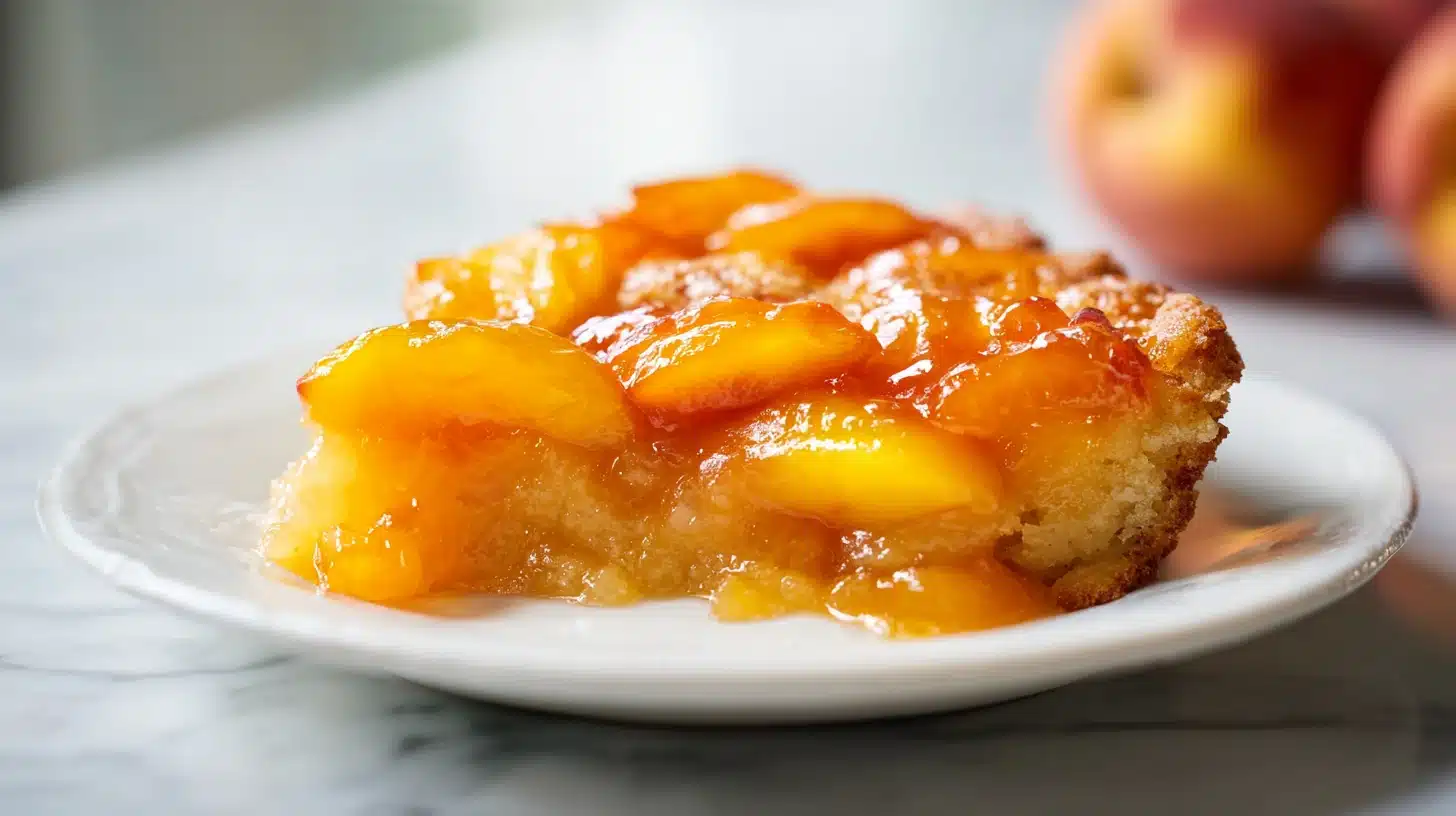
My grandmother never measured a thing, but her bisquick peach cobbler always came out of the oven with that same bronze, bubbling crust that made the whole kitchen smell like a Sunday afternoon in July.
Most cobblers fail at the same spot: a soggy, undercooked center that puddles into the fruit before you can even scoop a serving. This recipe fixes that with one simple cornstarch trick that firms up the peach filling just enough.
By the end, you’ll know exactly how to layer the batter so it rises evenly, which peaches work best in any season, and how to read the visual cues that tell you the cobbler is genuinely done.
Table of Contents
Why This Bisquick Peach Cobbler Works Every Time
This recipe has become a go-to for weeknight desserts and last-minute potlucks. It leans on pantry staples, takes about eight minutes of active prep, and produces results that taste like something you labored over for hours. The secret is understanding what each ingredient actually does, so you’re not just following steps blindly.
The Role of Bisquick Mix
Bisquick mix is a pre-blended combination of flour, baking powder, salt, and shortening. When you stir it with milk and pour it into a baking dish with melted butter already pooled in the bottom, something clever happens: the butter rises through the batter as it bakes, creating a crisp, golden underside while the top puffs up into a tender, cake-like crumb. You get two textures in one layer without any extra effort.
The ratio here matters. Too much Bisquick and the crust becomes thick and bready, burying the fruit. Too little and you end up with a thin, pale sheet that tears when you spoon it. The sweet spot is one cup of Bisquick to three-quarters of a cup of milk, which produces a pourable batter about as thick as pancake batter.
Why Cornstarch Changes Everything
Fresh peaches release a lot of juice as they cook. Canned peaches bring even more liquid with them from the syrup. Without a thickener, all of that fruit juice pools at the bottom of the dish and steams the batter from below rather than letting it bake through cleanly. A tablespoon of cornstarch tossed with the peaches before they go into the dish absorbs that extra moisture and turns it into a glossy, jammy sauce that clings to each piece of fruit.
This is the fix for the runny cobbler problem that trips up so many home bakers. You’ll notice the difference the moment you scoop the first serving: the filling holds its shape instead of flooding the plate.
Sugar Placement and Sweetness Balance
The batter gets a modest quarter-cup of sugar, which keeps it on the savory side of sweet and lets the peaches do the talking. A separate sprinkle of sugar goes over the top of the batter before baking, and that’s the layer that caramelizes into a crackly crust. A pinch of nutmeg in the peach mixture adds warmth without tasting like a spice rack exploded. Don’t skip it. It’s a small addition that rounds out the flavor in a way that’s hard to place but immediately missed when it’s gone.
If you love fruity summer desserts, you might enjoy browsing our easy summer meals 25 bold fast recipes ready in 35 minutes or less for more warm-weather ideas.
Print
Bisquick Peach Cobbler: The Easy Southern Dessert You’ll Make All Summer
- Total Time: 43 min
- Yield: 6 servings 1x
- Diet: Vegetarian
Description
A quick and easy Southern-style cobbler made with Bisquick mix and sweet peaches. The batter rises up around jammy, cornstarch-thickened peach filling to create a golden, crisp crust on top and a tender crumb underneath. Ready in under 45 minutes with either fresh, canned, or frozen peaches.
Ingredients
For the peach filling:
2 cans (15 oz each) sliced peaches in juice (drained, or 3 cups fresh peach slices)
1/4 cup granulated sugar
1 tablespoon cornstarch
1/4 teaspoon ground nutmeg
For the Bisquick batter:
1 cup Bisquick mix
3/4 cup whole milk
1/4 cup granulated sugar
4 tablespoons unsalted butter (cut into pieces)
For the topping:
1 tablespoon granulated sugar (for sprinkling)
Instructions
1. Preheat your oven to 375 degrees Fahrenheit. Place the butter pieces in a 9×13-inch baking dish and slide it into the oven for 3 to 4 minutes until the butter is fully melted and the dish is hot.
2. While the butter melts, combine the drained peach slices with the sugar, cornstarch, and nutmeg in a bowl. Toss well so every slice is lightly coated. Set aside while you make the batter.
3. In a separate bowl, stir together the Bisquick mix, milk, and sugar until just combined into a smooth, pourable batter about as thick as pancake batter.
4. Pull the hot baking dish from the oven. Pour the Bisquick batter directly over the melted butter. Do not stir. Let the batter spread on its own.
5. Spoon the seasoned peach mixture evenly over the top of the batter. Do not stir. The batter will rise up around the fruit as it bakes.
6. Sprinkle 1 tablespoon of granulated sugar evenly over the entire surface of the cobbler.
7. Bake at 375 degrees Fahrenheit for 33 to 35 minutes, until the top is deep golden brown, the edges are bubbling with a glossy caramel-colored sauce, and a toothpick inserted into the thickest part of the batter comes out with only a few moist crumbs.
8. Remove from the oven and let the cobbler rest for at least 10 minutes before serving. The filling will thicken as it cools. Serve warm with vanilla ice cream or whipped cream.
Notes
Store leftovers covered in the refrigerator for up to 4 days or freeze tightly wrapped for up to 2 months. Reheat at 350 degrees Fahrenheit for 10 minutes to restore crust texture.
For fresh peaches, blanch and peel them first, then slice into 1/2-inch wedges. Reduce sugar in the filling to 2 tablespoons if your peaches are very ripe and sweet.
For frozen peaches, thaw completely and drain off all melt water before tossing with the cornstarch mixture, or the filling will be too wet.
For a deeper flavor, swap granulated sugar for brown sugar in both the filling and the topping, or add 1 tablespoon of bourbon to the peach mixture before layering.
- Prep Time: 8 min
- Cook Time: 35 min
- Category: Dessert
- Method: Baking
- Cuisine: American
Nutrition
- Serving Size: 1 portion (approximately 1/6 of dish)
- Calories: 310 kcal
- Sugar: 32 g
- Sodium: 380 mg
- Fat: 11 g
- Saturated Fat: 6 g
- Unsaturated Fat: 5 g
- Trans Fat: 0 g
- Carbohydrates: 50 g
- Fiber: 2 g
- Protein: 4 g
- Cholesterol: 22 mg
Choosing Your Peaches: Fresh, Frozen, or Canned
The beauty of a quick Bisquick peach dessert is that it works with whatever peaches you have on hand. Each form has its own best practices, and knowing them keeps the cobbler consistent whether it’s peak July or the middle of February.
Fresh Peaches
Fresh peaches in season are the gold standard. Look for fruit that yields slightly when pressed at the stem end and smells floral and sweet from across the produce stand. Freestone varieties are easiest to work with because the pit separates cleanly with a twist.
Peel them using the blanching method: score an X at the bottom of each peach, drop them into boiling water for thirty seconds, then transfer to an ice bath. The skins slip off in seconds. Slice into half-inch wedges and toss with your sugar, cornstarch, and nutmeg mixture right away so they don’t oxidize.
You’ll need about four to five medium peaches, which yields roughly three cups of sliced fruit. If your peaches are very sweet and ripe, reduce the sugar in the filling to two tablespoons. If they’re still a little tart, keep the full quarter-cup.
Canned Peaches
Canned peaches are a perfectly legitimate choice and honestly make this an even faster assembly. Use two 15-ounce cans and drain them well, reserving a few tablespoons of the syrup if you want a saucier result. Slice the peach halves into wedges if they came whole.
The cornstarch step is especially important with canned peaches because the fruit is already fully softened and releases liquid immediately when it hits heat. Toss the drained peaches with the cornstarch, sugar, and nutmeg before layering, and you’ll get a filling that sets into a beautiful glaze rather than a watery pool.
Frozen Peaches
Frozen sliced peaches are a solid middle-ground option. Thaw them completely and drain off the melt water before using them, or they’ll add too much liquid to the baking dish. Once drained and tossed with the cornstarch mixture, they behave almost identically to fresh sliced peaches.
One note on texture: frozen peaches tend to be softer after baking than fresh ones, so the filling will be more uniform in texture. That’s not a bad thing, just a slightly different eating experience.
For another cobbler variation that uses the same technique with a different fruit combination, check out our strawberry rhubarb cobbler for a tart, spring-forward twist.
How to Assemble and Bake Bisquick Cobbler with Peaches
The assembly process is deliberately hands-off. There’s no cutting cold butter into flour, no chilling dough, no blind baking. The method is pour, layer, bake. But the order of those steps and a few small details make the difference between a cobbler that looks like a dessert menu and one that looks like a science experiment.
Step-by-Step Assembly
Start by preheating your oven to 375 degrees Fahrenheit. While the oven heats, place four tablespoons of unsalted butter in your baking dish and slide it into the oven for about 3 to 4 minutes, just until the butter melts completely. Watch it closely. You want melted butter, not browned butter (though browned is delicious if you’re feeling adventurous and have a minute or two to spare).
Pull the dish from the oven and pour the Bisquick batter directly over the melted butter. Don’t stir. Don’t nudge it toward the edges. Just pour it in the center and let it spread on its own. This is the move that most recipes get wrong when they tell you to stir everything together. The separation of batter and butter is what creates those distinct layers.
Next, spoon the seasoned peach mixture evenly over the top of the batter. Again, resist the urge to stir. The batter will rise up and around the fruit as it bakes, partially enveloping the peaches in a golden crust.
Sprinkle one tablespoon of granulated sugar over the entire surface. Slide the dish into the center rack of the oven.
Baking and Doneness Cues
Bake at 375 degrees for 33 to 35 minutes. At the 25-minute mark, the top will look pale and the edges will just be starting to pull away from the sides of the dish. By 33 minutes, the entire top should be deep golden brown, the edges should be bubbling with a glossy, amber-colored peach sauce, and the center should not jiggle when you give the pan a gentle shake.
The toothpick test works here: insert it into the thickest part of the batter (not into a pocket of fruit), and it should come out with just a few moist crumbs, not wet batter. If it comes out wet at 35 minutes, your oven may run cool. Give it five more minutes and check again.
Let the cobbler rest for at least 10 minutes before serving. The filling is molten straight from the oven and will seem thinner than it should be. A short rest allows the cornstarch-thickened sauce to set up properly.
Vessel Options
A standard 9×13-inch baking dish is the default and produces a thinner, crispier cobbler with more surface area. For a deeper, more custardy result, use a cast iron skillet or an 8×8-inch square dish, which will add 5 to 8 minutes to the bake time. The cast iron skillet also conducts heat more evenly at the base, which means the bottom crust crisps up beautifully.
Serving, Storing, and Variations
A bisquick peach cobbler straight from the oven is a complete argument for simplicity in baking. It smells like caramelized sugar and warm fruit, the crust shatters at the first tap of a spoon, and the peach filling bubbles up through the cracks in streams of golden sauce. Here’s how to serve it well and keep it tasting fresh.
Serving Suggestions
The classic pairing is a generous scoop of vanilla ice cream on top of a warm cobbler. The ice cream melts into the crevices of the crust, and the contrast between cold dairy and hot fruit filling is one of those combinations that never gets old. Freshly whipped cream is a lighter option and takes about two minutes to prepare with a hand mixer.
For a Southern-style presentation, serve the cobbler in shallow bowls rather than on flat plates. The fruit sauce pools around the crust and you can soak it up with every bite.
A drizzle of honey over the top just before serving adds a floral note that pairs especially well when you used slightly under-ripe peaches. A pinch of flaky sea salt on the crust right out of the oven enhances all of the sweet flavors.
Storage and Reheating
Store leftover cobbler covered loosely with foil or transferred to an airtight container in the refrigerator for up to four days. The crust will soften overnight as it absorbs moisture from the filling. To bring it back to something close to its original texture, reheat individual portions in a 350-degree oven for about 10 minutes rather than using the microwave, which steams the crust and makes it gummy.
For longer storage, the cobbler freezes reasonably well. Let it cool completely, wrap the dish tightly in plastic wrap followed by foil, and freeze for up to two months. Thaw overnight in the refrigerator and reheat in the oven at 350 degrees for 15 to 20 minutes.
Easy Variations Worth Trying
- Stir a half-teaspoon of cinnamon and a quarter-teaspoon of ginger into the peach mixture for a spiced version that leans into autumn flavors.
- Swap half the peaches for fresh blueberries for a peach-blueberry cobbler that’s particularly stunning in late summer when both fruits are at peak season.
- Add a tablespoon of bourbon to the peach mixture before layering it in the dish. The alcohol bakes off but leaves behind a warm, vanilla-adjacent depth that makes the cobbler taste considerably more complex.
- Use brown sugar instead of white in both the filling and the topping for a deeper, molasses-forward caramel flavor.
Peach cobbler using Bisquick is also a great jumping-off point. Once you understand the method, you can swap the peaches for nearly any stone fruit or berry and get equally good results.
Frequently Asked Questions
Can I use canned peaches in Bisquick peach cobbler?
Yes, canned peaches work very well in this recipe. Drain them thoroughly before using and toss them with cornstarch, sugar, and nutmeg just as you would fresh peaches. The cornstarch is especially important with canned fruit because the peaches are already soft and release liquid quickly during baking, and the starch keeps the filling from turning watery.
Why is my cobbler not done in the middle?
An underdone center is almost always caused by one of two things: the oven temperature was too high, which browned the outside before the inside had time to cook through, or the batter was too thick because the Bisquick-to-milk ratio was off. Make sure your oven is calibrated to 375 degrees, use the exact Bisquick and milk quantities in the recipe, and test doneness with a toothpick pressed into the batter rather than into the fruit.
How do you keep Bisquick cobbler from being runny?
The key is tossing the peaches with cornstarch before they go into the baking dish. One tablespoon of cornstarch per three cups of fruit absorbs the excess juice and converts it into a thick, glossy sauce as the cobbler bakes. Also make sure to drain canned or thawed frozen peaches well before mixing them with the other filling ingredients.
What is the difference between a cobbler and a crumble?
A cobbler has a batter or biscuit-style topping that is poured or dropped over the fruit and bakes into a soft, cakey crust. A crumble has a dry, streusel-style topping made from butter, flour, and sugar rubbed together into rough clumps, which bakes into a crunchy, sandy texture. Both are fruit desserts baked in a dish, but the topping texture is completely different: cobbler is soft and bready, crumble is crisp and crumbly.
Conclusion
The best things about this bisquick peach cobbler are the same things that make it feel like a family recipe even the first time you make it: it’s fast, it’s forgiving, and it tastes like someone spent considerably more time on it than you actually did. The cornstarch trick keeps the filling jammy rather than soupy, and the pour-don’t-stir method gives you that layered crust that looks like it came from a Southern diner.
Give it a try this week while peaches are good at the market, or pull out a couple of cans from the pantry for a midweek dessert that takes less than 45 minutes start to finish.
For more recipes like bisquick peach cobbler, follow us on Facebook and Pinterest for cozy fruit dessert inspiration.