The first time I stirred up a gut health chia pudding at 10 p.m. on a Sunday, I did it mostly out of desperation, and it quietly became the most consistent thing in my weekly routine.
Most overnight puddings turn into a gluey, flavorless paste by morning because the liquid ratio is off and there’s nothing to brighten the flavor. This recipe fixes both problems with a precise seed-to-liquid ratio and a splash of kefir that adds tang, creaminess, and live cultures all at once.
By the end, you’ll know exactly how to nail the texture every single time, which ingredients actually support digestion, and how to layer your jars for the best eating experience.
Table of Contents
Why This Recipe Actually Supports Gut Health
Talk about gut health long enough and the advice starts to blur together. Eat more fiber. Take a probiotic. Reduce stress. It all sounds reasonable, but finding a single recipe that quietly checks several of those boxes at breakfast is genuinely useful. This probiotic chia pudding does exactly that, and understanding why will make you far more motivated to keep it in rotation.
Chia Seeds: Soluble Fiber and Omega-3 Fatty Acids
Chia seeds are the backbone of this recipe. Two tablespoons contain roughly 10 grams of fiber, most of which is soluble. Soluble fiber dissolves in liquid and forms a gel in your digestive tract. That gel slows digestion slightly, which stabilizes blood sugar and feeds the beneficial bacteria living in your colon. Those bacteria ferment the fiber and produce short-chain fatty acids, compounds that help maintain the intestinal lining and reduce inflammation over time.
Chia seeds are also one of the richest plant sources of omega-3 fatty acids, specifically ALA. Omega-3s help keep the gut lining intact and reduce the kind of low-level inflammation that disrupts digestion. You get a meaningful dose of both nutrients in every serving of this recipe without cooking anything or taking a supplement.
Kefir: The Probiotic Layer
Kefir is the ingredient that separates this overnight chia pudding from a standard recipe. Kefir is a fermented dairy drink packed with live bacterial cultures, often including Lactobacillus kefiri strains that resist stomach acid better than many yogurt cultures. That means more of those beneficial bacteria survive the trip through your digestive system and actually reach your gut.
Using kefir instead of plain dairy milk adds a subtle tartness that cuts through the natural earthiness of chia seeds. It also adds a thin, pourable consistency that combines beautifully with the thickening action of the seeds. If you can’t find kefir or prefer a dairy-free option, a plain probiotic yogurt thinned with a little almond milk works very well as a substitute. You can also explore a chia pudding with yogurt approach if you want a thicker, spoonable base from the start.
Berries and Optional Boosters
Fresh or frozen berries add polyphenols, antioxidants that act as a prebiotic fuel source for your gut microbiome. Think of probiotics as the beneficial bacteria and prebiotics as the food that keeps them thriving. Blueberries, raspberries, and blackberries are especially rich in these compounds.
If you want to go further with gut support, stir in one teaspoon of ground flax seeds for additional soluble fiber, a pinch of ground ginger for its soothing effect on the digestive tract, or a small pinch of turmeric for anti-inflammatory support. None of these add strong flavors. They blend quietly into the background while doing their work.
Print
Gut Health Chia Pudding with Kefir, Berries, and Seeds
- Total Time: 495 min
- Yield: 2 servings 1x
- Diet: Vegetarian
Description
A thick, creamy overnight chia pudding made with plain kefir, almond milk, chia seeds, and fresh berries. The kefir base adds live probiotic cultures and a pleasant tang, while the chia seeds provide soluble fiber and omega-3 fatty acids. Mix it in 15 minutes the night before and breakfast is ready when you wake up.
Ingredients
For the pudding base:
1/4 cup black or white chia seeds
1 cup plain whole-milk kefir (unsweetened)
1/2 cup unsweetened almond milk
1 tablespoon pure maple syrup
1/2 teaspoon pure vanilla extract
Optional gut-boosting add-ins:
1 teaspoon ground flax seeds
1/4 teaspoon ground ginger
1/4 teaspoon ground turmeric
For the topping:
1/2 cup mixed fresh or frozen berries (blueberries, raspberries, blackberries)
1 teaspoon hemp hearts (optional)
Extra maple syrup for drizzling (optional)
Instructions
1. Whisk the liquid base: Pour the kefir and almond milk into a medium bowl or large measuring cup. Add the maple syrup and vanilla extract and whisk until the sweetener is fully dissolved and the mixture smells lightly of vanilla.
2. Add the chia seeds: Sprinkle the chia seeds over the liquid while whisking continuously. Whisk for a full 60 seconds to distribute the seeds evenly. If using ground flax seeds, ginger, or turmeric, stir them in now.
3. First rest: Let the mixture sit at room temperature for 5 minutes. You will notice it beginning to thicken slightly as the seeds absorb liquid.
4. Second whisk: Whisk the mixture vigorously one more time to break up any seed clusters that have formed. This step is the most important one for a smooth, lump-free texture.
5. Divide into jars: Pour the mixture evenly into two wide-mouth 16-ounce glass mason jars. Seal with lids.
6. Refrigerate overnight: Place the jars in the refrigerator and chill for at least 8 hours. The pudding is ready when it has thickened to a soft, spoonable consistency that holds its shape briefly before settling.
7. Top and serve: Open each jar and give the pudding a quick stir. Spoon the mixed berries over the top, sprinkle with hemp hearts if using, and add a small drizzle of extra maple syrup. Eat straight from the jar or transfer to a bowl.
Notes
Store sealed jars in the refrigerator for up to 4 days. This recipe does not freeze well as the texture becomes grainy after thawing.
For a dairy-free version, replace the kefir with plain unsweetened coconut milk kefir or a probiotic coconut yogurt thinned with oat milk to a pourable consistency.
The second whisk at the 5-minute mark is not optional if you want a smooth texture. Skipping it is the most common reason chia pudding ends up with rubbery lumps.
To make a 4-serving batch for the week, double all ingredients and divide into 4 jars. Keep berry toppings in a separate container and add each morning so they stay bright and do not bleed color into the pudding.
- Prep Time: 15 min
- Rest Time: 480 min
- Cook Time: 0 min
- Category: Breakfast
- Method: No-Cook
- Cuisine: American
Nutrition
- Serving Size: 1 jar (approximately 1 cup)
- Calories: 220 kcal
- Sugar: 11 g
- Sodium: 130 mg
- Fat: 10 g
- Saturated Fat: 2 g
- Unsaturated Fat: 8 g
- Trans Fat: 0 g
- Carbohydrates: 24 g
- Fiber: 10 g
- Protein: 9 g
- Cholesterol: 10 mg
Ingredient Breakdown and What to Buy
Getting the right ingredients makes the difference between a pudding that sets properly and one that stays soupy. Here is exactly what you need and what to look for at the store.
The Ingredient List
- 1/4 cup chia seeds (black or white, both work identically)
- 1 cup plain whole-milk kefir (or a 50/50 mix of probiotic yogurt and unsweetened almond milk)
- 1/2 cup unsweetened almond milk (or any plant-based or dairy milk of your choice)
- 1 tablespoon pure maple syrup (or raw honey, or a few drops of liquid stevia)
- 1/2 teaspoon pure vanilla extract
- 1/2 cup mixed fresh or frozen berries (blueberries, raspberries, blackberries)
- Optional: 1 teaspoon ground flax seeds, 1/4 teaspoon ground ginger, 1/4 teaspoon ground turmeric
Choosing Your Kefir
Not all kefir is created equal. Look for a plain, unsweetened whole-milk kefir with a live and active cultures label on the front. Flavored kefirs are usually loaded with added sugar, which undermines the digestive benefits. Brands like Lifeway Plain Whole Milk Kefir or Green Valley Creamery are widely available and consistently reliable.
If you are dairy-free, coconut milk kefir has become far easier to find in natural grocery stores, and it adds a subtle sweetness that pairs well with berries and vanilla. For a non-fermented alternative, a high-quality unsweetened probiotic coconut yogurt works well. Check the label to confirm it lists at least one billion CFU of live cultures.
Chia Seed Quality and Storage
Buy chia seeds from a store with reasonable turnover. Chia seeds have a high fat content from their omega-3 profile, and old seeds can smell faintly fishy or rancid. Store your bag in a sealed container away from heat and light. A small glass jar in a cool cupboard is all you need. Good seeds have zero smell and a very mild, neutral taste on their own.
The Liquid Ratio
The ratio that produces a thick but still creamy pudding, rather than a stiff gel or a soup, is 3 tablespoons of chia seeds per 1 cup of liquid. This recipe uses 1/4 cup (4 tablespoons) of chia seeds to 1.5 cups of total liquid, which gives a slightly thicker result that holds up well after stirring the next morning. If you prefer a looser texture, reduce the chia seeds by one tablespoon. If you want it thicker, add one extra tablespoon.
How to Make Gut Health Chia Pudding Step by Step
This healthy chia seed pudding comes together in fifteen minutes of actual hands-on time. The overnight chill does the rest of the work. Here is exactly how to do it right.
Step 1: Combine the Liquid Base
Pour the kefir and almond milk into a medium mixing bowl or a large measuring cup with a spout. Add the maple syrup and vanilla extract. Whisk everything together until the sweetener is fully dissolved and the mixture smells faintly of vanilla. You want a smooth, uniform liquid before the seeds go in. This prevents pockets of sweetener from settling at the bottom of your jars.
Step 2: Add the Chia Seeds and Whisk
Sprinkle the chia seeds over the liquid while whisking continuously. Whisk for a full 60 seconds. You will notice the mixture beginning to thicken almost immediately as the seeds absorb liquid. Whisk in the optional ground flax seeds, ginger, or turmeric now if you are using them.
Step 3: Rest, Then Whisk Again
Let the mixture sit at room temperature for 5 minutes, then whisk it vigorously one more time. This second whisk is the most important step for texture. Chia seeds begin clumping together within the first few minutes, and that second whisk breaks up any clusters before they set permanently. Skipping this step is the main reason chia pudding ends up with rubbery lumps in the final texture.
Step 4: Divide and Refrigerate
Pour the mixture evenly into two wide-mouth glass jars (16-ounce mason jars are ideal). Seal with lids and refrigerate for at least 8 hours or overnight. The pudding is ready when it has thickened to a soft, spoonable consistency and holds its shape briefly before settling. If it looks slightly loose when you first open the jar, give it a stir. It firms up within a minute of mixing.
Step 5: Top and Serve
Spoon the berries over the top of each jar. Add any additional toppings you like: a drizzle of extra maple syrup, a small handful of pumpkin seeds, or a sprinkle of hemp hearts. Eat straight from the jar or transfer to a bowl. The pudding keeps for up to four days in the refrigerator, making it ideal for a four-serving meal prep batch if you double the recipe.
For a protein boost alongside your gut-friendly chia pudding, a high protein yogurt bowl is an excellent companion recipe to prep at the same time on Sunday evening.
Serving Ideas, Variations, and Meal Prep Tips
One of the quiet strengths of this easy chia pudding digestion recipe is how well it adapts to different preferences, seasons, and what happens to be in your refrigerator on any given week.
Flavor Variations
Tropical Version: Swap the berries for diced mango and pineapple. Use coconut milk kefir as the base and add a squeeze of lime juice before chilling. The result is bright, sweet, and slightly tangy with the same gut-friendly base.
Chocolate Ginger Version: Stir one tablespoon of raw cacao powder and a pinch of cayenne into the liquid base along with the ginger. Top with a small handful of raspberries and a few cacao nibs. The slight bitterness of the cacao and the heat of the cayenne both support digestive function.
Vanilla Pear Version: Substitute thinly sliced ripe pear for the berries. Add a pinch of cardamom to the base. This works especially well in autumn when pears are at their best. Pears are also high in pectin, another soluble fiber that feeds beneficial gut bacteria.
Layering Your Jars
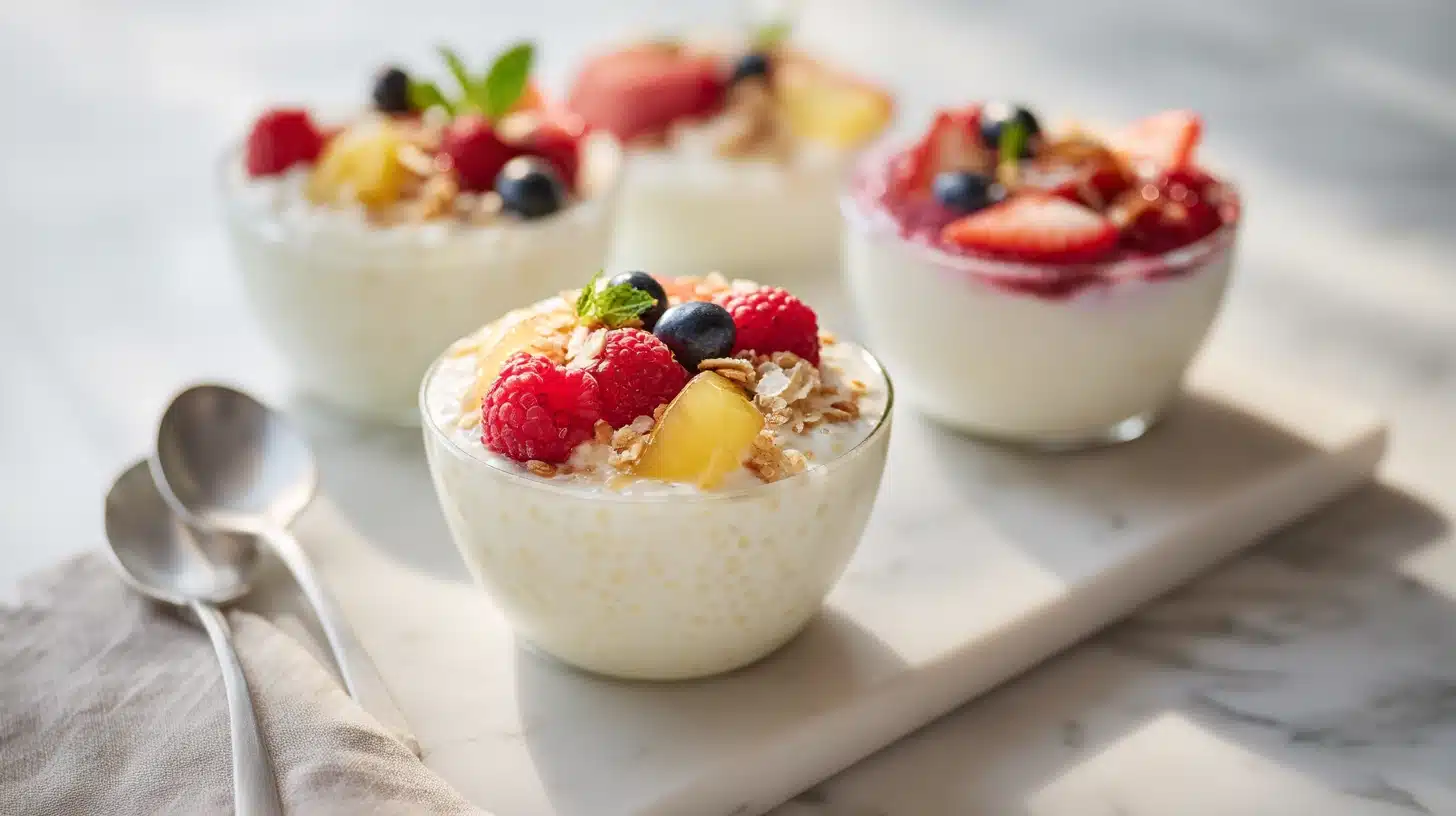
For the best eating experience, consider layering your jars rather than simply topping them. Spoon half the pudding into each jar, add a thin layer of berries, spoon the remaining pudding over the top, and finish with the rest of the berries. When you open the jar in the morning, you get berries woven through every bite rather than just sitting on the surface.
Meal Prep for the Full Week
Double or triple the base recipe and divide it into individual jars on Sunday evening. Keep the toppings separate in a small container and add them each morning just before eating. This prevents the berries from bleeding color into the pudding and keeps the texture of any crunchy toppings intact.
Glass jars are the best containers here. They seal well, they do not absorb odors, and you can see at a glance how many servings you have left. Wide-mouth pint mason jars are the most practical option and they are easy to find at any grocery store.
If you enjoy building a rotation of high-nutrition breakfast and snack recipes, a greek yogurt bowl with nuts and seeds makes a great companion recipe for days when you want something to eat immediately rather than something that chilled overnight.
Making It Vegan or Dairy-Free
Replace the kefir with plain, unsweetened coconut milk kefir or a thick coconut milk probiotic yogurt thinned with oat milk. Use maple syrup as the sweetener rather than honey. Every other element in the recipe is already plant-based. The texture and flavor change slightly, becoming a little richer and more tropical, but the gut-health benefits are preserved.
Adjusting Sweetness
Taste the liquid base before it chills and adjust the sweetness to your preference. One tablespoon of maple syrup produces a mildly sweet pudding that lets the vanilla and kefir tang come forward. Two tablespoons gives you something noticeably sweeter that feels more like a dessert. If you are watching sugar intake, skip the sweetener entirely and let the berries provide all the sweetness.
Frequently Asked Questions
Does chia seed pudding heal your gut?
Chia seed pudding supports gut health rather than healing it in a clinical sense. The soluble fiber in chia seeds feeds beneficial gut bacteria, and when you use kefir or probiotic yogurt as the base, you are also adding live cultures that contribute to a diverse microbiome. Consistent consumption as part of a varied, fiber-rich diet is where the real benefit accumulates over time.
Is chia seed pudding actually healthy?
Yes, when made with whole ingredients and a modest amount of sweetener, chia seed pudding is genuinely nutritious. Each serving delivers double-digit grams of fiber, a solid hit of omega-3 fatty acids, and a useful amount of calcium and magnesium. Pairing the seeds with a fermented base like kefir adds a probiotic dimension that most breakfast options simply cannot match.
How do you make chia pudding for gut healing?
Use a 3-to-4 tablespoon ratio of chia seeds per cup of liquid, whisk a second time after 5 minutes to prevent lumping, and choose a fermented liquid base like plain kefir or probiotic yogurt. Add berries for polyphenols and consider stirring in ground flax seeds or a pinch of ginger for additional digestive support. Chill for at least 8 hours before eating.
What are the best chia pudding jars?
Wide-mouth glass mason jars in the 16-ounce size are the most practical option. The wide mouth makes stirring easy and spooning the pudding out clean. Glass does not absorb flavors or smells the way plastic does, which matters when you are making a batch that will sit in the refrigerator for several days. Leak-proof lids are essential if you plan to grab a jar and take it with you.
Conclusion
A gut health chia pudding is one of those recipes that rewards you every time you come back to it. You started reading this because you wanted something easy that actually does what it promises, and this one delivers: a verified liquid ratio that sets perfectly, a kefir base that puts live cultures in every bite, and a layering method that makes the eating experience genuinely enjoyable.
Give it a try this week. Mix it up tonight and open a jar tomorrow morning. That is the entire commitment.
For more recipes like gut health chia pudding, follow us on Facebook and Pinterest for nourishing make-ahead breakfast ideas.
This recipe is part of my fibermaxxing collection — 21 high-fiber recipes for feeding your gut and staying full longer.