Garlic scape pesto was the sauce that made me stop throwing away the best part of my CSA box every June. Those curly green spirals that farmers bundle and toss in as a bonus? They are not garnish. They are the whole point.
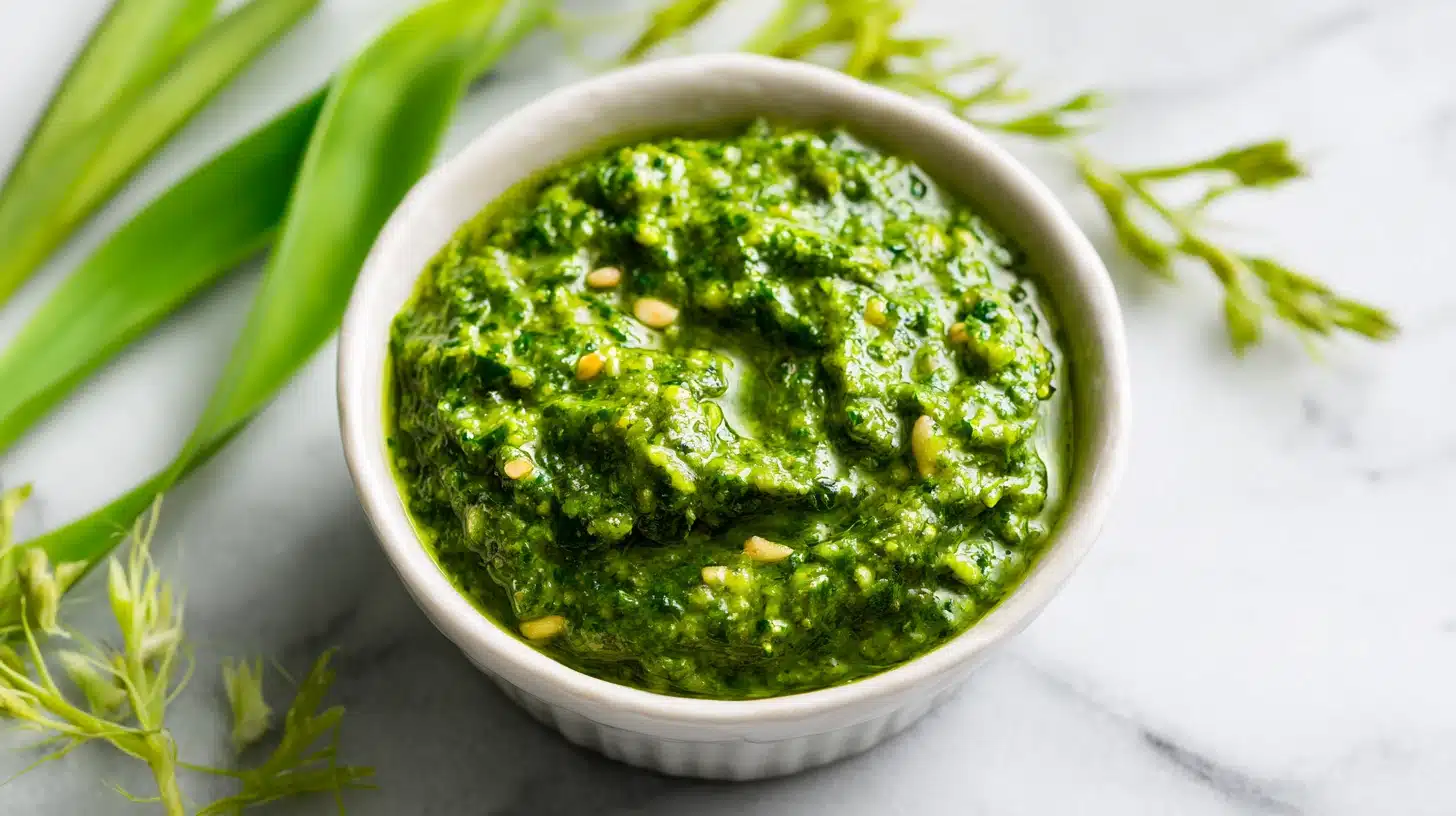
Most people look at a bunch of garlic scapes and have no idea what to do with them, so the scapes wilt in the crisper drawer and end up in the compost. This recipe solves that completely, turning a pound of scapes into a creamy, bright, deeply savory sauce in under ten minutes.
By the end, you’ll know exactly which part of the scape to use, how to keep the flavor from turning sharp or bitter, and at least five ways to put this sauce on dinner tonight.
Table of Contents
What Are Garlic Scapes and Why Are They Perfect for Pesto?
The Short Window You Cannot Miss
Garlic scapes are the tender green flower stalks that hardneck garlic plants send up in late spring and early summer, usually between late May and early July depending on your climate. Farmers cut them off to redirect the plant’s energy down to the bulb, which means every hardneck garlic plant produces exactly one scape per season. That makes them fleeting. If you see them at the farmers market or in your CSA share, buy them immediately because they will be gone within two to three weeks.
The scape looks like a long, curly green stem with a swollen tip at the end called the flower bud, or spathe. The whole thing starts out tender and becomes tougher and more fibrous as it matures, so younger, tighter curls are what you want for the most pleasant texture in a blended sauce.
What Do Garlic Scapes Taste Like?
The flavor is garlic, but softer, greener, and a little grassy. Think of it as the halfway point between a scallion and a raw garlic clove. You get all the aromatic depth without the sharp, almost aggressive bite that raw minced garlic can have. When blended into a pesto, that mellow quality lets the olive oil and parmesan shine alongside the garlic rather than overpowering everything else on the plate.
That nuanced flavor is exactly why garlic scape pesto works so well in places where raw garlic clove pesto would be too intense. Spread it on toast, fold it into scrambled eggs, or toss it with a bowl of warm pasta and you get something that tastes considered rather than just garlicky.
Which Part of the Garlic Scape Do You Use?
Use everything from the base of the stem up to and including the slender neck just below the bulging flower bud. Cut off and discard the very tip of the bud, which is the papery pointed end. The bud itself can be tough and slightly rubbery when raw, so most cooks remove it, though some leave it in for a more intense flavor. The long curling stem is the prize. Chop it into rough one-inch pieces so your food processor can blend it smoothly without straining the motor.
Print
Garlic Scape Pesto: The 10-Minute Sauce You’ll Make All Summer
- Total Time: 10 min
- Yield: 6 servings 1x
- Diet: Vegetarian
Description
A bright, creamy sauce made from fresh garlic scapes, pine nuts, Parmigiano-Reggiano, lemon juice, and extra-virgin olive oil. It comes together in a food processor in about 10 minutes and works beautifully tossed with pasta, spread on toast, or frozen in ice cube portions for later use.
Ingredients
For the pesto:
8 to 10 garlic scapes, trimmed and cut into 1-inch pieces (about 1 cup chopped, 4 ounces)
1/2 cup Parmigiano-Reggiano, finely grated and packed
1/3 cup pine nuts (or walnuts, cashews, or sunflower seeds)
3 tablespoons fresh lemon juice (about 1 large lemon)
1/2 teaspoon fine sea salt, plus more to taste
1/2 cup extra-virgin olive oil
1 small handful fresh basil leaves, optional
Black pepper to taste
Instructions
1. Trim the garlic scapes by cutting off and discarding the very tip of the papery flower bud. Chop the remaining scapes, including the long curling stem and the neck below the bud, into rough 1-inch pieces.
2. Add the chopped scapes, pine nuts, lemon juice, and salt to the bowl of a food processor. Pulse 8 to 10 times until the mixture is coarsely chopped and smells fragrant and garlicky.
3. Add the grated Parmigiano-Reggiano and basil leaves if using. Pulse 5 more times to combine everything into a rough, textured paste.
4. With the food processor running on low, stream in the olive oil through the feed tube in a slow, steady pour. Process until the pesto reaches a thick but spoonable consistency, about 20 to 30 seconds total.
5. Stop the processor and scrape down the sides with a spatula. Pulse once or twice more to make sure everything is evenly blended and no large scape pieces remain.
6. Taste the pesto and adjust seasoning. Add more lemon juice for brightness, more salt for depth, or a splash of cold water to thin the texture slightly. Pulse briefly to incorporate any adjustments.
7. Transfer to a clean glass jar and pour a thin layer of olive oil over the top before sealing. Refrigerate for up to 2 weeks or freeze in an ice cube tray for up to 6 months.
Notes
Store in the refrigerator for up to 14 days with a thin layer of olive oil over the surface to prevent browning. Freeze in an ice cube tray for up to 6 months and thaw individual cubes at room temperature for 20 minutes before use.
Nut swap: pine nuts give the creamiest result, but walnuts add an earthy depth, cashews produce the smoothest texture, and sunflower seeds are a great nut-free option.
For a brighter green color, blanch the scapes in boiling salted water for 30 seconds, then transfer to an ice bath before blending. This locks in the vivid color but slightly softens the raw scape flavor.
To keep the pesto from turning bitter, pulse rather than run the processor continuously, and use a good-quality extra-virgin olive oil for the best flavor.
- Prep Time: 10 min
- Cook Time: 0 min
- Category: Condiment
- Method: No-Cook
- Cuisine: American
Nutrition
- Serving Size: 1/4 cup
- Calories: 210 kcal
- Sugar: 0 g
- Sodium: 220 mg
- Fat: 21 g
- Saturated Fat: 4 g
- Unsaturated Fat: 17 g
- Trans Fat: 0 g
- Carbohydrates: 3 g
- Fiber: 0 g
- Protein: 4 g
- Cholesterol: 7 mg
How to Make Garlic Scape Pesto (Step by Step)
Making this recipe is genuinely one of the easiest things you will do in a summer kitchen. You need a food processor, ten minutes, and a handful of ingredients you likely already have.
The Ingredients You Need
Here is what goes into a great batch of garlic scape pesto:
- 8 to 10 garlic scapes (about 1 cup chopped, or roughly 4 ounces)
- 1/2 cup grated Parmigiano-Reggiano, packed
- 1/3 cup pine nuts (or walnuts, cashews, or sunflower seeds)
- 3 tablespoons fresh lemon juice (about 1 large lemon)
- 1/2 teaspoon fine sea salt, plus more to taste
- 1/2 cup extra-virgin olive oil
- Small handful of fresh basil leaves (optional, but lovely)
- Black pepper to taste
A note on nut swaps: pine nuts give the most classic pesto texture, buttery and smooth, but they are expensive. Walnuts add a faintly earthy, slightly bitter note that pairs beautifully with the green flavor of the scapes. Cashews produce the creamiest result. Sunflower seeds are a great nut-free option and keep the color bright.
The Process
Start by roughly chopping your scapes into one-inch pieces. Add them to the food processor along with the nuts, salt, and lemon juice. Pulse eight to ten times until the mixture looks coarsely chopped and smells extraordinary, that green garlicky fragrance filling your kitchen the moment the lid lifts.
Add the parmesan and the basil if you are using it. Pulse five more times to combine. Then, with the processor running, stream in the olive oil in a slow, steady pour through the feed tube. You are looking for a sauce that is thick enough to hold its shape on a spoon but loose enough to coat pasta ribbons easily. Stop and scrape down the sides once or twice to make sure everything is evenly blended.
Taste and adjust. More lemon juice brightens the whole thing. More salt deepens it. A splash of cold water thins it without dulling the flavor.
If you love garlic-forward pasta dishes, you will find that this pesto pairs naturally alongside recipes like this classic garlic pasta recipe for a full garlic-themed dinner spread.
The Secret to Avoiding Bitter Pesto
Two things make pesto turn bitter: over-processing and cheap olive oil. Pulse rather than run the processor continuously, and use the best extra-virgin olive oil you own for finishing. Heat and prolonged blending can oxidize the oil and create off-flavors, so work quickly and keep your olive oil cold if possible.
Five Ways to Serve Garlic Scape Pesto
The best thing about having a jar of this sauce in your refrigerator is how many different meals it can anchor without any extra effort.
Toss It with Pasta
This is the obvious move and it is obvious because it is perfect. Cook any pasta you like, reserve a cup of the starchy cooking water, drain the noodles, and toss them with two to three tablespoons of garlic scape pesto per serving. Add pasta water a splash at a time until the sauce coats every strand in a glossy, fragrant film. A shower of extra parmesan and a crack of black pepper is all it needs.
For a weeknight variation, try the combination with something like this lemon butter garlic pasta, using the pesto as a finishing swirl rather than the primary sauce for a layered, complex result.
Spread It on Everything
Garlic scape pesto is an extraordinary spread. Use it anywhere you would use butter or mayonnaise and you will immediately understand why people hoard jars of it in the freezer. It belongs on:
- Grilled sourdough rubbed with a cut tomato
- Crostini topped with ricotta and a drizzle of honey
- Flatbread or naan before the cheese goes on (try it on an easy pesto mozzarella naan for a five-minute appetizer)
- Sandwiches in place of mustard or aioli
- The inside of a grilled cheese before it hits the pan
Use It as a Marinade or Finishing Sauce
The olive oil base makes garlic scape pesto a natural marinade for proteins. Coat chicken thighs or a fillet of white fish in two tablespoons of pesto, let it sit for thirty minutes at room temperature, then grill or roast as usual. The parmesan creates a beautiful golden crust and the garlic perfume clings to the meat through the whole cook.
As a finishing sauce, a small spoonful dropped onto roasted vegetables or stirred into a bowl of white bean soup just before serving adds a punch of freshness that no amount of dried herbs can replicate.
Stir It into Grains and Dips
Fold a spoonful into warm farro, stir it through cooked white rice, or blend it into hummus for an entirely new dip situation. It also works beautifully stirred into Greek yogurt for a quick herby dipping sauce to serve with crudites or warm pita, similar in spirit to a yogurt dipping sauce recipe but with that distinctive garlic scape character.
How to Store and Freeze Garlic Scape Pesto
One of the best things about homemade garlic scape pesto is that it stores beautifully. Garlic scapes are a true seasonal ingredient with a narrow window, which means making a large batch during peak season and stashing it away is a completely reasonable and deeply satisfying strategy.
Refrigerator Storage
Transfer the finished pesto to a clean glass jar and pour a thin layer of olive oil over the top before sealing. That thin oil cap prevents oxidation and keeps the color bright green rather than dull olive-brown. Stored this way, garlic scape pesto will keep in the refrigerator for up to two weeks. Always use a clean spoon when scooping to avoid introducing bacteria.
Freezer Storage
This is where things get genuinely exciting. Garlic scape pesto freezes beautifully for up to six months with almost no quality loss. The best method is the ice cube tray trick: spoon the pesto into the wells of a standard ice cube tray, cover loosely with plastic wrap, and freeze until solid. Then pop the cubes out and store them in a labeled zip-top freezer bag.
Each cube is roughly two tablespoons of pesto, which is exactly the right amount to dress a single serving of pasta, swirl into a bowl of soup, or spread across a piece of toast. Pull one or two cubes out the morning you need them, let them thaw on the counter for about twenty minutes, and they are ready to use.
Scaling the Recipe
The recipe as written makes approximately one and a half cups of pesto, enough for six servings. During peak scape season, it is absolutely worth doubling or tripling the batch. Your food processor can handle a larger volume easily, and the extra ten minutes of work will pay dividends across a month or more of weeknight dinners.
For more ideas on what to make during those warm-weather cooking weeks, the collection of easy summer meals, 25 bold fast recipes ready in 35 minutes or less pairs well with having a jar of this pesto already in your fridge.
Keeping the Color Bright
If color is important to you, especially if you are photographing the sauce or presenting it at a dinner party, blanching the scapes for thirty seconds in boiling salted water and then plunging them into ice water before blending will lock in a vivid, almost electric green. The trade-off is a very slight softening of the raw, peppery scape flavor. Most of the time the unblanched version is more flavorful, but for presentation purposes, the blanching trick is worth knowing.
Frequently Asked Questions
What are garlic scapes?
Garlic scapes are the curling green flower stalks that grow from hardneck garlic plants in late spring and early summer. Farmers remove them so the plant puts its energy into growing a larger bulb underground. They have a mild, grassy garlic flavor and are sold in bundles at farmers markets and through CSA programs during a short seasonal window, typically late May through early July.
What do garlic scapes taste like?
Garlic scapes taste like a gentler, greener version of a raw garlic clove, with a faint grassy note similar to a scallion. They are less sharp and less pungent than raw minced garlic, which makes them ideal for a raw blended sauce like pesto where you want garlic flavor without the aggressive bite. The flavor becomes even milder and sweeter when the scapes are grilled or roasted.
What part of the garlic scape do you use for pesto?
Use the long curling stem and the slender neck just below the flower bud, but discard the very tip of the papery bud at the top. Chop the usable portion into rough one-inch pieces before adding to the food processor. The flower bud itself can be slightly tough and rubbery when raw, so most cooks remove it, though it can be left in for a more pronounced flavor.
How should I serve garlic scape pesto?
The most classic use is tossed with pasta and a splash of starchy cooking water, but the options are wide. Spread it on grilled bread, use it as a marinade for chicken or fish, swirl it into soups and grain bowls, stir it into hummus, or use it as a base for flatbread pizza. It also makes a fantastic sandwich spread anywhere you would normally use aioli or butter.
Conclusion
Garlic scape pesto takes ten minutes, uses an ingredient most people overlook, and produces a sauce that tastes genuinely unlike anything else in the pesto family. The narrow seasonal window is actually part of the appeal: knowing that scapes are only available for a few weeks each year makes that first batch feel like something worth celebrating.
Give this recipe a try the next time you spot a bundle of curly green scapes at your local market or in your CSA box. Make a double batch, freeze half in an ice cube tray, and you will be grateful for your future-self’s foresight every time you pull out a cube in September.
For more recipes like garlic scape pesto, follow us on Facebook and Pinterest for seasonal cooking ideas and easy weeknight dinner inspiration.