My grandmother kept a ceramic crock of her dill pickle recipe on the bottom shelf of the pantry all summer long, and the smell of dill and garlic brine still stops me cold every time I open a jar.
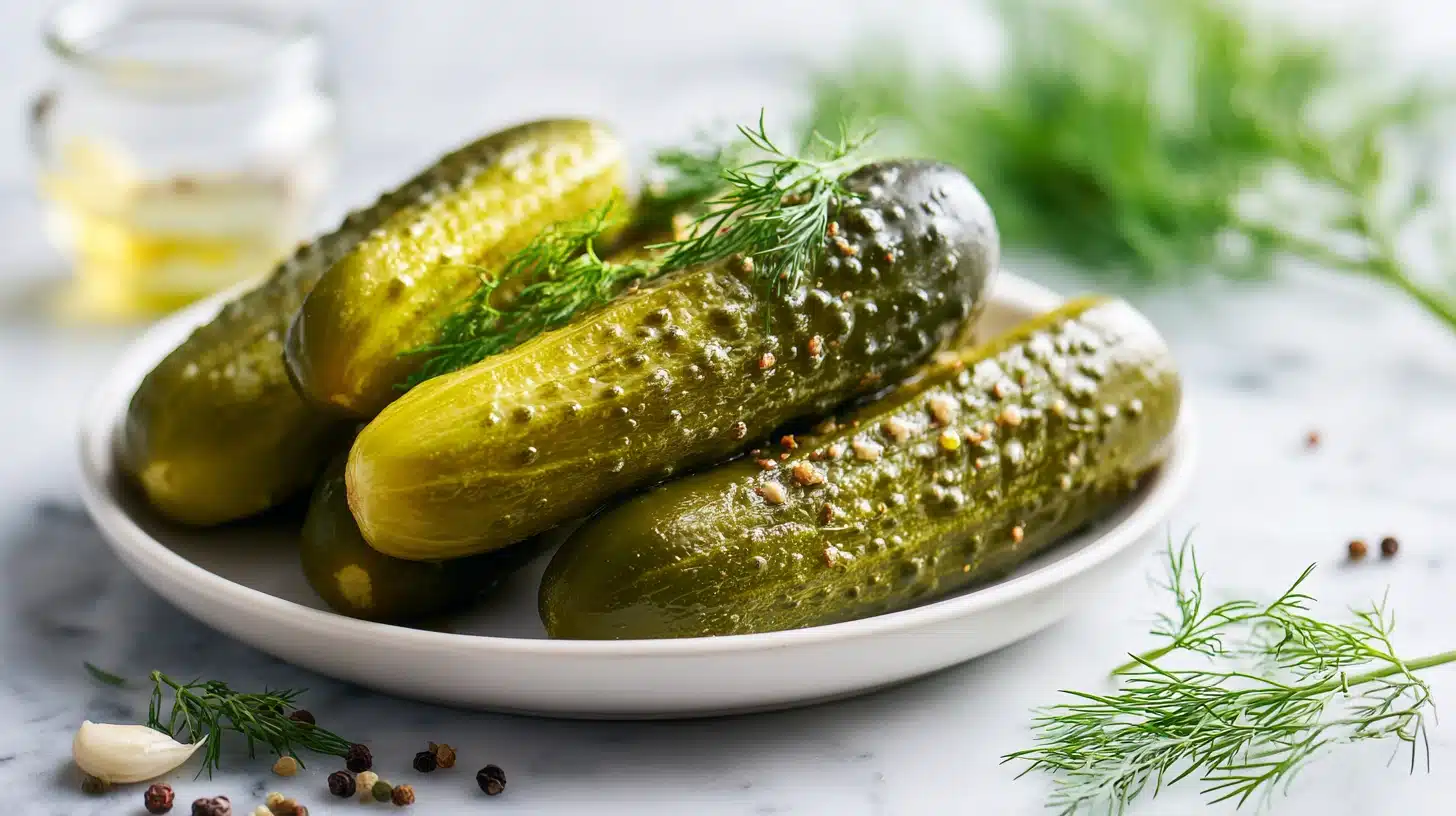
Most homemade pickles go soft within days, leaving you with a limp, waterlogged disappointment instead of that satisfying crunch you were promised. This recipe fixes that with one simple technique most home picklers skip entirely.
We’ll cover the exact brine ratio that keeps pickles crisp, the difference between refrigerator and canned methods so you can choose your path, and the spice combination that makes these taste like a proper deli jar.
Table of Contents
What You Need to Make the Best Easy Dill Pickle Recipe
The Right Cucumbers Matter More Than Anything
If there is one thing that separates a crunchy homemade pickle from a sad, mushy one, it is the cucumber you start with. Kirby cucumbers are the gold standard for a good dill pickle recipe. They have thinner skins, drier flesh, and smaller seed cavities than standard slicing cucumbers, which means they hold their structure through the pickling process.
Persian cucumbers are a close second. They are slightly smaller and can be harder to find in bulk, but they produce excellent results. What you want to avoid are those large, waxed cucumbers from the grocery store produce section. The wax coating prevents brine from penetrating evenly, and the high water content inside turns soft almost immediately.
When you are shopping, look for cucumbers that are firm end to end with no soft spots or yellowing. Smaller is better: cucumbers between three and five inches pickle more evenly than large ones. If you can find them at a farmers market, grab them. Field-fresh cucumbers that have not been refrigerated for days hold their crunch dramatically better than cold-stored ones.
Here is everything you need for one quart jar of pickles:
- 1 pound Kirby or Persian pickling cucumbers (about 4 to 6 small cucumbers)
- 1 cup distilled white vinegar (5% acidity, this is non-negotiable)
- 1 cup water
- 1 tablespoon canning salt or kosher salt (not iodized table salt)
- 4 garlic cloves, lightly smashed
- 4 to 6 sprigs fresh dill weed, or 1 teaspoon dill seed
- 1/2 teaspoon mustard seed
- 1/2 teaspoon black peppercorns
- 1/4 teaspoon sugar (optional, balances the acidity slightly)
- 1/4 teaspoon red pepper flakes (optional, for a gentle kick)
A Word About Salt
Never use iodized table salt in a dill pickle recipe. Iodine interferes with the fermentation process if you go the lacto-fermented route, and it can cause the brine to turn murky and the cucumbers to soften faster in a quick vinegar brine. Canning salt is ideal because it dissolves cleanly with no additives. Kosher salt works well too, just use a little more by volume since the flakes are larger than fine canning salt granules.
Print
The Crispiest Homemade Dill Pickle Recipe (Refrigerator or Canned)
- Total Time: 1458 min
- Yield: 16 servings 1x
- Diet: Vegan
Description
This easy homemade dill pickle recipe produces crisp, garlicky pickles in 24 hours with no special equipment. You can keep them as refrigerator pickles or process them in a water bath for shelf-stable jars. The brine is clean and tangy with a good punch of dill and garlic throughout.
Ingredients
For the brine:
1 cup distilled white vinegar (5% acidity)
1 cup water
1 tablespoon canning salt or kosher salt (not iodized)
1/4 teaspoon sugar (optional)
For the pickles:
1 lb Kirby or Persian pickling cucumbers (about 4 to 6 small cucumbers, scrubbed and blossom end trimmed)
4 garlic cloves (lightly smashed)
4 to 6 sprigs fresh dill weed, or 1 teaspoon dill seed
1/2 teaspoon mustard seed
1/2 teaspoon whole black peppercorns
1/4 teaspoon red pepper flakes (optional)
Instructions
1. Soak the cucumbers: Place the trimmed cucumbers in a large bowl of ice water and soak for at least 2 hours, or overnight in the refrigerator. This firms the cell walls and keeps the texture crisp.
2. Make the brine: Combine the vinegar, water, salt, and sugar (if using) in a small saucepan over medium heat. Stir until the salt dissolves completely, about 2 to 3 minutes. Remove from heat and let cool for 5 minutes. The brine should smell sharp and clean.
3. Prepare the jar: Place the garlic cloves, dill sprigs, mustard seed, peppercorns, and red pepper flakes in the bottom of a clean wide-mouth quart mason jar.
4. Pack the cucumbers: Remove the cucumbers from the ice bath and pack them tightly into the jar in a vertical upright position. Tuck any smaller pieces horizontally across the top to fill the jar completely.
5. Add the brine: Pour the warm brine over the cucumbers, leaving 1/2 inch of headspace at the top. Tap the jar gently on the counter to release any air bubbles.
6. Refrigerator method: Screw on the lid, let the jar cool to room temperature, then refrigerate for at least 24 hours before eating. Pickles taste best at 48 to 72 hours and keep for up to 2 months in the refrigerator.
7. Water bath canning method (optional): For shelf-stable pickles, process sealed jars in a boiling water bath for 10 minutes, adjusting for altitude if needed. Cool undisturbed for 12 to 24 hours on a kitchen towel. Store sealed jars in a cool dark place for up to 1 year.
Notes
Store refrigerator pickles in the refrigerator for up to 2 months. Water-bath processed sealed jars keep in a cool pantry for up to 1 year. Once opened, store canned pickles in the refrigerator and use within 2 months.
Always trim the blossom end of each cucumber before packing. That small cut removes softening enzymes and is the single most important step for a crunchy pickle.
Use canning salt or kosher salt only. Iodized table salt makes the brine cloudy and can soften pickles over time.
Apple cider vinegar can replace white vinegar for a slightly fruitier flavor, but it will make the brine lightly cloudy. This is harmless and purely cosmetic.
- Prep Time: 10 min
- Rest Time: 1440 min
- Cook Time: 8 min
- Category: Side Dishes
- Method: No-Cook
- Cuisine: American
Nutrition
- Serving Size: 2 pickle spears
- Calories: 5 kcal
- Sugar: 1 g
- Sodium: 320 mg
- Fat: 0 g
- Saturated Fat: 0 g
- Unsaturated Fat: 0 g
- Trans Fat: 0 g
- Carbohydrates: 1 g
- Fiber: 0 g
- Protein: 0 g
- Cholesterol: 0 mg
The One Secret to Crisp Dill Pickles (Most People Skip This)
Here is the step that makes the real difference: before your cucumbers ever see the jar, they need a blossom-end trim and an ice bath soak.
The Blossom End Trim
The blossom end of a cucumber, the end opposite the stem, contains enzymes that soften pickles from the inside out. Slice off a thin sliver from that end, about 1/16 of an inch. You do not need to take much. This one tiny cut neutralizes the softening enzymes and keeps your pickles snapping for weeks. It is the single most underused tip in home pickling, and once you start doing it, you will never skip it again.
The Ice Bath Soak
After trimming, submerge your cucumbers in a large bowl of ice water for at least two hours, or up to overnight in the refrigerator. This firms the cell walls and pulls out some of the excess interior moisture before the brine goes in. When you smell fresh cucumber and cold water together in that bowl, you know you are setting yourself up for a properly crunchy jar.
Building Your Brine
For one quart of homemade dill pickles, combine the vinegar, water, and salt in a small saucepan over medium heat. Stir until the salt dissolves completely, which takes about two to three minutes. The brine smells sharp and clean when it is ready. Remove it from the heat and let it cool for five minutes before pouring it over your cucumbers.
A vinegar-to-water ratio of 1:1 gives you a bright, assertive pickle with enough acidity to safely preserve by the refrigerator method. If you prefer a slightly mellower flavor, you can go 1 part vinegar to 1.5 parts water, but do not drop below that ratio if you plan to water-bath can your jars. The 5% acidity of distilled white vinegar keeps the brine at a safe pH for canning. Apple cider vinegar also works and adds a subtle fruity undertone, but it makes the brine slightly cloudy, which is purely cosmetic.
If you love pickle-forward flavors in other forms, you might enjoy this viral pickle dip recipe as a companion snack.
How to Pack and Process Your Dill Pickle Recipe
Packing the Jar Like a Pro
Start with a clean, dry wide-mouth quart jar. Layer in the spices first: garlic cloves, dill sprigs, mustard seed, and peppercorns. Putting the aromatics on the bottom and tucking some between the cucumbers means the brine carries their flavor up through the whole jar as it steeps.
Pack the cucumbers in vertically, as tightly as you can without crushing them. The tighter the pack, the less the cucumbers float and shift during processing, and floating cucumbers mean uneven pickling. If you have leftover cucumbers that do not fit standing upright, cut them into spears or coins and layer them across the top.
Pour the warm brine over the cucumbers, leaving about half an inch of headspace at the top of the jar. You will hear a soft hiss as the warm liquid meets the cold cucumber. Tap the jar gently on the counter to release any air bubbles trapped between the cucumbers.
Refrigerator Method
Screw on the lid, let the jar cool to room temperature, then refrigerate for at least 24 hours before opening. The flavor deepens noticeably between 24 and 48 hours, and by 72 hours you have a full, rounded kosher dill flavor throughout. This quick dill pickle recipe keeps in the refrigerator for up to two months.
Water Bath Canning Method
If you want shelf-stable canned dill pickles that last up to a year, process the sealed jars in a boiling water bath for 10 minutes (adjusting for altitude if you are above 1,000 feet). Allow the jars to cool undisturbed on a kitchen towel for 12 to 24 hours. You will hear the satisfying pop of lids sealing as the jars cool. Any lid that does not seal should be refrigerated and used within two months, same as the refrigerator method.
For anyone interested in taking the fermented path instead, this fermented pickles recipe is a great deep dive into the lacto-fermentation process.
Flavor Variations and Ways to Use Your Homemade Dill Pickles
Classic Kosher Dill
This is the base recipe above, no changes needed. The garlic, dill, mustard seed, and peppercorns in a clean white vinegar brine produce a bright, tangy pickle with that familiar deli crunch. It is the version I reach for most often.
Spicy Garlic Dill
Double the garlic to eight cloves and add half a teaspoon of red pepper flakes plus two to three dried chiles de arbol. The heat builds gradually as the jar sits, so what tastes mildly spicy on day one will have a proper kick by day four. These are exceptional sliced on a burger or alongside a bowl of chili.
Bread and Butter Dill Hybrid
Add two tablespoons of sugar to the brine along with half a teaspoon of celery seed and a pinch of turmeric. The result sits between a classic dill and a bread and butter pickle: tangy, slightly sweet, with a warm spiced note that pairs beautifully with sharp cheddar and crackers.
Everyday Uses for Your Pickles
Once you have a jar of homemade dill pickles in the refrigerator, you will find yourself reaching for them constantly. Here are some favorites:
- Chopped into egg salad or potato salad for a punchy, briny lift
- Sliced thin on grilled cheese sandwiches (game-changing, honestly)
- Served alongside a rich one pan garlic butter chicken recipe to cut through the richness
- Blended into homemade tartar sauce or ranch dressing
- Eaten straight from the jar over the kitchen sink, which is how most of mine disappear
The brine itself is too good to throw away. Use it to brine chicken before grilling, splash it into salad dressings, or stir a tablespoon into a Bloody Mary. If you want to go further with pickle brine, the pickle lemonade recipe on the site is surprisingly refreshing.
Frequently Asked Questions
What is the 321 rule for pickles?
The 321 rule is a simple ratio for quick pickle brine: 3 parts vinegar, 2 parts water, and 1 part sugar. It is often used for refrigerator pickles and quick pickled vegetables where a slightly sweeter, milder brine is preferred. For a classic crisp dill pickle recipe, most home picklers use a 1:1 vinegar-to-water ratio with no sugar, or just a pinch to balance the sharpness.
What is the secret to crisp dill pickles?
The two biggest factors are trimming the blossom end of the cucumber before packing and soaking the cucumbers in ice water for a couple of hours beforehand. The blossom end contains softening enzymes, and removing it preserves the crunch. Using fresh, firm Kirby cucumbers and not over-processing canned pickles also keeps the texture where it needs to be.
What is the best dill pickle recipe?
The best version depends on your preference, but most pickle lovers agree that a kosher-style dill pickle recipe using fresh dill, whole garlic cloves, mustard seed, black peppercorns, and a 1:1 white vinegar-to-water brine hits the right balance of tang, garlic punch, and clean crunch. Starting with Kirby cucumbers and using canning salt over iodized salt makes a noticeable difference in flavor and clarity.
What vinegar makes the best dill pickles?
Distilled white vinegar at 5% acidity is the most reliable choice for a dill pickle recipe because it keeps the brine clear and the flavor clean and sharp. Apple cider vinegar adds a mild fruitiness and slight color to the brine, which some people prefer. Rice vinegar is too mild for traditional dill pickles and is better suited to quick-pickled Asian vegetables. Always check the acidity level on the label and stick to 5% for safe canning.
Conclusion
This dill pickle recipe comes back to the same truth my grandmother lived by: a good pickle starts before it ever hits the brine. Trim the blossom end, soak the cucumbers in ice water, pack the jar tightly, and use salt that does not cloud your brine. Those four habits are the difference between a jar you are proud of and one that sits forgotten in the back of the refrigerator.
Give this a try over the weekend when you have a spare hour. The hands-on time is under 20 minutes, and the reward waiting for you after 24 hours is genuinely worth it.
For more recipes like this dill pickle recipe, follow us on Facebook and Pinterest for homemade preserving and canning inspiration.