The one mistake that turns rhubarb dream bars into a soupy mess happens before you even preheat the oven. It’s not the recipe. It’s how you handle the rhubarb.
Soggy crust, watery filling, fruit that sinks to the bottom. I’ve hit every one of these failures. The fix is simpler than you think, and it doesn’t require cornstarch or extra flour.
Here you’ll get three specific techniques that solve each problem: a blind-baked shortbread base, macerated rhubarb that keeps its bite, and the exact bake time for a jammy-but-set center. 73 minutes start to finish.
Table of Contents
Why you’ll love these rhubarb dream bars
Perfect sweet-tart balance
Most rhubarb bars swing too sweet or so sour they make you pucker. These bars land exactly in the middle. The trick isn’t adding more sugar. It’s macerating the rhubarb first.
I learned this the hard way. My first attempt dumped raw, wet rhubarb straight into the custard. It wept liquid as it baked. The crust went soggy, the filling separated, and I got a swamp, not a bar.
Now I toss sliced rhubarb with sugar and let it sit 15 minutes. The granules pull out excess moisture and soften the stalks. I drain that juice, then pat the fruit dry. The result? Firm, jammy rhubarb that holds its shape and stays bright, not watery.
If you love this tart-sweet balance, my strawberry rhubarb bars use the same maceration method for a fruitier twist.
Two irresistible layers
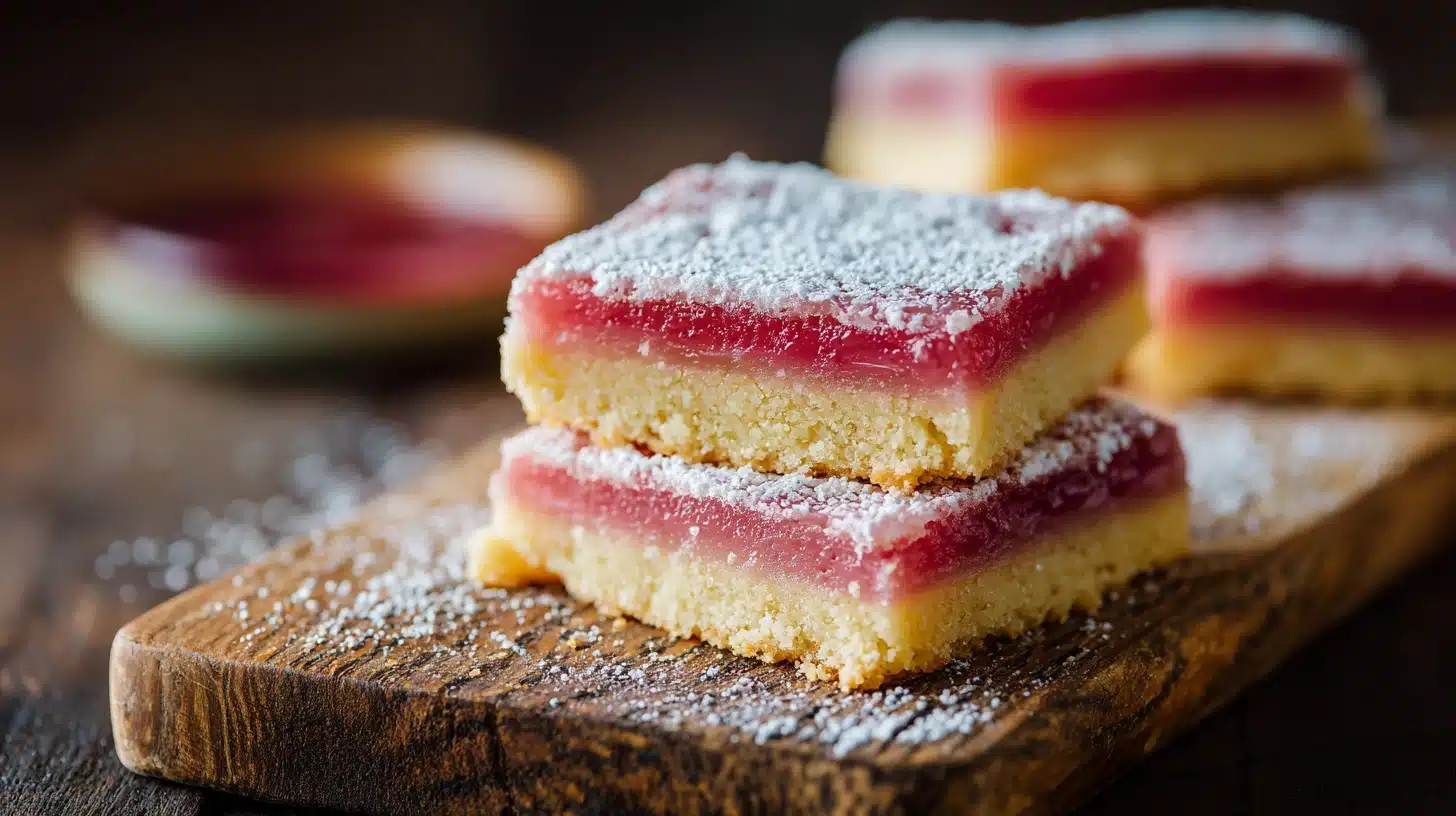
You get a sandy, buttery shortbread base and a custard-like rhubarb top that slices clean every time. The base uses powdered sugar and salted butter for a tender crumb that never gets tough. I blind-bake it until golden, then immediately pour the macerated rhubarb mixture over the hot crust. That hot-pour step bonds the layers so the filling doesn’t slide off when you cut a square.
The shortbread base has crisp edges, a tender center, and zero sogginess. The rhubarb custard is jammy, tart, and firm enough to eat out of hand. The hot pour step fuses the two layers into one cohesive bar.
I bake until the center barely jiggles, then cool completely. Dust with powdered sugar just before serving. That buttery, sour ribbon of rhubarb is what makes these bars so memorable.
Print
Rhubarb Dream Bars: The 3 Secrets to That Perfect Jammy Filling
- Total Time: 68 min
- Yield: 14 servings 1x
- Diet: Vegetarian
Description
Rhubarb dream bars feature a buttery shortbread base topped with a sweet-tart rhubarb custard. Macerating the rhubarb prevents a soggy crust, yielding clean, jammy slices every time.
Ingredients
1 cup (226g) salted butter, cold and cubed
½ cup (60g) powdered sugar
2 cups (250g) all-purpose flour
¼ teaspoon salt (omit if using salted butter)
3 cups (about 340g) rhubarb, sliced ½-inch thick
1 cup (200g) granulated sugar, divided
2 large eggs, room temperature
¼ cup (30g) all-purpose flour
½ teaspoon vanilla extract
Pinch of salt
Instructions
1. Preheat oven to 350°F (177°C). Line an 8×8-inch baking pan with parchment paper, leaving overhang for easy lifting.
2. In a large bowl, whisk together the flour, powdered sugar, and salt (if using unsalted butter). Cut in the cold butter until the mixture resembles coarse sand with pea-sized pieces.
3. Press the crumbs firmly and evenly into the prepared pan. Use the bottom of a measuring cup to compact the crust to prevent custard leaks.
4. Bake for 18-20 minutes, until the edges are just golden. Keep the crust hot.
5. In a medium bowl, whisk together eggs, remaining ¾ cup sugar, flour, vanilla, and salt until smooth and slightly frothy. Fold in the drained, macerated rhubarb until just combined.
6. Pour the rhubarb custard immediately over the hot crust, tilting the pan to spread evenly.
7. Bake at 350°F for 35-40 minutes. At 30 minutes, check: edges golden, center barely jiggly. If edges darken too quickly, tent loosely with foil.
8. Bake until an instant-read thermometer inserted in the center reads 200°F. The bars will continue setting as they cool.
9. Cool completely in the pan on a wire rack, about 1 hour. For cleanest slices, refrigerate 30 minutes.
10. Dust with powdered sugar, then cut into 14 bars.
Notes
Macerate rhubarb: toss sliced rhubarb with ¼ cup sugar and let sit 15 minutes, then drain and pat dry to prevent a soggy crust.
Use cold butter straight from the fridge; warm butter makes the crust greasy.
The hot pour step is critical: pour filling over the hot crust immediately after baking to bond layers.
For best results, use an instant-read thermometer to test doneness at 200°F.
Store in the refrigerator for up to 3 days. Do not freeze, texture will change.
- Prep Time: 18 min
- Cook Time: 50 min
- Category: Dessert
- Method: Baking
- Cuisine: American
Nutrition
- Serving Size: 1 bar
- Calories: 276 kcal
- Sugar: 19 g
- Sodium: 128 mg
- Fat: 14 g
- Saturated Fat: 9 g
- Unsaturated Fat: 5 g
- Trans Fat: 0 g
- Carbohydrates: 35 g
- Fiber: 1 g
- Protein: 3 g
- Cholesterol: 61 mg
Ingredients for rhubarb dream bars
Active Time: 18 minutes Total Time: 1 hour 13 minutes Yield: 14 bars
Shortbread crust ingredients
The base is a classic shortbread, just four pantry staples that bake up sandy and tender. Powdered sugar is the key difference here. Granulated sugar makes shortbread crisp and snappy. Powdered sugar dissolves faster, so the dough comes together with almost no gluten development. That means a delicate crumb that melts in your mouth, not a cracker.
- 1 cup (226g) unsalted butter, cold and cubed
- ½ cup (60g) powdered sugar
- 2 cups (250g) all-purpose flour
- ½ teaspoon salt
Cold butter is non-negotiable. If it softens before baking, the crust spreads and turns greasy. I cube it straight from the fridge, then work it into the dry ingredients with a pastry cutter or a few pulses in a food processor.
The mixture should look like coarse sand with pea-sized butter pieces scattered throughout. Those little pockets of butter create steam as they bake, giving the crust its flaky, tender texture.
Press the crumbs firmly into the pan. Really pack them down. I use the bottom of a measuring cup to compress an even layer. A loose press leaves gaps where custard can seep through and ruin the clean bottom edge.
Substitution tips: No unsalted butter? Use salted and omit the ½ teaspoon salt. Gluten-free flour blends with xanthan gum work here without adjustment. For a nuttier flavor, swap ¼ cup of the flour for almond flour.
| Original | Substitute | Notes |
|---|---|---|
| Unsalted butter | Salted butter (omit ½ tsp salt) | Same texture |
| All-purpose flour | 1:1 gluten-free blend | Must contain xanthan gum |
| Powdered sugar | Blitz granulated sugar in a blender | Measure after grinding, it compacts |
Rhubarb custard filling ingredients
The filling is where these bars get their signature sweet-tart punch. Macerating the rhubarb (see step 5) draws out excess water before baking, preventing a soggy bottom.
- 3 cups (about 340g) rhubarb, sliced ½-inch thick
- 1 cup (200g) granulated sugar, divided
- 2 large eggs, room temperature
- ¼ cup (30g) all-purpose flour
- ½ teaspoon vanilla extract
- ⅛ teaspoon salt
Pick ruby red stalks. They keep their color through baking and look far prettier against the pale custard. Thin, greenish stalks taste fine but bake up muddy brown.
Use ¼ cup of the sugar for macerating the rhubarb. The remaining ¾ cup goes into the custard base. Room-temperature eggs blend smoother and trap more air, which helps the filling set with a slight custard puff. The flour is minimal, just enough to bind without making the bars gummy. If you enjoy this velvety texture, my rhubarb custard bars use a similar egg-set method.
No cornstarch needed. The maceration step handles what cornstarch is usually called in to fix. That means the filling tastes clean and bright, not starchy or cloudy. A little vanilla rounds out the tartness without masking the rhubarb’s natural flavor. The salt sharpens everything.
How to make rhubarb dream bars
Making the shortbread crust
- Preheat oven to 350°F. Line an 8×8-inch baking pan with parchment, leaving overhang for lifting.
- In a large bowl, whisk the flour, powdered sugar, and salt. Cut in the cold butter until the mixture looks like coarse sand with pea-sized bits.
- Press the crumbs firmly and evenly into the pan. Use the bottom of a measuring cup to compact it, sealing the crust and preventing custard leaks.
- Bake for 18-20 minutes until the edges are just golden. Keep the crust hot while you prep the filling.
Chef’s Note: An uneven or loosely pressed crust leads to soggy spots. Really pack it down.
Preparing the rhubarb custard filling
- In a medium bowl, whisk the eggs, remaining ¾ cup sugar, flour, vanilla, and salt until smooth and slightly frothy. A gentle whisk avoids over-aerating.
- Fold in the drained, macerated rhubarb. The batter will be thin and speckled with pink.
- Stir just until combined. Overmixing can make the custard puff and crack.
Watch Out: If you skipped draining the rhubarb, the filling will be watery. That maceration step is essential.
Baking and cooling instructions
- Pour the rhubarb custard immediately over the hot crust. Tilt the pan to spread evenly.
- Bake at 350°F for 35-40 minutes. At 30 minutes, check: the edges should be golden, the center barely jiggly. If the edges darken too fast, tent loosely with foil.
- The bars are done when an instant-read thermometer inserted in the center hits 200°F. The filling will continue setting as it cools.
- Cool completely in the pan on a wire rack, about 1 hour. For the cleanest slices, refrigerate 30 minutes. Dust with powdered sugar before cutting into 14 bars.
Pro Tip: Cutting warm bars yields a mess. Patience pays off.
Storage, troubleshooting and recipe variations
Storage and make-ahead tips
These bars are best the day you bake them. The custard slowly weeps moisture into the crust overnight, so the crisp shortbread softens. If you have leftovers, store them in the fridge for up to 3 days.
Got extra rhubarb? Bake this rhubarb coffee cake, which stays tender for two days and uses up remaining stalks.
Serve the bars cold or at room temperature. No reheating needed. A light dusting of powdered sugar right before slicing freshens them up. For clean edges, chill the whole pan for 30 minutes, then lift out with the parchment overhang and cut with a sharp knife, wiping between slices.
| Storage Method | Duration | Notes |
|---|---|---|
| Fridge | Up to 3 days | Texture declines overnight. Best eaten same day. |
| Freezer | Not recommended | Custard turns icy and rubbery when thawed. |
Common problems and fixes
Most issues come down to moisture control or cutting too early. Here’s what can go wrong and how to fix it.
| Problem | Solution |
|---|---|
| Edges darken too fast while center is jiggly | Tent loosely with foil and bake 5 more minutes. The center should barely wobble. |
| Filling stays runny after cooling | Pop the pan back in a 350°F oven for 5–7 minutes. The custard sets more as it cools. |
| Bars crumble or fall apart when slicing | Cool completely, then refrigerate 30 minutes. A warm bar is a messy bar. |
| Crust seems pale after blind baking | That’s normal. It’ll finish browning once the filling goes on top. |
Delicious variations to try
Swap in a handful of sliced strawberries for a sweeter, pinker filling. I do this in my strawberry rhubarb bread and it’s just as good here. For a nutty crust, replace ¼ cup of flour with almond flour. Stir ½ teaspoon cinnamon into the custard for a warm spice note. If you want a creamy tang, drop spoonfuls of sweetened cream cheese on top before baking and swirl with a knife. The jammy rhubarb underneath still shines through. You can also cut the sugar by 2 tablespoons for an old-fashioned sour punch, letting the fruit’s natural acidity lead. For more rhubarb inspiration, try my strawberry rhubarb muffins, rhubarb custard cake, or rhubarb dump cake.
Rhubarb dream bars FAQ
Can I make these bars ahead of time?
These are best within a few hours of baking. The shortbread crust will soften if they sit overnight. If you must get ahead, refrigerate them for up to 3 days, but know the texture will decline over time. They don’t freeze well, as the custard turns icy and rubbery when thawed.
Can I use frozen rhubarb instead of fresh?
Yes, but thaw it fully first and drain off all the liquid. Pat the pieces very dry, then macerate with sugar as the recipe directs. Frozen rhubarb releases more moisture than fresh, so this extra step is crucial. Skip it, and the filling may turn runny. No need to adjust the sugar.
Why did my custard layer get watery or separate?
Skipping the maceration step is usually the culprit. Raw rhubarb holds a lot of water that seeps out during baking and breaks the custard. Drain the macerated fruit well and blot it dry before folding it in. For other texture fixes, see the troubleshooting table above.
How do I know when the bars are fully baked?
The center should barely jiggle when you gently shake the pan. For absolute certainty, use an instant-read thermometer. The filling is done at 200°F in the center. It will set further as it cools, so don’t overbake looking for a firm middle. Tent with foil if the edges brown too fast.
Can I double the recipe for a 9×13-inch pan?
Absolutely. Double all ingredients and use a 9×13-inch pan lined with parchment. Blind-bake the crust for 20–22 minutes until golden at the edges. Pour on the doubled filling and bake 40–45 minutes, checking that the center hits 200°F. Cool completely before slicing into bars.
Your next batch of rhubarb dream bars starts here
Two simple steps, macerating the rhubarb and blind-baking the crust, deliver a jammy, sweet-tart filling on a buttery shortbread base that never gets soggy. That contrast is what makes these bars worth the effort.
I make a batch whenever rhubarb hits the market. Grab some ruby stalks and try it this weekend.
Do you toss in strawberries or keep your bars pure rhubarb?
For more recipes like these, follow us on Facebook and Pinterest for easy dessert recipes and creative baking ideas.
More recipes in this series: