Honey French toast has a way of turning an ordinary Saturday morning into something worth remembering, and the secret has everything to do with how you treat the honey, not just how you pour it.
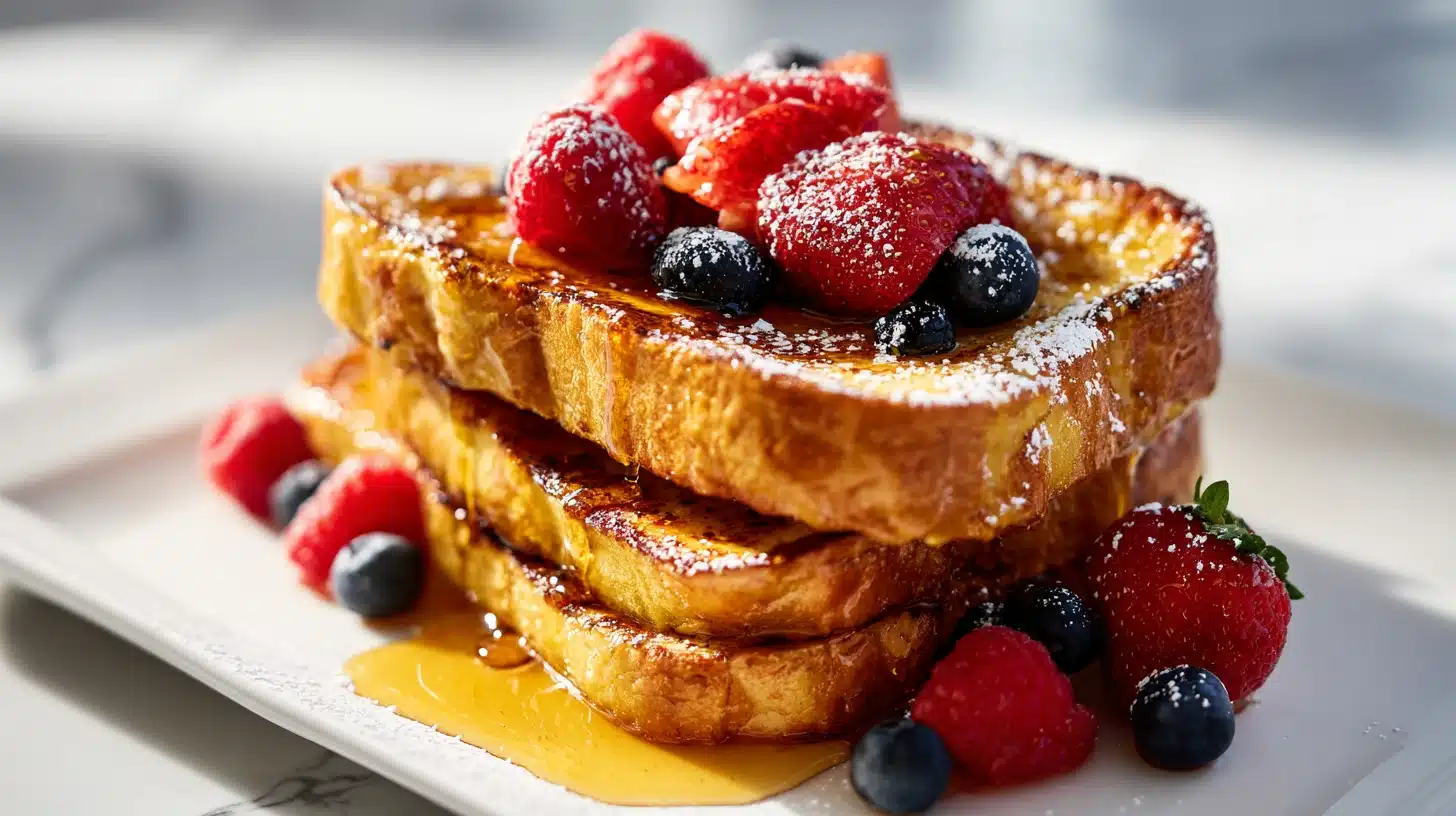
Most people end up with slices that are either gummy in the center or dry and eggy on the outside, and the fix is simpler than you think: it comes down to your custard ratio and your bread choice.
By the end, you’ll know exactly which bread holds up without falling apart, how to build a honey-infused custard that cooks into a caramel-edged crust, and the right moment to add honey for maximum flavor.
Table of Contents
Why Honey Makes Better French Toast Than Maple Syrup
This is a question I get almost every time I serve honey French toast at brunch, and the answer comes down to flavor depth and how each sweetener behaves under heat. Maple syrup is wonderful, but it stays on the surface. Honey, on the other hand, has a floral, slightly herbal complexity that changes when it meets a hot pan.
The Science of Honey in the Custard
When you whisk honey directly into your egg and milk custard, something interesting happens. The natural sugars in honey caramelize at a slightly lower temperature than refined sugar, which means the edges of your bread develop a thin, amber crust while the interior stays soft and custardy. That contrast, a barely crisp golden shell giving way to a pillowy center, is exactly what makes this version of French toast with honey so satisfying.
Raw or lightly processed honey works best here because its enzymes and floral notes survive a quick soak and a short time in the pan. Buckwheat honey gives you something bold and almost molasses-like. Wildflower honey keeps things light and floral. Clover honey is mild and sweet, which is perfect if you’re serving kids or anyone who wants something gentle.
Choosing the Right Honey Temperature
Cold honey doesn’t incorporate well into cold eggs and milk. Before you whisk your custard together, microwave the honey for 8 to 10 seconds until it’s just slightly warm and pourable. It will blend smoothly without leaving sticky pockets in the mix, and you’ll get a uniform custard that coats every inch of the bread.
If you love the combination of warm spices with your morning toast, a pinch of cinnamon and a half teaspoon of vanilla stirred into the custard turns this into a honey cinnamon French toast that smells like something from a bakery window. The cinnamon blooms in the warm honey, and by the time the bread hits the pan, your kitchen already smells incredible.
For another take on sweetened breakfast classics that use honey as the star, check out this honey quinoa breakfast bowl for a wholesome weekday alternative.
Print
Honey French Toast: The Golden, Custardy Breakfast You’ll Make Every Weekend
- Total Time: 20 min
- Yield: 4 servings 1x
- Diet: Vegetarian
Description
A simple, golden Honey French toast made with thick brioche bread soaked in a honey-vanilla custard and cooked in butter until the edges caramelize. Ready in 20 minutes and works for a quick weekday breakfast or a relaxed weekend brunch. Finished with a warm honey drizzle and your choice of fresh fruit or powdered sugar.
Ingredients
For the honey custard:
3 large eggs
1/3 cup whole milk
2 tablespoons honey (warmed for 8 seconds in the microwave)
1/2 teaspoon pure vanilla extract
1/4 teaspoon ground cinnamon
1 pinch fine salt
For cooking and serving:
4 slices brioche bread (cut 1 inch thick, day-old preferred)
2 tablespoons unsalted butter (divided)
2 tablespoons honey (for drizzling at the end)
1 tablespoon powdered sugar (optional, for dusting)
1/2 cup fresh berries (optional, for serving)
Instructions
1. Warm the honey: Place 2 tablespoons of honey in a small bowl and microwave for 8 to 10 seconds until just pourable. This helps it blend evenly into the custard without clumping.
2. Make the custard: Crack the eggs into a wide shallow dish such as a pie plate. Add the warm honey, whole milk, vanilla extract, cinnamon, and salt. Whisk until the mixture is smooth, slightly frothy, and fully combined with no streaks of egg white remaining.
3. Dry the bread if needed: If your brioche is fresh, lay the slices on a wire rack for 20 minutes or place them on a sheet pan in a 200 degree oven for 10 minutes to remove surface moisture. This prevents a soggy center.
4. Soak the bread: Lay one slice of brioche in the custard for 20 to 30 seconds per side, pressing gently to help absorption. The bread should feel heavier and soft but should hold its shape without drooping. Repeat with remaining slices.
5. Heat the pan: Warm a large skillet or griddle over medium heat. Add 1 tablespoon of butter and let it melt and foam. Wait for the foam to just start subsiding before adding bread. The butter should sizzle audibly when the bread touches it.
6. Cook the first batch: Add 2 soaked slices to the skillet. Cook for 2 to 3 minutes until the bottom is deep amber gold with lightly caramelized edges. Flip and cook the second side for 2 minutes. The center should feel set when pressed gently.
7. Keep warm and cook remaining slices: Transfer cooked slices to a wire rack set over a sheet pan and hold in a 200 degree oven. Add the remaining tablespoon of butter to the skillet and repeat with the remaining 2 slices.
8. Finish and serve: Plate the French toast while hot. Drizzle generously with honey so it pools into the crevices and soaks slightly into the warm surface. Dust with powdered sugar and add fresh berries or toasted pecans if desired. Serve immediately.
Notes
Store leftovers in an airtight container in the refrigerator for up to 3 days or freeze for up to 2 months. To reheat, place slices on a wire rack in a 350 degree oven for 8 minutes to restore the crisp exterior. Avoid the microwave as it softens the crust.
Bread swap: Challah, Texas toast, or day-old sourdough all work well. Aim for slices at least 3/4 inch thick to prevent sogginess.
Honey swap: Clover or wildflower honey keeps the flavor mild. Buckwheat honey adds a deeper, bolder note. Hot honey at the finish adds a sweet-heat contrast.
Dairy-free option: Replace whole milk with full-fat oat milk or canned coconut milk. Use a plant-based butter for cooking. The custard will still coat and cook well.
Make-ahead tip: Whisk the custard the night before and refrigerate it covered. Stir briefly before using as the honey may settle slightly overnight.
- Prep Time: 5 min
- Cook Time: 15 min
- Category: Breakfast
- Method: Stovetop
- Cuisine: American
Nutrition
- Serving Size: 1 slice
- Calories: 310 kcal
- Sugar: 18 g
- Sodium: 220 mg
- Fat: 13 g
- Saturated Fat: 6 g
- Unsaturated Fat: 7 g
- Trans Fat: 0 g
- Carbohydrates: 38 g
- Fiber: 1 g
- Protein: 9 g
- Cholesterol: 145 mg
The Best Bread for Honey French Toast
Bread choice is the single most underrated decision in any French toast recipe, and it’s also the most common reason people end up with a soggy, falling-apart mess on their plate. Not every loaf handles a custard soak the same way, and understanding why makes all the difference.
Thick Slices Are Non-Negotiable
You want bread that is cut at least three-quarters of an inch thick, ideally a full inch. Thin sandwich bread collapses the moment it absorbs custard and turns into something closer to scrambled eggs wrapped in bread. Thick slices have enough structure to soak up flavor without losing their shape.
The best options for easy honey French toast are:
- Brioche: rich, buttery, and slightly sweet, it pairs beautifully with honey and cooks to a deep golden color
- Challah: slightly denser than brioche, with a chewy crumb that holds custard without going mushy
- Texas toast: widely available, affordable, and thick enough to do the job on a weekday morning
- Day-old sourdough: the mild tang balances the sweetness of the honey, and the drier crumb absorbs custard more evenly than fresh bread
Why Day-Old Bread Is Actually Better
Fresh bread contains more moisture, which means it can only absorb a limited amount of custard before it becomes waterlogged. Bread that has been sitting out for a day or two has lost some of that surface moisture, so it drinks in the custard more efficiently and holds its structure when it hits the butter in the pan.
If all you have is fresh bread, lay the slices on a wire rack for 20 to 30 minutes before soaking, or put them on a sheet pan in a 200 degree oven for 10 minutes to dry them out slightly. This one step prevents the soggy bottom problem that plagues so many home cooks.
If you enjoy experimenting with different bread types, the hot cross bun french toast recipe is a brilliant way to see how enriched doughs behave with a custard soak.
How to Make Honey French Toast Step by Step
This recipe comes together in 20 minutes from start to finish, making it genuinely practical for a weekday morning as much as a lazy Sunday brunch. The custard takes two minutes to whisk, the soak takes about 30 seconds per side, and each batch cooks in four to five minutes over medium heat.
Building Your Custard
For four generous slices, whisk together:
- 3 large eggs
- 1/3 cup whole milk or heavy cream
- 2 tablespoons honey (warmed slightly)
- 1/2 teaspoon pure vanilla extract
- 1/4 teaspoon ground cinnamon
- A small pinch of fine salt
The salt is not optional. It sharpens everything else in the custard and keeps the sweetness from tasting flat. Whisk until the mixture is completely smooth and slightly frothy. Pour it into a wide, shallow dish, like a pie plate or a 9×13 baking dish, so you can lay full slices flat without folding them.
Soaking and Cooking
Lay each slice of bread in the custard for 20 to 30 seconds per side. You want the bread to absorb the custard without becoming limp. When you lift a slice, it should feel heavier and slightly soft but should hold its shape without drooping.
Heat a large skillet or griddle over medium heat. Add one tablespoon of unsalted butter and let it foam up and just start to subside before adding your bread. That sizzle when the slice hits the pan is your signal that the temperature is right. Too quiet means the pan is too cool and you’ll get pale, greasy toast. Too aggressive means the outside chars before the center cooks through.
Cook for 2 to 3 minutes per side until each surface is a deep amber gold with slightly caramelized edges. The center should feel set when you press it gently, not squishy. Cook in batches and keep finished slices warm in a 200 degree oven on a wire rack so they stay crisp underneath.
The Honey Finish
Here’s where vanilla honey French toast goes from good to genuinely great. While the toast is still hot on the plate, drizzle a generous stream of honey directly over the top. The heat from the bread warms the honey just enough to make it pool into the crevices and soak slightly into the surface. Add a dusting of powdered sugar, a few fresh berries, or a small scatter of toasted pecans if you want texture.
Variations, toppings, and make-ahead tips
Once you have mastered the base recipe, this becomes a canvas for endless variations. Honey French toast is one of those recipes that rewards a little creativity without requiring much extra effort.
Flavor variations worth trying
- Honey orange zest: add the zest of half an orange to the custard for a bright, citrusy note that cuts through the richness
- Hot honey: swap regular honey for a chili-infused hot honey drizzle at the end for a sweet-heat finish that works surprisingly well with savory sides
- Cardamom and honey: replace the cinnamon with a pinch of ground cardamom for something more aromatic and slightly exotic
- Cream cheese stuffed: spread two tablespoons of softened cream cheese between two thinner slices before soaking for a version closer to a stuffed french toast recipe
Topping ideas
The right toppings turn a simple plate of honey French toast into a full spread. Here are a few combinations that work particularly well:
| Topping Combination | Flavor Profile |
|---|---|
| Fresh strawberries and whipped cream | Light and classic |
| Sliced banana and toasted walnuts | Rich and nutty |
| Blueberries and lemon zest | Bright and fruity |
| Crispy bacon crumbles and hot honey | Sweet and savory |
| Greek yogurt and pomegranate seeds | Tangy and refreshing |
Make-ahead and storage tips
If you want to prep ahead for a crowd, whisk the custard the night before and store it covered in the refrigerator. Give it a quick stir before using since the honey can settle slightly overnight.
Cooked French toast keeps well in the refrigerator for up to three days. Store slices in a single layer or separated with parchment paper to prevent sticking. Reheat in a 350 degree oven for 8 minutes on a wire rack so the bottom crisps back up instead of steaming itself soft. Avoid the microwave if you can; it makes the texture rubbery and kills that golden crust you worked to build.
For freezing, let cooked slices cool completely on a wire rack, then freeze them in a single layer on a sheet pan for 45 minutes before transferring to a zip-close bag. They reheat beautifully in a toaster on the medium-high setting, which is genuinely one of the better weekday breakfast tricks I know.
Frequently asked questions
Can I use plant-based milk to make honey French toast dairy-free?
Yes, full-fat oat milk or canned coconut milk both work well as substitutes for whole milk in this recipe. They provide enough fat to create a rich custard without the dairy. Keep in mind that coconut milk adds a subtle sweetness and tropical note, which pairs nicely with the honey.
Why does my French toast always come out soggy in the middle?
The two most common causes are bread that is too fresh and a pan that is not hot enough. Fresh bread absorbs too much custard and has no room for it to cook off, while a cool pan lets the bread steam instead of sear. Use day-old bread, preheat your skillet properly until butter foams before adding the bread, and cook over medium rather than medium-low heat.
What type of honey is best for a honey French toast recipe?
A mild, floral honey like clover or wildflower is the most versatile choice because it sweetens without overpowering. If you want more complexity, buckwheat honey adds a rich, almost malty depth. For a delicate vanilla honey French toast, pair a light acacia honey with your vanilla extract and let the bread’s own flavor shine through.
Can I make this recipe in an air fryer?
You can, though the texture will differ slightly from stovetop. Preheat your air fryer to 370 degrees Fahrenheit, spray the basket with cooking spray, and cook soaked slices for 5 minutes, flip, then cook for another 3 to 4 minutes. The exterior crisps up nicely but you lose some of the buttery, pan-fried richness. If you enjoy air fryer breakfast ideas, the air fryer magic nutella toast pies are worth a look for a fun variation.
Conclusion
There is something genuinely satisfying about a recipe this simple delivering results this good. Honey French toast works because honey does something no other sweetener quite manages: it caramelizes into the crust, perfumes the custard, and finishes the plate with warmth and depth. Paired with the right bread and the right pan temperature, it is the kind of breakfast that feels special without asking much of you.
Give this a try on your next slow morning and see how quickly it becomes part of your regular rotation.
For more recipes like honey French toast, follow us on Facebook and Pinterest for sweet brunch recipes and weekend breakfast inspiration.