My first sip of a dirty matcha latte changed how I view morning drinks entirely. I expected the earthy grassiness of green tea to clash with the bitter roast of coffee, but instead they worked together in one layered glass.
Too often, homemade versions suffer from chalky, clumpy matcha or a muddy flavor where the espresso overpowers everything. I will show you how to balance both bold flavors and get a silky, smooth texture every single time.
Coming up: the exact water temperature for lump-free whisking, the layering technique for that visual contrast, and the best milk choices to tie these two strong personalities together.
Table of Contents
What Exactly Is a Dirty Matcha Latte?
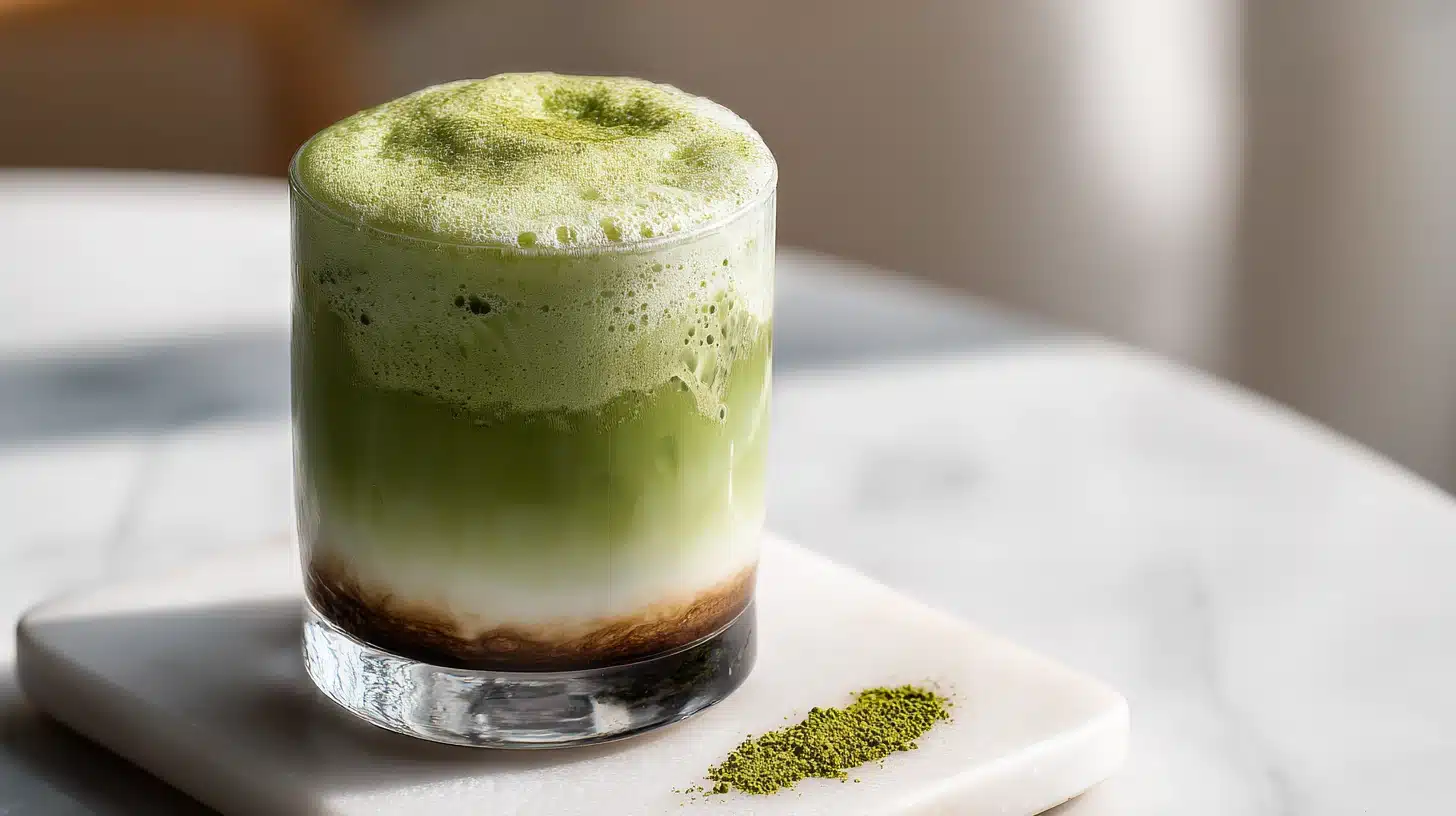
A dirty matcha latte is what happens when you combine two caffeine powerhouses: traditional Japanese green tea and Italian espresso. The word “dirty” refers to the visual effect. When you pour a dark, concentrated shot of espresso over a bright green matcha latte, the dark coffee bleeds into the green milk. You get a marbled, muddy, or “dirty” appearance. It looks striking in a clear glass, but the flavor is what keeps you coming back. The earthy, vegetal notes of the matcha provide a grounding base for the sharp, roasted notes of the coffee to land on. When you mix them, the flavors do not fight each other. The sweetness of the milk bridges the gap between the bitter espresso and the grassy green tea.
To understand this drink, you need to understand its components. You are essentially making two small drinks and combining them. First, you prepare a concentrated matcha shot by whisking bright green powder with a small amount of hot water. Second, you pull a fresh shot of espresso or brew a strong concentrate of coffee. Third, you combine these elements over milk and ice. The layering is what makes it special. If you just throw everything into a blender, you get a muddy tasting smoothie. When you layer them, you get distinct flavor shifts with every sip.
You might wonder if this is just a gimmick invented by modern coffee shops. It is actually a natural evolution of cafe culture. As matcha gained popularity in Western coffee shops, baristas started looking for ways to bridge the gap for coffee drinkers. The result was the matcha espresso latte. It gives you the antioxidants and sustained energy of green tea alongside the immediate kick of coffee. If you enjoy exploring how green tea pairs with unexpected flavors, you might find our apple pie matcha latte just as fascinating. The dirty matcha latte stands out because it does not hide behind sweet syrups. It relies on the quality of the tea and the coffee. The milk softens the edges, but the distinct bitterness of both the espresso and the green tea powder remains front and center. You taste the roast, then you taste the grass, then you taste the creamy sweetness. It is a complex drink that takes only minutes to prepare when you know the right technique.
Print
How to Make the Perfect Dirty Matcha Latte at Home
- Total Time: 10 min
- Yield: 1 latte 1x
Description
A dirty matcha latte combines a shot of strong espresso with creamy matcha green tea and milk for a layered, caffeinated drink. The espresso is poured over the bright green matcha and milk, creating a marbled dirty appearance and a complex flavor profile.
Ingredients
For the matcha base:
1 tsp ceremonial grade matcha powder
2 tbsp hot water (80 degrees Celsius or 176 degrees Fahrenheit)
For the latte:
1 cup milk (whole dairy milk or barista blend oat milk)
1 tsp maple syrup
1 cup ice cubes (if making iced version)
For the coffee:
1 shot fresh espresso (or 2 oz strong brewed coffee from a Moka pot)
Instructions
1. Sift the matcha powder into a wide bowl to remove any clumps.
2. Add the hot water to the sifted matcha powder.
3. Whisk vigorously in a zigzag motion using a bamboo whisk until you have a smooth, thick green paste with no lumps.
4. If making an iced latte, fill a tall clear glass with ice cubes.
5. Pour the milk into the glass and stir in the maple syrup until dissolved.
6. Slowly pour the whisked matcha over the back of a spoon onto the milk to create the green layer.
7. Pull a fresh shot of espresso.
8. Slowly pour the hot espresso over the back of a spoon directly onto the matcha layer.
9. Serve immediately without stirring to preserve the distinct layered dirty effect.
Notes
Store any leftover whisked matcha in the refrigerator for up to 1 day, but this drink is best enjoyed fresh.
If you do not have a bamboo whisk, sift the powder and use a small electric milk frother to break up the clumps.
For a sweeter cafe style drink, add 1 tbsp of vanilla syrup to the milk.
If your espresso sinks too fast, try pouring it even slower over the back of a spoon.
- Prep Time: 5 min
- Cook Time: 5 min
- Category: Drink
- Method: No-Cook
- Cuisine: Asian
Nutrition
- Serving Size: 1 latte
- Calories: 120 kcal
- Sugar: 12 g
- Sodium: 80 mg
- Fat: 5 g
- Saturated Fat: 3 g
- Unsaturated Fat: 2 g
- Trans Fat: 0 g
- Carbohydrates: 14 g
- Fiber: 1 g
- Protein: 6 g
- Cholesterol: 15 mg
Choosing the Right Ingredients for Your Dirty Matcha
The quality of your dirty matcha latte depends entirely on the ingredients you put into it. You cannot hide poor quality matcha or burnt espresso in this drink. The matcha powder is the most important component. You have two main choices: ceremonial grade and culinary grade. Ceremonial grade matcha is the highest quality. It is made from the youngest tea leaves, stone-ground into a fine, bright green powder. It tastes sweeter, less bitter, and dissolves smoothly. For a dirty matcha latte where the matcha shares the stage with strong espresso, ceremonial grade makes a huge difference. It prevents the drink from tasting overly astringent. Culinary grade is less expensive and slightly more bitter. It works fine if you are making a heavily sweetened blended drink, but in this recipe, it might make your latte taste too harsh.
Next, consider your coffee. You need a strong, concentrated coffee element to cut through the milk and the matcha. A fresh shot of espresso is the gold standard. It offers a rich, thick crema that floats on the milk. If you do not have an espresso machine, you can use a Moka pot or a strong brew from an Aeropress. Avoid regular drip coffee because it is too weak. You need the intense roasted flavor to stand up to the vegetal green tea. The milk you choose dictates the final texture. Whole dairy milk provides the best foam and a natural sweetness that balances the bitterness. If you prefer plant milk, oat milk is your best bet. It steams well, has a neutral flavor, and adds a slight brown sugar note. Almond milk works, but it can taste thin. Soy milk has a strong bean flavor that sometimes clashes with the green tea.
Sweeteners are optional but helpful. A little sweetness tames the astringent edges of both the coffee and the matcha. Maple syrup is my favorite choice here. It dissolves easily in cold liquids and adds a warm, woody sweetness that complements the earthy green tea. Honey works too, but it can seize up in cold drinks if you do not dissolve it in the hot matcha water first. Brown sugar simple syrup is another great option. Vanilla syrup adds a nice floral note if you want a sweeter cafe style drink. For a completely different flavor profile, you could try our butter pecan matcha latte which leans heavily into nutty, sweet notes. For the dirty matcha recipe, keep the sweetener subtle. You want to taste the coffee and the tea, not just sugar. Use filtered water heated to exactly 80 degrees Celsius or 176 degrees Fahrenheit. Boiling water scorches matcha and turns it bitter. Water that is too cool will not dissolve the powder, so you end up with a grainy texture.
The Art of Whisking and Layering
The technique you use to build your dirty matcha latte separates a mediocre drink from a cafe quality one. The two most common mistakes happen during the whisking phase and the pouring phase. Matcha powder does not dissolve. It suspends. Because it is finely ground stone leaf, it naturally wants to clump when it hits liquid. If you just stir it with a spoon, you will get gritty chunks at the bottom of your glass. To avoid this, you need a bamboo whisk, also known as a chasen. The fine, flexible tines of a bamboo whisk agitate the powder into the water. They break up clumps and give you a smooth suspension. If you do not have a chasen, a small electric milk frother works well. Place your matcha powder in a bowl or a wide cup. Add a small amount of hot water, about two tablespoons. Whisk vigorously in a zigzag motion, not a circular motion, until you have a thick, bright green paste.
Once you have your smooth matcha base, the layering begins. Layering is what makes a dirty matcha latte visually striking and texturally interesting. You want to build the drink in order of density. Start with your milk and ice if you are making an iced version. Pour the cold milk into a tall clear glass. Add your sweetener directly to the milk and stir. Next, pour your prepared matcha over the milk. To get a clean layer, pour the matcha slowly over the back of a spoon. This diffuses the liquid so it gently rests on top of the milk rather than sinking to the bottom. You will see a distinct line where the green tea meets the white milk. If you are looking for another visually striking layered drink, our blue matcha latte uses the same pouring technique.
Finally, it is time to add the espresso. The espresso is the heaviest and most intensely colored element. Pour the fresh hot espresso shot slowly over the back of a spoon directly onto the matcha layer. The dark coffee will push the green matcha down slightly. You get a three-layer effect. Dark brown on top, bright green in the middle, and white milk at the bottom. The espresso will slowly bleed down into the matcha. That is the “dirty” effect. Do not stir the drink before drinking. Put the glass to your lips and take a sip. You will taste the bitter, roasted espresso first, followed by the earthy, sweet matcha, and finish with the cool, creamy milk. The flavors evolve as you drink. The texture changes from frothy to smooth. This shifting experience is why the matcha coffee drink has become so popular. It hits your eyes, your tongue, and your sense of smell all at once.
Troubleshooting Your Dirty Matcha Latte
Even with the right ingredients, making a dirty matcha latte at home can go wrong. The most common issue is clumpy matcha. Matcha clumps because it is statically charged and highly absorbent. When it hits liquid, the outside of the powder clump gets wet instantly. It forms a shell that traps dry powder inside. You have to break those clumps before you add a lot of liquid. If you do not have a bamboo whisk, sift your matcha powder through a fine mesh strainer before adding any water. This physically separates the particles. Another trick is to add just a few drops of water first and use your whisk to smash the powder into a thick paste. Once it is a paste, you can add the rest of the water without fear of clumps.
Another frequent problem is the matcha tasting excessively bitter. This usually comes down to water temperature and whisking technique. Never use boiling water. Boiling water scorches the delicate green tea leaves and releases harsh tannins. Aim for 80 degrees Celsius. If you do not have a kettle with temperature control, boil your water and let it sit for two minutes before pouring it over the matcha. Over whisking can also cause bitterness. Whisk only until the powder is fully suspended. Whipping it into a stiff foam is unnecessary for this drink. If you are using a cheap culinary grade matcha, that bitterness will be prominent. Spending a little more on a ceremonial grade powder fixes this instantly. If your espresso tastes sour or thin, you likely need to tamp your grounds harder or use a finer grind. A sour espresso shot will ruin the balance of the dirty matcha latte.
Sometimes the layers mix together too quickly and you lose the visual appeal. This happens when your liquids are too warm or you pour too aggressively. If you are making an iced dirty matcha, the cold milk and ice help keep the layers stable. If you are making a hot version, make sure your milk is warm but not boiling. Pouring hot espresso over hot matcha over hot milk will cause everything to mix instantly. Use the back of a spoon to pour both the matcha and the espresso. This slows the velocity of the liquid. If you want a sweeter, more dessert like experience, try our matcha pistachio latte which uses a rich pistachio cream to add body. Below is a quick troubleshooting table to help you fix common issues with your dirty matcha recipe.
| Problem | Cause | Fix |
|---|---|---|
| Gritty, clumpy matcha at the bottom | Powder added to too much water at once | Sift powder first, make a paste with a few drops of water, then whisk |
| Matcha tastes excessively bitter | Water too hot or low quality powder | Use water at 80 degrees Celsius, upgrade to ceremonial grade matcha |
| Espresso sinks and mixes instantly | Pouring too fast or milk too warm | Pour espresso slowly over the back of a spoon, use colder milk |
| Drink tastes muddy and unbalanced | Espresso too weak or matcha too sweet | Use a strong double espresso shot, reduce sweetener in the milk |
Iced vs Hot Dirty Matcha Variations
The dirty matcha latte works well in both hot and iced formats, but the preparation changes slightly depending on the season and your mood. The iced version is the most popular way to serve this drink. The cold temperature mutes some of the bitterness, so the drink feels incredibly refreshing. To build an iced dirty matcha latte, fill a tall glass with ice cubes. Pour your cold milk over the ice. Leave room at the top for the matcha and espresso. Add your sweetener to the milk and give it a quick stir. Prepare your matcha shot in a separate bowl with hot water. Whisk until smooth. Pour the matcha over the milk. Then pull your espresso shot and pour it over the top. The ice keeps the layers distinct for longer. As you drink, the espresso slowly drips down through the green matcha into the white milk. The look keeps changing as you go.
Making a hot dirty matcha latte requires a bit more care to maintain the layers. Since you do not have ice to provide physical separation, you rely entirely on liquid density and temperature control. Warm your milk gently on the stove or using a steam wand. You want it steaming but not boiling, around 60 degrees Celsius. Pour the warm milk into your mug. If you have a milk frother, create a light microfoam on top. Whisk your matcha with hot water as usual. Gently pour the matcha over the back of a spoon onto the milk. Finally, pull your espresso shot and pour it over the back of the spoon onto the matcha layer. The crema from the espresso helps it float temporarily. Drink it quickly before the heat causes the layers to merge. The hot version has a more intense flavor profile. The warmth opens up the aromatic compounds in the coffee and the green tea. It is a deeply comforting drink for cold mornings.
You can also play with variations of the dirty matcha recipe by changing the milk or adding subtle flavors. Using a barista blend oat milk creates a thicker, creamier texture that holds layers exceptionally well. If you enjoy a hint of salt to balance bitterness, our sea salt matcha latte shows how a pinch of flake salt can transform the drink. For the dirty version, a dash of vanilla extract in the milk complements both the espresso and the green tea without overpowering them. Another variation involves cold foam. Instead of milk on the bottom, you can layer ice first, then matcha, and top the whole thing with a dollop of sweet cold foam. Pour the espresso over the cold foam. The dark coffee cascades down through the foam into the green tea. It looks fantastic and gives you a rich, creamy first sip. Whichever variation you choose, the important thing is maintaining the balance between the coffee and the tea.
Why the Dirty Matcha Latte Works as a Daily Ritual
The dirty matcha latte is a highly functional drink that provides a unique energy curve. When you drink coffee alone, you get a rapid spike of caffeine followed by a crash. When you drink matcha alone, you get a slower, steadier release of energy thanks to L-theanine, an amino acid that promotes calm focus. Combining them gives you the best of both worlds. The espresso provides the immediate jolt to get you moving, while the matcha provides sustained, jitter-free energy for the rest of the morning. This makes the matcha coffee drink an ideal pre-workout beverage or a mid-afternoon pick-me-up that will not leave you feeling exhausted an hour later.
Building this drink at home also saves you money and gives you complete control over the ingredients. Cafe dirty matcha lattes often contain high sugar syrups and artificial flavors. When you make it yourself, you control the sweetness, the milk quality, and the espresso strength. You can use pure maple syrup instead of processed sugar. You can use organic ceremonial grade matcha instead of whatever bulk powder the shop uses. The process of whisking the matcha and pulling the espresso becomes a morning ritual. It forces you to slow down for five minutes and engage with your food. The bright green color of the powder, the sound of the whisk against the bowl, the smell of fresh espresso. They hit all your senses before you even take a sip.
Once you master the basic dirty matcha, you open the door to a whole world of green tea coffee combinations. If you want to explore more matcha drinks, our easy jeju matcha latte recipe is a great starting point for pure matcha flavor. The dirty version remains a favorite because it bridges two distinct cultures of brewing. It respects the Japanese tea ceremony and the Italian coffee tradition without taking itself too seriously. It is a practical, delicious way to get your caffeine fix. The contrast of the bitter coffee and the earthy green tea wrapped in creamy milk is a flavor combination that keeps your palate interested. It never gets boring because every sip tastes slightly different as the layers mix. I keep coming back to this drink. It is robust and forgiving. You can adapt it to your personal taste.
Frequently Asked Questions
What is a dirty matcha latte?
A dirty matcha latte is a layered drink made by combining matcha green tea and a shot of espresso with milk. The espresso is poured over the matcha and milk. It creates a dark, marbled “dirty” appearance against the bright green tea. It offers the bitter, roasted flavor of coffee alongside the earthy, vegetal notes of green tea.
Does dirty matcha have more caffeine than a regular matcha latte?
Yes, a dirty matcha latte has significantly more caffeine. A regular matcha latte contains only the caffeine from the green tea powder, which is about 70 milligrams per serving. Adding a single shot of espresso adds another 60 milligrams of caffeine. Together, the drink provides a strong, sustained energy boost.
What’s the best matcha to use for a dirty matcha latte?
Ceremonial grade matcha is the best choice for this drink. It is made from young tea leaves, so it has a sweeter, smoother flavor and a bright green color. Culinary grade matcha is more bitter and astringent. Since the espresso already adds bitterness, using a high quality ceremonial grade powder prevents the drink from tasting overly harsh.
Why is my matcha clumpy?
Matcha clumps because it is finely ground and highly absorbent. When it hits liquid, the outside gets wet while the inside stays dry. Hard lumps form. To fix this, sift your matcha powder before whisking. Add just a few drops of hot water first to make a paste, then add the rest of your water and whisk vigorously in a zigzag motion with a bamboo whisk.
Conclusion
The dirty matcha latte is a great compromise for mornings when you cannot choose between tea and coffee. It gives you the immediate kick of espresso and the sustained focus of green tea in one glass. With the right water temperature, a good bamboo whisk, and a slow pour, you can achieve that perfect layered look and a silky texture without any chalky clumps. This drink is forgiving. You can adapt it to whatever milk and sweetener you prefer.
I make this dirty matcha latte almost every week now. For more recipes like dirty matcha latte, follow us on Facebook and Pinterest for energizing morning drink ideas.
More recipes in this series: