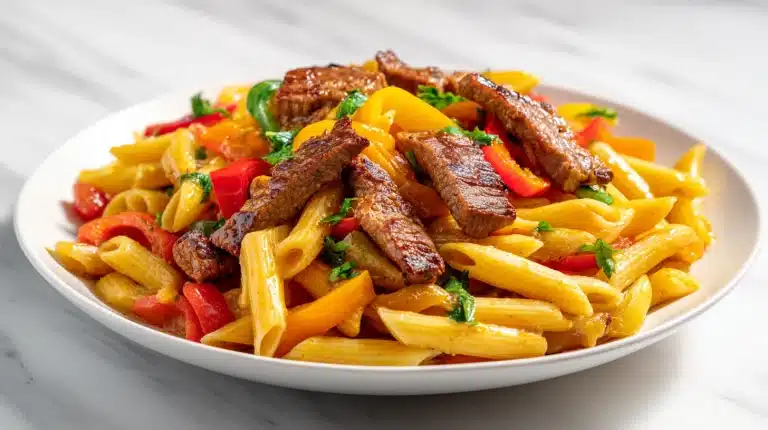
The mistake that makes cottage cheese alfredo taste grainy isn’t what you think. Skip the cream, not the step most recipes ignore.
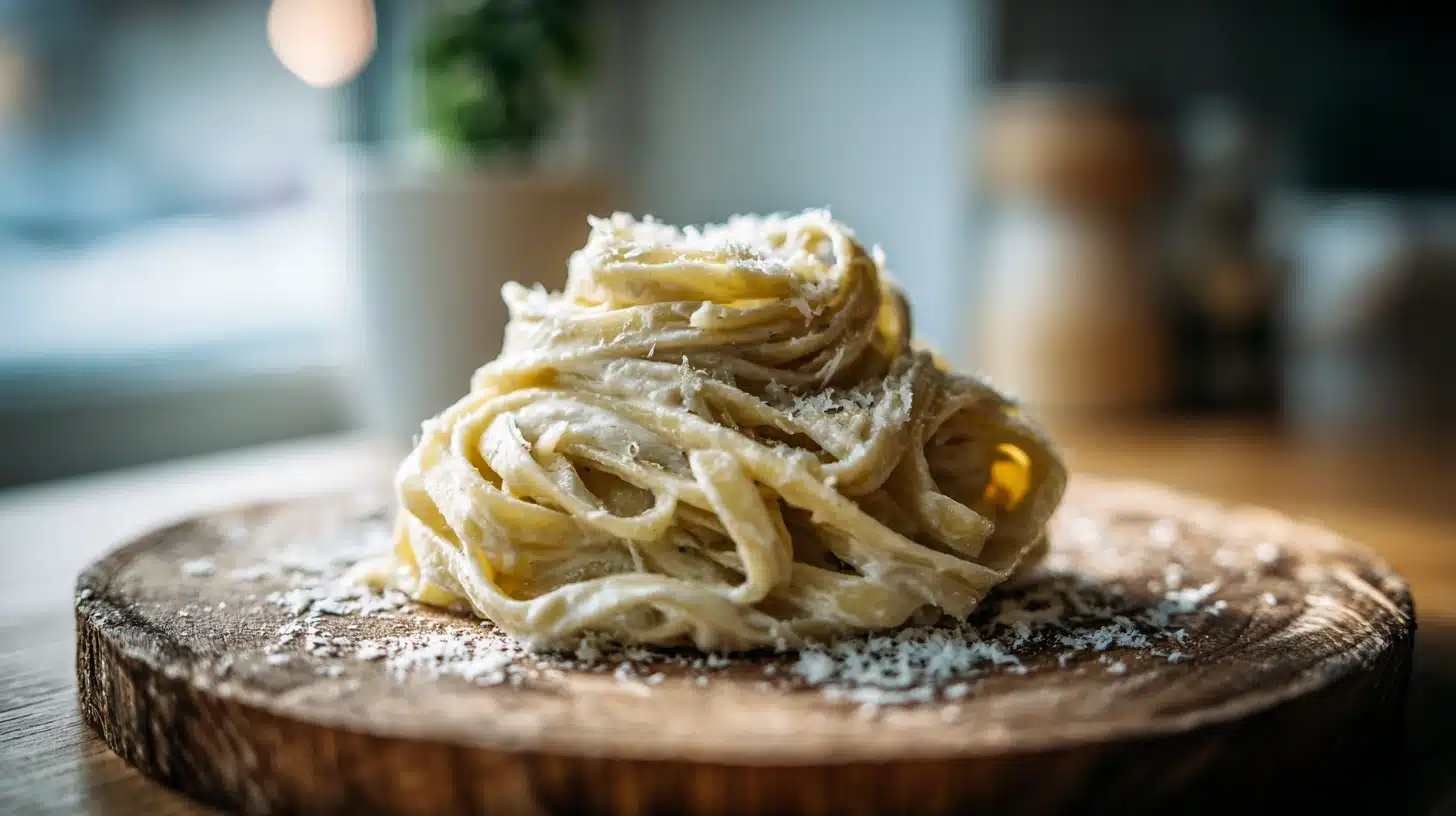
You’ve had it: a watery, clumpy sauce that slides off pasta. That’s not your fault. This version blends into velvet in minutes, with a warm spice note that makes it taste slow-simmered.
You’ll learn why blending works, the exact spice you need (it’s not nutmeg), and how to keep it smooth even when reheated. No cream, no butter, no disappointment.
Table of Contents
Why This Cottage Cheese Alfredo Recipe Works
Higher protein, lower calorie
This cottage cheese alfredo delivers roughly 20 grams of protein per serving. Traditional Alfredo, built on heavy cream and butter, often hits 400 calories and 30 grams of fat per cup. This version swaps that for blended 4% cottage cheese and a splash of olive oil. The result cuts fat nearly in half while keeping the sauce thick and silky. No chalky aftertaste, no puddle on the plate.
You don’t sacrifice richness. The fat in whole-milk cottage cheese mimics heavy cream’s mouthfeel once blended smooth. Parmesan and a touch of butter add savory depth without weighing things down. I dish this up on busy weeknights and feel good about the extra protein. Even family members who side-eye “healthy swaps” ask for seconds.
- About 20 grams of protein per serving
- Less than half the fat of classic Alfredo
- No heavy cream required
- Creamy texture that fools picky eaters
A warm spice note (not nutmeg, more on that later) makes it taste slow-simmered. If you’re into high-protein pasta tricks, my cottage cheese pasta high protein uses a similar blender method.
Quick and easy, ready in 24 minutes
Making cottage cheese alfredo takes 10 minutes of hands-on work. Toss everything into a blender while the pasta water heats. No mincing garlic, no stirring a roux. The sauce cooks in about 24 minutes, just enough time for the pasta to boil. That’s 24 minutes start to finish, and one pan to wash.
I learned this shortcut during a chaotic Tuesday. The baby was fussing, the fridge looked sad, and I had zero patience for a proper French sauce. I spun cottage cheese, garlic, Parmesan, and a little oil in the blender, poured it into a skillet, and watched it turn velvety. My toddler finished his bowl without a single complaint.
The same blending magic works for a crispy high protein cottage cheese crust if you’re craving pizza night. For now, you get a rich, garlicky sauce that clings to every noodle, no cream, no stress.
Print
24-Minute Cottage Cheese Alfredo: Creamy High-Protein Sauce with Warm Spices
- Total Time: 24 min
- Yield: 4 servings 1x
- Diet: Vegetarian
Description
Cottage cheese alfredo is a creamy, high-protein sauce made by blending cottage cheese, Parmesan, and garlic, then gently heating until thick. Ready in 24 minutes, it coats pasta, chicken, or vegetables with a rich garlic flavor and half the fat of traditional Alfredo.
Ingredients
1 cup (240g) 4% full-fat cottage cheese
1/3 cup (80ml) whole milk
2 tablespoons (28g) unsalted butter
2 cloves garlic, smashed
1/2 cup (50g) freshly grated Parmesan
1 tablespoon cornstarch mixed with 1 tablespoon cold water
1/4 teaspoon kosher salt
Instructions
1. Add cottage cheese, milk, Parmesan, and smashed garlic to a high-speed blender. Blend on high for 45-60 seconds until completely smooth, scraping down sides once.
2. Whisk the cornstarch slurry (cornstarch mixed with cold water) until smooth. Pour into blender and pulse 3 times to combine.
3. Melt butter in a medium saucepan over medium heat.
4. Pour in the blended cheese mixture and add salt. Cook for 12-14 minutes, whisking constantly with a silicone whisk.
5. Watch for visual cues: around 8 minutes, steam rises steadily; by 10 minutes, sauce coats the back of a spoon; at 12 minutes, lazy bubbles break the surface.
6. Remove from heat immediately when thickened. Sauce will continue to set as it cools.
7. If sauce breaks or looks grainy, remove from heat, blend again for 30 seconds, then return to low heat.
Notes
Store in the refrigerator for up to 3 days or freezer for up to 2 months.
If sauce breaks during cooking, blend again off heat for 30 seconds to re-emulsify.
Use full-fat cottage cheese, fat-free versions will be watery and won’t thicken properly.
Freshly grate Parmesan; pre-shredded cheese contains anti-caking agents that make the sauce grainy.
Serve over 2 oz dry pasta per person to reach approximately 20 g protein per serving.
- Prep Time: 10 min
- Cook Time: 14 min
- Category: Dinner, Main Course
- Method: Stovetop
- Cuisine: Italian
Nutrition
- Serving Size: 1 serving (about 1/3 cup sauce)
- Calories: 171 kcal
- Sugar: 2 g
- Sodium: 410 mg
- Fat: 12 g
- Saturated Fat: 7 g
- Unsaturated Fat: 5 g
- Trans Fat: 0 g
- Carbohydrates: 5 g
- Fiber: 0 g
- Protein: 12 g
- Cholesterol: 31 mg
Cottage Cheese Alfredo Ingredients and Equipment
Active Time: 10 minutes Total Time: 24 minutes Yield: 4 servings
Key ingredients
This cottage cheese alfredo relies on a handful of everyday ingredients that blend into something far more luxurious than the sum of their parts.
- 1 cup (240g) 4% full-fat cottage cheese
- 1/3 cup (80ml) whole milk
- 2 tablespoons (28g) unsalted butter
- 2 cloves garlic, smashed
- 1/2 cup (50g) freshly grated Parmesan
- 1 tablespoon cornstarch mixed with 1 tablespoon cold water
- 1/4 teaspoon kosher salt
The 4% cottage cheese matters. Fat-free versions taste watery and won’t emulsify properly when heated. I tested both. The full-fat one gives you that cling-to-the-fork texture. Parmesan must be freshly grated. Those green canisters contain anti-caking agents that make the sauce grainy.
Garlic gets smashed, not minced. A quick sauté in butter releases its oil-soluble compounds, so the sauce carries gentle warmth instead of raw bite. Cornstarch thickens without the floury taste of a roux. If you’ve made my high protein cottage cheese bagels, you already know how versatile this ingredient is in high-protein cooking.
| Original | Substitute | Notes |
|---|---|---|
| 4% cottage cheese | 2% cottage cheese | Slightly thinner sauce; don’t use fat-free |
| Whole milk | Unsweetened almond milk | Sauce will be less rich |
| Butter | Same amount olive oil | Lighter flavor, works well |
| Cornstarch | 2 tbsp all-purpose flour | Whisk into butter before adding liquids |
No butter? Use olive oil. It works beautifully and leans into the lighter profile. Want to bulk it up? Fold in sautéed spinach or seared shrimp after blending. My cottage cheese queso recipe uses a similar add-in trick for extra heft.
Recommended equipment
A high-speed blender is non-negotiable here. You need enough power to pulverize cottage cheese curds into a silky liquid. A standard blender works fine, but run it 30-45 seconds longer than you think. Food processors spin slower and leave tiny lumps. I learned that the hard way after scrubbing lumpy sauce off a colander.
A medium saucepan with a heavy bottom prevents hot spots that can scorch dairy. Thin pans are the enemy of any creamy sauce. Use a silicone whisk for stirring, it reaches the edges better than a wooden spoon and won’t scratch nonstick surfaces.
You don’t need a fancy microplane for the Parmesan. The small holes on a box grater get the job done. Just grate it yourself instead of buying pre-shredded. The difference in meltability is stark.
A liquid measuring cup with clear markings helps measure milk and cottage cheese accurately. Too much liquid and the sauce slides off pasta. Too little and it clumps. I eyeballed it once and ended up with cement. Use the cup.
How to Make Cottage Cheese Alfredo Sauce
Making cottage cheese alfredo is a two-step dance: blend raw ingredients until they disappear into liquid silk, then gently heat that mixture until it thickens into a sauce that hugs every noodle. No roux, no stress.
Blend until smooth
- Add the cottage cheese, milk, Parmesan, and smashed garlic to a high-speed blender.
- Blend on high for 45-60 seconds. Stop and scrape down the sides once. The mixture should look like a smoothie with absolutely zero white curds visible. If you see specks, keep blending.
- Whisk the cornstarch slurry (cornstarch + cold water) together in a small bowl until it looks like wet paint. Pour it into the blender and pulse three times to combine.
A food processor will leave tiny lumps. I tried it once and spent ten minutes pushing lumpy sauce through a strainer. Use a blender.
The garlic goes in raw here because blending pulverizes it completely. You won’t bite into sharp pieces later. The mixture will be thin and pourable at this stage, that’s exactly right. It tightens up dramatically in the pan.
This same blending trick works wonders for my high protein cottage cheese baked ziti, where a hidden ricotta-like layer disappears into the pasta.
Heat and thicken to perfection
- Melt the butter in a medium saucepan over medium heat.
- Pour in the blended cheese mixture and add the salt.
- Cook for 12-14 minutes, whisking constantly with a silicone whisk. This isn’t a “stir occasionally” situation, constant motion prevents scorching on the bottom.
- Watch for visual cues: around minute 8, steam rises steadily. By minute 10, the sauce coats the back of a spoon and holds a line when you drag your finger through it. At minute 12, you’ll see lazy bubbles breaking the surface.
- Remove from heat immediately when thickened. The sauce will continue to set as it cools slightly.
If your pasta finishes early, toss it with reserved pasta water to prevent sticking while the sauce finishes cooking.
If the sauce breaks or looks grainy mid-cook, take it off heat immediately and blend it again for 30 seconds before returning to low heat.
The finished sauce should cling without being gluey, perfect for twirling on fettuccine or drizzling over roasted vegetables. For a cozy evening twist, pair this sauce method with my cottage cheese sleep bowl, which uses warm spices to wind down after dinner.
Storage, Troubleshooting and Serving Ideas
How to store for maximum freshness
Leftover sauce goes straight into an airtight container and into the fridge. It stays creamy for up to 3 days. The garlic mellows as it sits, so the flavor actually deepens overnight.
For longer storage, freeze in a freezer-safe container for up to 2 months. I portion it into ½-cup amounts so I can thaw exactly what I need. Thaw overnight in the refrigerator. The texture will look slightly separated at first, but a quick whisk brings it back.
You don’t have to reheat it at all. The sauce tastes great cold or at room temperature straight from the fridge. If you prefer it warm, heat it gently in a saucepan over low heat while whisking in a splash of milk. That restores the silkiness without scrambling the cheese.
| Storage Method | Duration | Notes |
|---|---|---|
| Refrigerator (airtight) | Up to 3 days | Flavor improves; serve cold or reheat |
| Freezer (airtight) | Up to 2 months | Thaw in fridge; whisk in milk if separated |
Common problems and quick fixes
Most issues have a simple fix. The sauce thickens as it cools, so always save a little pasta water before draining. If your blender leaves tiny lumps, run it 30 seconds longer, patience pays off.
| Problem | Solution |
|---|---|
| Sauce too thick after cooking | Stir in reserved pasta water 1 tablespoon at a time |
| Grainy or lumpy texture | Blend for another 30-45 seconds until completely smooth |
| Sauce curdles or separates during heating | Remove from heat immediately, blend again for 30 seconds, then return to low heat whisking constantly |
| Sauce too thin | Whisk 1 teaspoon cornstarch with 1 tablespoon cold water, stir in, and simmer 2-3 minutes |
| Bitter garlic taste | Sauté garlic over medium heat just until golden, never dark brown |
Serving ideas go beyond pasta. Spoon it over roasted broccoli or asparagus for an instant creamy vegetable side. Use it as a white sauce layer in lasagna. For a fast work lunch, I spread cold sauce inside a high protein cottage cheese wraps with turkey, spinach, and a drizzle of hot honey. It also transforms a basic egg salad. Mix a generous spoonful into chopped eggs for a richer, tangier cottage cheese egg salad sandwich that keeps you full until dinner.
Cottage Cheese Alfredo FAQ
Why is my cottage cheese alfredo grainy?
Graininess usually means the curds weren’t fully broken down. Blend for a full 60 seconds until the mixture looks completely smooth with zero white specks. Use 4% full-fat cottage cheese, fat-free versions separate and turn gritty. Overheating can also cause clumping, so keep the heat gentle. See the troubleshooting table above for instant fixes.
How do you reheat cottage cheese alfredo without it separating?
Low and slow is the rule. Microwave at 50% power in 30-second bursts, whisking between each. On the stovetop, warm it in a saucepan over low heat with a splash of milk, stirring constantly. Never let it boil, high heat makes the proteins seize. If it does split, a 30-second blender burst salvages it.
How can I make this sauce less tangy?
The tang is mild, but you can soften it. Add ⅛ teaspoon baking soda while blending, it neutralizes acidity without altering texture. Using 4% milk-fat cottage cheese creates a richer, less sharp base. A pat of butter stirred in at the end rounds out any remaining edge.
Can I make a dairy-free version of this cottage cheese alfredo?
Yes, though it won’t be identical. Substitute silken tofu or thick unsweetened plant-based yogurt for the cottage cheese. Use nutritional yeast instead of Parmesan, olive oil for butter, and unsweetened almond milk. Blend until silky, then thicken with the same cornstarch slurry method.
Does cottage cheese alfredo taste like real alfredo?
It’s surprisingly close. Parmesan, garlic, and butter deliver the same savory depth, while cottage cheese adds body without heavy cream. You’ll notice a subtle tang and a lighter mouthfeel. For a richer taste, melt in an extra tablespoon of butter just before serving.
Make This Cottage Cheese Alfredo for Your Next Weeknight Dinner
You now have a blender method that turns cottage cheese into a silky, high-protein sauce with a warm spice note that tastes slow-simmered. This cottage cheese alfredo delivers 20 grams of protein per serving in just 24 minutes.
I always double the batch and freeze half for busy weeknights when the fridge looks sad. Try it this weekend and see how fast it disappears.
Do you go classic with fettuccine or pile it onto roasted broccoli?
For more recipes like cottage cheese alfredo, follow us on Facebook and Pinterest for quick weeknight dinner ideas and easy sauce recipes.