
My grandmother never called it gut healing chicken soup, but somehow she always knew exactly when to make it, and somehow it always worked.
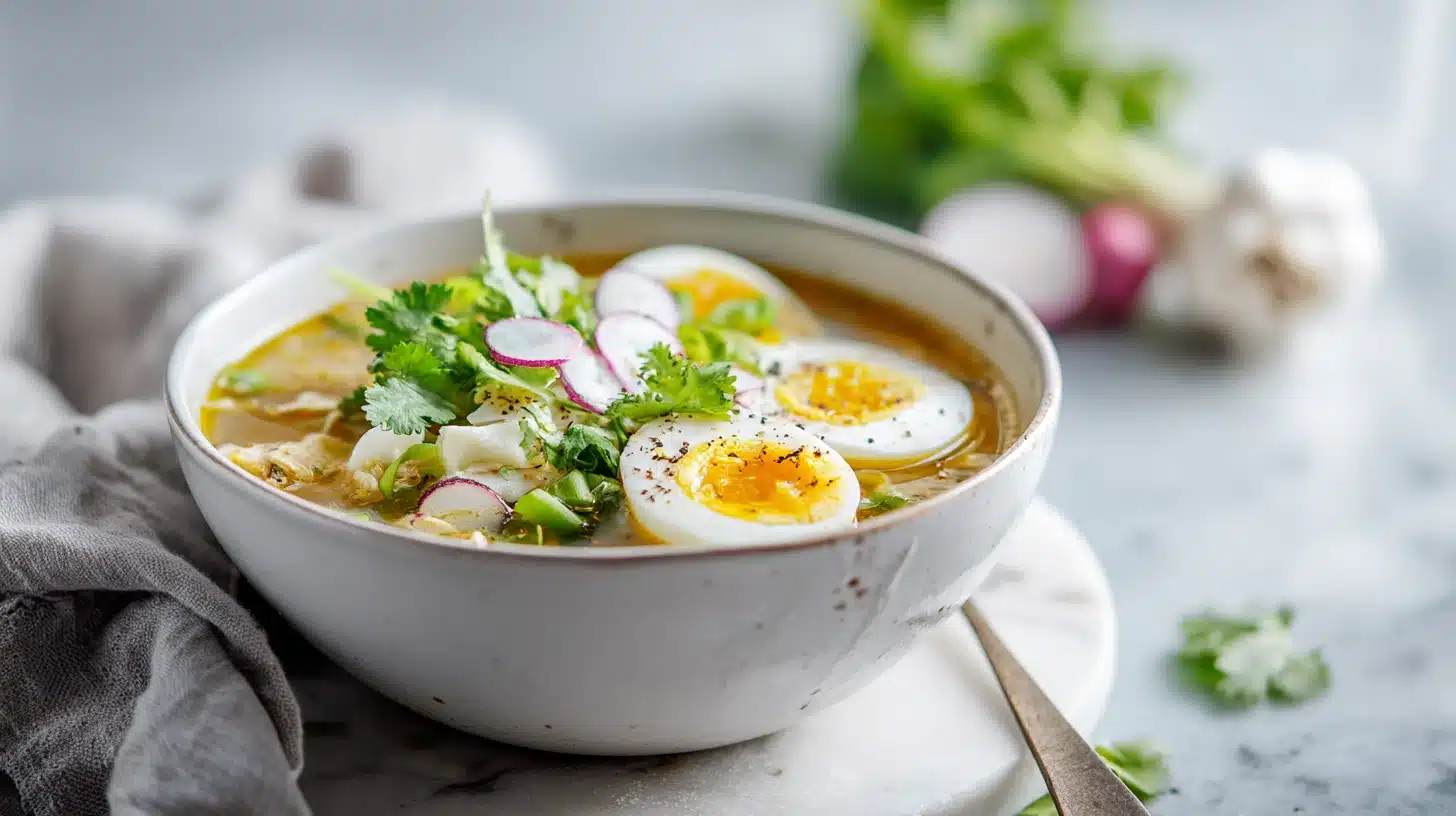
If your usual chicken soup leaves you with watery, flavorless broth and rubbery chicken that does nothing for your digestion, this recipe fixes both problems. The broth is rich and collagen-forward, and the chicken stays impossibly tender.
This guide covers why certain ingredients support gut health, how to build a nourishing broth in under an hour, and the one technique that keeps your chicken silky instead of stringy.
Table of Contents
Why This Gut Healing Chicken Soup Starts With the Right Broth
Most chicken soups fall flat because they start with store-bought stock stripped of the gelatin, minerals, and amino acids your gut needs. That thin, pale liquid might taste fine, but it does very little beyond hydrating you. The foundation of a truly restorative healing chicken soup is a broth that wobbles when cold, which tells you it’s loaded with collagen.
The Collagen Connection
Collagen breaks down during cooking into gelatin, and gelatin contains glutamine, an amino acid that plays a direct role in maintaining your intestinal lining. When your gut is under stress from processed foods, antibiotics, or chronic inflammation, glutamine is one of the first things your body reaches for to make repairs. A properly made broth gives your body a ready supply.
For this recipe, the base is a combination of high-quality chicken bone broth and raw chicken thighs. The thighs cook directly in the broth, adding more collagen and fat as they simmer. If you want to go deeper on the broth side, check out this chicken bone broth soup recipe for a longer, more concentrated version you can keep in your freezer.
Building Flavor Without Compromising Function
The aromatics here do double duty. Garlic is a prebiotic, which means it feeds the beneficial bacteria already living in your gut. Yellow onion contributes quercetin, a plant compound with anti-inflammatory properties. Fresh ginger brings warmth and a sharp, citrusy bite to the broth while also supporting digestive motility, which is a fancy way of saying it helps things move the way they should.
You will sauté the garlic, onion, and ginger in a small amount of olive oil before adding any liquid. This step takes about four minutes, and the smell that fills your kitchen—sweet and slightly sharp with a warm, gingery edge—is your cue that the aromatics are ready. Don’t rush this step. Softened, slightly golden aromatics mean a richer, more complex broth.
The broth comes together quickly once you add the liquid. Use four cups of high-quality chicken bone broth, which brings that pre-built collagen base, plus two cups of filtered water to balance the concentration. The finished broth should be golden and clear with a faint shimmer on the surface from the natural fats.
Print
Gut Healing Chicken Soup That Actually Works From the Inside Out
- Total Time: 45 min
- Yield: 8 servings 1x
- Diet: Gluten Free
Description
A simple, deeply nourishing chicken soup made with collagen-rich bone broth, anti-inflammatory turmeric and ginger, tender shredded chicken thighs, and fresh vegetables. It comes together in 45 minutes and is naturally gluten-free and dairy-free. The broth is golden, slightly silky, and genuinely good for your digestive system.
Ingredients
For the soup base:
2 tablespoons olive oil
1 medium yellow onion (diced)
4 cloves garlic (minced)
2 teaspoons fresh ginger (finely grated)
3 medium carrots (peeled and sliced into 1/4-inch coins)
3 stalks celery (sliced into 1/4-inch pieces)
For the broth and protein:
4 cups chicken bone broth (high-quality)
2 cups filtered water
1.5 lbs boneless skinless chicken thighs
1/2 teaspoon ground turmeric
1/4 teaspoon ground black pepper
1 teaspoon kosher salt (plus more to taste)
To finish:
3 cups fresh baby spinach
2 tablespoons fresh lemon juice (from about 1 lemon)
Fresh flat-leaf parsley (for garnish)
Drizzle of good olive oil (for serving)
Instructions
1. Warm 2 tablespoons of olive oil in a large heavy-bottomed pot over medium heat. Add the diced onion and sliced celery and cook for 4 minutes, stirring occasionally, until the onion is soft and translucent and the edges are just beginning to turn golden.
2. Add the minced garlic and grated ginger to the pot. Stir continuously for 60 seconds until fragrant and slightly deepened in color. You will smell a sharp, warm aroma that tells you the aromatics are ready.
3. Stir in the ground turmeric and black pepper and cook for 30 seconds, coating the aromatics in the spice so it blooms in the oil and turns a deep amber-gold color.
4. Add the sliced carrots, then pour in the chicken bone broth and filtered water. Stir to combine and scrape any golden bits from the bottom of the pot.
5. Nestle the raw chicken thighs into the broth in a single layer. Bring the liquid up to a gentle simmer over medium heat, where small lazy bubbles break the surface but the broth does not boil hard. Add 1 teaspoon kosher salt.
6. Simmer gently for 20 minutes, or until the chicken thighs reach 165 degrees Fahrenheit on an instant-read thermometer inserted into the thickest part. The broth will have deepened in color and the carrots will be fork-tender.
7. Remove the chicken thighs from the broth using tongs and place on a cutting board. Let rest for 2 minutes, then shred into uneven pieces using two forks. Return the shredded chicken to the pot.
8. Remove the pot from heat. Add the fresh spinach and lemon juice and stir gently. Cover and let sit for 2 minutes until the spinach has wilted to a bright, silky green. Taste and adjust salt as needed.
9. Ladle into bowls and garnish with fresh flat-leaf parsley and a drizzle of olive oil. Serve immediately with a lemon wedge on the side.
Notes
Store leftovers in an airtight container in the refrigerator for up to 4 days or in the freezer for up to 3 months. Reheat gently on the stovetop over medium-low heat, adding a splash of broth or water if needed. The broth will gel when cold, which is normal and a sign of good collagen content.
For a slow cooker version, add all ingredients except spinach and lemon juice and cook on low for 6 hours or high for 3 hours. Shred chicken in the pot, then stir in spinach and lemon juice off heat before serving.
To add probiotics, stir 1 tablespoon of white miso paste into a ladle of warm broth until dissolved, then stir into the pot after removing from heat. Do not add miso while the soup is boiling.
White rice, white rice noodles, or white beans can be added to make the soup more filling without disrupting gut comfort. Add cooked grains to individual bowls rather than the whole pot to keep the broth clean for storage.
- Prep Time: 15 min
- Cook Time: 30 min
- Category: Main Course, Soups
- Method: Stovetop
- Cuisine: American
Nutrition
- Serving Size: 1.5 cups
- Calories: 210 kcal
- Sugar: 4 g
- Sodium: 620 mg
- Fat: 9 g
- Saturated Fat: 2 g
- Unsaturated Fat: 7 g
- Trans Fat: 0 g
- Carbohydrates: 8 g
- Fiber: 2 g
- Protein: 24 g
- Cholesterol: 95 mg
The Anti-Inflammatory Ingredients That Make This Soup Special
The phrase “anti-inflammatory chicken soup” gets used loosely, but in this recipe it has a specific meaning. Every supporting ingredient was chosen because it either reduces inflammatory signaling in the body, supports a diverse gut microbiome, or supplies nutrients that your digestive system needs to repair and function well.
Here is what is doing the heavy lifting:
- Turmeric: Contains curcumin, which has been studied extensively for its ability to reduce markers of gut inflammation. Use at least half a teaspoon, and add a pinch of black pepper alongside it. Black pepper contains piperine, which increases curcumin absorption by up to 2,000 percent.
- Fresh ginger: Beyond flavor, gingerols and shogaols in ginger have demonstrated anti-nausea and anti-inflammatory effects in multiple studies. Two teaspoons of freshly grated ginger is the sweet spot here.
- Celery: A source of apigenin, a flavonoid that supports a healthy inflammatory response, and also contributes a clean, herby bitterness that rounds out the broth.
- Carrots: Supply beta-carotene, which converts to vitamin A in the body. Vitamin A plays a role in maintaining the mucosal lining of the gut.
- Spinach: Added at the very end so it barely wilts. It stays bright green, slightly silky, and contributes folate, magnesium, and iron without overcooking into a gray, bitter mess.
- Lemon juice: A finishing squeeze of fresh lemon brightens the entire pot and adds vitamin C, which supports immune function and helps your body absorb the iron from the spinach.
The combination of these ingredients is what makes this a genuine chicken soup for gut health rather than just a comforting bowl of soup. Each one earns its place with a specific function, and together they create something that tastes as nourishing as it actually is.
How to Cook the Chicken So It Stays Tender Every Single Time
Dry, stringy chicken in soup is almost always the result of one thing: cooking it too long at too high a temperature. Chicken breast is the biggest culprit because it has very little fat to protect it from heat. This recipe uses boneless, skinless chicken thighs, which have enough intramuscular fat to stay moist even with extended simmering, but the technique still matters.
The Gentle Simmer Method
Add the raw chicken thighs directly to the pot once your broth and vegetables are in. Bring everything up to a gentle simmer, not a rolling boil. You are looking for small, lazy bubbles breaking the surface, not a vigorous, churning boil. A hard boil toughens the proteins in the chicken rapidly and also makes your broth cloudy.
Simmer gently for 20 minutes. The chicken is done when it reads 165°F on an instant-read thermometer inserted into the thickest part of the thigh. Pull the thighs out of the broth using tongs and set them on a cutting board. Let them rest for just two minutes, then use two forks to shred them into generous, uneven pieces. Uneven shredding is intentional: the mix of smaller wisps and larger chunks means every spoonful has varying texture, and the smaller pieces absorb the broth beautifully.
Slide the shredded chicken back into the pot, stir in the spinach and lemon juice, and let everything rest off the heat for two minutes. The spinach will wilt into the broth from the residual heat, staying vivid green and tender rather than waterlogged. Taste the broth now. It should be savory, slightly earthy from the turmeric, warm from the ginger, with a clean brightness from the lemon. Adjust salt here, adding a quarter teaspoon at a time until the flavors snap into focus.
For another approach to slow-cooked, tender chicken soups, the chicken noodle soup in the crock pot uses a similar low-and-slow method that produces comparably silky results.
Serving, storing, and customizing your healing chicken soup
This gut healing soup is intentionally simple so that it works for a wide range of dietary needs and preferences. It is naturally gluten-free, dairy-free, and low in carbohydrates as written. Here is how to serve it, store it, and adapt it without losing what makes it so effective.
Serving suggestions
Ladle the soup into wide, shallow bowls that allow the steam to rise freely. The aroma that hits you first is that warm ginger and turmeric, earthy and slightly floral, followed by the deeper savory note of the chicken broth. Garnish with a small handful of fresh parsley, a thin slice of lemon on the rim, and a light drizzle of good olive oil over the surface. The oil creates a faint shimmer and adds another hit of healthy fat.
If you want to make this more substantial, add a scoop of cooked white rice to the bottom of each bowl before ladling the soup over it. White rice is easier on a sensitive gut than brown rice because the bran layer has already been removed. Cooked gluten-free pasta, zucchini noodles, or cauliflower rice are all solid options depending on your needs.
Storage and meal prep
This chicken soup keeps well in the refrigerator for up to four days in an airtight container. The broth will gel when cold because of the collagen content, which is a good sign, not a problem. It returns to a silky liquid as soon as it warms. Reheat gently on the stovetop over medium-low heat, adding a splash of water or extra broth if needed.
For freezing, cool the soup completely before portioning into freezer-safe containers. It freezes well for up to three months. Freeze without any rice or noodles added, since those become mushy after thawing. Thaw overnight in the refrigerator and reheat as above.
Customization ideas
| Add-In | Benefit | When to Add |
|---|---|---|
| Miso paste (1 tbsp) | Probiotics, umami depth | Stir in off heat |
| Zucchini noodles | Low-carb bulk | Last 3 minutes of simmering |
| Kale (chopped) | Iron, fiber | Last 5 minutes of simmering |
| White beans | Plant protein, fiber | Add with broth |
| Coconut milk (2 tbsp) | Creaminess, medium-chain fats | Stir in at the end |
One note on miso: do not add it while the soup is actively boiling, since high heat destroys the beneficial live cultures. Stir it into the pot after removing from heat, dissolving it in a small ladle of warm broth first so it incorporates evenly without clumping.
Frequently asked questions
Can I use chicken breast instead of chicken thighs?
You can, but monitor the cooking time carefully. Chicken breast loses moisture faster than thighs and can turn dry in as little as 15 minutes at a simmer. Pull it from the broth as soon as it reaches 165°F, shred immediately, and return it to the soup just before serving so it does not continue cooking in the hot liquid.
Does this soup actually help with gut health?
The ingredients in this soup, particularly the collagen-rich broth, glutamine from gelatin, prebiotic garlic and onion, and anti-inflammatory turmeric and ginger, are all supported by nutritional research as beneficial to gut function and the intestinal lining. This soup is not a medical treatment, but it is a genuinely nourishing option for supporting your digestive system as part of a balanced diet.
Can I make this in a slow cooker?
Yes. Add all the ingredients except the spinach and lemon juice to a slow cooker and cook on low for six hours or high for three hours. Shred the chicken directly in the pot using two forks, then stir in the spinach and lemon juice, cover, and let sit for five minutes before serving.
How do I make this soup more filling without disrupting the gut-healing benefits?
White rice, white rice noodles, or cooked white beans are the gentlest additions for a sensitive gut, since they are lower in insoluble fiber than whole grains. Miso paste stirred in off the heat adds depth and probiotics. A drizzle of good olive oil in each bowl also adds satisfying fat without compromising the soup’s function.
Conclusion
There is something quietly powerful about a bowl of gut healing chicken soup made with intention. It is not complicated or fussy, but every ingredient has a job, and together they produce a broth that is golden, slightly shimmery, warm with ginger and turmeric, and genuinely good for you from the inside out.
Give this a try on a Sunday afternoon when you have 45 minutes and want something that will carry you through the week in your fridge or freezer.
For more recipes like gut healing chicken soup, follow us on Facebook and Pinterest for nourishing soup and comfort meal ideas.