The first sip of watermelon lemonade I ever had was at a roadside farm stand in Georgia, poured from a mason jar so cold it fogged in the August heat. Nothing I had made at home came close, and for years I assumed the secret was some mystery ingredient.
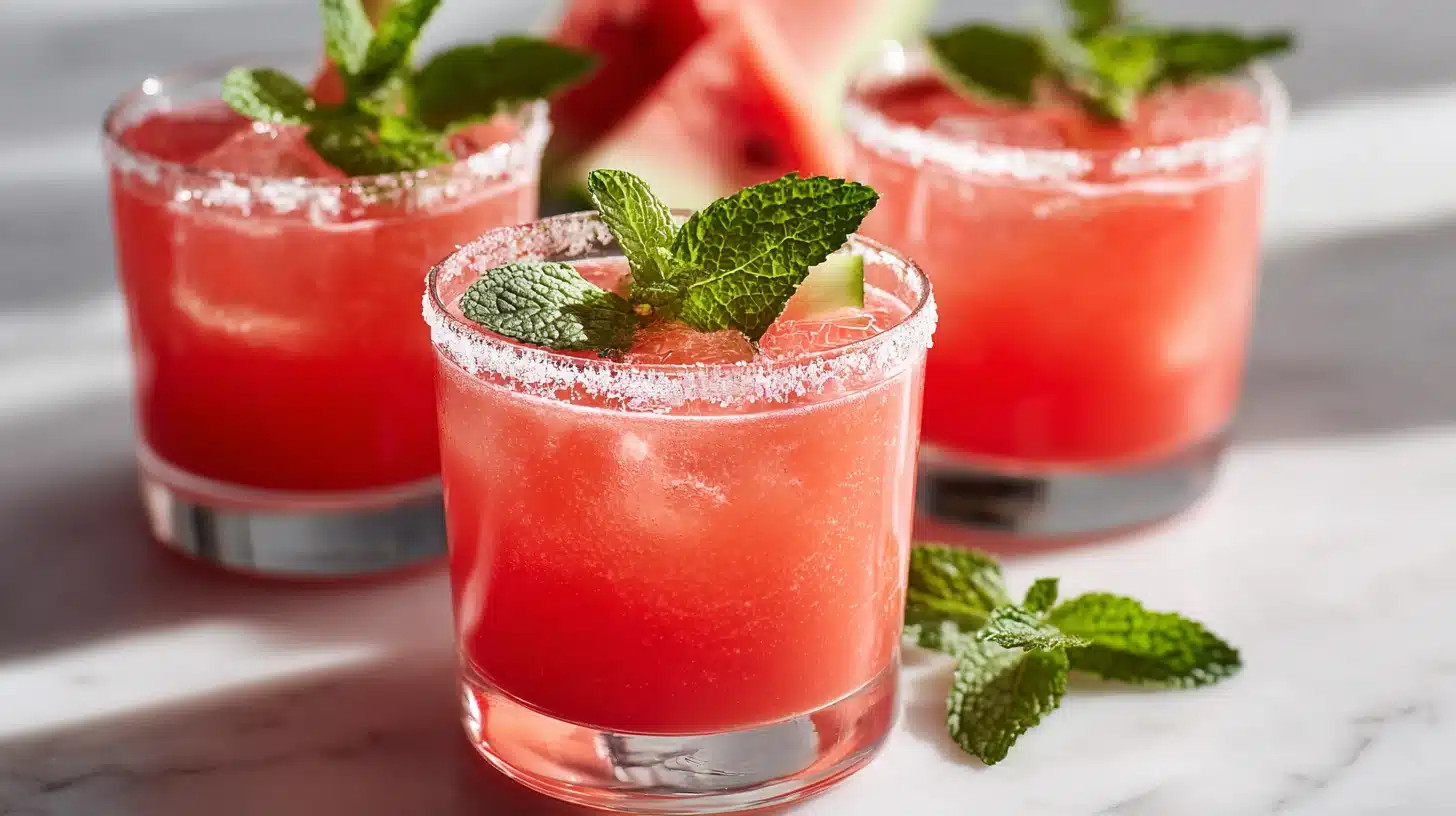
Most homemade versions turn out either too sweet, too thin, or so aggressively tart that your jaw aches. This recipe fixes that by balancing the natural sugars in fresh watermelon puree with bright lemon juice and a simple syrup you can control down to the last spoonful.
The trick is getting three things right: a ripe watermelon with actual flavor, freshly squeezed lemon juice instead of bottled, and a simple syrup that dissolves completely so nothing settles at the bottom of the glass.
Table of Contents
Why This Homemade Watermelon Lemonade Recipe Works
Getting a great homemade watermelon lemonade consistently comes down to understanding three things: the fruit, the acid, and the sweetener. Most recipes treat watermelon like it’s just flavored water, but that melon is doing serious structural work here. A ripe watermelon carries its own sweetness and a faint floral note that disappears completely if you use fruit that is past its prime or not yet ready.
Choosing the Right Watermelon
Look for a melon with a deep yellow field spot on the bottom, a matte (not glossy) rind, and a hollow thud when you tap it. The flesh should be a saturated coral-red with no white streaking near the center. That streaking means the sugar content is uneven, and your puree will taste flat. Cut the watermelon into rough cubes and remove as many seeds as you can before blending. Even one or two left in won’t ruin anything, since you’re straining the puree anyway, but fewer seeds means less bitterness sneaking in.
The Simple Syrup Question
Granulated sugar dissolved directly into cold liquid won’t incorporate evenly. That’s the main reason homemade watermelon lemonade tastes gritty or leaves a sugary sludge at the bottom of the pitcher. A quick simple syrup, made from equal parts sugar and water simmered for two minutes until completely clear, solves this in one step. Let it cool to room temperature before adding it to your drink, or it will dull the fresh, bright aroma of the watermelon.
If you prefer a lower-glycemic option, agave nectar dissolves cold without any cooking and has a slightly more neutral sweetness that lets the fruit lead. Start with two tablespoons, taste, and add more from there.
Freshly Squeezed Lemon Juice vs. Bottled
Fresh lemon juice is the difference between a drink that tastes alive and one that tastes like a mix. Freshly squeezed juice has volatile aromatic compounds that burn off quickly once the fruit is processed and bottled. For six servings, you’ll need roughly four medium lemons, which yields about half a cup of juice. Roll each lemon firmly on the counter before cutting, pressing down with your palm to break down the internal membranes. You’ll get noticeably more juice with half the effort.
If you love citrus-forward drinks, our peach lemonade uses the same technique with stone fruit for a slightly warmer, more honeyed flavor profile.
Print
Fresh Watermelon Lemonade That Tastes Like Summer in a Glass
- Total Time: 15 min
- Yield: 6 servings 1x
- Diet: Vegan
Description
A bright, smooth watermelon lemonade made with fresh watermelon juice, freshly squeezed lemon juice, and a quick simple syrup. It comes together in 15 minutes and is easy to adjust to your taste. Finish each glass with a coarse salt rim and fresh mint for the best results.
Ingredients
For the Simple Syrup:
1/2 cup granulated sugar
1/2 cup water
For the Watermelon Lemonade:
6 cups seedless watermelon cubes (roughly 2 pounds, cut into rough chunks)
1/2 cup fresh lemon juice (from about 4 medium lemons)
2 to 3 cups cold water (or chilled sparkling water)
1 cup ice cubes per glass
For Serving:
4 to 5 fresh mint sprigs
2 tablespoons coarse salt (for the rim)
1 tablespoon fresh lemon juice (for wetting the glass rim)
Lemon slices (for garnish, optional)
Instructions
1. Make the simple syrup. Combine 1/2 cup granulated sugar and 1/2 cup water in a small saucepan over medium heat. Stir until the sugar fully dissolves and the liquid is completely clear, about 2 minutes. Remove from heat and set aside to cool to room temperature.
2. Blend the watermelon. Add the watermelon cubes to a blender in batches if needed and blend on high for 30 to 45 seconds until completely smooth. The mixture will turn a vivid magenta and smell intensely sweet and fresh.
3. Strain the puree. Set a fine mesh strainer over a large pitcher. Pour the blended watermelon through the strainer, pressing gently with the back of a spoon to extract all the juice. Discard the pulp. You should have about 2 to 2 1/2 cups of clear juice.
4. Combine the lemonade. Add the fresh lemon juice and cooled simple syrup to the pitcher with the watermelon juice. Stir well to combine. Add 2 cups of cold water, taste, and adjust with more water, lemon juice, or simple syrup as needed.
5. Prepare the salt rim. Pour coarse salt onto a shallow plate. Run a cut lemon around the outer rim of each glass to moisten it, then press the rim into the salt and twist gently to coat.
6. Add ice and mint. Fill each salt-rimmed glass with ice cubes. Pour the lemonade over the top. Tuck a fresh mint sprig against the side of each glass and add a lemon slice if desired.
7. Taste and serve. Give the pitcher a final stir before pouring each serving, as the watermelon juice will begin to settle. Serve immediately for the freshest flavor.
Notes
Store leftover lemonade in a sealed pitcher in the refrigerator for up to 3 days. Stir or shake well before each serving as the juice will naturally settle. Do not freeze the finished drink.
To make a sparkling version, replace the still water with chilled sparkling water added right before serving to preserve the carbonation.
For a watermelon mint version, muddle 6 to 8 fresh mint leaves in the bottom of the pitcher before adding the liquids, then strain out the leaves when pouring.
Agave nectar can replace the granulated sugar. Use 2 to 3 tablespoons dissolved directly into the cold juice without any cooking. Start with less and taste as you go.
- Prep Time: 10 min
- Cook Time: 5 min
- Category: Drink
- Method: No-Cook, Stovetop
- Cuisine: American
Nutrition
- Serving Size: 1 cup
- Calories: 85 kcal
- Sugar: 18 g
- Sodium: 320 mg
- Fat: 0 g
- Saturated Fat: 0 g
- Unsaturated Fat: 0 g
- Trans Fat: 0 g
- Carbohydrates: 22 g
- Fiber: 0 g
- Protein: 1 g
- Cholesterol: 0 mg
Ingredients and Equipment You Will Need
Keeping this recipe simple means fewer items cluttering your counter and a drink that’s ready in about fifteen minutes flat. Here’s exactly what goes into six generous servings of fresh watermelon lemonade.
The Ingredient List
- 6 cups seedless watermelon cubes (roughly half a small melon, about 2 pounds)
- 1/2 cup fresh lemon juice (from 4 medium lemons)
- 1/2 cup granulated sugar (or 3 tablespoons agave nectar)
- 1/2 cup water (for the simple syrup)
- 2 to 3 cups cold water or sparkling water (to adjust consistency)
- 1 cup ice cubes per glass
- 4 to 5 fresh mint sprigs (for garnish)
- 2 tablespoons coarse salt (for the rim, optional)
- 1 tablespoon extra lemon juice (for wetting the rim)
Equipment
- High-powered blender
- Fine mesh strainer or nut milk bag
- Medium saucepan (for the simple syrup)
- Large pitcher (at least 64 ounces)
- Citrus juicer or reamer
- Shallow plate or small dish (for the salt rim)
The fine mesh strainer is non-negotiable if you want that clear, smooth texture. Without it, watermelon lemonade has a slightly foamy, fibrous quality that’s pleasant enough but doesn’t look as polished in a glass. For a totally rustic backyard version, skip the straining. For a pitcher you’d set out at a party, take the extra two minutes to strain it.
You can absolutely make this into sparkling watermelon lemonade by substituting the plain cold water with chilled sparkling water. Add the sparkling water just before serving so you preserve every bubble. This is the version I bring to summer cookouts, and it disappears before anything else on the table.
For more recipes that work this well in the summer heat, browse our roundup of easy summer meals 25 bold fast recipes ready in 35 minutes or less.
Step-by-Step Instructions for the Best Watermelon Lemonade
Follow these steps in order and your watermelon lemonade will be smooth, balanced, and perfectly chilled every single time.
Step 1: Make the Simple Syrup First
Combine 1/2 cup granulated sugar and 1/2 cup water in a small saucepan over medium heat. Stir until the sugar fully dissolves, about 2 minutes. You’ll know it’s ready when the liquid turns completely clear with no white graininess visible at the bottom. Remove from heat and set aside to cool while you prep everything else. A hot syrup added to fresh fruit juice cooks the aromatic compounds right out and leaves you with a flat, cooked-fruit taste.
Step 2: Blend the Watermelon
Add your watermelon cubes to the blender in two batches if needed. Blend on high for 30 to 45 seconds until completely smooth. The color shifts from chunky red to vivid magenta, and the smell, even through the sealed blender lid, is extraordinary. All that sweet, grassy summer fragrance means your base is working.
Step 3: Strain the Puree
Pour the blended watermelon through a fine mesh strainer set over your pitcher, pressing gently with the back of a spoon to push the liquid through. Discard the pulp left behind or add it to a smoothie later. You should end up with roughly 2 to 2.5 cups of clear, jewel-toned watermelon juice.
Step 4: Combine and Taste
Add the fresh lemon juice and cooled simple syrup to the pitcher with the watermelon juice. Stir well. Add 2 cups of cold water to start, taste, and adjust. If it needs more tartness, add another tablespoon of lemon juice. If it needs more sweetness, stir in another teaspoon of simple syrup. If it feels too concentrated, add the third cup of water. This tasting step is where you make the recipe yours.
Step 5: Prepare the Salt Rim (Optional but Recommended)
Pour coarse salt onto a shallow plate. Run a lemon wedge around the outer rim of each glass to moisten it, then press the rim down into the salt and twist gently. The salt isn’t just decorative. It suppresses bitterness and heightens the perception of sweetness, the same principle behind salting caramel or the rim of a margarita. Once you try this watermelon lemonade with a salt rim, the version without will taste noticeably flat.
Step 6: Serve Over Ice
Fill each salt-rimmed glass with ice, pour the lemonade over the top, and tuck a sprig of fresh mint against the side of the glass. The mint releases its fragrance as the glass sits, adding an herbal top note that makes the drink smell as good as it tastes.
If you enjoy exploring creative lemonade flavors, the matcha lemonade on Forkful Daily uses a similar balancing technique with earthy green tea and bright citrus.
Variations, Tips, and Storage
Once you have the base watermelon lemonade down, there are a dozen easy directions you can take it. Here are the ones worth knowing about.
Make It a Watermelon Mint Lemonade
Muddle 6 to 8 fresh mint leaves in the bottom of the pitcher before adding your liquids. Press firmly with the back of a spoon until the leaves turn dark and the liquid around them smells intensely herbal. Strain out the muddled leaves when you pour into glasses and garnish with fresh sprigs. The mint adds a cooling quality that makes the drink feel even more refreshing on a hot day. This is the version I make when the temperature hits 90 degrees and the basil is overtaking my herb box.
Make It Sparkling
Swap the still water for an equal amount of chilled sparkling water, added at the very end. The carbonation lifts all the flavors and gives you a livelier, more celebratory feel. Serve immediately after adding the sparkling water, as the bubbles fade quickly once they hit the still lemonade base.
Make It a Cocktail
Add 1.5 ounces of vodka, white rum, or tequila per glass. Pour the spirit over the ice before adding the lemonade so it distributes evenly. A tajin rim works beautifully here instead of plain coarse salt.
Storage Tips
- Store leftover watermelon lemonade in a sealed pitcher or mason jar in the refrigerator for up to 3 days.
- Shake or stir well before each serving, since the watermelon juice will settle to the bottom naturally over time.
- Don’t freeze the finished drink, as the lemon juice becomes oddly bitter after thawing.
- You can freeze the strained watermelon juice separately for up to 1 month. Thaw overnight in the refrigerator, then add fresh lemon juice and simple syrup when ready to serve.
- Simple syrup keeps in a sealed jar in the refrigerator for up to 4 weeks, so make a double batch and use it for iced tea, cocktails, or homemade sodas all season.
The watermelon juice base also pairs beautifully with other summer fruit. A handful of fresh or frozen strawberries blended in with the watermelon gives you a deeper berry note and a color that borders on neon. If you love pairing watermelon with bright, savory flavors, our feta cucumber watermelon salad uses the same fruit in a completely different but equally satisfying way.
Frequently Asked Questions
How can I make watermelon mint lemonade?
Muddle 6 to 8 fresh mint leaves in the bottom of your pitcher until they release their oils and darken in color. Add the watermelon juice, lemon juice, and simple syrup on top, then stir well and strain out the mint before pouring into ice-filled glasses. Garnish each glass with a fresh mint sprig for aroma and presentation.
Can I use bottled lemon juice instead of fresh?
You can in a pinch, but the flavor difference is real and noticeable. Bottled lemon juice is more acidic, slightly bitter, and lacks the bright floral fragrance of freshly squeezed juice. If you use bottled, start with less than the recipe calls for, taste as you go, and add a small strip of fresh lemon zest to the pitcher to reintroduce some of those aromatic oils.
Why did my watermelon lemonade separate after sitting?
Watermelon juice is mostly water with suspended solids, and those solids sink over time as the liquid settles. This is completely normal and doesn’t mean anything went wrong. Simply give the pitcher a good stir or a gentle shake before pouring each serving. If you strained the puree well and used a dissolved simple syrup rather than granulated sugar, the separation will be minimal and recombine easily.
Can I make this lemonade ahead of time?
Yes, and it’s actually a great make-ahead drink. Prepare the watermelon juice base and simple syrup up to 24 hours in advance and store them separately in the refrigerator. Combine everything about 30 minutes before serving, taste and adjust, and add ice right before your guests arrive. If you’re using sparkling water, stir it in at the very last minute to preserve the carbonation.
Conclusion
There’s something genuinely special about a drink as straightforward as watermelon lemonade done exactly right. The balance of sweet fruit, bright acid, and that unexpected coarse salt rim turns a simple pitcher of juice into something people actually talk about.
Give this a try the next time you have half a watermelon sitting on the counter and a bag of lemons in the fridge. It comes together in fifteen minutes and keeps beautifully in the refrigerator for days.
For more recipes like watermelon lemonade, follow us on Facebook and Pinterest for fresh summer drink ideas and easy seasonal recipes all year long.