My grandmother kept a small dish of salted pepitas on her nightstand every single night, and I used to think it was just a quirky habit until I started struggling with sleep myself and remembered her ritual.
That memory sent me down a rabbit hole of research, and it turns out this pumpkin seed sleep snack is one of the most scientifically supported bedtime bites you can reach for. No gummy texture to fight, no stale cracker situation, just a simple combination that comes together in minutes and actually does something useful for your body.
Inside: why pumpkin seeds work for nighttime nutrition, the exact ratio that tastes best, and three easy flavor variations to keep things interesting all week.
Table of Contents
Why Pumpkin Seeds Are a Sleep Superfood
You probably already know that magnesium is linked to better sleep. What surprises most people is just how rich pumpkin seeds are in that mineral. A single one-ounce serving of hulled pumpkin seeds, also called pepitas, delivers roughly 150 milligrams of magnesium. That’s about 35 percent of the daily recommended intake for adults in one small handful.
Magnesium helps regulate the nervous system by supporting GABA, a neurotransmitter that quiets the brain. When your magnesium levels are low, which is incredibly common in adults who eat a processed diet, your brain has a harder time switching off at night. You lay there with a busy mind, not because you are stressed, but because your body is literally missing a key relaxation mineral.
The Tryptophan Connection
Here’s where the pumpkin seed sleep snack story gets even more interesting. Pumpkin seeds are one of the best plant-based sources of tryptophan, the amino acid your body converts into serotonin and then into melatonin. Yes, that melatonin, the hormone that tells your body it’s time to sleep.
The catch is that tryptophan needs a small amount of carbohydrate to cross the blood-brain barrier efficiently. Eating tryptophan-rich foods on their own isn’t as effective as pairing them with a light carbohydrate source. This is exactly why the recipe below combines pumpkin seeds with a small amount of honey drizzled over a base of plain yogurt or a thin rice cake. The carbohydrate opens the door, so to speak, and the tryptophan can get where it needs to go.
Zinc for Melatonin Synthesis
Pumpkin seeds are also a meaningful source of zinc, with around 2 milligrams per ounce. Zinc is a cofactor in the enzymatic process that converts tryptophan to serotonin to melatonin. So eating pumpkin seeds before bed gives your body magnesium for nervous system calm, tryptophan for melatonin production, and zinc to help that production process run smoothly. It’s a tightly coordinated nutritional package in a small, crunchy seed.
If you’re curious about other ways seeds can support your health goals, the bariatric seed trick is another fascinating read that looks at how seeds interact with digestion and satiety.
The takeaway here is that reaching for a magnesium-rich bedtime snack like this one isn’t just wellness folklore. There’s a clear, logical chain from what you eat at 9 pm to how easily your brain winds down by 10:30.
Print
The Pumpkin Seed Sleep Snack That Actually Helps You Wind Down
- Total Time: 5 min
- Yield: 1 serving 1x
- Diet: Vegetarian
Description
A no-cook bedtime snack that pairs hulled pumpkin seeds with plain Greek yogurt and a drizzle of raw honey. The seeds provide magnesium, tryptophan, and zinc to support natural melatonin production, and the whole thing comes together in under a minute.
Ingredients
For the base (choose one):
1/3 cup plain whole-milk Greek yogurt (or 1 plain rice cake for a dairy-free option)
For the topping:
2 tablespoons raw or dry-roasted hulled pumpkin seeds (pepitas)
1/2 teaspoon raw honey
1 pinch ground cinnamon (optional)
Optional add-ins:
1 tablespoon unsweetened tart cherry juice (stir into yogurt)
1/4 medium banana (sliced, for the rice cake version)
Instructions
1. Choose your base: spoon the Greek yogurt into a small bowl, or place the rice cake on a small plate.
2. Scatter the 2 tablespoons of pumpkin seeds evenly over the yogurt or rice cake so every bite gets some crunch.
3. Drizzle the raw honey in a thin zigzag pattern directly over the seeds, letting it pool slightly in the gaps between them.
4. If using cinnamon, pinch a small amount between your fingers and dust it lightly over the top.
5. For the tart cherry variation, stir 1 tablespoon of unsweetened tart cherry juice into the yogurt before adding the seeds.
6. Eat the snack 30 to 60 minutes before your planned sleep time for best results.
Notes
This snack is best made fresh and eaten right away. Pumpkin seeds stored in an airtight container in a cool, dry pantry stay fresh for up to 3 months.
To prep ahead for the week, measure 2 tablespoons of pumpkin seeds into 7 small containers and keep them in the pantry next to your honey for fast nightly assembly.
Use plain, unsweetened coconut yogurt or almond yogurt for a dairy-free version. The sleep-supporting nutrients come from the seeds, so any base works.
Raw honey crystallizes over time. If it thickens, set the jar in a bowl of warm water for a few minutes to loosen it before drizzling. Do not microwave.
- Prep Time: 5 min
- Cook Time: 0 min
- Category: Side Dishes, Snack
- Method: No-Cook
- Cuisine: American
Nutrition
- Serving Size: 1 bowl
- Calories: 175 kcal
- Sugar: 6 g
- Sodium: 55 mg
- Fat: 8 g
- Saturated Fat: 2 g
- Unsaturated Fat: 6 g
- Trans Fat: 0 g
- Carbohydrates: 14 g
- Fiber: 1 g
- Protein: 11 g
- Cholesterol: 8 mg
How to Build the Perfect Pumpkin Seed Sleep Snack
The beauty of this recipe is that it requires zero cooking and zero equipment beyond a small bowl and a spoon. But the ratios and the pairing choices matter more than you might expect.
The Base Options
You have two great starting points:
- Plain whole-milk Greek yogurt (1/3 cup): The protein slows digestion and keeps blood sugar stable through the night. The mild tang pairs beautifully with the nutty crunch of the seeds. Go for whole milk rather than fat-free because the fat helps with fat-soluble nutrient absorption and keeps you feeling satisfied without being heavy.
- One plain rice cake: This is the lighter option, and it works particularly well if dairy bothers you in the evening. The simple carbohydrate is gentle on the stomach and provides just enough of a carb boost to support tryptophan absorption.
The Seed Layer
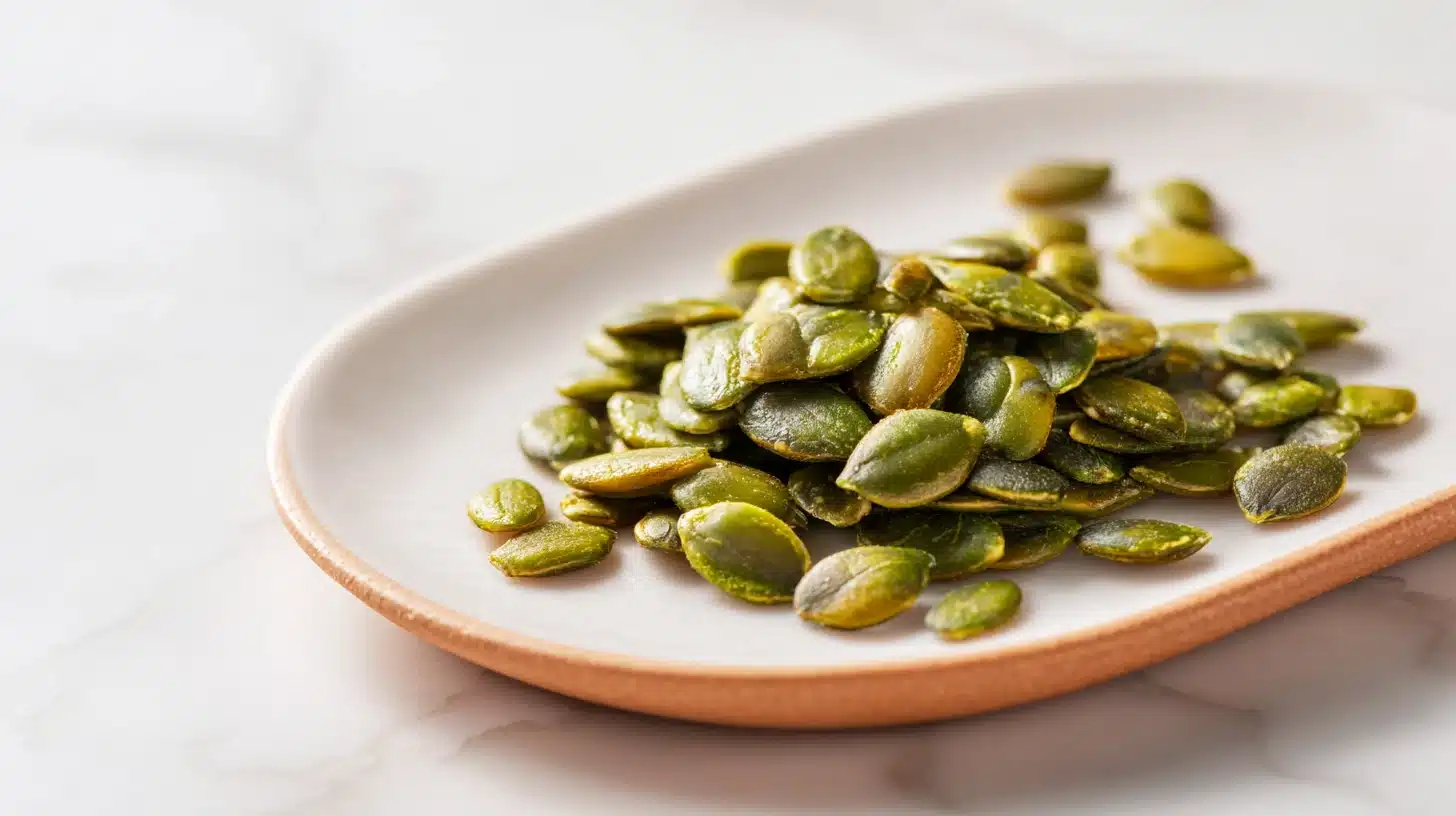
Use 2 tablespoons of raw or dry-roasted hulled pumpkin seeds (pepitas). Raw seeds have a slightly grassy, mild flavor. Dry-roasted seeds are nuttier and more savory, with a satisfying crunch that sounds like a very quiet pop when you bite into them. Both work. Avoid seeds roasted in oil with heavy salt if you’re sensitive to sodium at night, though a light salt is fine and actually enhances the sweet-savory contrast.
Two tablespoons is the sweet spot. More than that and the calorie load tips past what’s ideal for a bedtime snack. Less and you’re not getting a meaningful dose of magnesium and tryptophan.
The Sweetener
A 1/2 teaspoon of raw honey does several things at once. It provides the small carbohydrate hit needed for tryptophan transport, it adds a floral sweetness that makes this feel like a treat rather than a supplement, and raw honey contains trace amounts of melatonin itself. It’s a tiny drizzle, barely a teaspoon, but it transforms the flavor profile completely.
Three Flavor Variations
Once you have the base down, these three variations keep the pumpkin seed evening snack feeling fresh:
- Cinnamon Vanilla: Stir a pinch of cinnamon and a drop of pure vanilla extract into your yogurt before topping with seeds. Cinnamon adds warmth and has mild blood-sugar-stabilizing properties.
- Tart Cherry: Add a tablespoon of unsweetened tart cherry juice to the yogurt. Tart cherries are one of the few foods with naturally occurring melatonin, making this the most sleep-forward variation.
- Banana and Seeds: Skip the yogurt, spread a tablespoon of almond butter on the rice cake, top with sliced banana and the pumpkin seeds. Banana adds potassium and a natural sweetness, and the almond butter brings extra magnesium into the mix.
Timing, Portions, and the Science of Eating Before Bed
One of the most common questions about eating pumpkin seeds before bed is simply: when, exactly? The research on nutrient absorption and sleep hormone production points to a window of 30 to 60 minutes before you plan to sleep. Eat too early and the tryptophan-to-melatonin conversion has already peaked and started to taper by the time you need it. Eat too late and your digestive system is working hard when it should be quieting down.
The portion size here, roughly 150 to 200 calories depending on your base choice, sits in the ideal range for a bedtime snack. It’s substantial enough to prevent middle-of-the-night hunger waking but light enough not to spike your blood sugar or cause discomfort when you lie down.
What to Avoid Pairing With It
Some foods actively interfere with sleep when eaten close to bedtime. Keep your pumpkin seed sleep snack away from:
- Caffeine (obviously, but chocolate counts here too)
- High-sugar foods that cause a rapid blood sugar rise and crash
- Spicy or acidic foods that can trigger reflux when you’re horizontal
- Alcohol, which fragments sleep architecture even if it feels sedating initially
The simple combination in this recipe avoids all of those pitfalls. It’s savory-sweet, low in added sugar, free from stimulants, and gentle on the digestive system.
Does It Actually Work?
The honest answer is: for most people, yes, with consistent use. Sleep nutrition isn’t a one-night fix. The magnesium-rich bedtime snack approach works best when it becomes part of a regular wind-down routine. Think of it like building a habit signal for your body. Over time, the act of preparing this small snack becomes part of the cue-routine-reward loop that primes your nervous system for rest.
Several small studies on magnesium supplementation and tryptophan intake have shown improvements in sleep onset time and sleep quality over two to four weeks. Food sources are gentler than supplements and come packaged with cofactors that improve absorption, which is another reason to reach for seeds rather than a pill bottle.
If you enjoy building snack boards and small bites as part of your evening routine, the roasted grape ricotta phyllo cups are a lovely option for entertaining, though they’re a bit more indulgent than a true sleep snack.
Storage, Prep, and Making This a Weekly Habit
One of the best things about this recipe is that there’s genuinely nothing to prep in the traditional sense. No chopping, no cooking, no cooling time. But there are a few strategies that make it even easier to reach for on a tired Tuesday night.
Portioning Ahead
Measure out seven single-serving portions of pumpkin seeds (two tablespoons each) into small snack-size containers or zip-lock bags at the start of the week. Label them “bedtime” if you share a kitchen and want to keep them distinct from your snacking stash. This removes the friction of measuring when you’re already half-asleep and not inclined to open three different containers.
Keep the containers in the front of your pantry, right next to the honey. When the seeds and the sweetener are in the same visual zone, the assembly takes about 45 seconds.
Choosing the Right Seeds
Look for hulled pumpkin seeds labeled “pepitas” at the grocery store. They’re typically found in the bulk bins, the snack aisle, or the baking section. For this recipe, you want:
- Raw pepitas if you prefer a milder, slightly chewy texture and the most neutral flavor
- Dry-roasted pepitas if you want maximum crunch and a toasty, nutty depth
- Lightly salted dry-roasted pepitas if you like a more snack-forward flavor that plays well against the honey
Avoid seeds that list multiple oils, artificial flavors, or coatings in the ingredients. The simpler the ingredient list, the better this pumpkin seed sleep snack will taste and perform nutritionally.
Keeping Greek Yogurt Fresh
If Greek yogurt is your base of choice, buy individual single-serve containers (around 5.3 oz each) rather than a large tub. This prevents the large tub from lingering open in the fridge, picking up odors, and developing a watery whey layer on top that you then have to stir back in at 10 pm. The individual containers are portioned, sealed, and grab-and-go ready.
A Note on Honey Storage
Raw honey crystallizes over time, especially if stored in a cool pantry. If your honey has gone thick and grainy, place the jar in a bowl of warm water for a few minutes and it will loosen right back up. Don’t microwave honey, as high heat degrades some of its beneficial enzymes. The warm water bath method is slower but preserves the flavor and the trace nutrients you want intact.
For anyone who loves the autumnal side of pumpkin flavor and wants to extend that theme into other baked goods, the sourdough pumpkin cinnamon rolls are a weekend project worth bookmarking.
Making It a Real Ritual
The sleep science community talks a lot about sleep hygiene, meaning the habits and environment conditions that support consistent, quality sleep. Adding a pumpkin seed evening snack to your wind-down routine gives your body a behavioral cue, not just a nutritional one. Pair it with dimming the lights, putting your phone on the charger across the room, and brewing a caffeine-free herbal tea. The snack becomes an anchor point in a broader sequence that trains your brain to recognize bedtime is approaching.
Frequently Asked Questions
Can I eat this pumpkin seed sleep snack every night?
Yes, this snack is designed to be eaten nightly as part of a regular routine. Two tablespoons of pumpkin seeds is well within reasonable daily seed intake, and the other ingredients (yogurt, honey, or a rice cake) are all gentle enough for daily use. Consistency is actually the point, since the sleep benefits of magnesium and tryptophan accumulate with regular intake over days and weeks rather than from a single serving.
Are raw or roasted pumpkin seeds better for sleep?
Both raw and dry-roasted pumpkin seeds contain comparable levels of magnesium, tryptophan, and zinc, so either choice supports sleep. The main difference is flavor and texture. Raw seeds are milder and slightly chewy, while dry-roasted seeds are crunchier and nuttier. Choose whichever you enjoy more, since you’re more likely to stick with a nightly habit if the snack genuinely tastes good to you.
What if I am dairy-free? Can I still make this snack?
Absolutely. The rice cake base is naturally dairy-free, and you can swap the Greek yogurt for a plain, unsweetened coconut yogurt or almond-based yogurt. Look for options with minimal added sugar and a short ingredient list. The tryptophan and magnesium content of the seeds remains the same regardless of the base you choose, so the sleep-supporting core of the recipe is fully intact with a dairy-free swap.
How soon before bed should I eat this snack?
The ideal window is 30 to 60 minutes before you plan to sleep. This timing allows the tryptophan in the pumpkin seeds to begin its conversion pathway to serotonin and melatonin while also giving your digestive system enough time to process the small amount of food comfortably. Eating it right as you get into bed is a bit too late to get the full nutritional benefit, and eating it two or more hours before bed means the effect may have already tapered by the time you’re trying to fall asleep.
Conclusion
Sometimes the simplest rituals are the most effective ones. A small bowl, a handful of seeds, a drizzle of honey, and a few quiet minutes before bed. That’s really all this pumpkin seed sleep snack asks of you. The science is solid, the prep is nonexistent, and the flavors are genuinely satisfying rather than medicinal. This isn’t about forcing yourself to eat something virtuous. It’s about giving your body the specific nutrients it needs to do what it already wants to do: rest.
Give it a try this week for five nights in a row and pay attention to how you feel by night three or four.
For more recipes like the pumpkin seed sleep snack, follow us on Facebook and Pinterest for calming bedtime snack ideas and wholesome evening recipes.