The Joanna Gaines peach cobbler is one of those recipes you make once and immediately understand why it became a Southern legend. It smells like a childhood summer and tastes like someone’s grandmother made it just for you.
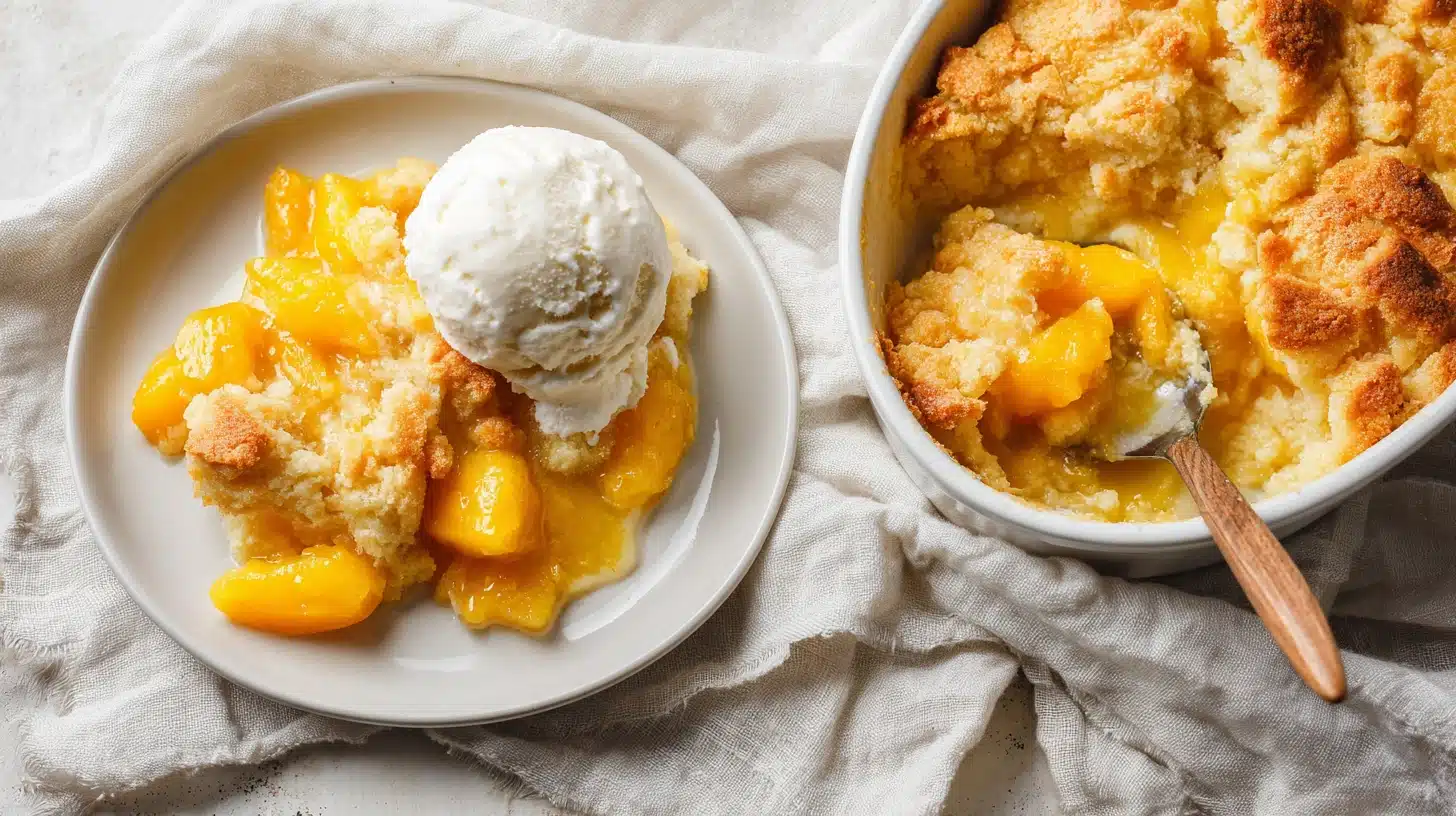
Most homemade cobblers end up with a soggy, undercooked bottom or a dry, biscuit-like top that crumbles apart before it reaches the bowl. This recipe solves both problems with one technique: the melted butter method.
You’ll understand the reverse layering trick, how to handle fresh versus frozen peaches, and the ratio that guarantees a golden, self-saucing cobbler every single time.
Table of Contents
What Makes This Cobbler Different From Every Other Recipe
The Magnolia Table Approach to a Southern Classic
If you’ve flipped through Joanna Gaines’ Magnolia Table cookbook, you know her food philosophy: simple, honest, generous. Her peach cobbler lives that out. No shortcuts that compromise flavor. No fussy techniques requiring culinary school. What there is: a method that seems completely counterintuitive the first time you read it, and completely obvious the moment you taste it.
Most cobbler recipes have you make a batter, pour it over fruit, and hope. The Joanna Gaines peach cobbler does something different. You pour melted butter directly into the baking dish first, then ladle the batter on top without stirring. Then the peaches go on top of the batter, again without stirring. You don’t mix the layers. You trust the oven.
What happens inside the dish at 350°F is baking magic. The butter migrates upward through the batter as it heats, creating a shatteringly crisp, golden-brown top crust while the batter beneath turns soft and slightly custardy. The peach juices sink down through that batter layer and form a glossy, sweet sauce at the base. You end up with three distinct textures in a single spoonful: crispy top, pillowy middle, and jammy fruit sauce at the bottom.
Why the Ratio Matters So Much
The batter for this cobbler is a simple pourable dough: one cup each of all-purpose flour, granulated sugar, and whole milk, plus one tablespoon of baking powder and a pinch of salt. That balance is deliberate. Too much flour and the batter turns dense and bready. Too little sugar and the crust never achieves that deep amber caramelization. The 1:1:1 ratio of flour, sugar, and milk creates a batter thin enough to allow the butter to rise through it freely, which is the entire mechanical secret behind the self-saucing cobbler effect.
The butter quantity matters equally. Joanna’s recipe calls for half a cup (one stick) of unsalted butter, melted and poured directly into the pan before anything else. That butter pool is the medium through which the whole layering chemistry happens. Cut it down to save calories and you lose the crispy top. Increase it hoping for more richness and the batter gets greasy and struggles to set. Stick to the half cup and trust the process.
A small optional addition that nudges the whole dessert from good to deeply comforting: a half teaspoon of ground cinnamon folded into the batter. It’s not in every version, but the warmth it adds against fresh peaches is worth noting.
Print
Joanna Gaines Peach Cobbler: The Magnolia Table Recipe That Never Fails
- Total Time: 60 min
- Yield: 6 servings 1x
- Diet: Vegetarian
Description
A simple Southern peach cobbler made with fresh or frozen peaches and a reverse-layering method that produces a crispy golden crust, soft custardy batter, and a glossy peach sauce at the base. The melted butter goes in first, then the batter, then the peaches on top without stirring. The oven does the rest.
Ingredients
For the peach layer:
4 cups fresh or frozen peaches (peeled, pitted, sliced to 1/2 inch)
1/4 cup granulated sugar (to macerate peaches)
For the batter:
3/4 cup granulated sugar
1 cup all-purpose flour
1 cup whole milk (room temperature)
1 tablespoon baking powder
1/4 teaspoon fine salt
1/2 teaspoon ground cinnamon (optional)
For the base:
1/2 cup unsalted butter (1 stick, melted)
Instructions
1. Preheat your oven to 350 degrees Fahrenheit. Combine the sliced peaches and 1/4 cup granulated sugar in a bowl, toss well, and let them macerate for 15 minutes. The peaches will release their juices and turn glossy.
2. Place the stick of unsalted butter in a 9×13-inch baking dish and slide it into the preheating oven for about 5 minutes until fully melted and just starting to foam at the edges. Remove the dish carefully.
3. In a medium bowl, whisk together the flour, 3/4 cup sugar, baking powder, salt, and cinnamon until combined. Pour in the milk and whisk until a smooth, thin batter forms with no dry streaks.
4. Pour the batter directly over the melted butter in the hot baking dish. Do not stir. The butter will creep up around the edges of the batter immediately.
5. Scatter the macerated peach slices evenly over the top of the batter in a single layer. Pour any accumulated peach juice from the bowl over the peaches. Do not stir or mix the layers together.
6. Bake at 350 degrees Fahrenheit for 40 to 45 minutes until the top is deeply golden-brown, puffed up around the peach slices, and the center does not jiggle when you gently shake the pan. The edges will be caramelized and the kitchen will smell like warm peach jam.
7. Remove from the oven and let the cobbler rest for at least 10 minutes before serving. This allows the glossy peach sauce at the base to settle and thicken slightly.
8. Serve warm, scooped into bowls, with vanilla ice cream or lightly sweetened whipped cream alongside.
Notes
Store covered in the refrigerator for up to 4 days. Reheat individual portions in the microwave at 50 percent power for 60 to 90 seconds, or reheat the full pan covered with foil at 325 degrees Fahrenheit for 15 minutes. Freeze in airtight containers for up to 2 months; thaw overnight in the refrigerator before reheating.
If using frozen peaches, thaw them completely in a colander and pat them dry with paper towels before macerating. Skipping this step will add excess water to the cobbler and prevent the batter from setting properly.
If your peaches are very sweet and ripe, you can reduce the batter sugar to 1/2 cup. Taste a slice of peach before baking and adjust accordingly.
Do not stir the layers once they are in the pan. The entire texture of this cobbler depends on the butter, batter, and peaches staying in their separate layers as they bake.
- Prep Time: 15 min
- Cook Time: 45 min
- Category: Dessert
- Method: Baking
- Cuisine: American
Nutrition
- Serving Size: 1 scoop (approximately 1 cup)
- Calories: 385 kcal
- Sugar: 48 g
- Sodium: 210 mg
- Fat: 14 g
- Saturated Fat: 9 g
- Unsaturated Fat: 5 g
- Trans Fat: 0 g
- Carbohydrates: 62 g
- Fiber: 2 g
- Protein: 4 g
- Cholesterol: 38 mg
The Ingredients and How to Choose Them Well
Fresh Versus Frozen Peaches: A Practical Guide
The single most common question about making Joanna Gaines peach cobbler at home is whether fresh or frozen peaches will work. Both produce a delicious result, but they behave differently and need different handling.
Fresh peaches are the gold standard from June through August when tree-ripened fruit is available at farm stands and farmers’ markets. Look for peaches that give slightly under gentle thumb pressure and smell sweet at the stem end. If your peaches are rock hard, leave them on the counter for two to three days before baking. Hard, underripe peaches bake up mealy and flavorless. You need about four cups of sliced fresh peaches, which works out to roughly five medium peaches, peeled and cut into half-inch slices.
For frozen peaches, choose a bag with no added sugar or syrup. Thaw them completely in a colander set over a bowl, then pat them dry with paper towels. This step is not optional. Frozen peaches release a significant amount of liquid as they thaw, and if that liquid goes into the baking dish, it will dilute your peach layer and create a watery cobbler instead of a saucy one. Drained and dried frozen peaches perform nearly as well as fresh ones, making this a year-round recipe.
Canned peaches can technically work in a pinch, but drain them very thoroughly and reduce the sugar in your batter by two tablespoons, since canned fruit is already sweetened. The texture will be softer than fresh or frozen, but the cobbler will still be enjoyable.
The Full Ingredient List
Here is everything you need to make the Magnolia Table peach cobbler for six people:
- 4 cups fresh or frozen peaches (peeled, pitted, and sliced to 1/2 inch)
- 1 cup granulated sugar (divided: 3/4 cup for batter, 1/4 cup to macerate peaches)
- 1 cup all-purpose flour
- 1 cup whole milk (room temperature)
- 1/2 cup unsalted butter (1 stick, melted)
- 1 tablespoon baking powder
- 1/4 teaspoon fine salt
- 1/2 teaspoon ground cinnamon (optional but recommended)
The peach maceration step, tossing your sliced peaches with that quarter cup of sugar and letting them sit for fifteen minutes before using them, is a small detail that makes a meaningful difference. It pulls juice from the peaches, intensifies their flavor, and ensures the fruit layer stays distinct and glossy in the finished cobbler rather than drying out on top.
If you love baking with seasonal fruit, our strawberry rhubarb cobbler uses a very similar reverse-layer technique and is a perfect bookend to this recipe when peach season winds down.
Step-by-Step Instructions for Perfect Results Every Time
Prepping the Dish and Batter
Start by preheating your oven to 350°F. While it heats, place your stick of unsalted butter directly in a 9×13-inch baking dish and slide it into the oven for about 5 minutes until the butter is fully melted and just beginning to foam at the edges. This small amount of heat also warms the pan, which helps the batter begin cooking from the bottom the moment it hits the dish.
While the butter melts, whisk together your flour, three-quarters cup of sugar, baking powder, salt, and cinnamon in a medium bowl. Pour in the milk and whisk until the batter is smooth with no dry streaks. It will be quite thin, closer to a crepe batter than a pancake batter, and that is exactly right.
Pull the hot baking dish from the oven. Pour the batter directly over the melted butter. Don’t stir, don’t swirl, don’t tilt the pan. Just let it settle naturally. You will see the butter creep up around the edges of the batter immediately, and that is the texture you are building.
Layering the Peaches and Baking
Now scatter your macerated peach slices evenly across the top of the batter, distributing the fruit in a single relaxed layer. Pour any accumulated peach juice from the macerating bowl over the top as well. Again: don’t stir. The layers need to stay separate as they go into the oven.
Bake at 350°F for 40 to 45 minutes. You are looking for a deeply golden-brown top crust that has puffed up around and between the peach slices, with the visible fruit edges turning slightly caramelized and jammy. The center of the cobbler should not jiggle when you gently shake the pan. If the top is browning too quickly at the 30-minute mark, tent it loosely with foil for the remaining baking time.
Let the cobbler rest for at least 10 minutes before serving. This resting time allows the sauce layer to settle and thicken slightly so your serving spoon catches all three layers cleanly: crust, soft batter, and glossy peach sauce.
Serve it warm with a generous scoop of vanilla ice cream or a spoonful of lightly sweetened whipped cream. The contrast of cold cream melting into the warm cobbler is what makes this dessert feel genuinely special.
Storage, Make-Ahead Tips, and Serving Ideas
How to Store and Reheat Joanna Gaines Peach Cobbler
This peach cobbler stores and reheats beautifully. Cover the baking dish tightly with plastic wrap or transfer leftovers to an airtight container. It keeps in the refrigerator for up to four days without the crust becoming unpleasantly soggy.
To reheat individual servings, use the microwave at 50 percent power for 60 to 90 seconds. The lower power setting warms the cobbler evenly without making the peach layer rubbery. For a full-pan reheat, cover the dish with foil and warm it at 325°F for about 15 minutes. You won’t fully recover the shattering crisp of the freshly baked top crust, but the flavor will be entirely intact and the texture will be soft and inviting.
For longer storage, this peach cobbler freezes reasonably well. Let it cool completely, portion it into freezer-safe containers, and freeze for up to two months. Thaw overnight in the refrigerator before reheating.
Make-Ahead Strategies
If you want to serve this cobbler at a dinner party without the stress of last-minute baking, here’s a practical approach. Macerate and prepare your peaches up to 24 hours ahead, storing them covered in the refrigerator. Mix your dry ingredients into a sealed container. On the day of serving, all you need to do is melt the butter, whisk together the wet batter, and assemble before baking. The whole active hands-on time is genuinely under 15 minutes.
You can also bake the cobbler earlier in the day and reheat it in a low oven (300°F, covered with foil) for about 20 minutes before serving. This approach works particularly well for holiday meals where oven real estate is limited.
Creative Serving Ideas
The classic pairing for peach cobbler is vanilla ice cream, and there’s nothing wrong with classic. But a few other serving ideas are worth keeping in your back pocket:
- A drizzle of homemade pumpkin butter recipe stirred into lightly whipped cream makes an unexpectedly wonderful autumn variation alongside the last peaches of the season.
- Toasted sliced almonds scattered over the top just before serving add a welcome crunch against the soft cobbler texture.
- A pinch of flaky sea salt over the finished dish right before it hits the table sharpens every flavor and makes the peach sweetness pop.
- Strong iced coffee or sweet tea is the traditional Southern pairing, and it works because the bitterness of the coffee cuts cleanly through the buttery sweetness.
Frequently Asked Questions
What are the most common mistakes when making peach cobbler?
The biggest mistake is stirring the batter and fruit layers together after adding them to the pan. The Joanna Gaines peach cobbler relies on those layers staying separate so the butter can migrate upward and create the signature crispy crust. The second most common mistake is using underripe or rock-hard peaches that never soften properly in the oven, leaving you with chewy, flavorless fruit against an otherwise perfect cobbler.
Can I use frozen peaches for Joanna Gaines peach cobbler?
Yes, frozen peaches work well in this recipe as long as you thaw them fully in a colander and pat them dry before using. The key is removing the excess water that frozen peaches release during thawing. Skip that draining step and that extra liquid will make your cobbler watery and prevent the batter from setting properly. Thawed, dried frozen peaches produce a result that is nearly indistinguishable from fresh.
How do I prevent my cobbler from being watery?
A watery cobbler almost always traces back to one of two causes: frozen peaches that weren’t drained properly, or fresh peaches that weren’t macerated before adding them to the dish. Macerating the peaches with sugar for 15 minutes draws out excess juice in a controlled way before baking. That juice then becomes a concentrated, syrupy sauce in the cobbler rather than thin liquid that makes the batter soggy and underbaked.
What makes Joanna Gaines’ cobbler different from other versions?
The defining feature of the Joanna Gaines peach cobbler recipe is the reverse layering method combined with the melted butter base. Most cobbler recipes either use a drop biscuit topping or a simple stirred batter poured over fruit. This recipe pours butter first, then batter, then fruit on top, and never stirs the layers. The result is a self-saucing cobbler with a distinctly crispy top crust and a soft, custardy interior that no other method quite replicates.
Conclusion
There is a reason the Joanna Gaines peach cobbler keeps getting passed around dinner tables, group chats, and recipe blogs more than a decade after it first appeared on the Magnolia Table. It’s not complicated, but it is clever. The reverse layering technique and the melted butter base solve the two biggest cobbler problems in one move, and the result is a dessert that looks and tastes like it required far more effort than it actually did.
Give it a try this weekend while summer peaches are still in season, or pull it out in January with a bag of frozen peaches when you need something warm and comforting on a cold night.
For more recipes like this, follow us on Facebook and Pinterest for cozy Southern dessert inspiration.