Most Blackberry Lime Sourdough Bread recipes end up a soggy, purple mess, but not because of the fruit. The invisible mistake is when you add the berries; most recipes add them too early, at the start of mixing. The secret is folding them in during final shaping, after the gluten is fully developed. I learned this the hard way, turning beautiful dough into a gummy, underbaked disaster.
This recipe flips that frustration with a specific technique that locks in the sweet-tart flavor of blackberries and bright lime zest without sacrificing your loaf’s perfect oven spring. You’ll get a stunning, marbled crumb with just 80 minutes of active time, proving that complex flavor doesn’t require complex work. Below, I’ll show you exactly how to fold in the berries, answer whether frozen fruit works (it does, with one crucial step), and share my favorite citrus swap for when limes are out of season.
Table of Contents
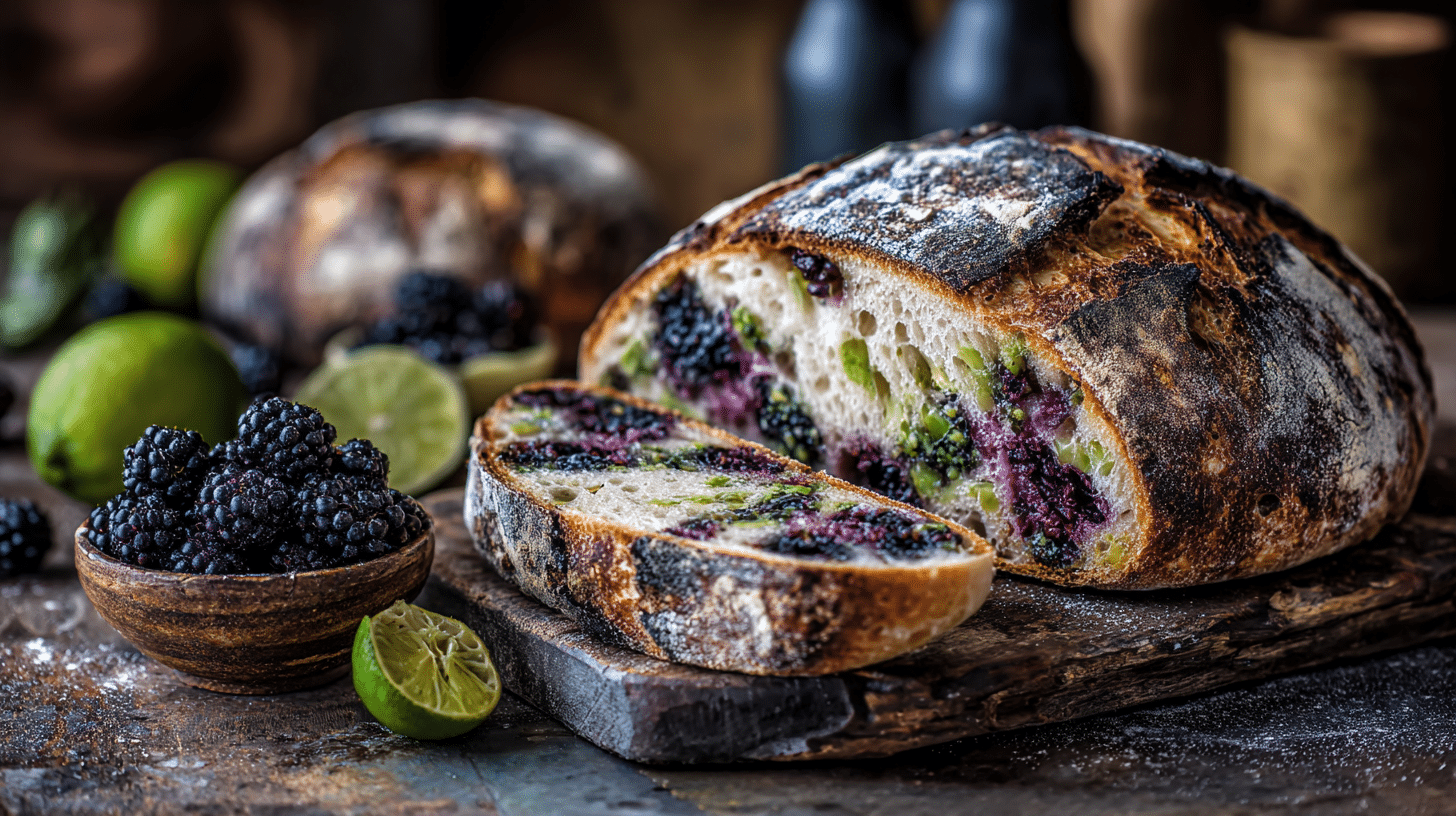
Table of Contents
Why You’ll Love This Blackberry Lime Sourdough Bread
A Bright, Tangy Twist on Classic Sourdough
Most fruited sourdough loaves promise flavor but deliver a soggy, purple crumb. This Blackberry Lime Sourdough Bread is different because of when and how you add the berries. I learned this through a dozen messy bakes. The secret is folding whole, fresh blackberries into an already-developed dough during the final shaping. This protects the levain‘s delicate structure and prevents the berries from bursting too early, which bleeds color and adds excess moisture. The result is a stunning marbled interior with distinct pockets of sweet-tart fruit, perfectly paired with the bright, fragrant punch of fresh lime zest. You get all the complex, tangy depth of a classic sourdough, elevated by a flavor combination that tastes like summer.
You’ll love this recipe because it’s built for real life. It uses a straightforward bread flour base and standard sourdough starter schedule, so you can focus on the fun part: the flavor. The active work is concentrated into about 80 minutes spread across a day. The rest is just patient waiting, perfect for a weekend project. Unlike more delicate pastries, this loaf is forgiving. A slightly warmer kitchen just speeds up bulk fermentation, and a forgotten stretch and fold session can be remedied with a longer rest. It’s the ideal bridge for bakers wanting to move beyond plain loaves into something special without stress.
Print
Blackberry Lime Sourdough Bread
- Total Time: 24 hours 20 min
- Yield: 12 slices 1x
Description
This Blackberry Lime Sourdough Bread blends tangy levain with sweet summer berries and bright lime zest. A special folding technique keeps the blackberries whole for beautiful bursts of flavor in every slice. The result is a stunning, flavorful loaf with a crisp crust and tangy, marbled crumb.
Ingredients
400g bread flour
100g active sourdough starter (levain)
300g water
150g fresh blackberries
Zest of 2 limes
25g granulated sugar
9g fine sea salt
Rice flour (for dusting banneton)
Instructions
1. DAY 1: Build Levain & Mix Dough
2. 8-12 hours before mixing, feed your starter to create 100g of active, bubbly levain.
3. In a large bowl, mix 400g bread flour and 300g water until no dry bits remain. Cover and let rest (autolyse) for 1 hour.
4. Add the 100g active levain to the bowl. Use wet hands to pinch and fold it into the dough until fully incorporated. Let rest 15 minutes.
5. Sprinkle 9g salt over the dough and mix again until thoroughly combined.
6.
7. Bulk Fermentation & Folds
8. Over the next 2-3 hours, perform 3-4 sets of stretch and folds, spaced 30 minutes apart.
9. After the second set of folds, gently press dough into a rectangle on a damp counter. Scatter most of the 150g blackberries and all the lime zest over the surface. Fold dough over itself like a letter to encase them.
10. After final fold, cover bowl and let dough bulk ferment at room temperature (70-75°F/21-24°C) until puffy and risen by 30-50% (4-8 hours total).
11.
12. Shaping & Cold Proof
13. Turn dough onto a lightly floured surface. Shape into a tight boule or batard.
14. Place shaped dough seam-side up into a banneton generously dusted with rice flour. Cover and refrigerate for 12-16 hours.
15.
16. DAY 2: Baking
17. Place Dutch oven with lid into your oven. Preheat to 450°F (230°C) for at least 45 minutes.
18. Carefully turn cold-proofed dough onto parchment paper. Score the top with a sharp blade or lame.
19. Using parchment as a sling, carefully place dough into the preheated Dutch oven. Cover with lid.
20. Bake covered for 25 minutes. Remove lid and bake uncovered for another 18-20 minutes, until deep golden brown.
21. Transfer loaf to a wire rack and let cool completely (at least 2 hours) before slicing.
Notes
Store at room temperature for up to 3 days or freeze for up to 3 months. Reheat at 350°F for 10 minutes.
For best results, weigh all ingredients with a digital scale for accuracy.
Your levain is ready when a spoonful floats in water. If it sinks, wait longer.
If using frozen blackberries, thaw completely and pat bone-dry with paper towels before adding.
The dough is ready to shape when it holds a slight indentation from a gentle poke.
- Prep Time: 80 min
- Rest Time: 19 hours
- Cook Time: 45 min
- Category: Breakfast, Dessert, Sourdough
- Method: Baking
- Cuisine: American
Nutrition
- Serving Size: 1 slice
- Calories: 178 kcal
- Sugar: 5 g
- Sodium: 293 mg
- Fat: 1 g
- Saturated Fat: 0 g
- Unsaturated Fat: 0 g
- Trans Fat: 0 g
- Carbohydrates: 36 g
- Fiber: 2 g
- Protein: 5 g
- Cholesterol: 0 mg
What makes this recipe stand out:
- Berry Integrity: A specific folding technique keeps blackberries whole, creating beautiful bursts of flavor instead of a monochrome, wet dough.
- Zest, Not Just Juice: Using fresh lime zest provides a more potent, aromatic citrus kick than juice alone, which can alter hydration.
- Flexible Timeline: The dough can comfortably bulk ferment for 4-8 hours, fitting into your day instead of dictating it.
Perfect for Using Fresh Summer Berries
This recipe is my go-to when the farmers’ market is overflowing with ripe blackberries. Their deep, wine-like sweetness and slight tang are the perfect counterpoint to sourdough’s acidity. While you can use frozen in a pinch (thaw and pat them completely dry first), fresh berries have a firmer skin that holds up better during folding, giving you those gorgeous, jammy pockets. Paired with lime zest and a touch of granulated sugar, the flavors sing without masking the beautiful tang of your levain.
If you enjoy fruited sourdough, you might also love this raspberry lemon sourdough bread for another vibrant combo, or try a citrus twist with this blueberry orange sourdough bread. What makes this blackberry lime version unique is its bold balance. The lime doesn’t just add acidity; its floral notes lift the entire loaf. It’s a fantastic way to use a seasonal bounty for something beyond jam or pie. One surprising tip? A tiny pinch of salt sprinkled over the berries as you fold them in helps to intensify their natural flavor, making every bite pop even more against the creamy, tangy crumb.
Active Time: 80 minutes Total Time: 1460 minutes (24 hrs 20 min, includes rest) Yield: 1 loaf (12 slices)
Ingredients & Equipment
Key Ingredients Explained
You only need a handful of simple ingredients to make this stunning Blackberry Lime Sourdough Bread. Precision matters here, so I strongly recommend using a digital scale for the best results.
- 400g bread flour: This higher-protein flour creates the strong, elastic gluten network needed to support the juicy berries and achieve great oven spring.
- 100g active sourdough starter: This is your levain, the natural leavening agent. Make sure it’s bubbly and at its peak, about 4-8 hours after feeding. A sluggish starter means a flat loaf.
- 300g water: We use a 75% hydration. Room-temperature water (about 70°F/21°C) helps control fermentation speed.
- 150g fresh blackberries: Their firm skin holds up best during folding. If you only have frozen, thaw completely and pat them bone-dry with paper towels to prevent a soggy dough.
- Zest of 2 limes: This is where the magic is; the aromatic oils in the zest give a brighter, more potent flavor than juice. Avoid the white pith, which is bitter.
- 25g granulated sugar: A small amount balances the tang of the sourdough starter and blackberries without making the bread sweet.
- 9g fine sea salt: Crucial for flavor and strengthening the gluten structure. Add it after the flour and water have mixed to avoid hindering hydration.
Quick Substitutions: No limes? Use lemon zest for a different, equally bright citrus note. For another berry-citrus combo, try this strawberry lemon sourdough bread.
Essential Baking Tools
You don’t need a bakery’s worth of gear, but these tools are non-negotiable for success.
- Digital Kitchen Scale: This is the #1 tool. Measuring by weight (grams) is accurate and ensures consistent hydration and fermentation every time.
- Mixing Bowl & Dough Whisk: A large glass or ceramic bowl and a sturdy dough whisk make combining the initial bread flour and water a breeze without overworking the dough.
- Banneton (Proofing Basket): This lined basket supports the dough during its final cold proof, creating that beautiful, spiraled crust. Dust it generously with rice flour to prevent sticking.
- Dutch Oven: It’s essential. The trapped steam mimics a professional bakery’s oven, giving your loaf an incredible rise and a crisp, blistered crust. A 5 or 6-quart size is perfect.
- Razor Blade or Lame: For scoring. A sharp, clean cut allows the dough to expand properly in the oven. A simple single-edge razor blade works great.
| Banneton | A medium bowl lined with a heavily floured kitchen towel | Use a mix of rice flour and all-purpose flour to prevent sticking. |
| Dutch Oven | A heavy baking sheet with a pan of water below for steam | The crust won’t be as crisp, but you’ll still get decent oven spring. |
| Dough Whisk | A sturdy wooden spoon or your clean hands | Mix just until no dry flour remains to avoid early gluten development. |
With your ingredients weighed and tools ready, you’re all set to mix, fold, and bake your way to an incredible loaf. For another fantastic fruited variation, this lemon blueberry sourdough bread uses a similar, berry-friendly technique.
Step-by-Step Instructions
Day 1: Prepare the Levain & Mix the Dough
Making this Blackberry Lime Sourdough Bread is a two-day process that builds incredible flavor. Day one is all about building your levain and developing the dough’s strength before its long rest.
- Build your levain: About 8-12 hours before you plan to mix your dough, feed your sourdough starter. Combine 20g of active starter with 100g of bread flour and 100g of warm water. Let it sit at room temperature until it’s bubbly, domed, and at peak activity.
- Autolyse the dough: In a large bowl, mix the 400g bread flour and 300g water with a dough whisk or your hands until no dry bits remain. Cover and let it rest for 1 hour. This relaxes the gluten, making the dough easier to work with.
- Mix in levain and salt: Add your 100g of active levain to the bowl. Use wet hands to pinch and fold it into the dough until fully incorporated. Let it rest for 15 minutes. Sprinkle the 9g salt and 25g granulated sugar over the dough and mix again until thoroughly combined.
Pro Tip: Your levain is ready when a spoonful floats in a glass of water. If it sinks, wait another hour. A strong levain is non-negotiable for a good rise.
Bulk Fermentation: Stretch & Folds
This is where you build structure through gentle stretches and folds. The goal isn’t to knead, but to carefully strengthen the gluten network around the berries.
- Perform stretch and folds: Over the next 2-3 hours, perform 3-4 sets of stretch and folds, spaced 30 minutes apart. With wet hands, grab one side of the dough, stretch it up, and fold it over the center. Rotate the bowl a quarter turn and repeat until you’ve gone around the bowl.
- Incorporate blackberries and lime zest: After the second set of folds, gently press the dough into a rectangle on a damp counter. Scatter most of the 150g fresh blackberries (reserve a small handful for shaping) and all of the lime zest over the surface. Fold the dough over itself like a letter to encase them, then return it to the bowl for the remaining folds.
- Complete bulk fermentation: After the final fold, cover the bowl and let the dough rest at room temperature (70-75°F / 21-24°C) until it looks puffy and has risen by about 30-50%. This usually takes 4-8 hours total. Don’t rush it; a full ferment develops flavor.
Pro Tip: The dough is ready for shaping when it holds a slight indentation from a gentle poke. If it springs back immediately, it needs more time. For another recipe using a similar gentle folding technique for add-ins, try this lemon poppy seed sourdough loaf.
After shaping (which we’ll cover next), you’ll cold-proof your loaf overnight. This slow fermentation deepens the tangy flavor characteristic of great sourdough bread. If you ever want to experiment with a different base flavor, this chocolate sourdough starter recipe makes an incredible foundation for sweet loaves.
Shaping & Cold Proof
- Shape the dough: Turn the dough onto a lightly floured surface and shape it into a tight boule or batard.
- Cold proof: Place the shaped dough seam-side up into a banneton generously dusted with rice flour. Cover and refrigerate for 12–16 hours.
Storage, Serving & Troubleshooting
How to Store Your Sourdough Bread
This loaf is best enjoyed fresh, but proper storage keeps it delicious for days. The key is protecting the crust from moisture, which makes it soft and chewy.
For short-term storage, let the bread cool completely on a wire rack. Once cool, wrap it tightly in beeswax wrap or place it in a paper bag, then inside a loosely closed plastic bag. This balances moisture control. Keep it at room temperature for up to 3 days. Avoid the fridge, it accelerates staling and can make the crumb gummy.
To freeze for longer, slice it first. This lets you thaw only what you need. Wrap slices or the whole loaf tightly in plastic wrap, then in foil or a freezer bag. It will keep for up to 3 months. Thaw slices overnight in the fridge or at room temperature for an hour. For that just-baked feel, reheat thawed slices in a 350°F oven for 10 minutes, or toast them directly from frozen.
| Room Temp (wrapped) | Up to 3 days | Eating within a few days |
| Freezer (double-wrapped) | Up to 3 months | Long-term storage; single servings |
Best Ways to Serve Blackberry Lime Bread
This isn’t your average toast. The sweet-tart pockets of blackberry and bright lime zest make it a standout. Here’s how to serve it:
- Toasted with Butter: A classic for a reason. Light toasting caramelizes the natural sugars in the berries and crisps the crumb. Spread with good salted butter.
- With Cream Cheese: The tangy cream cheese complements the sourdough’s acidity beautifully. Add a drizzle of honey for extra sweetness.
- As a Dessert: Serve a warm slice with a scoop of vanilla ice cream or a dollop of whipped cream. It’s an incredible, easy dessert.
- For Breakfast: Cube stale bread for a fantastic make ahead banana bread breakfast casserole-style bake, or use it in a French toast custard.
If you love this fruity twist, you might also enjoy a simpler, quick-bread alternative like this banana bread without butter for a different treat.
Troubleshooting Common Issues
- Dense, gummy crumb: This usually means underproofing or underbaking. Ensure your dough rises 30-50% during bulk fermentation and that the baked loaf reaches an internal temperature of 205°F.
- Berries bleeding color everywhere: To prevent a purple dough, gently coat fresh berries in a teaspoon of bread flour before folding them in. Slightly underripe berries also bleed less.
- Weak oven spring: This points to shaping or steam. Create strong surface tension when you shape. Bake in a preheated Dutch oven with the lid on for the first 25 minutes to trap essential steam for the rise.
Frequently Asked Questions About Blackberry Lime Sourdough Bread
Can I use frozen blackberries?
Yes, but you must thaw them completely first. Lay the berries on paper towels and pat them bone-dry to remove all excess moisture. Wet berries will release too much liquid into your dough during bulk fermentation, resulting in a gummy, dense crumb. This extra step is crucial for success.
Can I add lime juice to the dough?
I don’t recommend it. Adding lime juice changes the dough’s hydration and acidity unpredictably, which can weaken gluten development. For a stronger citrus flavor, simply increase the amount of lime zest. The aromatic oils in the zest provide a brighter, more potent flavor without risking your loaf’s structure.
What other berries or fruits can I use?
You can use raspberries, blueberries, or chopped strawberries. For citrus, lemon or orange zest works beautifully. The key is using 150g of fruit and folding it in gently during shaping. Avoid very wet fruits like peaches. Always pat frozen fruit dry thoroughly to prevent a soggy dough.
How do I prevent the berries from burning or bleeding?
To prevent bleeding, gently toss fresh blackberries in a teaspoon of bread flour before folding them in. To avoid burning, ensure your Dutch oven is properly preheated, and you bake with the lid on for the first 20 minutes at 450°F. This creates steam that protects the fruit.
The key to this stunning loaf is mastering the berry-folding technique and trusting the simple schedule. With just 80 minutes of hands-on work, you get a complex, flavorful bread that feels like a weekend project without the stress. I always make two loaves, one for now and one for the freezer, because it disappears fast.
Give this Blackberry Lime Sourdough Bread a try this weekend and enjoy the sweet-tart rewards. What’s your favorite summer fruit to bake into sourdough?
For more recipes like Blackberry Lime Sourdough Bread, follow us on Facebook and Pinterest for festive brunch ideas and easy homemade baking inspiration you’ll love to save.