My grandmother used to say that the best peaches and cream cake you will ever taste is the one you bake in August, when the peaches are so ripe they drip down your wrist the moment you cut into them.
Most fresh peach cakes turn out either soggy at the base or dry through the crumb, because the fruit releases liquid as it bakes and nobody accounts for it. This recipe fixes both problems with a simple maceration step and a cream cheese stabilized whipped topping that holds its shape for hours.
You’ll walk away with a foolproof method for macerating fresh peaches, a technique for a tender, tight-crumbed sponge that won’t go gummy, and a cream layer that stays cloud-soft without sliding off the cake.
Table of Contents
Why This Peaches and Cream Cake Works So Well
Understanding why a recipe works is half the battle. Plenty of peach cream dessert cakes look gorgeous in photos but disappoint at the table: the bottom layer is waterlogged, the whipped cream weeps within an hour, and the peach flavor tastes faint because it competed with too much sugar. This version tackles each of those problems directly, and the results are worth the extra fifteen minutes of prep.
The Maceration Step Changes Everything
Macerating the peaches before they ever touch the cake does two important things. First, it pulls excess moisture out of the fruit and into the bowl, so that liquid never migrates into your sponge. Second, it concentrates the peach flavor and softens the texture into something silky rather than raw and fibrous.
To macerate, slice your peaches into half-inch wedges, toss them with two tablespoons of granulated sugar and a teaspoon of fresh lemon juice, and let them rest in a colander set over a bowl for at least thirty minutes. You will see a surprising amount of rosy syrup collect in the bowl below. Save that syrup. Brush it over the warm sponge layers as they come out of the oven, and you get deep, perfumed peach flavor all the way through the crumb without any added artificial extract.
A Cream Cheese Whipped Filling That Holds
Standard whipped cream is beautiful for about forty minutes. After that, it starts to weep and deflate, especially in summer heat. The fix is a small amount of full-fat cream cheese beaten in at the beginning. The cream cheese is cold and firm, so it acts as a structural scaffold for the whipped cream that surrounds it. The result is a filling that holds clean slices three hours after assembly and still tastes light rather than dense.
If you have ever made rosemarys bakery whipped cream cake, you’ll recognize the logic: cream cheese plus heavy cream equals stability without sacrificing that pillowy, cloud-like texture everyone loves.
The Sponge: Light but Sturdy
A good peaches and cream sponge cake needs to carry the weight of fruit and cream without collapsing. A standard genoise can be too delicate. A butter cake can be too dense. This recipe splits the difference: it uses creamed butter for flavor and structure, but adds a portion of sour cream to the batter to keep the crumb tender and slightly moist. The sour cream also adds a faint tang that plays beautifully against sweet peaches.
The most important technique is not over-beating the batter once the flour goes in. Mix just until the last streak of flour disappears, then stop. Over-mixing develops gluten and produces a tight, rubbery crumb that no amount of peach syrup can save.
Print
Peaches and Cream Cake: Fresh, Dreamy, and Worth Every Slice
- Total Time: 180 min
- Yield: 10 servings 1x
- Diet: Vegetarian
Description
A tender butter sponge layered with cream cheese stabilized whipped cream and fresh macerating peaches. The peaches are soaked in sugar and lemon juice before baking to remove excess moisture, and the syrup is brushed onto the warm cake layers for a deep, natural peach flavor all the way through the crumb.
Ingredients
For the sponge cake:
1 3/4 cups all-purpose flour
1 1/2 teaspoons baking powder
1/4 teaspoon fine salt
1/2 cup unsalted butter (softened to room temperature)
1 cup granulated sugar
2 large eggs (room temperature)
1/2 cup sour cream (full-fat)
1/4 cup whole milk
1 teaspoon pure vanilla extract
For the macerated peaches:
4 medium ripe freestone peaches (peeled and sliced into 1/2-inch wedges, about 3 cups)
2 tablespoons granulated sugar
1 teaspoon fresh lemon juice
For the cream cheese whipped filling:
8 ounces full-fat cream cheese (softened to room temperature)
1/4 cup powdered sugar
1 teaspoon pure vanilla extract
1 1/2 cups heavy whipping cream (cold)
For garnish:
1 tablespoon cinnamon sugar (1 tablespoon sugar mixed with 1/4 teaspoon cinnamon)
Small handful of fresh mint leaves
Instructions
1. Macerate the peaches. Toss the sliced peaches with 2 tablespoons granulated sugar and 1 teaspoon lemon juice in a bowl. Set a colander over a bowl and pour the peaches in. Let them drain at room temperature for 30 minutes. Reserve the collected syrup for brushing the cake layers.
2. Prepare the oven and pans. Preheat your oven to 350 degrees Fahrenheit. Grease two 8-inch round cake pans with butter, line the bottoms with parchment paper, and dust the sides lightly with flour. Tap out any excess.
3. Make the sponge batter. In a medium bowl, whisk together the flour, baking powder, and salt. In a large bowl, beat the softened butter and 1 cup granulated sugar together on medium speed until pale and fluffy, about 3 minutes. Add the eggs one at a time, beating well after each. Mix in the sour cream, milk, and vanilla extract until smooth. Add the flour mixture and fold gently with a spatula just until no dry streaks remain. Do not over-mix.
4. Bake the layers. Divide the batter evenly between the prepared pans. Bake at 350 degrees Fahrenheit for 30 to 35 minutes, until the tops are golden and spring back when pressed lightly and a toothpick inserted in the center comes out with just a few moist crumbs. The edges will begin to pull away from the pan sides.
5. Soak and cool. As soon as the layers come out of the oven, brush the reserved peach syrup evenly over the surface of each warm cake layer. Let the layers cool in the pans for 15 minutes, then turn out onto a wire rack and cool completely for at least 1 hour.
6. Make the whipped cream filling. Beat the softened cream cheese alone on medium-high speed until completely smooth with no lumps, about 2 minutes. Add the powdered sugar and vanilla and beat to combine. With the mixer running on medium, pour in the cold heavy whipping cream in a slow, steady stream. Increase speed to high and whip until the mixture holds firm, billowy peaks, about 2 to 3 minutes. Do not over-beat.
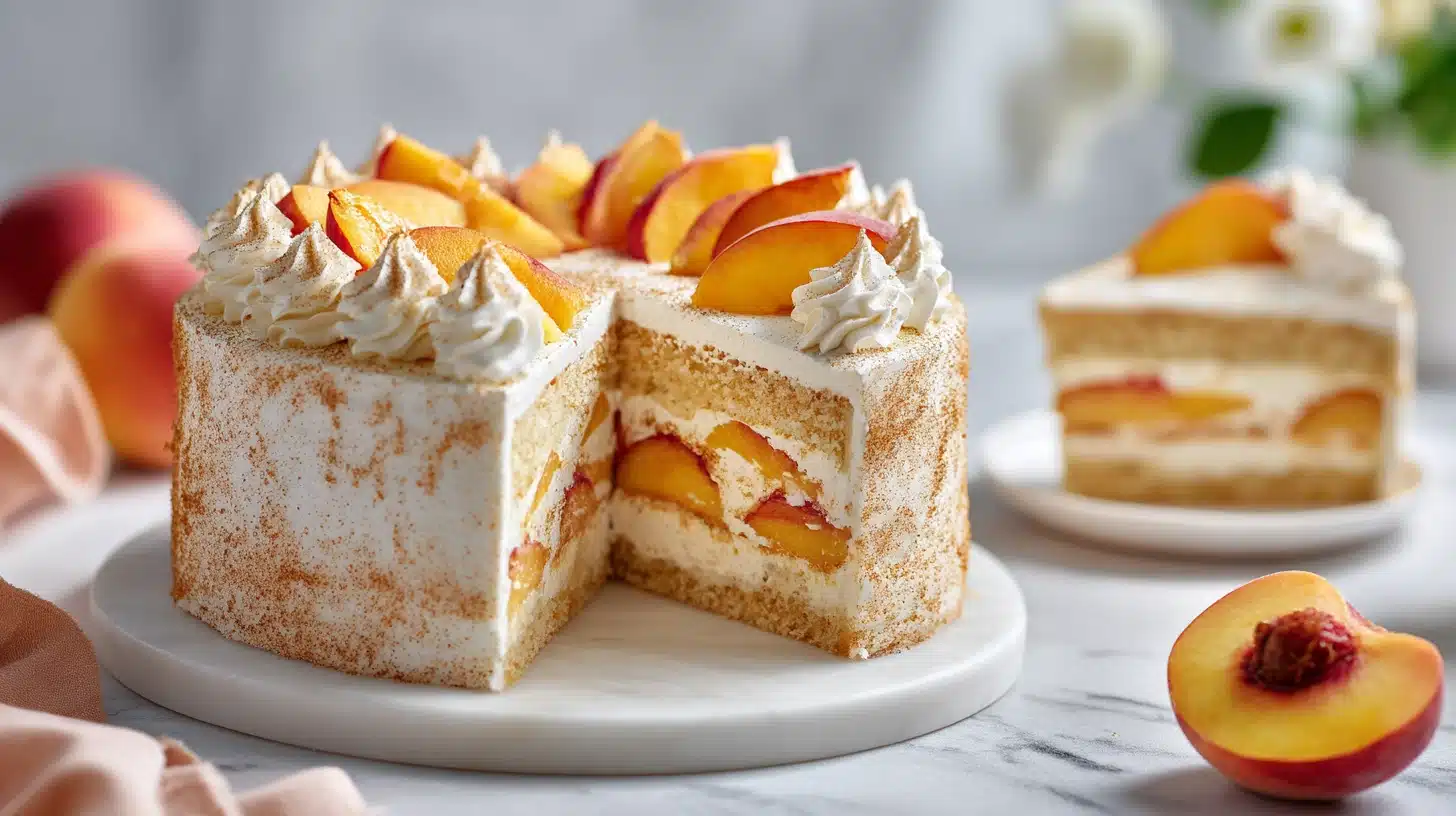
7. Assemble the cake. Level the cooled cake layers with a serrated knife if domed. Place one layer on a cake stand or plate. Spread about 3/4 cup of the whipped cream filling evenly over the top, stopping 1/2 inch from the edge. Arrange half the macerated peach slices over the cream in a single overlapping layer, leaving a 1/2-inch border. Place the second cake layer on top and press gently.
8. Frost and decorate. Spread the remaining whipped cream filling over the top and sides of the cake, swirling the top with the back of a spoon for a rustic look. Arrange the remaining macerated peach slices decoratively over the top. Scatter fresh mint leaves across the surface and dust lightly with cinnamon sugar.
9. Chill before serving. Refrigerate the assembled cake for at least 2 hours before slicing. This allows the cream to firm up and the layers to set into clean, defined slices. Use a sharp knife wiped clean between each cut for the neatest results.
Notes
Store covered loosely in the refrigerator for up to 3 days. The cake does not freeze well once assembled, but the unfrosted sponge layers can be wrapped tightly in plastic wrap and frozen for up to 2 months. Thaw overnight in the refrigerator before assembling.
Make sure the cream cheese is fully softened before beating. Cold cream cheese will break into small lumps that do not smooth out once the whipping cream is added.
If fresh peaches are out of season, use 3 cups of thawed frozen peach slices drained overnight in the refrigerator, or canned peaches in juice (not syrup) drained and patted dry. Reduce maceration time to 15 minutes for pre-softened fruit.
For a brown butter version, cook the butter in a light-colored pan until the milk solids turn golden and smell nutty, then cool to room temperature before using in the batter.
- Prep Time: 18 min
- Rest Time: 120 min
- Cook Time: 42 min
- Category: Dessert
- Method: Baking
- Cuisine: American
Nutrition
- Serving Size: 1 slice
- Calories: 420 kcal
- Sugar: 32 g
- Sodium: 185 mg
- Fat: 26 g
- Saturated Fat: 16 g
- Unsaturated Fat: 10 g
- Trans Fat: 0 g
- Carbohydrates: 44 g
- Fiber: 1 g
- Protein: 5 g
- Cholesterol: 110 mg
Choosing and Preparing Your Peaches
The peaches are the soul of a fresh peach cake with cream, so it is worth spending a few extra minutes choosing the right ones and preparing them properly.
Freestone vs. Clingstone
For a layered cake, freestone peaches are your best friend. The pit releases cleanly when you halve the fruit, which means you can slice neat, uniform wedges without fighting the stone or bruising the flesh. Freestone varieties like Reliance, Redhaven, and Loring are typically available from late July through September depending on your region.
Clingstone peaches, which are often sold earlier in the season, have flesh that sticks firmly to the pit. They taste wonderful but are harder to slice neatly. If clingstone is all you can find, peel the whole peach, stand it upright, and slice the flesh away from the stone in vertical panels. The slices won’t be as uniform, but the flavor will be just as good.
To Peel or Not to Peel
Peeling is personal. The skin of a ripe peach is paper-thin and softens beautifully once macerated, so leaving it on is perfectly fine and saves time. If you prefer a cleaner presentation without any pink-red skin flecks, blanching is the easiest method: score a small X on the bottom of each peach, drop them into boiling water for thirty seconds, then transfer immediately to an ice bath. The skins slip off in seconds.
Ripeness Is Non-Negotiable
A firm, underripe peach will not soften enough during maceration and will taste chalky in the finished cake. Press gently near the stem: it should yield slightly, like a ripe avocado. If your peaches are a day away from ripe, leave them on the counter at room temperature. Never refrigerate unripe peaches; the cold stops the ripening process and produces a mealy texture.
If fresh peaches are truly out of season, frozen sliced peaches work well. Thaw them in a colander overnight in the refrigerator, drain thoroughly, and proceed with the maceration step. Canned peaches in juice (not syrup) can also work in a pinch, though the flavor is noticeably milder.
Assembling Your Peaches and Cream Layer Cake
Assembly is where home bakers most often run into trouble. Rushing through this stage leads to sliding layers, cream that squirts out the sides, and a finished cake that looks nothing like the intended result. Take your time here and the payoff is a peaches and cream layer cake that looks like it came from a bakery counter.
Step-by-Step Assembly
Start with fully cooled sponge layers. This is non-negotiable. Even slightly warm cake will melt the cream filling on contact and produce a greasy, sliding mess. Allow the layers to cool completely on a wire rack, at least one hour, before you begin.
Once the layers are cool, level them with a serrated knife if they have domed during baking. A flat surface gives the cream layer an even platform to sit on and prevents the finished cake from leaning.
Spread a generous three-quarter cup of the cream cheese whipped filling over the first layer, taking it almost to the edge. Arrange a single layer of macerated peach slices over the cream, slightly overlapping and stopping about half an inch from the edge. This gap prevents the filling from pushing out when you set the second layer on top.
Set the second cake layer on top and press very gently. Frost the top and sides with the remaining whipped cream filling. For a more rustic look, swirl the top with the back of a spoon. For a cleaner finish, use a small offset spatula to pull the cream smooth.
Arrange the remaining peach slices decoratively over the top. A few fresh mint leaves and a light dusting of cinnamon sugar add color and aroma without complicating the flavor. Refrigerate for at least two hours before slicing so the layers have time to set and the cream firms up into clean, defined layers.
For another light and airy cream dessert worth trying alongside this one, the cloud cake recipe uses a similar stabilized cream technique with a completely different flavor profile.
Storing and Slicing
Store the finished peach cream dessert cake loosely covered in the refrigerator for up to three days. Use a sharp knife wiped clean between each cut for the neatest slices. The macerated peaches on the interior will continue to soften over time, so the cake actually improves on day two as the syrup soaks further into the crumb.
Variations and Creative Twists on This Recipe
Once you have the base peaches and cream cake mastered, there are several directions you can take it depending on the occasion, the season, or simply your mood.
Brown Butter Sponge
Swap the standard melted butter in the batter for brown butter. Cook unsalted butter in a light-colored saucepan over medium heat until the milk solids turn deep golden and the kitchen smells like toasted hazelnuts. Cool the brown butter to room temperature before using. It adds a nutty, caramel-like depth to the sponge that pairs beautifully with ripe peaches.
Bourbon Peaches
Add a tablespoon of good bourbon to the macerating peaches along with the sugar and lemon juice. The alcohol softens the fruit slightly faster and adds a warm, oaky note that makes the whole cake taste more complex. This version is particularly good for fall gatherings when peaches are at the tail end of their season and benefit from a little extra flavor boost.
Almond Sponge
Replace two tablespoons of all-purpose flour with almond flour and add a half teaspoon of almond extract to the batter. The result is a fragrant, slightly denser crumb with a nutty undertone that complements both the peaches and the cream. Top the finished cake with toasted sliced almonds for crunch and visual contrast.
Cardamom Cream
Stir a quarter teaspoon of ground cardamom into the whipped cream filling. Cardamom and peaches are an underrated pairing: the spice is floral and slightly citrusy, and it makes the cream taste more interesting without overpowering the fruit. A tiny pinch of turmeric adds a soft golden color to the filling as well.
A Note on Other Fruit Swaps
This recipe is genuinely flexible. Nectarines work perfectly in place of peaches and require no peeling. Mangoes produce a tropical version that is stunning in summer. If you find yourself in the dead of winter craving something fruity and creamy, check out this strawberry rhubarb coffee cake for a tart, bright alternative that uses the same macerating principle on a different fruit combination.
Frequently Asked Questions
Can I make this peaches and cream cake a day ahead?
Yes, and it is actually better the next day. Assemble the cake completely, cover it loosely with plastic wrap or a cake dome, and refrigerate overnight. The peach syrup soaks deeper into the sponge, the cream filling firms up into cleaner layers, and the flavors meld in a way that same-day assembly cannot replicate. Slice it straight from the refrigerator for the neatest cuts.
Can I use canned or frozen peaches instead of fresh?
Both work with minor adjustments. Frozen peaches should be thawed overnight in the refrigerator and drained thoroughly in a colander before macerating. Canned peaches in juice should be drained and patted dry, then macerating time can be reduced to fifteen minutes since they are already softened. Avoid canned peaches in heavy syrup, as the added sugar will make the cake cloying.
Why did my whipped cream filling turn grainy or lumpy?
This almost always happens when the cream cheese is not fully softened before beating. Cold cream cheese breaks into small curds when the whipping cream hits it, and those curds won’t smooth out no matter how long you beat the mixture. Set the cream cheese out at room temperature for at least thirty minutes, beat it alone until completely smooth, then add the cream gradually with the mixer running on medium.
How do I know when the sponge layers are fully baked?
At 350°F, the layers should take between 28 and 35 minutes, but use your senses rather than the clock alone. The top should be golden and spring back when you press it lightly in the center. A toothpick inserted in the middle should come out with just a few moist crumbs, not wet batter. You should also hear the sizzling sound of the batter quieting and smell a warm, buttery aroma filling your kitchen. If the edges are pulling away from the pan sides, that is another reliable visual cue that the cake is done.
Conclusion
A great peaches and cream cake is built on three things: ripe fruit, stabilized cream, and a sponge that knows its role. This recipe respects all three, and the result is a cake that tastes exactly like late summer should: bright, lush, and unapologetically creamy.
Give this one a try this weekend while peaches are still at their peak. It is the kind of cake that disappears fast at any table, so consider making two.
For more recipes like peaches and cream cake, follow us on Facebook and Pinterest for beautiful fruit dessert ideas and seasonal baking inspiration.