Most people think crème brûlée requires hours of fussing over a double boiler, but the real reason most Lemon Crème Brûlée recipes curdle has nothing to do with your patience. Lumpy custard? Weeping egg yolks? That happens when lemon juice is added to hot, heavy cream too quickly. This recipe uses a simple tempering technique that keeps everything silky, and the whole thing takes just 18 minutes of active time.
You’ll learn exactly how much lemon zest and fresh lemon juice you can add without breaking the custard, why a water bath is non-negotiable for that creamy texture, and how a kitchen torch transforms granulated sugar and vanilla extract into that caramelized crackle. The secret isn’t more ingredients, it’s knowing when to add each one.
Table of Contents
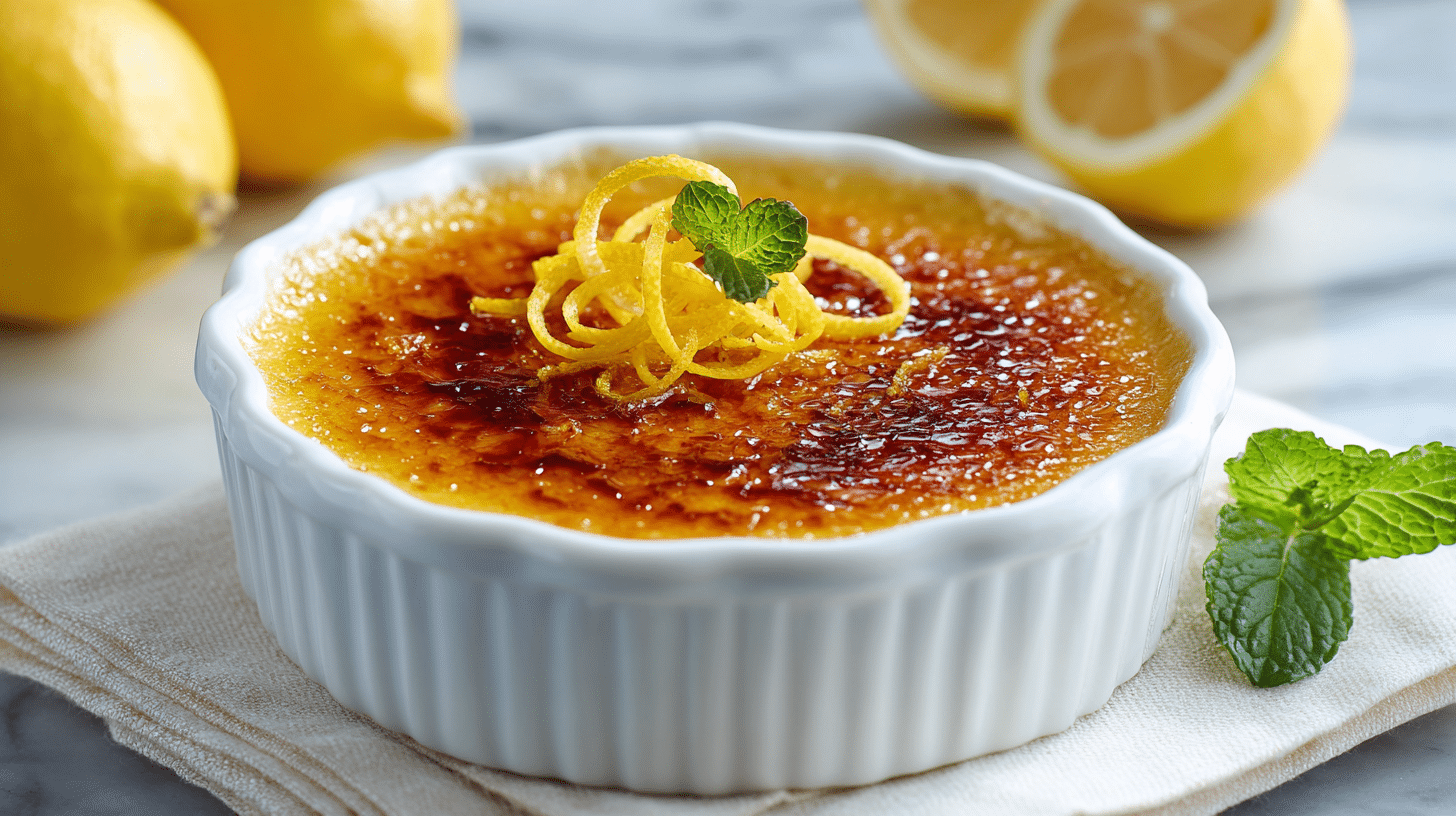
Table of Contents
Why You’ll Love This Lemon Crème Brûlée
What is Crème Brûlée?
Crème brûlée is a classic French dessert dating back to the 17th century. It’s a rich custard made from heavy cream and egg yolks, baked slowly in a water bath until it wobbles like Jell-O. The magic happens right before serving, you sprinkle granulated sugar on top and hit it with a kitchen torch. This creates a thin sheet of caramelized sugar that cracks when tapped with a spoon.
The contrast between that crackling top and the silky custard underneath makes this dessert unforgettable. Most home cooks find the technique intimidating, but the bain-marie does most of the work. If you’ve made our creme brulee cookie, you know how satisfying that caramelized crack can be.
Here’s what makes this Lemon Crème Brûlée worth your time:
- Just 18 minutes of active prep
- Only 7 ingredients you probably have
- The water bath guarantees a smooth texture
- That caramelized sugar crust never gets old

Lemon Crème Brûlée
- Total Time: 4 hours 51 min
- Yield: 4 servings 1x
Description
Lemon Crème Brûlée combines silky custard with a crackling caramelized sugar top. Fresh lemon zest and juice add bright citrus flavor to the classic French dessert. The water bath ensures smooth, even baking every time.
Ingredients
2 cups (480ml) heavy whipping cream
4 large egg yolks, room temperature
1/3 cup (67g) granulated sugar, plus 4 teaspoons for topping
2 teaspoons lemon zest (from about 2 lemons)
2 tablespoons fresh lemon juice
1 teaspoon vanilla extract
1/4 teaspoon salt
Instructions
1. Rub lemon zest into granulated sugar until fragrant to release the lemon oil.
2. Heat heavy cream in a saucepan until simmering, then stir in the lemon-sugar mixture.
3. Whisk egg yolks in a bowl, then slowly pour in warm cream while whisking constantly (this is tempering).
4. Add fresh lemon juice, vanilla extract, and salt to the mixture.
5. Strain through a fine-mesh sieve into four ramekins.
6. Place ramekins in a deep pan and add hot water halfway up the sides for the water bath (bain-marie).
7. Bake at 325°F (165°C) for 30-33 minutes until custard jiggles like Jell-O in the center.
8. Chill for 4 hours. Before serving, sprinkle 1 teaspoon sugar on each custard and torch until caramelized.
Notes
Store in the refrigerator for up to 3 days. Do not freeze, texture will change.
Add the caramelized sugar topping just before serving for the best crack.
Room temperature eggs blend more smoothly during tempering than cold ones.
If you see curdled bits after tempering, strain them out, the custard will still be smooth.
Chilled custard holds the caramelized layer better, so never skip the 4-hour rest.
- Prep Time: 18 min
- Cook Time: 33 min
- Category: Dessert
- Method: Baking
- Cuisine: French
Nutrition
- Serving Size: 1 ramekin
- Calories: 415 kcal
- Sugar: 21 g
- Sodium: 100 mg
- Fat: 37 g
- Saturated Fat: 22 g
- Unsaturated Fat: 13 g
- Trans Fat: 0 g
- Carbohydrates: 24 g
- Fiber: 0 g
- Protein: 5 g
- Cholesterol: 265 mg
The Lemon Twist
Adding lemon to crème brûlée sounds simple, but here’s where most recipes fail: lemon juice is acidic, and acid makes egg yolks curdle. Dump fresh lemon juice into warm heavy cream, and you’ll get scrambled eggs. The fix is tempering, slowly whisking warm cream into your egg yolk mixture before adding the acid.
I learned this the hard way after ruining three batches. Now I rub lemon zest into the granulated sugar first, which releases lemon oil and gives you more flavor without the curdling risk. Strain the custard through a fine-mesh sieve for that perfectly smooth texture.
This Lemon Crème Brûlée delivers bright citrus flavor balanced by rich, creamy custard, refreshing without being sharp. Our irish cream crème brûlée uses the same tempering technique with a different flavor profile. The lemon version needs at least 4 hours to chill and set, the wait is worth it.
Ingredients for Lemon Crème Brûlée
Active Time: 18 minutes
Total Time: 4 hours 51 minutes
Yield: 4 servings
- 2 cups (480ml) heavy whipping cream
- 4 large egg yolks, room temperature
- 1/3 cup (67g) granulated sugar, plus 4 teaspoons for topping
- 2 teaspoons lemon zest (from about 2 lemons)
- 2 tablespoons fresh lemon juice
- 1 teaspoon vanilla extract
- 1/4 teaspoon salt
Key Ingredients
Heavy whipping cream forms the base, 36% fat content ensures proper setting. Four egg yolks (about 72g) thicken the custard to that classic consistency. The sugar splits between the base and topping: 1/3 cup sweetens the custard, then 4 teaspoons create the caramelized sugar crackle. Lemon zest releases citrus oil when rubbed into sugar, intensifying the lemon flavor without extra acid. Fresh lemon juice adds brightness, bottled works, but tastes flat. Vanilla extract rounds everything out. Room temperature eggs blend smoothly during tempering, while cold ones can cause curdling.
Ingredient Substitutions
Heavy cream substitutions change the texture significantly.
| heavy cream | half-and-half | softer set, less rich |
| fresh lemon juice | bottled | use 1.5 tbsp, muted flavor |
| granulated sugar | superfine | dissolves faster, same amount |
Don’t substitute whole eggs for yolks, the whites create a rubbery texture. Skip low-fat milk entirely; the custard won’t set properly.
Equipment You’ll Need
You’ll need four 4-6 ounce ramekins for this Lemon Crème Brûlée. A deep roasting pan holds the water bath for gentle, even baking. A kitchen torch creates the crackling top, see our no blowtorch crème brûlée for a broiler alternative. A fine-mesh sieve ensures silky custard by straining out any cooked egg bits. A whisk and medium saucepan handle the cream heating. An instant-read thermometer is optional, the custard is done when it wobbles like Jell-O in the center. Like our coffee crème brûlée, proper equipment makes all the difference.
How to Make Lemon Crème Brûlée
Step-by-Step Instructions
Making this Lemon Crème Brûlée is straightforward when you follow the right order:
- Rub lemon zest into granulated sugar until fragrant, this releases lemon oil for brighter flavor.
- Heat heavy cream until simmering, then stir in the lemon-sugar mixture.
- Whisk egg yolks, then slowly pour in warm cream while whisking constantly (this is tempering).
- Add fresh lemon juice, vanilla extract, and salt.
- Strain through a fine-mesh sieve into four ramekins.
- Place in a pan with hot water halfway up the sides for the water bath (also called a bain-marie).
- Bake at 325°F / 165°C for 30-33 minutes until the custard jiggles like Jell-O in the center.
- Chill for 4 hours before torching.
Pro Tip: If you see curdled bits after tempering, strain them out, the custard will still be smooth.
How to Achieve the Perfect Brûlée Topping
The caramelized sugar crust makes crème brûlée iconic. Sprinkle 1 teaspoon of granulated sugar evenly over each chilled custard. Use a kitchen torch in a circular motion about 2 inches from the surface until the sugar turns amber. You’ll hear it crackle as it cools. Work quickly so the custard stays cold underneath. The sugar should form a thin, glass-like sheet that cracks when tapped with a spoon. Let it sit 1 minute before serving so the topping hardens completely.
Pro Tip: If sugar pools in spots, blot gently with a paper towel and try again with a lighter touch.
Pro Tips for Success
Cold ramekins cause uneven baking, let them sit at room temperature for 10 minutes before filling. The internal temperature should reach 170-175°F when done, but the jiggle test works just as well. If the custard looks curdled after baking, you likely overheated the cream or rushed tempering. This French dessert technique is the same one used in our classic vanilla bean crème brûlée. For a seasonal twist, try this sweet potato crème brûlée recipe. Store covered in the fridge for up to 3 days, but add the sugar topping just before serving.
Pro Tip: Chilled custard holds the caramelized layer better, so never skip the 4-hour rest.
Making Ahead, Storage & Serving
How to Store
You can make these custards 1-2 days ahead, they actually benefit from the extra chilling time. Cover each ramekin tightly with plastic wrap, pressing it directly onto the custard surface to prevent a skin from forming. Store in the refrigerator for up to 3 days.
| Refrigerator | Up to 3 days | Cover tightly, add sugar topping just before serving |
| Freezer | Not recommended | Texture becomes grainy when thawed |
Don’t add the granulated sugar topping until you’re ready to serve, the caramelized sugar layer softens and loses its crack within hours. For the best texture, remove the custards from the fridge 10 minutes before torching so they’re not ice-cold.
Serving Suggestions
This creamy lemon brûlée shines on its own, but a few garnishes make it feel restaurant-worthy. Fresh berries complement the bright citrus, raspberries, and blueberries work especially well. A thin strip of lemon zest on top of the caramelized sugar adds a pop of color and reinforces the lemon flavor.
- Top with fresh raspberries or blueberries for color contrast
- Add a small sprig of mint for a fresh, herbal note
- Serve alongside shortbread cookies for a crunchy texture
- Pair with our strawberry crème brûlée for a dessert spread
For a fun brunch twist, serve this French dessert with coffee, try an iced crème brûlée latte to echo those caramelized sugar notes.
Troubleshooting Common Issues
Even experienced cooks run into problems with custard. Here’s how to fix the most common issues:
Problem: Curdled custard
Solution: You likely added hot heavy cream too quickly during tempering. Strain through a fine-mesh sieve to remove lumps, then bake as directed.
Problem: Undercooked centers
Solution: The custard should jiggle like Jell-O in the center when done, not slosh like liquid. If it’s still too loose when you take it out of the oven, return it to the water bath and bake in 5-minute increments until the jiggle is set, don’t wait until after chilling to discover this.
Problem: Bubbles on custard surface
Solution: Run a kitchen torch quickly over the filled ramekins before baking to pop air bubbles, or skim with a spoon.
Problem: Burnt sugar topping
Solution: Keep the torch moving in circles about 2 inches from the surface. Amber is the goal, not dark brown.
Frequently Asked Questions About Lemon Crème Brûlée
Can I put lemon juice in crème brûlée?
Yes, but timing matters. Adding lemon juice directly to hot cream causes curdling. The trick is tempering, slowly whisk warm heavy cream into your egg yolks first, then add 2 tablespoons fresh lemon juice. Rub lemon zest into the granulated sugar beforehand for extra citrus flavor without the curdling risk.
Is lemon crème brûlée difficult to make?
Not at all. The active prep takes just 18 minutes. The water bath (bain-marie) does most of the work, baking the custard gently at 325°F for 30-33 minutes. The only tricky part is tempering, pour warm cream into eggs slowly while whisking. After that, strain into ramekins and chill for 4 hours.
What is the secret to a creamy crème brûlée?
Three things: tempering, a water bath, and straining. Slowly whisk warm heavy cream into egg yolks to prevent curdling. Bake in a bain-marie at 325°F for gentle, even heat. Always strain through a fine-mesh sieve before pouring into ramekins. Chill for at least 4 hours so the custard sets properly.
What is crème brûlée made of?
Classic crème brûlée uses heavy cream, egg yolks, granulated sugar, and vanilla extract. This lemon version adds fresh lemon juice and lemon zest for brightness. The custard bakes in a water bath, then chills. Right before serving, sprinkle sugar on top and use a kitchen torch to create the caramelized sugar crust.
The tempering technique and water bath are what make this Lemon Crème Brûlée foolproof, just 18 minutes of active work for a dessert that tastes like you spent hours in the kitchen. I always make the custards the night before so they’re perfectly chilled and ready for that satisfying kitchen torch moment when guests arrive.
Give this a try this weekend and impress everyone with that crackling caramelized sugar top. What’s your go-to dessert when you want to look fancy without the fuss?
For more recipes like Lemon Crème Brûlée, follow us on Facebook and Pinterest for impressive dinner party desserts and easy homemade baking inspiration you’ll love to save.