
There’s one mistake buried in every bad singapore vegetable curry gravy recipe, and it happens before you add a single ingredient. It’s not the type of curry powder, and it’s not how long you simmer the pot. It’s something you’re doing in the first three minutes.
Watery, bland curry. Slimy okra. Tofu puffs that never soak up the sauce. This one-pot fix delivers thick, fragrant gravy where galangal and lemongrass actually shine through, in just 1 hour 5 minutes.
You’ll walk away with the coconut milk shake-test that prevents split sauce, the blanch trick that erases okra slime for good, and the paste-frying technique that makes your turmeric and chile paste bloom, not burn.
Table of Contents
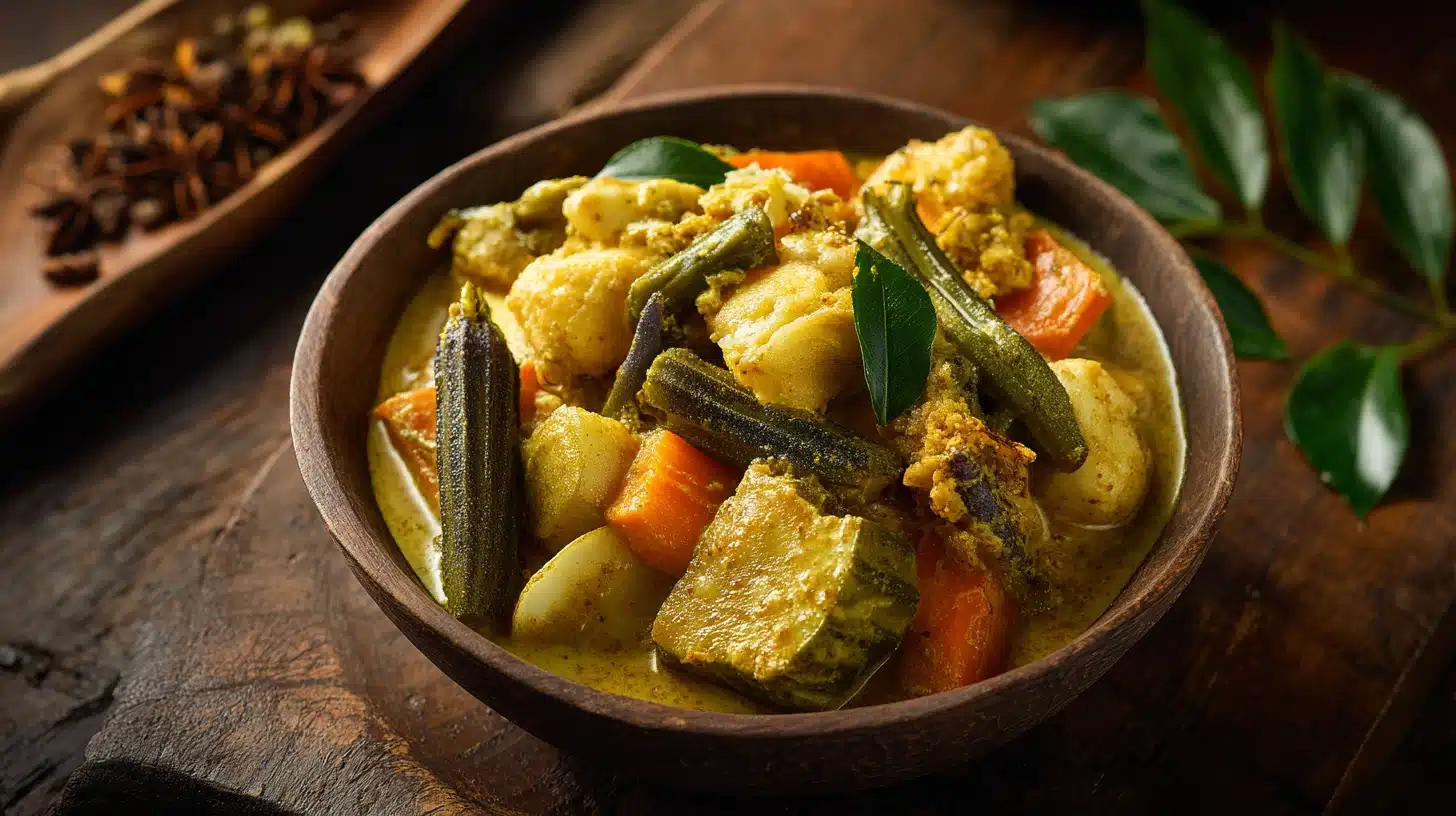
Table of Contents
Why This Singapore Vegetable Curry Recipe Works
Rich, creamy gravy with coconut milk
I used to think any coconut milk would do. Then I’d stir it in and watch the gravy turn thin and grainy. The shake-test changed that. Grab a can and shake it hard. If it sloshes like water, skip it. You want a thick, almost silent slosh, that means the fat hasn’t separated. Full-fat coconut milk with that dense feel gives you the velvety body this singapore vegetable curry gravy recipe needs.
The real work happens in the first three minutes. Dump cold curry paste into warm oil and the spices stay flat. Instead, heat 2 tablespoons oil over medium-low. Add your vegetable curry paste, chopped lemongrass, galangal, and turmeric. Stir constantly. In about 90 seconds, the paste darkens slightly and the oil glistens at the edges. That’s the bloom point, where chile paste and aromatics turn into a fragrant base that won’t burn or taste raw.
Pour in a splash of coconut milk and let it bubble gently to combine. Then add the rest. Never boil hard or the sauce splits.
- Shake-test for thick coconut milk before you buy
- Fry paste over medium-low until oil separates
- Add coconut milk in stages to prevent curdling
- Simmer with a bruised lemongrass stalk and a lime leaf for aroma
I’ve applied this same slow-building approach to creamy one-pot dishes like my one pot creamy garlic pasta. Layering flavors right in the pan makes all the difference.
Incredibly versatile for any vegetables
The beauty of this singapore vegetable curry gravy recipe is that it bends to whatever’s in your crisper. Got a sad half-head of cabbage and three wrinkly long beans? They’ll work. The trick isn’t the vegetables themselves, it’s when you add them.
Start with the sturdy ones: thick carrot slices and cabbage wedges need 8 to 10 minutes of simmering to soften. Eggplant and okra go in much later. And okra? I blanch it separately for 30 seconds in boiling water, then drain. That quick dip kills the enzyme that creates slime. Without this step, your gravy turns gluey.
Toss the blanched okra in at the very end so it stays tender but not slippery.
Tofu puffs (or beancurd puffs) are my favorite addition. Press them into hot water before cooking, they’ll open up and soak the gravy like sponges. Skip the pressing and they float around, barely taking in any flavor. If you’re cooking vegetarian, use a vegetable curry paste that omits shrimp paste. I often fry fresh curry leaves in the paste for an extra citrusy punch. Serve with a spoonful of sambal and fried shallots, and you’ve got a Malaysian-style meal that rivals any hawker stall. When I’m craving coconut-based comfort food, I sometimes turn to my crispy coconut shrimp recipe, but this curry, with whatever odds and ends I have, is my real weeknight hero.
Print
One-Pot Singapore Vegetable Curry Gravy Recipe: Easy, Aromatic, 3 Steps
- Total Time: 65 min
- Yield: 6 servings 1x
Description
Easy one-pot Singapore vegetable curry gravy with creamy coconut milk and warm spices. Blanching okra avoids sliminess. Ready in 65 minutes.
Ingredients
For the Curry Paste Base:
3 tablespoons vegetable or red curry paste (70 g)
2 tablespoons vegetable oil
2 stalks lemongrass, bruised and tied into knots
1-inch piece galangal, sliced thin
1 teaspoon ground turmeric
1 tablespoon tamarind paste mixed with 2 tablespoons water
1 can (14 oz / 400 ml) full-fat coconut milk, shaken thick
For the Vegetables:
1 medium eggplant (12 oz / 340 g), cut into 1-inch chunks
4 oz (115 g) okra, ends trimmed and blanched 30 seconds
4 oz (115 g) long beans, cut into 2-inch pieces
2 medium carrots, sliced diagonally ¼ inch thick
¼ small cabbage, cut into 1-inch wedges
1 cup (50 g) tofu puffs or beancurd puffs, pressed in hot water
Optional:
6–8 fresh curry leaves
2 lime leaves
Salt and sugar to taste
Optional / Non-Vegetarian Add-Ins:
1 tablespoon dried prawns, soaked and drained
Instructions
1. Blanch the okra by dropping trimmed pods into boiling water for 30 seconds; drain and set aside. Press tofu puffs in hot water until they swell, then drain.
2. Heat the oil in a large pot over medium-low. Add curry paste, galangal, turmeric, and lemongrass knots. Stir constantly for 90 seconds until the paste darkens and oil beads at edges. If using curry leaves, add now and stir 30 seconds until fragrant.
3. Add carrots, cabbage wedges, and long beans. Pour in enough water to just cover them. Bring to a gentle simmer and cook for 8-10 minutes until they begin to soften. Add eggplant and continue simmering for 10 minutes. Fold in the blanched okra and pressed tofu puffs, cooking 1-2 minutes to warm through.
4. Pour in half the coconut milk and let it bubble gently for 5 minutes. Stir in remaining coconut milk, tamarind water, and lime leaves if using. Simmer 5-7 minutes without boiling. Season with salt and a pinch of sugar. Serve over rice with sambal and fried shallots.
Notes
Store leftovers in the refrigerator for up to 4 days or freezer for up to 6 months. Reheat at 300°F for 10 minutes.
For the creamiest gravy, use full-fat coconut milk that barely sloshes when you shake the can.
Blanch okra for 30 seconds in boiling water to prevent sliminess in the curry.
Press tofu puffs in hot water before cooking so they absorb the gravy instead of floating.
Keep the heat at a gentle simmer, a hard boil will split the coconut milk and make the sauce thin.
- Prep Time: 30 min
- Cook Time: 35 min
- Category: Dinner, Main Course
- Method: Stovetop
- Cuisine: Singaporean
Nutrition
- Serving Size: 1 serving
- Calories: 253 kcal
- Sugar: 3 g
- Sodium: 480 mg
- Fat: 20 g
- Saturated Fat: 12 g
- Unsaturated Fat: 8 g
- Trans Fat: 0 g
- Carbohydrates: 15 g
- Fiber: 4 g
- Protein: 5 g
- Cholesterol: 0 mg
Key Ingredients for Singapore Vegetable Curry
Active Time: 30 min Total Time: 65 min Yield: 6 servings
- 3 tablespoons vegetable or red curry paste (70 g)
- 1 can (14 oz / 400 ml) full-fat coconut milk, shaken thick
- 1 medium eggplant (12 oz / 340 g), cut into 1-inch chunks
- 4 oz (115 g) okra, ends trimmed, blanched 30 seconds
- 4 oz (115 g) long beans, cut into 2-inch pieces
- 2 medium carrots, sliced diagonally ¼ inch thick
- ¼ small cabbage, cut into 1-inch wedges
- 1 cup (50 g) tofu puffs or beancurd puffs, pressed in hot water
- 2 stalks lemongrass, bruised and tied into knots
- 1-inch piece galangal, sliced thin
- 1 teaspoon ground turmeric
- 6-8 fresh curry leaves (optional)
- 2 lime leaves (optional)
- 1 tablespoon tamarind paste mixed with 2 tablespoons water
- 2 tablespoons vegetable oil
- Salt and sugar to taste
Optional / Non-Vegetarian Add-Ins:
- 1 tablespoon dried prawns, soaked and drained
No galangal? Ginger works but lacks its piney brightness, so double the amount. Tamarind can be replaced with 1 tablespoon lime juice in a pinch.
| Original | Substitute | Notes |
|---|---|---|
| Vegetable curry paste (store-bought) | Red curry paste | Use 2 tbsp; it’s spicier and often contains shrimp paste |
| Vegetable curry paste (store-bought) | Homemade spice paste (shallot, garlic, dried chilies, galangal, lemongrass, blitzed) | Add ½ tsp shrimp paste for depth; omit for a fully vegetarian version |
| Fresh galangal | Ginger | Milder, so use double the amount and slice thinner |
Choosing the best curry paste
The base of this singapore vegetable curry gravy recipe is the curry paste, and not all jars are equal. I stick with vegetable curry paste that lists galangal and lemongrass high in the ingredients. Those tell you the blend was built for a fragrant, coconutty gravy. Fry 3 tablespoons in hot oil for about 90 seconds until the paste darkens and oil beads at the edges. That’s when the chile paste and turmeric bloom and stop tasting raw. Some brands include shrimp paste; if you’re cooking vegetarian, check the label. Toss in a few fresh curry leaves at the end of frying for a citrusy shove of aroma.
Vegetables and protein that shine
Carrots, cabbage, and long beans hold their shape through simmering, so they go in first. Eggplant soaks up coconut milk like a sponge, but overcook it and it turns to mush, so add chunks during the last 10 minutes. Okra gets a quick blanch to kill the slime enzyme (see Step 2), then joins at the very end. Tofu puffs need a quick press in hot water; otherwise they float around without drinking any gravy. Whatever’s left in your fridge works here, which is why I often use leftover veg in a speedy fried rice and vegetables recipe the next day.
Essential aromatics and spices
Lemongrass, galangal, and turmeric are the trio that make this taste like a hawker stall, not a sad pantry soup. Bruise lemongrass stalks hard with the back of a knife so their oils seep out during simmering. Slice galangal paper-thin so it softens enough to eat. Turmeric stains the coconut milk gold and adds earthy warmth. Keep the heat at a gentle bubble to avoid curdling. I add a lime leaf or two, plus a spoonful of tamarind paste for a tang that cuts the richness. Dried prawns (if you’re using them) bring a funky umami that’s optional but addictive.
How to Make Singapore Vegetable Curry Gravy
Step 1: Prepare the spice paste
- Heat the oil over medium-low. Add the vegetable curry paste, sliced galangal, turmeric, and bruised lemongrass knots. Stir constantly for about 90 seconds until the paste darkens slightly and the oil beads at the edges. That’s the bloom signal. If it smells acrid, the heat’s too high. Fully cooking the paste banishes raw spice taste, the foundation of a great singapore vegetable curry gravy recipe.
Quick Note: Fry the paste until the oil beads at the edges, that’s your sign it’s fully cooked and won’t taste raw.
Step 2: Cook the vegetables
- Add carrots, cabbage wedges, and long beans to the pot. Pour in enough water to just cover them. Bring to a gentle simmer and cook for 8 to 10 minutes until they begin to soften.
Toss in eggplant and simmer another 10 minutes. Finally, fold in the blanched okra and pressed tofu puffs, they need just a minute or two to heat through. This method is forgiving, like a good potato soup with vegetables recipe for whatever’s in the fridge.
Pro Tip: Press tofu puffs in hot water until they puff slightly, this opens their pores so they drink up the gravy instead of floating around.
Step 3: Simmer and finish with coconut milk
- Pour in half the coconut milk and let it bubble gently for 5 minutes. Stir in the remaining coconut milk, tamarind water, and lime leaves if using. Simmer another 5-7 minutes without a hard boil, that would split the sauce.
Taste and add salt and a pinch of sugar. The gravy should coat the back of a spoon and smell of lemongrass and turmeric. Serve over rice with a spoonful of sambal and fried shallots.
Watch Out: A hard boil splits coconut milk’s fat, turning your gravy thin and oily. Keep the heat at a quiet bubble.
Storage, variations, and serving ideas
How to store and reheat leftover curry
This vegetable curry with coconut milk gets better overnight as the lemongrass and galangal mingle. Cool it completely, then pack into airtight containers. In the fridge you’ve got up to 4 days before the aroma fades. For longer storage, freeze for up to 6 months. The coconut milk holds fine if you haven’t boiled it hard. Thaw overnight in the fridge.
Reheating is gentle work. On the stovetop, warm it over low heat, adding a splash of water if the gravy thickened. A hard boil will split the coconut cream, so keep it to a quiet bubble. In the microwave, use medium power, stirring every minute. For a big batch, pour it into an oven-safe dish, cover, and reheat at 300°F for 10 minutes until steaming. Discard any limp lime leaves or lemongrass stalks before serving, they’ve already done their job.
Delicious variations and substitutions
No two pots of this homestyle vegetable curry need to be identical. Swap eggplant for zucchini, use cauliflower instead of cabbage, or toss in baby corn for crunch.
If you’re cooking for vegetarians, use a vegetable curry paste that skips shrimp paste and omit dried prawns. Tofu puffs still make it hearty; you can also add chickpeas or pressed beancurd puffs. Run out of curry leaves? Leave them out or scatter torn Thai basil at the very end. It won’t replicate the citrusy zing, but freshness is never a bad thing.
Tamarind paste gives a tangy backbone. In a pinch, lime juice works, but stir it in off the heat so it stays bright. The chile paste heat can be dialed up with extra sambal or toned down by using a mild red curry paste.
What to serve with vegetable curry
This Singapore curry vegetables dish loves a sturdy starch to soak up the gravy. Steamed jasmine rice is the classic pick, but I reach for roti canai or flaky paratha when I want something rippable and dippable. Soft rice noodles turn it into a laksa-like bowl, just spoon the curry over and dig in.
Fried shallots and a spoonful of sambal on top bring the hawker-stall vibe home. A fresh cucumber salad cuts the richness, and leftover curry makes a killer next-day lunch tucked into a toasted sandwich or spooned over plain congee. If you’re serving guests, put out little bowls of lime wedges and extra fried shallots so everyone can tweak their bowl.
Troubleshooting
| Problem | Solution |
|---|---|
| Okra makes the curry slimy | Blanch okra slices for 30 seconds, then stir them in only at the final simmer. |
| Chile paste burns | Cook on medium-low, stir constantly, and use enough oil to prevent scorching. |
| Tofu puffs don’t absorb flavor | Add large puffs early in simmering; add small, tender ones at the end. |
| Curry thickens overnight | Thin with a little water and re-season with salt or light soy sauce. |
| Coconut milk looks thin and watery | Shake cans before buying, a quiet can with minimal sloshing means thick, creamy milk. |
Your Singapore Vegetable Curry Gravy Recipe Questions, Answered
Which curry powder should I use for Singapore vegetable curry?
This recipe uses vegetable or red curry paste, not powder. If you only have powder, stir 2 tablespoons with a little water to form a paste and fry it for 90 seconds. The flavor won’t be quite as deep, but it works in a pinch.
Can I freeze vegetable curry?
Yes, the curry freezes well for up to 6 months. Cool it completely, then pack into airtight containers. Coconut milk holds its creaminess if you never hard-boiled it. Thaw overnight in the fridge and reheat gently over low heat, adding a splash of water if it thickened.
How do I prevent the curry from becoming watery or slimy?
A watery or slimy curry usually comes from thin coconut milk or okra enzymes. Shake the can before buying, a quiet, thick slosh means rich cream. Blanch okra for 30 seconds (see Step 2), and never hard-boil the gravy. Add coconut milk in two stages over low heat to keep the sauce velvety.
Is Singapore vegetable curry spicy?
It’s more warm and fragrant than fiery. The vegetable curry paste gives gentle chile warmth, not sharp heat. You can dial it up with extra sambal on the side, or keep it mild by choosing a red curry paste labeled “mild.” The lemongrass and galangal do most of the heavy lifting.
Can I make this curry without coconut milk?
Coconut milk is central to this curry’s rich body. You can substitute thick oat milk or cashew cream, but the gravy will be thinner. Stir in a teaspoon of cornstarch slurry to help it cling, and expect a lighter, nuttier flavor. It’s still comforting, just not quite the same.
Make This Singapore Vegetable Curry Gravy Recipe for an Easy Weeknight Dinner
This one-pot Singapore vegetable curry gravy recipe delivers creamy coconut richness with warm galangal and lemongrass. The 30-second okra blanch and the paste-frying bloom technique ensure a thick, non-slimy gravy every time.
I always press extra tofu puffs. They’re the best part after soaking overnight. Make a double batch this weekend; the curry’s even better the next day.
Do you like your curry extra spicy with sambal, or do you keep it mild?
For more recipes like this one, follow us on Facebook and Pinterest for comforting one-pot dinners and easy family meal inspiration.