Every Biscoff cheesecake recipe insists on a water bath, but the real secret to crack-free cheesecake has nothing to do with water at all.
Cracked tops come from overbaking, not from skipping a water bath. This recipe takes 30 minutes of active time and produces a smooth, crack-free cheesecake without the fuss. You’ll discover why Lotus Biscoff spread belongs in both the crust and filling, how room temperature cream cheese prevents lumpy batter, and the visual sign that means your cheesecake is perfectly done.
Table of Contents
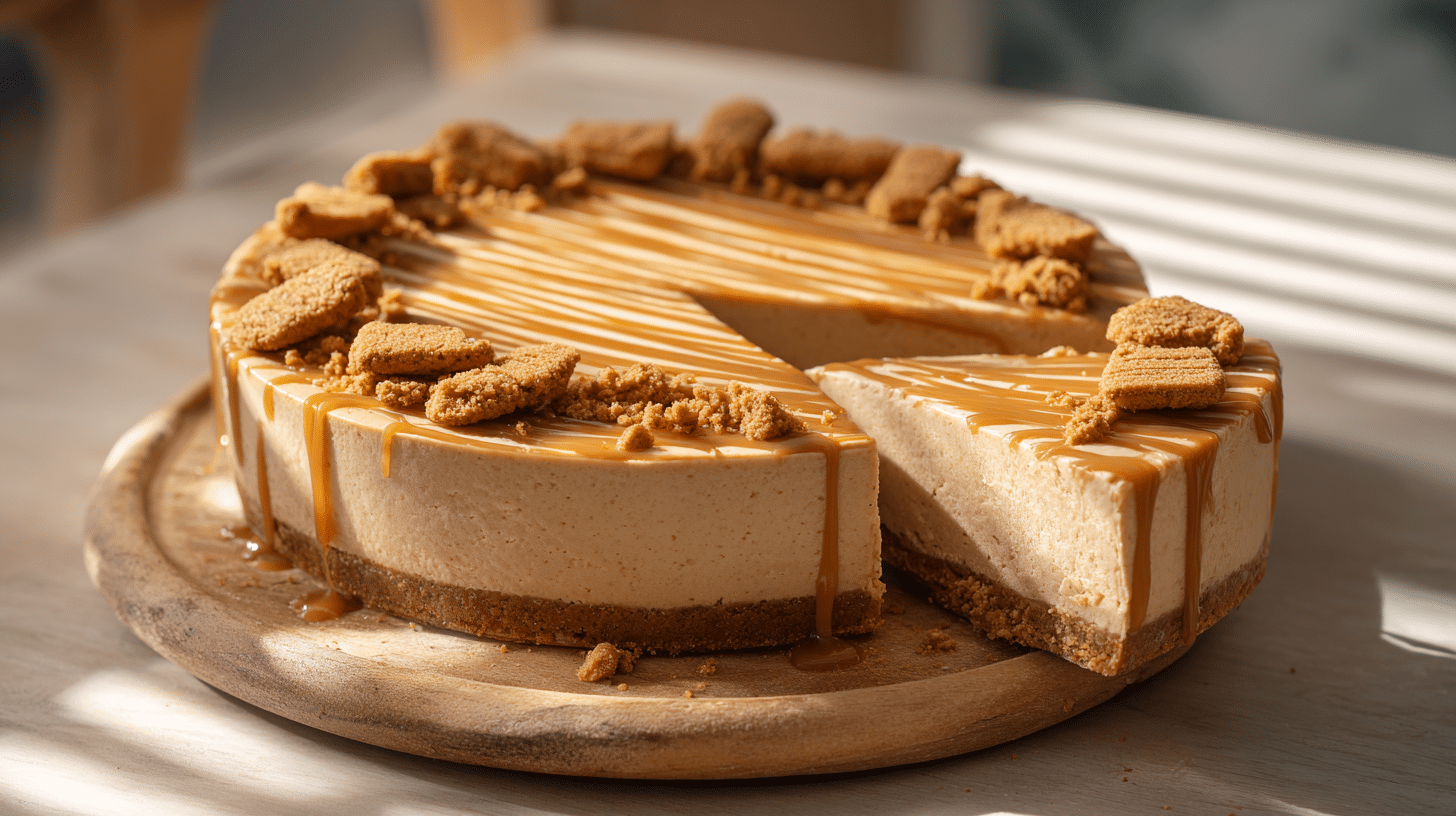
Table of Contents
Why You’ll Love This Biscoff Cheesecake
What Is Biscoff?
Biscoff comes from Belgium, where Lotus Bakery started making speculoos cookies in 1932. These spiced shortbread cookies have a caramelized brown sugar flavor with warm cinnamon, nutmeg, and a hint of ginger. The cookies became so popular that someone had the brilliant idea to grind them into a smooth, spreadable paste, kind of like peanut butter, but made entirely from cookies.
Lotus Biscoff spread (also called cookie butter) has the same caramelized spice flavor as the cookies, but with a creamy, spreadable texture. It’s sweet, slightly crunchy or smooth depending on the variety, and completely addictive straight from the jar. I’ve caught myself eating it with a spoon more times than I care to admit.
This Biscoff cheesecake recipe uses both forms: crushed Biscoff cookies for the crust and Biscoff spread swirled through the creamy filling. The combination gives you triple the flavor impact without any extra work. The spices in the cookies pair naturally with the tangy cream cheese, creating a dessert that tastes like autumn in every bite.
- Caramelized brown sugar flavor with warm spices
- Creamy, spreadable texture that melts into fillings
- Works in both crust and filling for layered flavor
- Naturally vegetarian and nut-free
Most people don’t realize that speculoos cookies were originally a Saint Nicholas Day treat in Belgium and the Netherlands. Now you can find Lotus Biscoff cookies on coffee shop counters worldwide, that little cookie served with your latte? That’s the one.
Print
The Easiest Biscoff Cheesecake Recipe
- Total Time: 1 hours 45 min
- Yield: 12 slices 1x
Description
This biscoff cheesecake recipe combines a spiced cookie crust with creamy cream cheese filling and a swirled Biscoff spread topping. The water bath method produces a crack-free cheesecake with minimal effort.
Ingredients
2 cups Lotus Biscoff cookies, crushed into fine crumbs
5 tablespoons unsalted butter, melted
1 tablespoon granulated sugar
24 ounces full-fat cream cheese, room temperature
1 cup granulated sugar
1/2 cup sour cream, room temperature
1/3 cup Biscoff spread, room temperature
3 large eggs, room temperature
2 teaspoons vanilla extract
1/2 cup Biscoff spread
4–6 Biscoff cookies, crushed for garnish
1/4 cup heavy cream (optional, to thin the spread)
Instructions
1. Pulse 28 Lotus Biscoff cookies in a food processor until you have fine, even crumbs, about 30 seconds of processing.
2. Add 5 tablespoons melted butter and 1 tablespoon sugar to the crumbs, then pulse until the mixture resembles wet sand.
3. Press the mixture firmly into the bottom of a 9-inch springform pan, using the bottom of a measuring cup to create an even layer.
4. Bake at 325°F for 8-10 minutes until the crust smells fragrant and looks set. Let cool completely.
5. Beat 24 ounces room temperature cream cheese and 1 cup sugar in a large bowl on medium speed for 2 minutes until completely smooth.
6. Add 1/2 cup sour cream, 1/3 cup Biscoff spread, and 2 teaspoons vanilla, then beat for another minute until incorporated.
7. Add 3 room temperature eggs one at a time, beating on low speed just until each disappears into the batter. Do not overmix.
8. Wrap the bottom of your springform pan with 2-3 layers of heavy-duty foil to prevent water from seeping in.
9. Place the pan inside a large roasting pan, then pour the cheesecake filling over your cooled crust.
10. Fill the roasting pan with hot water until it reaches halfway up the sides of the springform pan.
11. Bake at 325°F for 55-65 minutes until the edges are set but the center still jiggles slightly like Jell-O.
12. Turn off the oven and crack the door open about 2 inches, leave the cheesecake inside for 1 hour.
13. Remove from the oven and run a thin knife around the edges to release it from the pan sides.
14. Cool completely at room temperature for another hour, then refrigerate for at least 6 hours or overnight.
15. Warm 1/2 cup Biscoff spread in the microwave for 15-20 seconds until it flows easily. Stir in heavy cream if desired for thinner consistency.
16. Pour the warmed spread over the chilled cheesecake and spread into an even layer, leaving a small border around the edges.
17. Sprinkle 4-6 crushed Lotus Biscoff cookies on top for crunch and visual appeal.
Notes
Store in the refrigerator for up to 5 days or freezer for up to 3 months.
Room temperature ingredients are essential, cold cream cheese will leave lumps that no amount of mixing can fix.
For clean slices, dip your knife in hot water and wipe it dry between each cut.
If the top cracks during baking, the Biscoff topping will cover any imperfections completely.
The cheesecake texture improves significantly after refrigerating overnight, 12 hours is ideal.
- Prep Time: 30 min
- Cook Time: 60 min
- Category: Dessert
- Method: Baking
- Cuisine: American
Nutrition
- Serving Size: 1 slice
- Calories: 550 kcal
- Sugar: 34 g
- Sodium: 180 mg
- Fat: 36 g
- Saturated Fat: 19 g
- Unsaturated Fat: 17 g
- Trans Fat: 0 g
- Carbohydrates: 43 g
- Fiber: 1 g
- Protein: 7 g
- Cholesterol: 125 mg
No-Bake vs Baked: Which Should You Choose?
Both methods produce delicious results, but they work differently. A no-bake cheesecake relies on heavy cream whipped to stiff peaks for structure, then chilled until firm. A baked cheesecake uses eggs and sour cream, then cooks in the oven for a denser, richer texture.
No-bake cheesecake is faster and more forgiving. You don’t need to worry about cracks, water baths, or overbaking. Mix the filling, spread it over your cheesecake crust, and refrigerate for 6 hours minimum. The trade-off is a slightly softer texture that can weep if left out too long.
Baked cheesecake takes more technique but delivers that classic New York-style richness. The eggs create a firm, sliceable texture that holds up beautifully at room temperature. Room temperature ingredients are essential here; cold cream cheese will leave lumps that no amount of mixing can fix.
This Biscoff cheesecake recipe uses the baked method because the heat helps the Biscoff spread caramelize slightly in the filling. That extra depth of flavor is worth the extra effort. But if you’re short on time or nervous about baking, the no-bake version still tastes incredible with 30 minutes of prep time.
For the baked version, you’ll need a springform pan and about 60 minutes in the oven, plus chilling time. The water bath method helps, but I’ve found that low-and-slow baking at 325°F works just as well for a crack-free cheesecake without the hassle.
Biscoff Cheesecake Ingredients
Active Time: 30 minutes
Total Time: 1 hour 45 minutes
Yield: 12 slices
For the Biscoff Cookie Crust
The crust is where this biscoff cheesecake recipe starts building flavor. Lotus Biscoff cookies give you that signature caramel flavor with warm cinnamon spices right from the first bite. You’ll need about 28 cookies for your cheesecake crust.
Some bakers brush the crust with melted Biscoff spread or cookie butter before adding the filling. The butter binds everything together, and melted butter coats the crumbs evenly.
- 2 cups (200g) Lotus Biscoff cookies, crushed into fine crumbs
- 5 tablespoons (70g) unsalted butter, melted
- 1 tablespoon granulated sugar
No Lotus Biscoff cookies? Crush graham crackers and add 1 teaspoon of cinnamon plus a pinch of ginger to mimic the speculoos flavor.
For the Creamy Cheesecake Filling
Cream cheese and sour cream work together to create that signature tangy richness. Full-fat cream cheese in the block style is essential; tub cream cheese has added air and stabilizers that make your baked cheesecake dense instead of fluffy.
Sour cream adds moisture and balances the sweetness of the cookie butter. The eggs provide structure and help the cheesecake set in your springform pan. Room temperature ingredients are essential for a crack-free cheesecake. Pour the filling over your cheesecake crust and smooth the top.
- 24 ounces (680g) full-fat cream cheese, room temperature
- 1 cup (200g) granulated sugar
- 1/2 cup (115g) sour cream, room temperature
- 1/3 cup (113g) Biscoff spread, room temperature
- 3 large eggs, room temperature
- 2 teaspoons vanilla extract
For a no-bake cheesecake version, skip the eggs and fold in 1 cup of whipped heavy cream instead.
For the Biscoff Topping
The topping takes this Biscoff cheesecake from good to memorable. Warming the Biscoff spread makes it pourable; about 20 seconds in the microwave does the trick. Drizzle it in artistic swirls or spread it into an even layer.
Crushed Lotus Biscoff cookies on top add crunch and make the presentation look bakery-worthy. The Biscoff spread will firm up when chilled, so add it after the cheesecake cools completely. Press some extra Biscoff cookies into the sides for texture.
- 1/2 cup (170g) Biscoff spread
- 4-6 Biscoff cookies, crushed for garnish
- 1/4 cup (60ml) heavy cream (optional, to thin the spread)
If the spread is too thick, stir in heavy cream one tablespoon at a time until pourable.
Ingredient Tips & Substitutions
Room temperature ingredients are the most important factor for a smooth, crack-free cheesecake. Cold cream cheese leaves lumps that no amount of mixing can fix, and cold eggs can cause the batter to curdle in the oven. Take everything out of the fridge 2 hours before baking.
| Lotus Biscoff cookies | graham crackers + 1 tsp cinnamon | loses some caramel flavor |
| Biscoff spread | cookie butter (any brand) | similar texture, taste varies |
| Cream cheese | mascarpone | richer, less tangy |
| Sour cream | Greek yogurt | same amount, different tang |
For a gluten-free Biscoff cheesecake, look for gluten-free speculoos cookies or make a crust from almond flour. While many recipes call for a water bath, this one uses low temperature to prevent cracks without the extra step.
How to Make Biscoff Cheesecake
This Biscoff cheesecake recipe comes together in five straightforward steps. The process is simpler than most people expect; the key is working with room temperature ingredients and knowing exactly when the cheesecake is done.
Step 1: Prepare the Biscoff Cookie Crust
- Pulse 28 Lotus Biscoff cookies in a food processor until you have fine, even crumbs, about 30 seconds of processing.
- Add 5 tablespoons of melted butter and 1 tablespoon sugar to the crumbs, then pulse until the mixture resembles wet sand.
- Press the mixture firmly into the bottom of a 9-inch springform pan, using the bottom of a measuring cup to create an even layer.
- Bake at 325°F for 8-10 minutes until the crust smells fragrant and looks set.
The crust should feel firm when you touch it and smell like toasted caramel. Let it cool completely before adding the filling; about 15 minutes on the counter works.
Pro Tip: If you don’t have a food processor, place the Biscoff cookies in a zip-top bag and crush them with a rolling pin. This works just as well and saves on cleanup.
Step 2: Make the Cheesecake Filling
- Beat 24 ounces of room temperature cream cheese and 1 cup of sugar in a large bowl on medium speed for 2 minutes until completely smooth.
- Add 1/2 cup sour cream, 1/3 cup Biscoff spread, and 2 teaspoons vanilla, then beat for another minute until incorporated.
- Add 3 room temperature eggs one at a time, beating on low speed just until each disappears into the batter.
Stop mixing as soon as the last egg blends in. Overmixing introduces air bubbles that cause cracks during baking. The batter should look silky and uniform, with no visible cream cheese lumps.
Watch Out: Cold cream cheese will leave lumps that never disappear. If you forgot to take it out early, cut it into cubes and let it sit in a bowl of warm water for 10 minutes.
Step 3: Baking with a Water Bath
- Wrap the bottom of your springform pan with 2-3 layers of heavy-duty foil to prevent water from seeping in.
- Place the pan inside a large roasting pan, then pour the cheesecake filling over your cooled crust.
- Fill the roasting pan with hot water until it reaches halfway up the sides of the springform pan.
- Bake at 325°F for 55-65 minutes until the edges are set, but the center still jiggles slightly.
The water bath creates gentle, even heat that prevents cracks. Your cheesecake is done when the internal temperature reaches 150°F. The center should wobble like Jell-O, not ripple like liquid.
Chef’s Note: No foil? Place the springform pan inside a slightly larger cake pan, then set both in the water bath. This creates a double barrier against leaks.
Step 4: Cooling and Setting
- Turn off the oven and crack the door open about 2 inches. Leave the cheesecake inside for 1 hour.
- Remove from the oven and run a thin knife around the edges to release it from the pan sides.
- Cool completely at room temperature for another hour, then refrigerate for at least 6 hours or overnight.
This gradual cooling prevents the dramatic temperature change that causes cracks. The cheesecake will continue setting as it chills. For the cleanest slices, refrigerate overnight; the texture improves significantly after 12 hours.
Quick Note: If the top cracks anyway, don’t worry. The Biscoff topping will cover any imperfections completely.
Step 5: Adding the Biscoff Topping
- Warm 1/2 cup Biscoff spread in the microwave for 15-20 seconds until it flows easily.
- Stir in 1-2 tablespoons heavy cream if you want a thinner drizzle consistency.
- Pour the warmed spread over the chilled cheesecake and spread it into an even layer, leaving a small border around the edges.
- Sprinkle 4-6 crushed Lotus Biscoff cookies on top for crunch and visual appeal.
Work quickly once you warm the spread; it thickens as it cools. The topping should coat the back of a spoon and flow off in a steady stream, not a slow glob. If it’s too thick, add more cream one teaspoon at a time.
Cook’s Tip: For clean slices, dip your knife in hot water and wipe it dry between each cut. This prevents the Biscoff layer from smearing.
Tips for the Best Biscoff Cheesecake
Troubleshooting Common Problems
Even experienced bakers run into issues with cheesecake. The good news is that most problems have simple fixes.
| Cracked top | Cool gradually in oven with door cracked; don’t overbake |
| Lumpy filling | Beat cream cheese alone first until smooth; use room temperature ingredients |
| Runny center | Use full-fat brick cream cheese; chill full 6 hours minimum |
| Water bath leak | Wrap pan in 3 layers of foil or use double-pan method |
| Burnt crust | Cover edges with foil after 40 minutes of baking |
The biggest mistake I see is rushing the cooling process. That dramatic temperature drop from oven to counter shocks the structure and causes cracks. Let it cool in the turned-off oven first. Your crack-free cheesecake depends on patience, not skill.
How to Store Biscoff Cheesecake
Proper storage keeps your Biscoff cheesecake fresh and flavorful. Cover the springform pan with plastic wrap or transfer slices to an airtight container. Store in the refrigerator for up to 5 days.
| Refrigerator | Up to 5 days | Cover tightly; add topping day of serving |
| Freezer | Up to 3 months | Wrap in plastic then foil; thaw overnight |
Keep the Biscoff spread and Biscoff cookies separate until serving. The lotus biscoff cookies will soften if stored directly on top of the cheesecake crust. For a baked cheesecake, the texture stays best when chilled. A no-bake cheesecake may weep slightly after day three.
Can You Freeze Biscoff Cheesecake?
Yes, both baked cheesecake and no-bake cheesecake freeze beautifully for up to 3 months. Wrap the whole cheesecake or individual slices in plastic wrap, then add a layer of aluminum foil to prevent freezer burn.
Thaw frozen slices in the refrigerator overnight. Don’t thaw at room temperature; cream cheese can develop an odd texture when warmed too quickly. Add the Biscoff spread and crushed Biscoff cookies after thawing for the best presentation.
Label your packages with the date. After three months, the cheesecake crust may become slightly soggy, and the cream cheese filling can develop ice crystals that affect texture.
Serving Suggestions
This Biscoff cheesecake recipe shines on its own, but these additions make it even more special:
- A dollop of freshly whipped cream with a dusting of cinnamon
- Extra Lotus Biscoff cookies arranged around the plate edge
- A drizzle of warmed cookie butter over each slice
- Fresh berries to balance the rich speculoos spices
- A cup of coffee or this brown sugar boba iced coffee recipe for an afternoon treat
For fall gatherings, serve slices alongside this homemade pumpkin butter recipe. The warm spices in both complement each other perfectly.
Biscoff Cheesecake Recipe FAQ
Is a water bath really needed for cheesecake?
A water bath helps, but it’s not strictly necessary for a crack-free cheesecake. I’ve tested this Biscoff cheesecake recipe both ways. The real key is baking at 325°F and cooling gradually in the turned-off oven. If you skip the water bath, don’t open the oven door during baking; temperature fluctuation causes more cracks than skipping the bath itself.
Why is my cheesecake cracked?
Cracks come from overbaking and rapid temperature changes, not from skipping a water bath. Pull your Biscoff cheesecake when the edges are set, but the center still jiggles like Jell-O, around 150°F internal temperature. Cooling it in the turned-off oven with the door cracked for 1 hour prevents that dramatic temperature drop that causes cracking.
How do I know when my cheesecake is done?
The center should wobble like Jell-O when you gently shake the pan, not ripple like liquid. An instant-read thermometer inserted in the center should read 150°F. The edges will look set and slightly puffed. For this biscoff cheesecake recipe, that’s typically 55-65 minutes at 325°F. It finishes setting as it chills.
Can I make Biscoff cheesecake without a springform pan?
Yes, but removing slices gets tricky. Use a deep 9-inch cake pan lined with parchment paper, leaving overhang on the sides to lift the cheesecake out after chilling. A no-bake cheesecake works better in this scenario since it releases more easily. For a baked cheesecake, the springform pan’s removable sides make serving much easier, worth the investment if you bake cheesecakes regularly.
This Biscoff cheesecake recipe comes together in just 30 minutes of active time, and the real secret to crack-free results is room temperature ingredients, not a water bath. You’ll get triple the flavor by using both Lotus Biscoff cookies in the crust, and Biscoff spread swirled through the filling.
I always make this the day before serving because the texture improves dramatically after an overnight chill. Give it a try this weekend, you’ll be surprised how simple it is.
Do you prefer the smooth Biscoff spread or the crunchy version in your cheesecake?
For more recipes like the Biscoff cheesecake recipe, follow us on Facebook and Pinterest for easy dessert recipes and creative baking ideas.