Maceration is sold as a must-do step for Raspberry Rhubarb Pie. It’s actually the fastest path to a soggy, leaking mess. Skip it, and the bottom crust bites back with a cracker-crisp snap you can hear.
A runny, seedy slick and a pale, doughy bottom crust have wrecked too many homemade pies. The fix is simpler than you think. It starts with how you handle the fruit before a single berry hits the bowl.
You’ll walk away with the exact thickener-to-fruit ratio that sets up clean every time, a blind-baking shortcut that seals the crust from steam, and the sweet-tart balance that lets raspberry and rhubarb share the spotlight instead of one flavor hogging the show.
Table of Contents
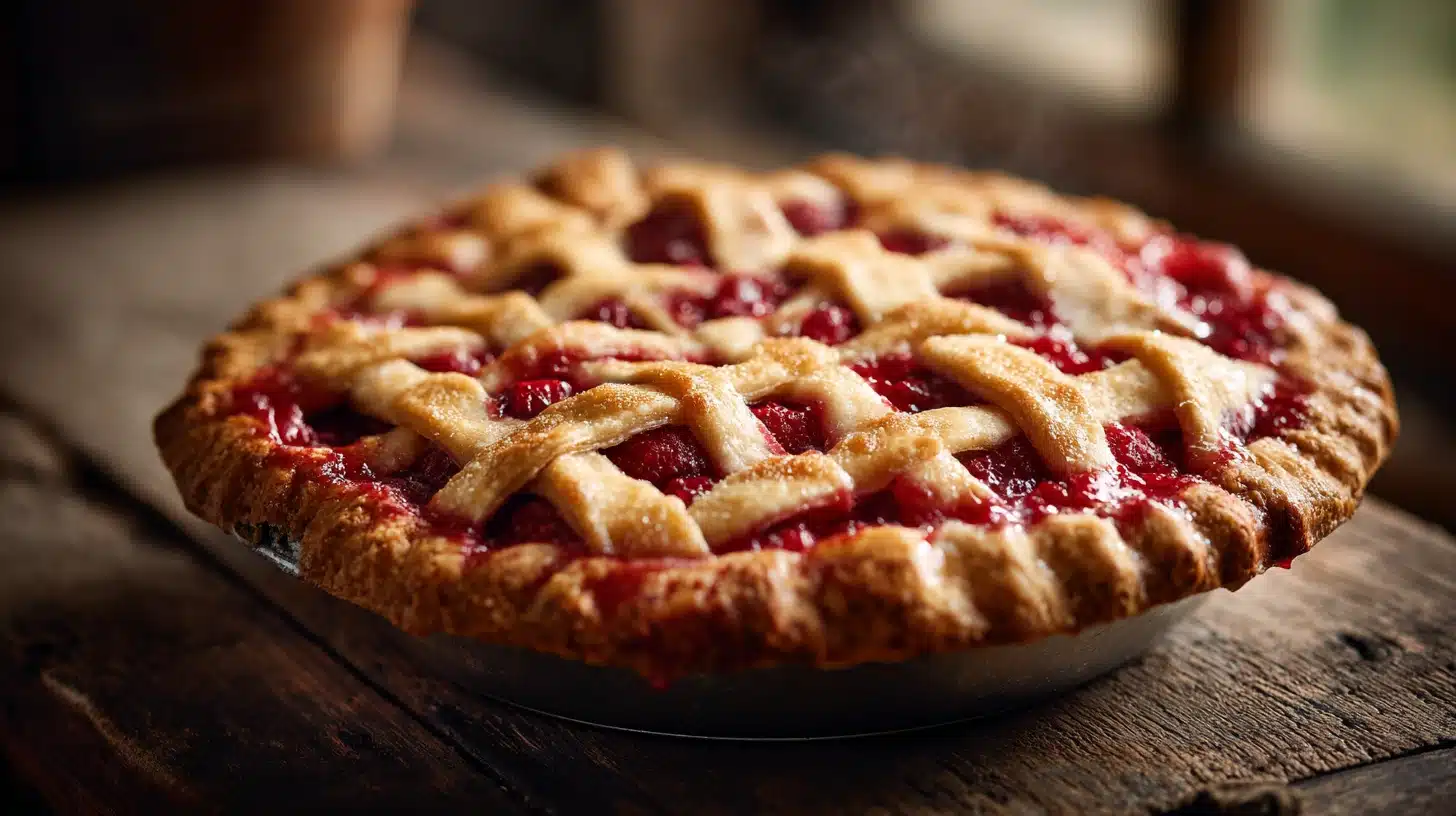
Table of Contents
Why This Raspberry Rhubarb Pie Works
Sweet-tart flavor balance
A Raspberry Rhubarb Pie that actually sings isn’t about dumping sugar into a bowl of fruit and hoping for the best. It’s about layering sweetness exactly where it matters. I sprinkle one-third of the sugar and flour mixture directly over the bottom crust before adding a single berry. That thin, sweet barrier does two things: it seasons the filling from below and helps shield the crust from steam.
Rhubarb brings bright, mouth-puckering tang. Raspberries add a floral, jammy sharpness. The two together need a sturdy sweetener that rounds the edges without erasing character. Brown sugar works beautifully here, lending a subtle molasses note that plain white sugar just can’t match. The result is a filling that tastes deliberate. Neither fruit bullies the other.
- The sugar-flour layer prevents a gummy bottom crust.
- Brown sugar deepens the flavor without muddying the fruit.
- An extra sprinkle of sugar between fruit layers prevents bland pockets.
- A final dusting on top helps the lattice brown and crackle.
If you’ve ever wrestled with a weepy pie, the thickener is your best friend. Instant tapioca absorbs juices as the pie bakes, turning them into a glossy, sliceable filling. No runny slicks, no soup. This same method works just as reliably for a strawberry rhubarb pie filling, though raspberries’ smaller seeds make for a smoother mouthfeel here.
Raspberries instead of strawberries
Most rhubarb pies default to strawberries, but raspberries are the upgrade nobody talks about. Strawberries tend to collapse into a soft, almost mushy texture when baked. Raspberries hold their shape far better. They soften and burst, sure, but individual berries stay distinct enough to create a pie with actual texture layers. Not a uniform jam.
That matters because texture keeps rhubarb from feeling stringy. As the rhubarb softens, the raspberries maintain little pockets of structure. The contrast is wonderful. Plus, raspberries bring a brighter, slightly more complex acidity that wakes up the whole filling. A classic strawberry rhubarb pie leans sweet. This version leans electric.
You don’t need fresh berries either. Frozen raspberries work straight from the freezer. No thawing, no extra flour, no second-guessing. Just toss them in with the sliced rhubarb and keep moving. That alone makes the recipe feel less fussy on a busy afternoon.
A handful of raspberries also gives the filling a deeper, jewel-red color that strawberries rarely deliver. When you cut into that golden lattice and see a glossy, ruby center, you know you made the right call.
Print
The Perfect Raspberry Rhubarb Pie: 3 Simple Secrets for a Foolproof Dessert
- Total Time: 105 min
- Yield: 8 servings 1x
- Diet: Vegetarian
Description
A Raspberry Rhubarb Pie with a perfectly balanced sweet-tart filling thickened by instant tapioca. Brown sugar layered on the bottom crust prevents sogginess and adds depth. Raspberries hold their shape for a sliceable, ruby-centred pie.
Ingredients
4 cups sliced rhubarb (about 1 pound / 450g)
2 cups fresh or frozen raspberries (10 ounces / 280g)
1 cup packed brown sugar (200g)
1/3 cup instant tapioca (60g)
2 tablespoons unsalted butter, cut into small pieces
1 double-crust pie dough (homemade or store-bought)
Instructions
1. Preheat oven to 425°F (218°C) and position rack in lowest position.
2. In a large bowl, whisk together brown sugar and instant tapioca. Reserve about one-third of the mixture.
3. Add sliced rhubarb and raspberries to the remaining sugar mixture. Toss quickly to coat. If using frozen raspberries with excess liquid, stir in 1 tablespoon all-purpose flour. Dot with butter pieces.
4. Roll out bottom crust and fit into a 9-inch pie dish. Sprinkle the reserved sugar-tapioca mixture evenly over the dough.
5. Pile the fruit filling on top, mounding slightly in the centre. Roll out top crust, cut lattice strips, or place full crust on and cut vents. Crimp edges firmly.
6. Bake at 425°F for 15 minutes. Lower temperature to 350°F (175°C) and continue baking 40–50 minutes, until filling bubbles thickly through vents and crust is deep golden. An instant-read thermometer inserted into the centre should register 200°F.
7. If edges brown too fast, cover with foil after the first 25 minutes; remove foil for the final 10 minutes.
8. Cool the pie completely on a wire rack, at least 3 hours, before slicing. Filling firms up as it cools.
Notes
Store at room temperature for up to 2 days or freezer for up to 3 months. Reheat at 350°F for 10 minutes.
Use frozen raspberries straight from the freezer, no thawing required. The sugar-tapioca mix on the bottom crust seasons from below and seals against steam.
Instant tapioca creates a clear, sliceable filling; if substituting cornstarch, note it may thin with the fruit’s acidity.
Cutting the pie while warm will turn the filling runny, patience gives perfect slices.
- Prep Time: 15 min
- Rest Time: 35 min
- Cook Time: 55 min
- Category: Dessert
- Method: Baking
- Cuisine: American
Nutrition
- Serving Size: 1 slice
- Calories: 296 kcal
- Sugar: 28 g
- Sodium: 372 mg
- Fat: 11 g
- Saturated Fat: 7 g
- Unsaturated Fat: 4 g
- Trans Fat: 0 g
- Carbohydrates: 50 g
- Fiber: 3 g
- Protein: 2 g
- Cholesterol: 18 mg
Raspberry Rhubarb Pie Ingredients
Active Time: 15 minutes Total Time: 1 hour 45 minutes Yield: 8 servings
- 4 cups sliced rhubarb (about 1 pound / 450g)
- 2 cups fresh or frozen raspberries (10 ounces / 280g)
- 1 cup packed brown sugar (200g)
- 1/3 cup instant tapioca (60g)
- 2 tablespoons unsalted butter, cut into small pieces
- 1 double-crust pie dough (homemade or store-bought)
If your frozen raspberries release a lot of juice, stir 1 tablespoon all-purpose flour into the fruit with the tapioca. No butter? Use 2 tablespoons cold coconut oil instead.
Key ingredients you’ll need
Rhubarb is the tart backbone here. Slice it about 1/2 inch thick so it softens without turning stringy. Raspberries bring a jammy brightness and hold their shape better than strawberries. You can use either fresh or frozen fruit; if using frozen, don’t thaw them first. Tossing them in straight from the freezer keeps extra juice from watering down the filling.
Brown sugar does the heavy lifting. Its molasses note rounds out the sharp edges of rhubarb and raspberries without masking their flavor. I sprinkle a third of the sugar mixture directly on the bottom crust before adding fruit. That layer seasons from below and helps prevent a soggy base. Dot the top with butter pieces right before sealing the pie; they melt into the filling and add a silky richness. Leftover raspberries? They’d be perfect in these pink raspberry swirl heart cookies.
Choosing the right thickener
Instant tapioca is the workhorse here. It absorbs juices as the pie bakes and turns them into a glossy, sliceable filling. No runny slicks. The granules soften completely, so you won’t bite into anything gritty. If you’re using defrosted raspberries that are especially wet, add a tablespoon of flour as backup.
Flour works too, but it needs a longer bake to lose its raw taste and can make the filling look cloudy. Cornstarch sets up clear, yet rhubarb’s acidity can break it down, leaving you with a thinner filling. Some old-fashioned recipes call for an egg-sugar-flour mixture; if you go that route, whisk it thoroughly to avoid lumps. For a crumble-topped version instead of a lattice, this same filling works beautifully in a strawberry rhubarb pie with crumble top.
| Original | Substitute | Notes |
|---|---|---|
| Instant tapioca | 3 tbsp cornstarch + 1 tbsp flour | Best for fresh fruit; may thin with frozen |
| Instant tapioca | 1/4 cup all-purpose flour | Bake 10 minutes longer to cook the flour |
| Instant tapioca | 2 eggs + 2 tbsp flour (whisked smooth) | Creates a custard-like filling |
How to make raspberry rhubarb pie
Building a Raspberry Rhubarb Pie that slices clean and tastes bright comes down to a few precise moves. The mixing and baking order matters more than any single ingredient. Here’s exactly how to put it all together.
Preparing the fruit filling
- Whisk the brown sugar and instant tapioca together in a large bowl. No clumps.
- Add the sliced rhubarb and raspberries. Toss quickly with a rubber spatula until every piece is coated. Work fast. You don’t want the fruit to sit and release juice. If the frozen berries start throwing off liquid, stir in the extra tablespoon of flour now.
- Dot the fruit with the butter pieces. They’ll melt into the filling, adding silkiness. This method avoids the custard-like set of a rhubarb custard pie and leans on tapioca for a cleaner slice.
Chef’s Note: Reserve about a third of the dry sugar-tapioca mix before adding fruit. Scattering it on the bottom crust creates a sweet barrier that seals the dough from steam.
Assembling and baking the pie
- Roll out the bottom crust and ease it into a 9-inch pie dish. Sprinkle the reserved sugar-tapioca mixture evenly over the dough.
- Pile the fruit filling on top, mounding it slightly in the center. All those butter dots should be scattered through the fruit.
- Roll out the top crust, cut lattice strips, or lay the full crust on and cut vents. Crimp the edges firmly. If you’d rather skip the double crust, this same filling shines under a rhubarb crisp with crumble topping.
- Move the oven rack to the lowest position and preheat to 425°F.
- Bake for 15 minutes at the high heat to set the crust. Then lower the temperature to 350°F and continue baking another 40-50 minutes. Frozen fruit usually needs the longer end.
- Check at 40 minutes: the filling should bubble thickly through the vents and the crust be deep golden. An instant-read thermometer inserted into the center should register 200°F. If the edges darken too fast, cover them with foil after the first 25 minutes; remove the foil for the final 10 minutes.
- Cool the pie completely on a wire rack, at least 3 hours, before slicing. The filling firms up as it cools.
Watch Out: Cutting into a hot pie turns that thick, glossy filling into a runny mess. Patience pays off.
Storage, troubleshooting & serving ideas
How to store for maximum freshness
I always wrap leftover pie in plastic wrap first, pressing it right against the cut surface to keep the filling moist, then a layer of foil. That double seal makes a real difference.
| Method | Duration | Notes |
|---|---|---|
| Counter | Up to 2 days | Only if kitchen stays below 70°F and the pie is well-wrapped |
| Fridge | Up to 2 days | Crust softens slightly; a quick reheat brings back crispness |
| Freezer | Up to 3 months | Wrap whole pie or individual slices in plastic then foil |
| Reheat | 10 minutes at 350°F | From fridge; if frozen, thaw slices overnight first |
You can also freeze an unbaked pie. Assemble it completely, wrap tightly, and freeze up to 3 months. Bake from frozen at 425°F for 15 minutes, then drop to 350°F until the center hits 200°F. Add 10 to 15 extra minutes. That same method works beautifully on an apple rhubarb crisp for a last-minute dessert stash.
Common problems & quick fixes
Even a straightforward pie can trip you up. Most issues trace back to heat management or not waiting long enough to slice.
Troubleshooting
| Problem | Solution |
|---|---|
| Runny filling when cut | Cool the pie completely, at least 3 hours. The tapioca needs time to set. Slicing warm turns the filling soupy. |
| Soggy bottom crust | Bake on the lowest oven rack and scatter the sugar-tapioca mix on the dough before adding fruit. |
| Crust edges burn too fast | Cover edges with foil after the first 25 minutes; remove foil for the final 10 minutes to brown. |
| Raspberries break down into mush | Toss the fruit gently and let the filling stand 20 minutes before piling into the crust. Less handling means more whole berries. |
| Pie tastes too sweet | Cut the brown sugar by 2 tablespoons; rhubarb’s tartness can vary, and raspberries already bring natural sweetness. |
- Slice the pie at room temperature for clean, photo-worthy pieces.
- A quick 10-minute reheat at 350°F plus a scoop of vanilla ice cream turns any slice into a warm dessert.
- Love the tart-sweet combo? Swap raspberries for apples in this apple rhubarb pie when you want a fall twist.
Raspberry Rhubarb Pie FAQ
Can I use frozen rhubarb and raspberries in this Raspberry Rhubarb Pie?
Absolutely. Toss them straight from the freezer into the sugar-tapioca mix. No thawing. They’ll release a bit more juice, so stir in 1 extra tablespoon of flour. Bake as directed, adding 5 to 10 minutes if the center isn’t bubbling thickly at 40 minutes.
How can I tell when the pie is fully baked?
Look for a deep golden crust and thick, slow bubbles through the vents, not a quick simmer. An instant-read thermometer inserted in the center should hit 200°F. The filling will set as the pie cools, so don’t rely on the jiggle test alone.
Can I substitute cornstarch for tapioca in a raspberry rhubarb pie?
Yes. Swap the instant tapioca for 3 tablespoons cornstarch plus 1 tablespoon all-purpose flour. Whisk them with the brown sugar before adding fruit. Rhubarb’s acidity can weaken cornstarch’s gel, so the filling may be slightly looser, but still sliceable.
Should I peel rhubarb before baking it in a pie?
No, rhubarb stalks don’t need peeling. Just trim the ends and slice 1/2 inch thick. If the stalks are thick and tough (common later in the season), use a vegetable peeler to strip away any fibrous strings. This keeps them from turning stringy in the baked pie.
How do I prevent a soggy bottom crust?
A soggy bottom is common, but you can fix it. In this Raspberry Rhubarb Pie, the sugar-tapioca layer is crucial. Also, place a rimmed baking sheet on the lowest rack while the oven preheats, then set the pie on it. The hot metal delivers instant heat that seals the crust.
Bake this raspberry rhubarb pie this weekend
You just learned the tricks that make this Raspberry Rhubarb Pie simple: skip the maceration, layer sugar and tapioca right on the crust, and let instant tapioca set the filling. The result is a crisp-bottomed pie that slices clean every time.
I bake this on lazy Sundays when the kitchen’s still quiet, and the smell of bubbling raspberries fills the whole house. Give it a go this weekend. It comes together with surprisingly little effort.
Do you stick with raspberries or swap in strawberries when rhubarb season peaks?
For more recipes like Raspberry Rhubarb Pie, follow us on Facebook and Pinterest for easy pie recipes and seasonal baking inspiration.
More recipes in this series: